Kirjojen hintavertailu – 12 859 819 kirjaa ja 27 kauppaa

Kirjailija

Edgar Allan Poe

Kirjat ja teokset yhdessä paikassa: 2 091 kirjaa, julkaisuja vuosilta 1840–2027, suosituimpiin kuuluu Heureka ja muita kirjoituksia. Vertaile teosten hintoja ja tarkista saatavuus suomalaisista kirjakaupoista.

Nimi esiintyy myös muodoissa: Edgar-Allan Poe

2 091 kirjaa

Kirjojen julkaisuvuodet: 1840–2027.

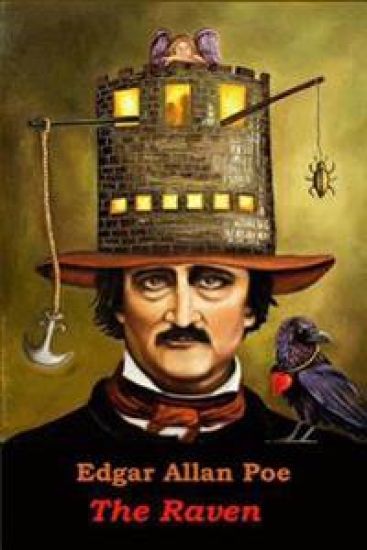
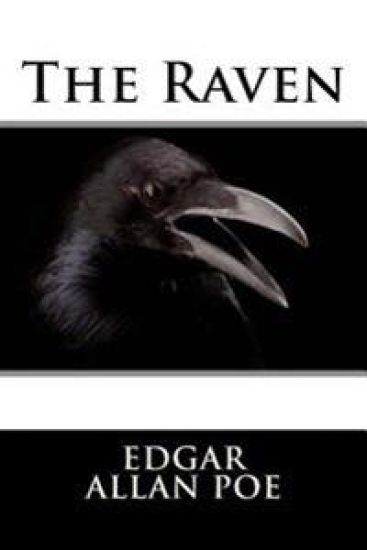
The Raven

The Raven

Edgar Allan Poe

Createspace Independent Publishing Platform
2016
nidottu
"Deep into that darkness peering, long I stood there, wondering, fearing, doubting, dreaming dreams no mortal ever dared to dream before." --- Edgar Allan Poe, The Raven "The Raven" is a narrative poem by American writer Edgar Allan Poe. First published in January 1845, the poem is often noted for its musicality, stylized language, and supernatural atmosphere. It tells of a talking raven's mysterious visit to a distraught lover, tracing the man's slow fall into madness. The lover, often identified as being a student, is lamenting the loss of his love, Lenore. Sitting on a bust of Pallas, the raven seems to further instigate his distress with its constant repetition of the word "Nevermore". The poem makes use of a number of folk, mythological, religious, and classical references. Poe claimed to have written the poem very logically and methodically, intending to create a poem that would appeal to both critical and popular tastes, as he explained in his 1846 follow-up essay, "The Philosophy of Composition". The poem was inspired in part by a talking raven in the novel Barnaby Rudge: A Tale of the Riots of 'Eighty by Charles Dickens. Poe borrows the complex rhythm and meter of Elizabeth Barrett's poem "Lady Geraldine's Courtship", and makes use of internal rhyme as well as alliteration throughout. "The Raven" was first attributed to Poe in print in the New York Evening Mirror on January 29, 1845. Its publication made Poe widely popular in his lifetime, although it did not bring him much financial success. The poem was soon reprinted, parodied, and illustrated. Critical opinion is divided as to the poem's literary status, but it nevertheless remains one of the most famous poems ever written.
The Spectacles (annotated)

The Spectacles (annotated)

Edgar Allan Poe

Createspace Independent Publishing Platform
2016
nidottu
"The Spectacles" is a short story by Edgar Allan Poe, published in 1844. It is one of Poe's comedy tales. The narrator, 22-year-old Napoleon Bonaparte Froissart, changes his last name to "Simpson" as a requirement to inherit a large sum from a distant cousin, Adolphus Simpson. At the opera he sees a beautiful woman in the audience and falls in love instantly. He describes her beauty at length, despite not being able to see her well; he requires spectacles but, in his vanity, "resolutely refused to employ them". His companion Talbot identifies the woman as Madame Eugenie Lalande, a wealthy widow, and promises to introduce the two. He courts her and proposes marriage; she makes him promise that, on their wedding night, he will wear his spectacles.
Nouvelles histoires extraordinaires

Nouvelles histoires extraordinaires

Edgar-Allan Poe

Createspace Independent Publishing Platform
2016
nidottu
Extrait: I Litt rature de d cadence -Paroles vides que nous entendons souvent tomber, avec la sonorit d'un b illement emphatique, de la bouche de ces sphinx sans nigme qui veillent devant les portes saintes de l'Esth tique classique. chaque fois que l'irr futable oracle retentit, on peut affirmer qu'il s'agit d'un ouvrage plus amusant que l'Iliade. Il est videmment question d'un po me ou d'un roman dont toutes les parties sont habilement dispos es pour la surprise, dont le style est magnifiquement orn , o toutes les ressources du langage et de la prosodie sont utilis es par une main impeccable. Lorsque j'entends ronfler l'anath me, -qui, pour le dire en passant, tombe g n ralement sur quelque po te pr f r , -je suis toujours saisi de l'envie de r pondre: Me prenez-vous pour un barbare comme vous, et me croyez-vous capable de me divertir aussi tristement que vous faites? Des comparaisons grotesques s'agitent alors dans mon cerveau; il me semble que deux femmes me sont pr sent es: l'une, matrone rustique, r pugnante de sant et de vertu, sans allure et sans regard, bref, ne devant rien qu' la simple nature; l'autre, une de ces beaut s qui dominent et oppriment le souvenir, unissant son charme profond et originel toute l' loquence de la toilette, ma tresse de sa d marche, consciente et reine d'elle-m me, -une voix parlant comme un instrument bien accord , et des regards charg s de pens e et n'en laissant couler que ce qu'ils veulent..... Edgar Allan Poe (Boston, 19 janvier 1809 - Baltimore, 7 octobre 1849) est un po te, romancier, nouvelliste, critique litt raire, dramaturge et diteur am ricain, ainsi que l'une des principales figures du romantisme am ricain. Connu surtout pour ses contes - genre dont la bri vet lui permet de mettre en valeur sa th orie de l'effet, suivant laquelle tous les l ments du texte doivent concourir la r alisation d'un effet unique- il a donn la nouvelle ses lettres de noblesse et est consid r comme l'inventeur du roman policier. Nombre de ses r cits pr figurent les genres de la science-fiction et du fantastique. Charles-Pierre Baudelaire est un po te fran ais, n Paris le 9 avril 1821 et mort dans la m me ville, rue du D me, dans le 16e arrondissement, le 31 ao t 1867 ( 46 ans). Dante d'une poque d chue selon le mot de Barbey d'Aurevilly, nourri de romantisme, tourn vers le classicisme, la crois e entre le Parnasse et le symbolisme, chantre de la modernit , il occupe une place consid rable parmi les po tes fran ais pour un recueil certes bref au regard de l'oeuvre de son contemporain Victor Hugo (Baudelaire s'ouvrit son diteur de sa crainte que son volume ne ressembl t trop une plaquette...), mais qu'il aura fa onn sa vie durant: Les Fleurs du mal.
The Thousand-and-Second Tale of Scheherazade (annotated)

The Thousand-and-Second Tale of Scheherazade (annotated)

Edgar Allan Poe

Createspace Independent Publishing Platform
2016
nidottu
The Thousand-and-Second Tale of Scheherazade" is a short-story by American author Edgar Allan Poe (1809-1849). It was published in the February 1845 issue of Godey's Lady's Book and was intended as a partly humorous sequel to the celebrated collection of Middle Eastern tales One Thousand and One Nights. The tale depicts the eighth and final voyage of Sinbad the Sailor, along with the various mysteries Sinbad and his crew encounter; the anomalies are then described as footnotes to the story. While the King is uncertain - except in the case of the elephants carrying the world on the back of the turtle - that these mysteries are real, they are actual modern events that occurred in various places during, or before, Poe's lifetime. The story ends with the king in such disgust at the outlandish tales Scheherazade has just woven, that he has her executed the next day.
The Unparalleled Adventure of One Hans Pfaall (annotated)

The Unparalleled Adventure of One Hans Pfaall (annotated)

Edgar Allan Poe

Createspace Independent Publishing Platform
2016
nidottu
"The Unparalleled Adventure of One Hans Pfaall" (1835) is a short story by Edgar Allan Poe published in the June 1835 issue of the monthly magazine Southern Literary Messenger, and intended by Poe to be a hoax. Poe planned to continue the hoax in further installments, but was upstaged by the famous Great Moon Hoax which started in the August 25, 1835 issue of the New York Sun daily newspaper. Poe later wrote that the flippant tone of the story made it easy for educated readers to see through the supposed hoax.
Histoires grotesques et serieuses

Histoires grotesques et serieuses

Edgar-Allan Poe

Createspace Independent Publishing Platform
2016
nidottu
Extrait: LE MYST RE DE MARIE ROGET POUR FAIRE SUITE A DOUBLE ASSASSINAT DANS LA RUE MORGUE Il y a des s ries id ales d' v nements qui courent parall lement avec les r elles. Les hommes et les circonstances, en g n ral, modifient le train id al des v nements, en sorte qu'il semble imparfait; et leurs cons quences aussi sont galement imparfaites. C'est ainsi qu'il en fut de la R formation; au lieu du Protestantisme est arriv le Luth ranisme. NOVALIS. Il y a peu de personnes, m me parmi les penseurs les plus calmes, qui n'aient t quelquefois envahies par une vague mais saisissante demi-croyance au surnaturel, en face de certaines co ncidences d'un caract re en apparence si merveilleux, que l'esprit se sentait incapable de les admettre comme pures co ncidences. De pareils sentiments (car les demi-croyances dont je parle n'ont jamais la parfaite nergie de la pens e), de pareils sentiments ne peuvent tre que difficilement comprim s, moins qu'on n'en r f re la science de la chance, ou, selon l'appellation technique, au calcul des probabilit s. Or, ce calcul est, dans son essence, purement math matique; et nous avons ainsi l'anomalie de la science la plus rigoureusement exacte appliqu e l'ombre et la spiritualit de ce qu'il y a de plus impalpable dans le monde de la sp culation. Les d tails extraordinaires que je suis invit publier forment, comme on le verra, quant la succession des poques, la premi re branche d'une s rie de co ncidences peine imaginables, dont tous les lecteurs retrouveront la branche secondaire ou finale dans l'assassinat r cent de Mary Cecilia Rogers, New-York. Lorsque, dans un article intitul Double assassinat dans la rue Morgue, je m'appliquai, il y a un an peu pr s, d peindre quelques traits saillants du caract re spirituel de mon ami le chevalier C. Auguste Dupin, Edgar Allan Poe (Boston, 19 janvier 1809 - Baltimore, 7 octobre 1849) est un po te, romancier, nouvelliste, critique litt raire, dramaturge et diteur am ricain, ainsi que l'une des principales figures du romantisme am ricain. Connu surtout pour ses contes - genre dont la bri vet lui permet de mettre en valeur sa th orie de l'effet, suivant laquelle tous les l ments du texte doivent concourir la r alisation d'un effet unique- il a donn la nouvelle ses lettres de noblesse et est consid r comme l'inventeur du roman policier. Nombre de ses r cits pr figurent les genres de la science-fiction et du fantastique. Charles-Pierre Baudelaire est un po te fran ais, n Paris le 9 avril 1821 et mort dans la m me ville, rue du D me, dans le 16e arrondissement, le 31 ao t 1867 ( 46 ans). Dante d'une poque d chue selon le mot de Barbey d'Aurevilly, nourri de romantisme, tourn vers le classicisme, la crois e entre le Parnasse et le symbolisme, chantre de la modernit , il occupe une place consid rable parmi les po tes fran ais pour un recueil certes bref au regard de l'oeuvre de son contemporain Victor Hugo (Baudelaire s'ouvrit son diteur de sa crainte que son volume ne ressembl t trop une plaquette...), mais qu'il aura fa onn sa vie durant: Les Fleurs du mal.
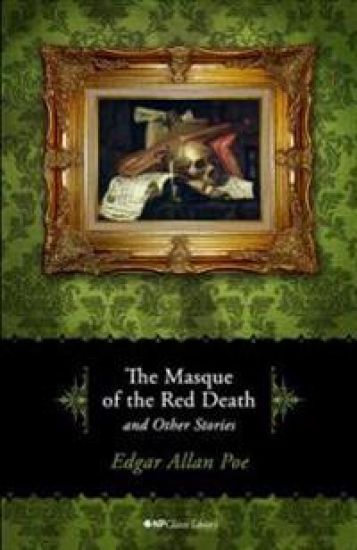
The Masque of the Red Death and Other Stories

The Masque of the Red Death and Other Stories

Edgar Allan Poe

Nosetouch Press
2016
nidottu
The Nosetouch Press Classic Library is an ongoing collection of meticulously curated genre gems, breathing new life into vintage literary treasures. Best read by the warm glow of candlelight than the chilly incandescence of a tablet screen-they're quality paperbacks whenever you need them.
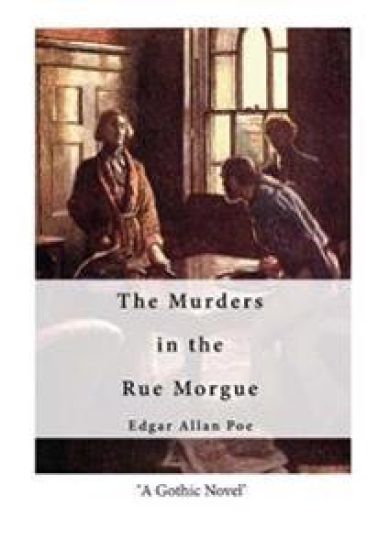
The Murders in the Rue Morgue: Classic Gothic Horror

The Murders in the Rue Morgue: Classic Gothic Horror

Edgar Allan Poe

Createspace Independent Publishing Platform
2016
nidottu
Classic Gothic HorrorThe Murders in the Rue MorgueEdgar Allan Poe"The Murders in the Rue Morgue" is a short story by Edgar Allan Poe published in Graham's Magazine in 1841. It has been recognized as the first modern detective story; Poe referred to it as one of his "tales of ratiocination." Two works that share some similarities predate Poe's stories, including Das Fraulein von Scuderi (1819) by E. T. A. Hoffmann and Zadig (1747) by Voltaire. C. Auguste Dupin is a man in Paris who solves the mystery of the brutal murder of two women. Numerous witnesses heard a suspect, though no one agrees on what language was spoken. At the murder scene, Dupin finds a hair that does not appear to be human. As the first fictional detective, Poe's Dupin displays many traits which became literary conventions in subsequent fictional detectives, including Sherlock Holmes and Hercule Poirot. Many later characters, for example, follow Poe's model of the brilliant detective, his personal friend who serves as narrator, and the final revelation being presented before the reasoning that leads up to it. Dupin himself reappears in "The Mystery of Marie Roget" and "The Purloined Letter."
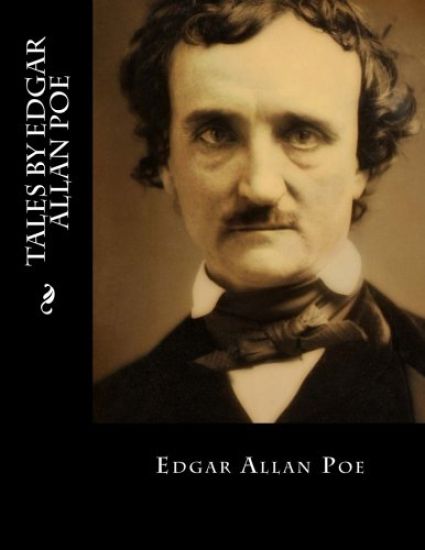
Tales by Edgar Allan Poe

Tales by Edgar Allan Poe

Edgar Allan Poe

Createspace Independent Publishing Platform
2016
nidottu
Edgar Allan Poe ( January 19, 1809 - October 7, 1849) was an American writer, editor, and literary critic. Poe is best known for his poetry and short stories, particularly his tales of mystery and the macabre. Widely regarded as a central figure of Romanticism in the United States and American literature as a whole, he was one of the country's earliest practitioners of the short story. Poe is generally considered the inventor of the detective fiction genre and is further credited with contributing to the emerging genre of science fiction. He was the first well-known American writer to try to earn a living through writing alone, resulting in a financially difficult life and career. Born in Boston, Poe was the second child of two actors. His father abandoned the family in 1810, and his mother died the following year. Thus orphaned, the child was taken in by John and Frances Allan, of Richmond, Virginia. Although they never formally adopted him, Poe was with them well into young adulthood. Tension developed later as John Allan and Edgar repeatedly clashed over debts, including those incurred by gambling, and the cost of secondary education for the young man. Poe attended the University of Virginia for one semester but left due to lack of money. Poe quarreled with Allan over the funds for his education and enlisted in the Army in 1827 under an assumed name. It was at this time his publishing career began, albeit humbly, with an anonymous collection of poems, Tamerlane and Other Poems (1827), credited only to "a Bostonian". With the death of Frances Allan in 1829, Poe and Allan reached a temporary rapprochement. Later failing as an officer's cadet at West Point and declaring a firm wish to be a poet and writer, Poe parted ways with John Allan. Poe switched his focus to prose and spent the next several years working for literary journals and periodicals, becoming known for his own style of literary criticism. His work forced him to move among several cities, including Baltimore, Philadelphia, and New York City. In Baltimore in 1835, he married Virginia Clemm, his 13-year-old cousin. In January 1845 Poe published his poem, "The Raven", to instant success. His wife died of tuberculosis two years after its publication. For years, he had been planning to produce his own journal, The Penn (later renamed The Stylus), though he died before it could be produced. On October 7, 1849, at age 40, Poe died in Baltimore; the cause of his death is unknown and has been variously attributed to alcohol, brain congestion, cholera, drugs, heart disease, rabies, suicide, tuberculosis, and other agents. Poe and his works influenced literature in the United States and around the world, as well as in specialized fields, such as cosmology and cryptography. Poe and his work appear throughout popular culture in literature, music, films, and television. A number of his homes are dedicated museums today. The Mystery Writers of America present an annual award known as the Edgar Award for distinguished work in the mystery genre.
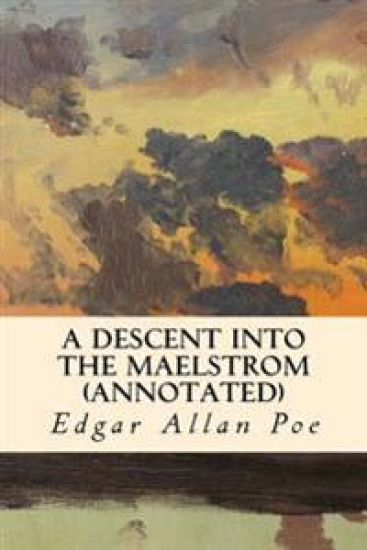
A Descent into the Maelstrom (annotated)

A Descent into the Maelstrom (annotated)

Edgar Allan Poe

Createspace Independent Publishing Platform
2016
nidottu
"A Descent into the Maelstr m" is an 1841 short story by Edgar Allan Poe. In the tale, a man recounts how he survived a shipwreck and a whirlpool. It has been grouped with Poe's tales of ratiocination and also labeled an early form of science fiction. The story's opening bears a similarity to Samuel Taylor Coleridge's The Rime of the Ancient Mariner (1798): in both, an excited old man tells his story of shipwreck and survival. The tale is one of sensation, emphasizing the narrator's thoughts and feelings, especially his terror of being killed in the whirlpool. The narrator uses his reasoning skills to survive and the story is considered one of Poe's early examples of science fiction.
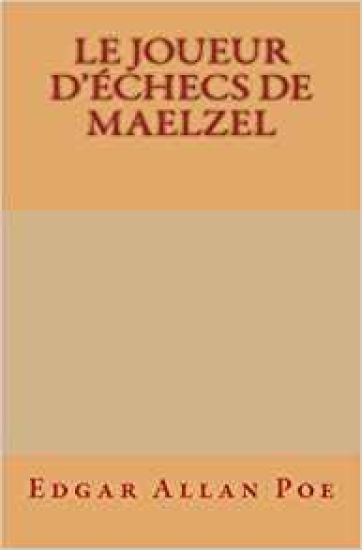
Le Joueur d'échecs de Maelzel

Le Joueur d'échecs de Maelzel

Edgar Allan Poe

Createspace Independent Publishing Platform
2016
nidottu
Aucune exhibition du m me genre n'a jamais peut- tre autant excit l'attention publique que le Joueur d' checs de Maelzel. Partout o il s'est fait voir, il a t , pour toutes les personnes qui pensent, l'objet d'une intense curiosit .
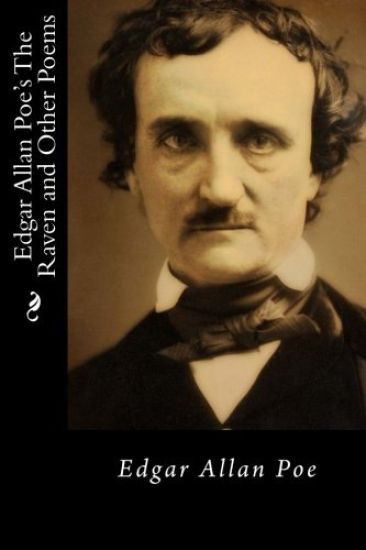
Edgar Allan Poe's The Raven and Other Poems

Edgar Allan Poe's The Raven and Other Poems

Edgar Allan Poe

Createspace Independent Publishing Platform
2016
nidottu
Edgar Allan Poe ( January 19, 1809 - October 7, 1849) was an American writer, editor, and literary critic. Poe is best known for his poetry and short stories, particularly his tales of mystery and the macabre. Widely regarded as a central figure of Romanticism in the United States and American literature as a whole, he was one of the country's earliest practitioners of the short story. Poe is generally considered the inventor of the detective fiction genre and is further credited with contributing to the emerging genre of science fiction. He was the first well-known American writer to try to earn a living through writing alone, resulting in a financially difficult life and career. Born in Boston, Poe was the second child of two actors. His father abandoned the family in 1810, and his mother died the following year. Thus orphaned, the child was taken in by John and Frances Allan, of Richmond, Virginia. Although they never formally adopted him, Poe was with them well into young adulthood. Tension developed later as John Allan and Edgar repeatedly clashed over debts, including those incurred by gambling, and the cost of secondary education for the young man. Poe attended the University of Virginia for one semester but left due to lack of money. Poe quarreled with Allan over the funds for his education and enlisted in the Army in 1827 under an assumed name. It was at this time his publishing career began, albeit humbly, with an anonymous collection of poems, Tamerlane and Other Poems (1827), credited only to "a Bostonian". With the death of Frances Allan in 1829, Poe and Allan reached a temporary rapprochement. Later failing as an officer's cadet at West Point and declaring a firm wish to be a poet and writer, Poe parted ways with John Allan. Poe switched his focus to prose and spent the next several years working for literary journals and periodicals, becoming known for his own style of literary criticism. His work forced him to move among several cities, including Baltimore, Philadelphia, and New York City. In Baltimore in 1835, he married Virginia Clemm, his 13-year-old cousin. In January 1845 Poe published his poem, "The Raven", to instant success. His wife died of tuberculosis two years after its publication. For years, he had been planning to produce his own journal, The Penn (later renamed The Stylus), though he died before it could be produced. On October 7, 1849, at age 40, Poe died in Baltimore; the cause of his death is unknown and has been variously attributed to alcohol, brain congestion, cholera, drugs, heart disease, rabies, suicide, tuberculosis, and other agents. Poe and his works influenced literature in the United States and around the world, as well as in specialized fields, such as cosmology and cryptography. Poe and his work appear throughout popular culture in literature, music, films, and television. A number of his homes are dedicated museums today. The Mystery Writers of America present an annual award known as the Edgar Award for distinguished work in the mystery genre.