
Kirjailija
Edgar Allan Poe
Kirjat ja teokset yhdessä paikassa: 2 091 kirjaa, julkaisuja vuosilta 1840–2027, suosituimpiin kuuluu Heureka ja muita kirjoituksia. Vertaile teosten hintoja ja tarkista saatavuus suomalaisista kirjakaupoista.
Nimi esiintyy myös muodoissa: Edgar-Allan Poe
2 091 kirjaa
Kirjojen julkaisuvuodet: 1840–2027.

La historia presenta a un narrador an nimo obsesionado con el ojo enfermo (al que llama "ojo de buitre") de un anciano con el cual convive, hasta que cierto d a decide asesinarlo. El crimen es estudiado cuidadosamente y tras ser perpetrado, el cad ver es despedazado y escondido bajo las tablas del suelo de la casa. La polic a acude a la misma y el asesino acaba delat ndose a s mismo, imaginando alucinadamente que el coraz n del viejo se ha puesto a latir bajo la tarima.

The Narrative of Arthur Gordon Pym of Nantucket
Edgar Allan Poe
Createspace Independent Publishing Platform
2016
nidottu
The Narrative of Arthur Gordon Pym of Nantucket (1838) is the only complete novel written by American writer Edgar Allan Poe. The work relates the tale of the young Arthur Gordon Pym, who stows away aboard a whaling ship called the Grampus. Various adventures and misadventures befall Pym, including shipwreck, mutiny, and cannibalism, before he is saved by the crew of the Jane Guy. Aboard this vessel, Pym and a sailor named Dirk Peters continue their adventures further south. Docking on land, they encounter hostile black-skinned natives before escaping back to the ocean. The novel ends abruptly as Pym and Peters continue toward the South Pole. The story starts out as a fairly conventional adventure at sea, but it becomes increasingly strange and hard to classify. Poe, who intended to present a realistic story, was inspired by several real-life accounts of sea voyages, and drew heavily from Jeremiah N. Reynolds and referenced the Hollow Earth theory. He also drew from his own experiences at sea. Analyses of the novel often focus on the potential autobiographical elements as well as hints of racism and the symbolism in the final lines of the work. Difficulty in finding literary success early in his short story-writing career inspired Poe to pursue writing a longer work. A few serialized installments of The Narrative of Arthur Gordon Pym of Nantucket were first published in the Southern Literary Messenger, though never completed. The full novel was published in July 1838 in two volumes. Some critics responded negatively to the work for being too gruesome and for cribbing heavily from other works, while others praised its exciting adventures. Poe himself later called it "a very silly book". Nevertheless, The Narrative of Arthur Gordon Pym of Nantucket became an influential work, notably for Herman Melville and Jules Verne.
The Raven (Richard Foster Classics)
Edgar Allan Poe
Createspace Independent Publishing Platform
2016
nidottu
The Black Cat (Richard Foster Classics)
Edgar Allan Poe
Createspace Independent Publishing Platform
2016
nidottu

Poems 1824 - 1827
Dimitrios Spyridon Chytiris; Edgar Allan Poe
Createspace Independent Publishing Platform
2016
nidottu
Edgar Allan Poe (January 19, 1809 - October 7, 1849) was an American writer, editor, and literary critic. Poe is best known for his poetry and short stories, particularly his tales of mystery and the macabre. Widely regarded as a central figure of Romanticism in the United States and American literature as a whole, he was one of the country's earliest practitioners of the short story. Poe is generally considered the inventor of the detective fiction genre and is further credited with contributing to the emerging genre of science fiction. He was the first well-known American writer to try to earn a living through writing alone, resulting in a financially difficult life and career. Born in Boston, Poe was the second child of two actors. His father abandoned the family in 1810, and his mother died the following year. Thus orphaned, the child was taken in by John and Frances Allan, of Richmond, Virginia. Although they never formally adopted him, Poe was with them well into young adulthood. Tension developed later as John Allan and Edgar repeatedly clashed over debts, including those incurred by gambling, and the cost of secondary education for the young man. Poe attended the University of Virginia for one semester but left due to lack of money. Poe quarreled with Allan over the funds for his education and enlisted in the Army in 1827 under an assumed name. It was at this time his publishing career began, albeit humbly, with an anonymous collection of poems, Tamerlane and Other Poems (1827), credited only to "a Bostonian". With the death of Frances Allan in 1829, Poe and Allan reached a temporary rapprochement. Later failing as an officer's cadet at West Point and declaring a firm wish to be a poet and writer, Poe parted ways with John Allan. Poe switched his focus to prose and spent the next several years working for literary journals and periodicals, becoming known for his own style of literary criticism. His work forced him to move among several cities, including Baltimore, Philadelphia, and New York City. In Baltimore in 1835, he married Virginia Clemm, his 13-year-old cousin. In January 1845 Poe published his poem, "The Raven", to instant success. His wife died of tuberculosis two years after its publication. For years, he had been planning to produce his own journal, The Penn (later renamed The Stylus), though he died before it could be produced. On October 7, 1849, at age 40, Poe died in Baltimore; the cause of his death is unknown and has been variously attributed to alcohol, brain congestion, cholera, drugs, heart disease, rabies, suicide, tuberculosis, and other agents. Poe and his works influenced literature in the United States and around the world, as well as in specialized fields, such as cosmology and cryptography. Poe and his work appear throughout popular culture in literature, music, films, and television. A number of his homes are dedicated museums today. The Mystery Writers of America present an annual award known as the Edgar Award for distinguished work in the mystery genre.
Poems 1831 - 1836
Dimitrios Spyridon Chytiris; Edgar Allan Poe
Createspace Independent Publishing Platform
2016
nidottu
Edgar Allan Poe ( January 19, 1809 - October 7, 1849) was an American writer, editor, and literary critic. Poe is best known for his poetry and short stories, particularly his tales of mystery and the macabre. Widely regarded as a central figure of Romanticism in the United States and American literature as a whole, he was one of the country's earliest practitioners of the short story. Poe is generally considered the inventor of the detective fiction genre and is further credited with contributing to the emerging genre of science fiction. He was the first well-known American writer to try to earn a living through writing alone, resulting in a financially difficult life and career. Born in Boston, Poe was the second child of two actors. His father abandoned the family in 1810, and his mother died the following year. Thus orphaned, the child was taken in by John and Frances Allan, of Richmond, Virginia. Although they never formally adopted him, Poe was with them well into young adulthood. Tension developed later as John Allan and Edgar repeatedly clashed over debts, including those incurred by gambling, and the cost of secondary education for the young man. Poe attended the University of Virginia for one semester but left due to lack of money. Poe quarreled with Allan over the funds for his education and enlisted in the Army in 1827 under an assumed name. It was at this time his publishing career began, albeit humbly, with an anonymous collection of poems, Tamerlane and Other Poems (1827), credited only to "a Bostonian". With the death of Frances Allan in 1829, Poe and Allan reached a temporary rapprochement. Later failing as an officer's cadet at West Point and declaring a firm wish to be a poet and writer, Poe parted ways with John Allan. Poe switched his focus to prose and spent the next several years working for literary journals and periodicals, becoming known for his own style of literary criticism. His work forced him to move among several cities, including Baltimore, Philadelphia, and New York City. In Baltimore in 1835, he married Virginia Clemm, his 13-year-old cousin. In January 1845 Poe published his poem, "The Raven", to instant success. His wife died of tuberculosis two years after its publication. For years, he had been planning to produce his own journal, The Penn (later renamed The Stylus), though he died before it could be produced. On October 7, 1849, at age 40, Poe died in Baltimore; the cause of his death is unknown and has been variously attributed to alcohol, brain congestion, cholera, drugs, heart disease, rabies, suicide, tuberculosis, and other agents. Poe and his works influenced literature in the United States and around the world, as well as in specialized fields, such as cosmology and cryptography. Poe and his work appear throughout popular culture in literature, music, films, and television. A number of his homes are dedicated museums today. The Mystery Writers of America present an annual award known as the Edgar Award for distinguished work in the mystery genre.
Poems 1829 - 1830
Dimitrios Spyridon Chytiris; Edgar Allan Poe
Createspace Independent Publishing Platform
2016
nidottu
Edgar Allan Poe ( January 19, 1809 - October 7, 1849) was an American writer, editor, and literary critic. Poe is best known for his poetry and short stories, particularly his tales of mystery and the macabre. Widely regarded as a central figure of Romanticism in the United States and American literature as a whole, he was one of the country's earliest practitioners of the short story. Poe is generally considered the inventor of the detective fiction genre and is further credited with contributing to the emerging genre of science fiction. He was the first well-known American writer to try to earn a living through writing alone, resulting in a financially difficult life and career. Born in Boston, Poe was the second child of two actors. His father abandoned the family in 1810, and his mother died the following year. Thus orphaned, the child was taken in by John and Frances Allan, of Richmond, Virginia. Although they never formally adopted him, Poe was with them well into young adulthood. Tension developed later as John Allan and Edgar repeatedly clashed over debts, including those incurred by gambling, and the cost of secondary education for the young man. Poe attended the University of Virginia for one semester but left due to lack of money. Poe quarreled with Allan over the funds for his education and enlisted in the Army in 1827 under an assumed name. It was at this time his publishing career began, albeit humbly, with an anonymous collection of poems, Tamerlane and Other Poems (1827), credited only to "a Bostonian". With the death of Frances Allan in 1829, Poe and Allan reached a temporary rapprochement. Later failing as an officer's cadet at West Point and declaring a firm wish to be a poet and writer, Poe parted ways with John Allan. Poe switched his focus to prose and spent the next several years working for literary journals and periodicals, becoming known for his own style of literary criticism. His work forced him to move among several cities, including Baltimore, Philadelphia, and New York City. In Baltimore in 1835, he married Virginia Clemm, his 13-year-old cousin. In January 1845 Poe published his poem, "The Raven", to instant success. His wife died of tuberculosis two years after its publication. For years, he had been planning to produce his own journal, The Penn (later renamed The Stylus), though he died before it could be produced. On October 7, 1849, at age 40, Poe died in Baltimore; the cause of his death is unknown and has been variously attributed to alcohol, brain congestion, cholera, drugs, heart disease, rabies, suicide, tuberculosis, and other agents. Poe and his works influenced literature in the United States and around the world, as well as in specialized fields, such as cosmology and cryptography. Poe and his work appear throughout popular culture in literature, music, films, and television. A number of his homes are dedicated museums today. The Mystery Writers of America present an annual award known as the Edgar Award for distinguished work in the mystery genre.

The Tell-Tale Heart (Richard Foster Classics)
Edgar Allan Poe
Createspace Independent Publishing Platform
2016
nidottu
HarperCollins is proud to present its incredible range of best-loved, essential classics.

Oxford Bookworms Library: Level 2: The Murders in the Rue Morgue audio pack
Edgar Allan Poe
Oxford University Press
2016
muu
The most consistent of all series in terms of language control, length, and quality of story. David R. Hill, Director of the Edinburgh Project on Extensive Reading.
"Bon-Bon" is a comedic short story by Edgar Allan Poe, first published in December 1832 in the Philadelphia Saturday Courier. Originally called "The Bargain Lost", the story follows a man named Pierre Bon-Bon, who believes himself a profound philosopher, and his encounter with the Devil. The humor of the story is based on the verbal interchange between the two, which satirizes classical philosophers including Plato and Aristotle. The Devil reveals that he has eaten the souls of many of these philosophers. The story, which received moderate praise, was originally submitted by Poe as "The Bargain Lost", and was his entry to a writing contest. Though none of the five stories he submitted won the prize, the Courier printed them all, possibly without paying Poe for them. This early version of the story has many differences from later versions, which Poe first published as "Bon-Bon" in 1835.
The Gold-Bug is a classic American horror story by Edgar Allan Poe. Let me call myself, for the present, William Wilson. The fair page now lying before me need not be sullied with my real appellation. This has been already too much an object for the scorn-for the horror-for the detestation of my race.
William Wilson is classic American horror short story by Edgar Allan Poe that includes the following excerpt: "Let me call myself, for the present, William Wilson. The fair page now lying before me need not be sullied with my real appellation. This has been already too much an object for the scorn-for the horror-for the detestation of my race."
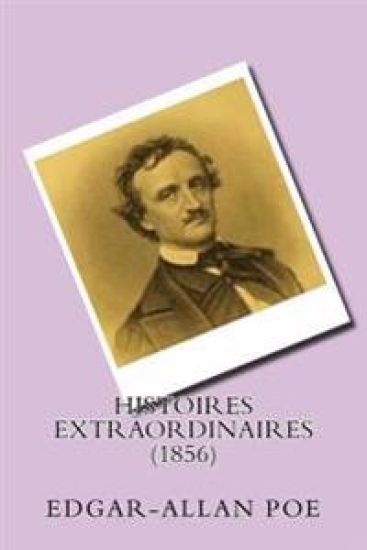
Histoires extraordinaires (1856)
Edgar-Allan Poe
Createspace Independent Publishing Platform
2016
nidottu
Extrait: I Dans ces derniers temps, un malheureux fut amen devant nos tribunaux, dont le front tait illustr d'un rare et singulier tatouage: Pas de chance Il portait ainsi au-dessus de ses yeux l' tiquette de sa vie, comme un livre son titre, et l'interrogatoire prouve que ce bizarre criteau tait cruellement v ridique. Il y a, dans l'histoire litt raire, des destin es analogues, de vraies damnations, -des hommes qui portent le mot guignon crit en caract res myst rieux dans les plis sinueux de leur front. L'Ange aveugle de l'expiation s'est empar d'eux et les fouette tour de bras pour l' dification des autres. En vain leur vie montre-t-elle des talents, des vertus, de la gr ce; la Soci t a pour eux un anath me sp cial, et accuse en eux les infirmit s que sa pers cution leur a donn es.-Que ne fit pas Hoffmann pour d sarmer la destin e, et que n'entreprit pas Balzac pour conjurer la fortune?-Existe-t-il donc une Providence diabolique qui pr pare le malheur d s le berceau, -qui jette avec pr m ditation des natures spirituelles et ang liques dans des milieux hostiles, comme des martyrs dans les cirques? Y a-t-il donc des mes sacr es, vou es l'autel, condamn es marcher la mort et la gloire travers leurs propres ruines?.... Edgar Allan Poe (Boston, 19 janvier 1809 - Baltimore, 7 octobre 1849) est un po te, romancier, nouvelliste, critique litt raire, dramaturge et diteur am ricain, ainsi que l'une des principales figures du romantisme am ricain. Connu surtout pour ses contes - genre dont la bri vet lui permet de mettre en valeur sa th orie de l'effet, suivant laquelle tous les l ments du texte doivent concourir la r alisation d'un effet unique- il a donn la nouvelle ses lettres de noblesse et est consid r comme l'inventeur du roman policier. Nombre de ses r cits pr figurent les genres de la science-fiction et du fantastique. Charles-Pierre Baudelaire est un po te fran ais, n Paris le 9 avril 1821 et mort dans la m me ville, rue du D me, dans le 16e arrondissement, le 31 ao t 1867 ( 46 ans). Dante d'une poque d chue selon le mot de Barbey d'Aurevilly, nourri de romantisme, tourn vers le classicisme, la crois e entre le Parnasse et le symbolisme, chantre de la modernit , il occupe une place consid rable parmi les po tes fran ais pour un recueil certes bref au regard de l'oeuvre de son contemporain Victor Hugo (Baudelaire s'ouvrit son diteur de sa crainte que son volume ne ressembl t trop une plaquette...), mais qu'il aura fa onn sa vie durant: Les Fleurs du mal.