
Kirjailija
Elizabeth Gaskell
Kirjat ja teokset yhdessä paikassa: 268 kirjaa, julkaisuja vuosilta 1976–2026, suosituimpiin kuuluu Ruth. Vertaile teosten hintoja ja tarkista saatavuus suomalaisista kirjakaupoista.
268 kirjaa
Kirjojen julkaisuvuodet: 1976–2026.
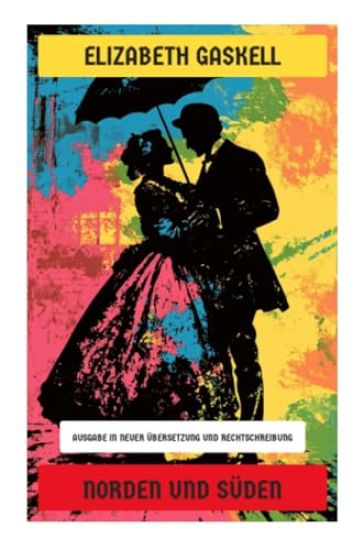
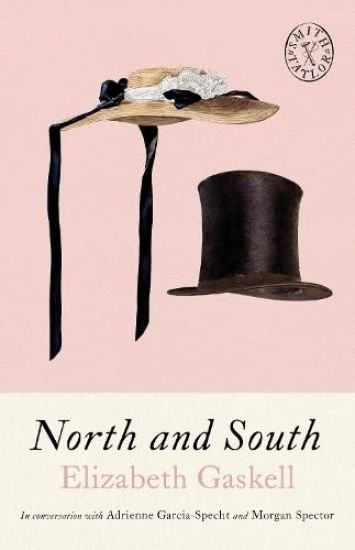
Set amid the rapidly changing social, spiritual, and moral landscape of the industrial revolution, North and South is a forceful, brilliant, and romantic novel about freedom and the cost of profit. When Margaret Hale, a minister’s daughter, relocates with her family to Milton in the north of England she witnesses firsthand the brutal working conditions in Milton’s factories and mills. Her liberal education has given her strong convictions, but little common sense, and her pity finds a mostly unsympathetic ear among the gruff mill workers and their families. Magaret is most vexed by a local industrialist and mill-owner, John Thornton, whom she considers contemptuous and bull-headed. But through her clashes with Thornton and her growing affinity for the workers and their plight for survival, Margaret comes to see the world as a much more complicated place, and that her earlier pity was not charity but a kind of arrogance. Thunderously philosophical and compulsively readable, North and South is a vivid portrayal of not only unthinking conformity or selfish individualism, but the power of vulnerability and change.
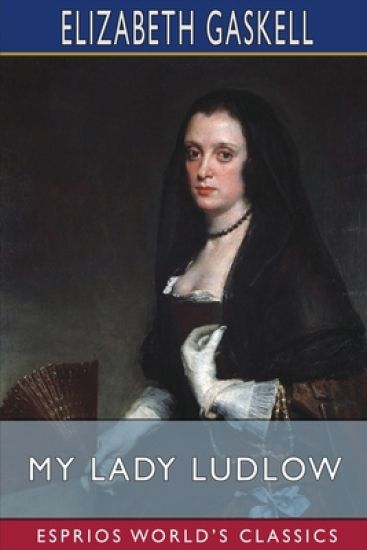
My Lady Ludlow is a novel by Elizabeth Gaskell. It appeared in the magazine Household Words in 1858, and was republished in Round the Sofa in 1859, with framing passages added at the start and end. It recounts the daily lives of the widowed Countess of Ludlow of Hanbury and the spinster Miss Galindo, whose father was a Baronet, and their caring for other single women and girls. It is also concerned with Lady Ludlow's man of business, Mr. Horner, and a poacher's son named Harry Gregson whose education he provides for.
The Life of Charlotte Bront is the posthumous biography of Charlotte Bront by fellow novelist Elizabeth Gaskell. The first edition was published in 1857. A major source was the hundreds of letters sent by Bront to her lifelong friend Ellen Nussey. Gaskell had to deal with rather sensitive issues, toning down some of her material: in the case of her description of the Clergy Daughters' School, attended by Charlotte and her sisters, this was to avoid legal action from the Rev. William Carus Wilson, the founder of the school. The published text does not go so far as to blame him for the deaths of two Bront sisters, but even so the Carus Wilson family published a rebuttal with the title "A refutation of the statements in 'The life of Charlotte Bronte, ' regarding the Casterton Clergy Daughters' School, when at Cowan Bridge".
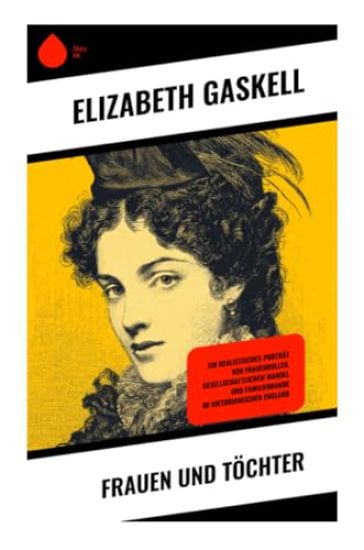
Elizabeth Cleghorn Gaskell, (29 September 1810 - 12 November 1865), often referred to as Mrs. Gaskell, was an English novelist and short story writer. Her novels offer a detailed portrait of the lives of many strata of Victorian society, including the very poor, and are of interest to social historians as well as lovers of literature. Her first novel, Mary Barton, was published in 1848. Gaskell's The Life of Charlotte Bront , published in 1857, was the first biography of Bront . Some of Gaskell's best known novels are Cranford (1851-53), North and South (1854-55), and Wives and Daughters (1865).
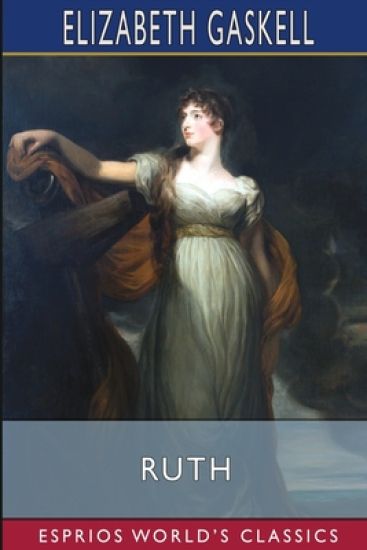
Ruth is a novel by Elizabeth Gaskell, first published in three volumes in 1853. Ruth is a young orphan girl working in a respectable sweatshop for the overworked Mrs. Mason. She is selected to go to a ball to repair torn dresses. At the ball she meets the aristocratic Henry Bellingham, a rake figure who is instantly attracted to her. They meet again by chance and form a secret friendship; on an outing together, they are spotted by Mrs. Mason who, fearing for her shop's reputation, dismisses Ruth. Alone in the world, Ruth is whisked away by Bellingham to London where she becomes a fallen woman.
The Poor Clare is a short story by English Victorian writer Elizabeth Gaskell. First serialized in three installments in 1856 Charles Dickens' popular magazine Household Words, The Poor Clare is a gothic ghost story about a young woman unwittingly cursed by her own grandmother. The Story is narrated by an unnamed young lawyer from London, reflecting on the "extraordinary incidents" which he experienced in his youth.
A Dark Night's Work is an 1863 novel by Elizabeth Gaskell. It was first published serially in Charles Dickens's magazine All the Year Round. The word "dark" was added to the original title by Dickens against Gaskell's wishes. Dickens felt that the altered title would be more striking. The story centers on a country lawyer, Edward Wilkins, and his daughter Ellinor. Edward has an artistic and literary personality, unsuited to his social position as the son of a successful lawyer who takes over his father's practice in the provincial town of Hamley. His legal representation of the local gentry and nobility leads him to try fitting into their social circles, only to be mocked and treated with derision.
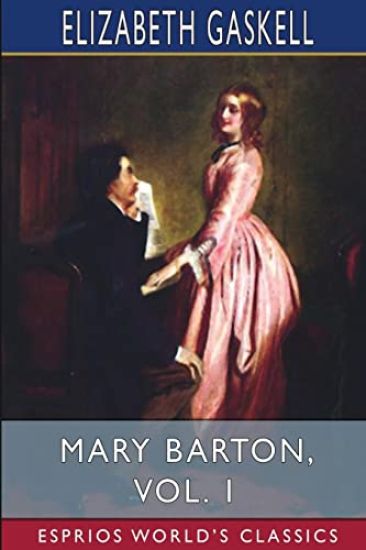
Elizabeth Cleghorn Gaskell n e Stevenson (1810-1865), often referred to simply as Mrs. Gaskell, was an English novelist and short story writer during the Victorian era. She is perhaps best known for her biography of Charlotte Bront . Her novels offer a detailed portrait of the lives of many strata of society, including the very poor, and as such are of interest to social historians as well as lovers of literature. She married William Gaskell, the minister at Cross Street Unitarian Chapel in Manchester. They settled in Manchester, where the industrial surroundings would offer inspiration for her novels. Her first novel, Mary Barton: A Tale of Manchester Life, was published anonymously in 1848. The best known of her remaining novels are Cranford (1853), North and South (1855), and Wives and Daughters (1866).
Elizabeth Cleghorn Gaskell n e Stevenson (1810-1865), often referred to simply as Mrs. Gaskell, was an English novelist and short story writer during the Victorian era. She is perhaps best known for her biography of Charlotte Bront . Her novels offer a detailed portrait of the lives of many strata of society, including the very poor, and as such are of interest to social historians as well as lovers of literature. She married William Gaskell, the minister at Cross Street Unitarian Chapel in Manchester. They settled in Manchester, where the industrial surroundings would offer inspiration for her novels. Her first novel, Mary Barton: A Tale of Manchester Life, was published anonymously in 1848. The best known of her remaining novels are Cranford (1853), North and South (1855), and Wives and Daughters (1866).
Elizabeth Cleghorn Gaskell n e Stevenson (1810-1865), often referred to simply as Mrs. Gaskell, was an English novelist and short story writer during the Victorian era. She is perhaps best known for her biography of Charlotte Bront . Her novels offer a detailed portrait of the lives of many strata of society, including the very poor, and as such are of interest to social historians as well as lovers of literature. She married William Gaskell, the minister at Cross Street Unitarian Chapel in Manchester. They settled in Manchester, where the industrial surroundings would offer inspiration for her novels. Her first novel, Mary Barton: A Tale of Manchester Life, was published anonymously in 1848. The best known of her remaining novels are Cranford (1853), North and South (1855), and Wives and Daughters (1866).
Elizabeth Cleghorn Gaskell n e Stevenson (1810-1865), often referred to simply as Mrs. Gaskell, was an English novelist and short story writer during the Victorian era. She is perhaps best known for her biography of Charlotte Bront . Her novels offer a detailed portrait of the lives of many strata of society, including the very poor, and as such are of interest to social historians as well as lovers of literature. She married William Gaskell, the minister at Cross Street Unitarian Chapel in Manchester. They settled in Manchester, where the industrial surroundings would offer inspiration for her novels. Her first novel, Mary Barton: A Tale of Manchester Life, was published anonymously in 1848. The best known of her remaining novels are Cranford (1853), North and South (1855), and Wives and Daughters (1866).
Elizabeth Cleghorn Gaskell n e Stevenson (1810-1865), often referred to simply as Mrs. Gaskell, was an English novelist and short story writer during the Victorian era. She is perhaps best known for her biography of Charlotte Bront . Her novels offer a detailed portrait of the lives of many strata of society, including the very poor, and as such are of interest to social historians as well as lovers of literature. She married William Gaskell, the minister at Cross Street Unitarian Chapel in Manchester. They settled in Manchester, where the industrial surroundings would offer inspiration for her novels. Her first novel, Mary Barton: A Tale of Manchester Life, was published anonymously in 1848. The best known of her remaining novels are Cranford (1853), North and South (1855), and Wives and Daughters (1866).
Elizabeth Cleghorn Gaskell n e Stevenson (1810-1865), often referred to simply as Mrs. Gaskell, was an English novelist and short story writer during the Victorian era. She is perhaps best known for her biography of Charlotte Bront . Her novels offer a detailed portrait of the lives of many strata of society, including the very poor, and as such are of interest to social historians as well as lovers of literature. She married William Gaskell, the minister at Cross Street Unitarian Chapel in Manchester. They settled in Manchester, where the industrial surroundings would offer inspiration for her novels. Her first novel, Mary Barton: A Tale of Manchester Life, was published anonymously in 1848. The best known of her remaining novels are Cranford (1853), North and South (1855), and Wives and Daughters (1866).