

Kirjailija
Emile Zola
Kirjat ja teokset yhdessä paikassa: 2 184 kirjaa, julkaisuja vuosilta 1884–2026, suosituimpiin kuuluu Émile Zola Collection - The Ladies' Paradise. Vertaile teosten hintoja ja tarkista saatavuus suomalaisista kirjakaupoista.
Nimi esiintyy myös muodoissa: Émile Zola, Emile Zolá
2 184 kirjaa
Kirjojen julkaisuvuodet: 1884–2026.

En ese Paris febril y deslumbrante del Segundo Imperio todo el mundo se ocupaba de Nana, la nueva estrella del Teatro de Variedades. Bajo esa fama, ambicion desenfrenada, y sensualidad, se ocultaba una corriente de vejaciones, miseria, y sufrimientos. Simbolo de la decadencia de la sociedad Parisina, Nana se convierte tambien en el prototipo de la mujer fatal, la cortesana sin escrupulos, y cuyos atributos son sintomas de corrupcion que la perseguiran hasta su muerte. A pesar de la densidad de la novela, esta no nunca cansa; mas bien -como una ola imparable- guia al lector hasta una conclusion tan grafica que mesmeriza, ofende, pero a la vez, como literatura-hechiza y satisface.

El Vientre de Paris (Spanish Edition)
Emile Zola
Createspace Independent Publishing Platform
2017
nidottu
La obra pertenece al estilo literario denominado naturalismo en la que Zola describe entre frutas, verduras, carnes, pescados, embutidos y quesos, la vida cotidiana de la sociedad parisina en torno al nuevo mercado central de Les Halles de Par s, gigantesco edificio met lico con muros de cristal, que fue una de las construcciones parisinas m s relevantes del II Imperio, construido entre 1854 y 1870 por V ctor Baltard y derribado cien a os despu s. En este bodeg n literario Zola narra el regreso de Florent (quien ha vivido deportado en Cayena durante a os) a una ciudad en la que vivi su juventud y en la que se reencuentra con su hermano menor Quenu, casado con Lisa Macquart. Florent se dedica contra su voluntad a ejercer de inspector de pescado en el mercado central y encuentra en su tiempo libre su verdadera vocaci n, la docencia y la pol tica. Con un grupo de correligionarios conspirar contra el Segundo Imperio y, al final, sus actividades le conducir n a una nueva deportaci n.

El Vientre de Paris (Spanish Edition)
Emile Zola
Createspace Independent Publishing Platform
2017
nidottu
En este bodeg n literario Zola narra el regreso de Florent (quien ha vivido deportado en Cayena durante a os) a una ciudad en la que vivi su juventud y en la que se reencuentra con su hermano menor Quenu, casado con Lisa Macquart. Florent se dedica contra su voluntad a ejercer de inspector de pescado en el mercado central y encuentra en su tiempo libre su verdadera vocaci n, la docencia y la pol tica. Con un grupo de correligionarios conspirar contra el Segundo Imperio y, al final, sus actividades le conducir n a una nueva deportaci n.

d104e int gral. Dans la nuit du 23 au 24 juin 1875, apr s un mois entier de pluie ininterrompue, de terribles crues de la Garonne d vast rent des dizaines de communes, d truisirent 1 400 maisons Toulouse, et tu rent 209 personnes. Cette catastrophe a inspir mile Zola pour sa nouvelle L'Inondation le combat in gal des hommes contre les forces de la nature.

Les Romanciers Naturalistes. Balzac, Stendhal, Gustave Flaubert, Edmond Et Jules de Goncourt
Émile Zola
Hachette Livre - BNF
2017
pokkari

Germinal, the most famous work by Emile Zola, is the second workers' novel in the Rougon Macquart series. Like L'Assommoir, it depicts the condition of workers, in this case miners in Northern France. It is also a novel of social conflict and the class struggle.

Au Bonheur des Dames est un roman d' mile Zola publi en 1883, pr publi d s d cembre 1882 dans Gil Blas, le onzi me volume de la suite romanesque Les Rougon-Macquart. travers une histoire sentimentale, le roman entra ne le lecteur dans le monde des grands magasins, l'une des innovations du Second Empire (1852-1870). Raconte l'histoire d'un jeune Provincialat, Denise Baudu qui arrive Paris a t l'ajout parents Mort de l'aide. L'accompagnant ses deux jeunes fr res, Jean et Pepe. Si un magasin a couru le gars Les enfants qui avait autrefois le Do soutien promise. Denise avait travaill dans leur ville en tant que commis de magasin de v tements et son oncle esp rer que pour l'emploi dans le v tre, "The Old Elbeuf". Mais les petites entreprises dans cette r gion de Paris (situ juste au nord de l'Op ra) cette baisse par la concurrence d'un grand magasin, "Au Bonheur des Dames".

- La bibliographie de l'auteur - Dans les Contes a Ninon (parus en 1864, Zola a 24 ans) et les Nouveaux Contes a Ninon (1874), Zola expose tous ses talents, il joue de tous les registres, de tous les genres: le merveilleux, le fantastique, la satire, l'epopee, le recit realiste, l'autobiographie. Il y exploite tous les tons: l'humour, l'ironie, le pathetique, le serieux demonstratif, la colere. Ces volumes de contes sont une refraction de l'oeuvre entiere: ils resument dix annees de production litteraire et annoncent des themes, des figures et des formes que l'ecrivain developpera dans ses grands chefs-d'oeuvre. Entre contes et chroniques, sous le signe de la fantaisie comme du serieux, ces oeuvres de jeunesse montrent la richesse, l'ambiguite, la puissance d'imagination et d'expression qui donneront bientot leur prix aux romans a venir.

Extrait du roman: La chambre se trouvait peine clair e par la clart p le du cr puscule. Les rideaux des fen tres, demi cart s, laissaient voir les branches hautes des arbres, que rougissaient les derniers rayons du soleil. En bas, sur le boulevard des Invalides, des enfants jouaient, et leurs rires aigus montaient, adoucis et caressants. Le printemps qui suivit les terribles journ es de l'insurrection de f vrier eut des fra cheurs p n trantes. Les ti des soir es de mai gardent ainsi parfois les frissons de l'hiver. Des souffles frais agitaient les rideaux et apportaient les roulements lointains des voitures. Ici, tombait une m lancolie. Les meubles, vagues dans l'ombre, tachaient de noir les tentures claires; le tapis, rosaces bleues, p lissait peu peu. La nuit avait d j envahi le plafond et les coins de la pi ce. Biographie de l'auteur: mile Zola est un crivain et journaliste fran ais, n le 2 avril 1840 Paris, o il est mort le 29 septembre 1902 . Consid r comme le chef de file du naturalisme, c'est l'un des romanciers fran ais les plus populaires, les plus publi s, traduits et comment s au monde.

Les mysteres de Marseille: Roman
Emile Zola
Createspace Independent Publishing Platform
2017
nidottu
Extrait du Roman: Comme quoi Blanche de Cazalis s'enfuit avec Philippe Cayol. Vers la fin du mois de mai 184., un homme, d'une trentaine d'ann es, marchait rapidement dans un sentier du quartier Saint-Joseph, pr s des Aygalades. Il avait confi son cheval au m ger1 d'une campagne voisine, et il se dirigeait vers une grande maison carr e, solidement b tie, sorte de ch teau campagnard comme on en trouve beaucoup sur les coteaux de la Provence. L'homme fit un d tour pour viter le ch teau et alla s'asseoir au fond d'un bois de pins, qui s' tendait derri re l'habitation. L , cartant les branches, inquiet et fi vreux, il interrogea les sentiers du regard, semblant attendre quelqu'un avec impatience. Par moments, il se levait, faisait quelques pas, puis s'asseyait de nouveau en fr missant. Cet homme, haut de taille et de tournure trange, portait de larges favoris noirs. Son visage allong , creus de traits nergiques, avait une sorte de beaut violente et emport e. Biographie de L'auteur: mile Zola est un crivain et journaliste fran ais, n le 2 avril 1840 Paris, o il est mort le 29 septembre 1902 . Consid r comme le chef de file du naturalisme, c'est l'un des romanciers fran ais les plus populaires, les plus publi s, traduits et comment s au monde.

Full text. On a beautiful May day, in the French village of Saint-Jory, several miles up the Garonne from Toulouse, the Garonne floods, washing away all the bridges; ruining nearly two thousand houses; drowning hundreds; and leaving twenty thousand starving to death... This tragic fate of a well-to-do farming familyis an accurate description of the immediate impact this flood has on one household.
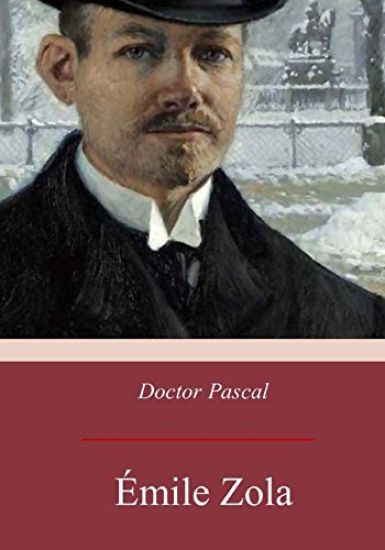
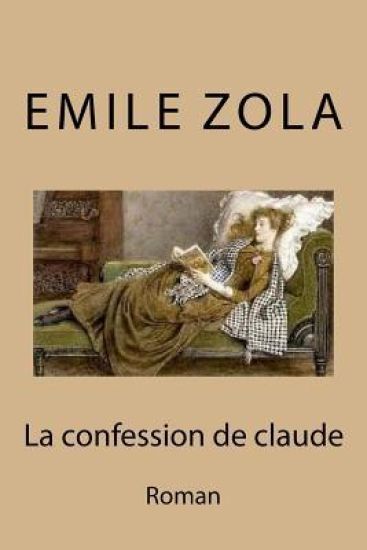


Piping Hot! (Pot-Bouille) - Illustrated
Émile Zola
Createspace Independent Publishing Platform
2017
nidottu
This is a new edition of "Piping Hot (Pot-Bouille): A Realistic Novel," originally published in 1887 by "Vizetelly & Co.," of London, England. Part of the project Immortal Literature Series of classic literature, this is a new edition of the classic work published in 1887-not a facsimile reprint. Obvious typographical errors have been carefully corrected and the entire text has been reset and redesigned by Pen House Editions to enhance readability, while respecting the original edition. "Piping Hot " (Pot-Bouille) follows the adventures of a young and ambitious man, Octave Mouret, who moves into a house on Rue de Choiseul, one of the immense "maisons bourgeoises" in Paris, in which several characters of the novel live and interact. In the beginning of the story, Octave Mouret meets Madame H douin, owner and director of a nearby shop, "The Ladies' Paradise," where Mouret is employed as a salesman. "Piping Hot " is a fascinating story of love and ambition which follows the private lives of a number of individuals who pursue different occupations while living under the same roof. About the Author: mile Fran ois Zola (born in Paris on April 2, 1840; died in Paris on September 29, 1902) was a journalist, a novelist, a playwright, and a political activist. He was one of the most influential French novelists of the 19th century and the founder of the literary and theatrical school of naturalism. Zola was a major figure in the political liberalization of France. mile Zola's works include novels, dramas, poetry, and criticism, among which is his famous "Les Rougon-Macquart" (1871-1893), a cycle of twenty novels which depict various aspects of life and society, such as "L'Assommoir" (1877), the seventh novel of the series, about the suffering of the Parisian working-class; "Nana" (1880), the ninth installment, which deals with prostitution; "The Ladies Paradise" (1883), the eleventh novel (original title: "Au Bonheur des Dames"), which focuses on Octave Mouret, who, in "Pot-Bouille," meets Caroline H douin, the owner of a small silk shop; and "Germinal" (1885), the thirteenth novel in the series, which depicts the mining industry and is considered by some as his masterpiece. "Piping Hot (Pot-Bouille)" was the tenth novel of the cycle and Zola's most sarcastic satire, which describes daily life in a newly constructed block of flats in late nineteenth-century Paris. Zola's open letter to French president F lix Faure, under the headline "J'Accuse... ," published on the front page of the newspaper "L'Aurore" on January 13, 1898, charging various French officials with a "terrible miscarriage of justice," reopened the case of the Jewish army officer, Captain Alfred Dreyfus, who had been sentenced to Devil's Island. For that, Zola was himself sentenced to a year in prison but fled to England, returning one year later after Dreyfus' name had been cleared. Dreyfus was eventually reinstated as an officer and publicly decorated with the Legion of Honor. Zola's open letter to French president F lix Faure, under the headline J'Accuse... , published on the front page of the newspaper L'Aurore on January 13, 1898, charging various French officials with a "terrible miscarriage of justice," reopened the case of the Jewish army officer, Captain Alfred Dreyfus, who had been sentenced to Devil's Island. For that, Zola was himself sentenced to a year in prison but fled to England, returning one year later after Dreyfus' name had been cleared. Dreyfus was eventually reinstated as an officer and publicly decorated with the Legion of Honor.

The Ladies' Paradise: A Realistic Novel
Émile Zola
Createspace Independent Publishing Platform
2017
nidottu
The Ladies' Paradise, originally "Au Bonheur des Dames," is the eleventh novel of the famous Rougon-Macquart (1871-1893) series of twenty novels written by mile Zola. It tells a rags-to-riches story about Denise Baudu, a poor young girl from the provinces, and Octave Mouret, the wealthy owner of the department store where Denise comes to work. The rise of the modern department store in late nineteenth-century Paris, the store as a symbol of capitalism of the modern city, and the bourgeois revolution tell us a fascinating story of love and ambition, while depicting a rich texture of Parisian society. Part of the project Immortal Literature Series of classic literature, this is a new edition of the classic work published in 1886 - not a facsimile reprint. Obvious typographical errors have been carefully corrected and the entire text has been reset and redesigned to enhance readability. About the Author: mile Fran ois Zola (1840-1902) was a journalist, a novelist, a playwright, and a political activist. He was one of the most influential French novelists of the 19th century and the founder of the literary and theatrical school of naturalism. Zola was a major figure in the political liberalization of France. mile Zola's works include novels, dramas, poetry, and criticism, among which is his famous Rougon-Macquart (1871-1893), a cycle of twenty novels which depict various aspects of life and society, such as "L'Assommoir" (1877), the seventh novel of the series, about the suffering of the Parisian working-class; "Nana" (1880), the ninth installment, which deals with prostitution; "Pot-Bouille" (1882), the tenth novel, and Zola's most sarcastic satire, which describes daily life in a newly constructed block of flats in late nineteenth-century Paris; and "Germinal" (1885), the thirteenth novel in the series, which depicts the mining industry and is considered by some as one of his masterpieces. "The Ladies Paradise," originally "Au Bonheur des Dames," one of his most relevant works, was the eleventh novel of the cycle. Zola's open letter to French president F lix Faure, under the headline J'Accuse... , published on the front page of the newspaper L'Aurore on January 13, 1898, charging various French officials with a "terrible miscarriage of justice," reopened the case of the Jewish army officer, Captain Alfred Dreyfus, who had been sentenced to Devil's Island. For that, Zola was himself sentenced to a year in prison but fled to England, returning one year later after Dreyfus' name had been cleared. Dreyfus was eventually reinstated as an officer and publicly decorated with the Legion of Honor.

Piping Hot! (Pot-Bouille) - Illustrated
Émile Zola
Createspace Independent Publishing Platform
2017
nidottu
This is a new edition of "Piping Hot (Pot-Bouille): A Realistic Novel," originally published in 1887 by "Vizetelly & Co.," of London, England. Part of the project Immortal Literature Series of classic literature, this is a new edition of the classic work published in 1887-not a facsimile reprint. Obvious typographical errors have been carefully corrected and the entire text has been reset and redesigned by Pen House Editions to enhance readability, while respecting the original edition. "Piping Hot " (Pot-Bouille) follows the adventures of a young and ambitious man, Octave Mouret, who moves into a house on Rue de Choiseul, one of the immense "maisons bourgeoises" in Paris, in which several characters of the novel live and interact. In the beginning of the story, Octave Mouret meets Madame H douin, owner and director of a nearby shop, "The Ladies' Paradise," where Mouret is employed as a salesman. "Piping Hot " is a fascinating story of love and ambition which follows the private lives of a number of individuals who pursue different occupations while living under the same roof. About the Author: mile Fran ois Zola (born in Paris on April 2, 1840; died in Paris on September 29, 1902) was a journalist, a novelist, a playwright, and a political activist. He was one of the most influential French novelists of the 19th century and the founder of the literary and theatrical school of naturalism. Zola was a major figure in the political liberalization of France. mile Zola's works include novels, dramas, poetry, and criticism, among which is his famous "Les Rougon-Macquart" (1871-1893), a cycle of twenty novels which depict various aspects of life and society, such as "L'Assommoir" (1877), the seventh novel of the series, about the suffering of the Parisian working-class; "Nana" (1880), the ninth installment, which deals with prostitution; "The Ladies Paradise" (1883), the eleventh novel (original title: "Au Bonheur des Dames"), which focuses on Octave Mouret, who, in "Pot-Bouille," meets Caroline H douin, the owner of a small silk shop; and "Germinal" (1885), the thirteenth novel in the series, which depicts the mining industry and is considered by some as his masterpiece. "Piping Hot (Pot-Bouille)" was the tenth novel of the cycle and Zola's most sarcastic satire, which describes daily life in a newly constructed block of flats in late nineteenth-century Paris. Zola's open letter to French president F lix Faure, under the headline "J'Accuse... ," published on the front page of the newspaper "L'Aurore" on January 13, 1898, charging various French officials with a "terrible miscarriage of justice," reopened the case of the Jewish army officer, Captain Alfred Dreyfus, who had been sentenced to Devil's Island. For that, Zola was himself sentenced to a year in prison but fled to England, returning one year later after Dreyfus' name had been cleared. Dreyfus was eventually reinstated as an officer and publicly decorated with the Legion of Honor. Zola's open letter to French president F lix Faure, under the headline J'Accuse... , published on the front page of the newspaper L'Aurore on January 13, 1898, charging various French officials with a "terrible miscarriage of justice," reopened the case of the Jewish army officer, Captain Alfred Dreyfus, who had been sentenced to Devil's Island. For that, Zola was himself sentenced to a year in prison but fled to England, returning one year later after Dreyfus' name had been cleared. Dreyfus was eventually reinstated as an officer and publicly decorated with the Legion of Honor.


Piping Hot! (Pot-Bouille) A Realistic Novel
Emile Zola
Createspace Independent Publishing Platform
2017
nidottu