Kirjojen hintavertailu – 12 859 827 kirjaa ja 27 kauppaa
Kirjailija
Emile Zola
Kirjat ja teokset yhdessä paikassa: 2 184 kirjaa, julkaisuja vuosilta 1884–2026, suosituimpiin kuuluu Émile Zola Collection - The Ladies' Paradise. Vertaile teosten hintoja ja tarkista saatavuus suomalaisista kirjakaupoista.
Nimi esiintyy myös muodoissa: Émile Zola, Emile Zolá
En 1856, Eug ne Rougon, un ancien avocat de province qui a contribu faire l'Empire et que l'Empire a fait, se sentant proche de sa disgr ce, pr f re prendre les devants et d missionner de la pr sidence du Conseil d'Etat. Mais ses amis ont besoin de lui, et sa chute les embarrasse. Ils s'inqui tent de le voir tromper son ennui par un projet de d frichement des Landes qui le conduirait une sorte d'exil, et parmi tous ceux qui travaillent son retour en gr ce la plus active est la troublante Clorinde qu'il a refus d' pouser. Dans la grande fresque des Rougon-Macquart, Son Excellence Eug ne Rougon, que Zola fait para tre en 1876, est le roman du pouvoir et des solidarit s d'int r ts qui appellent l'intrigue dans le grand monde de Paris o s'ourdissent les manoeuvres qui font et d font les carri res. Une fiction crite sur un ton de com die, sans histoire nettement dessin e, et qui s' carte de la mani re traditionnelle de l' crivain et du naturalisme: Il n'y a pas un mot de trop, crit Flaubert George Sand. C'est solide, et sans aucune blague.
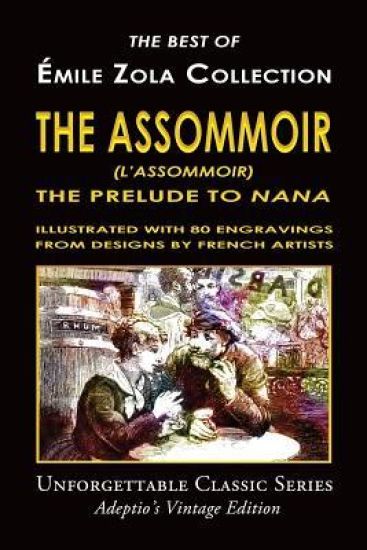
This is a new edition of "The Assommoir (L'Assommoir), The Prelude to 'Nana'," originally published in 1885 by Vizetelly & Co., of London, England. Part of Adeptio's Unforgettable Classic Series, this is not a facsimile reprint. Obvious typographical errors have been carefully corrected and the entire text has been reset and redesigned by Adeptio Editions to enhance readability, while respecting the original edition. The novel is principally the story of Gervaise Macquart, who is featured briefly in the first novel in the series, La Fortune des Rougon, running away to Paris with her shiftless lover Lantier to work as a washerwoman in a hot, busy laundry in one of the seedier areas of the city. "The Assommoir" is considered one of Zola's masterpieces The novel-a study of alcoholism and poverty in the working-class districts of Paris-was a huge commercial success and helped establish Zola's fame and reputation throughout France and the world. About the Author: mile- douard-Charles-Antoine Zola (1840-1902) was a journalist, a novelist, a playwright, and a political activist. He was one of the most influential French novelists of the 19th century and the founder of the literary and theatrical school of naturalism. Zola was a major figure in the political liberalization of France. During his youth in the south of France, Zola befriended Paul C zanne, his schoolmate and future renowned Post-Impressionist painter-best known for his incredibly varied painting style that influenced 20th century abstract art. Zola's first book, Contes Ninon (Stories for Ninon), was a collection of short stories dedicated to his imaginary childhood love, Ninon. He published his debut novel in 1865, La Confession de Claude, an autobiographical work that chronicled a man falling in love with a sex worker. The book drew the attention of the public as well as of the police, and it was banned in the social circles, causing Zola to lose his job. Zola went on to write Th r se Raquin (1867), his first major novel, which delves into intrigue, adultery, and murder; and the dark love story Madeleine F rat (1868), his last novel before he started his masterful Rougon-Macquart 20-novel series. mile Zola's works include novels, dramas, poetry, and criticism, among which is his famous Les Rougon-Macquart (1871-1893), a cycle of twenty novels which depict various aspects of life and society, such as The Fortune of the Rougons (La Fortune des Rougon) originally published in 1871 and the first novel of the series; The Rush For The Spoil (La Cur e), in 1872; The Conquest of Plassans (La Conqu te de Plassans), in 1874; The Assommoir - The Prelude to Nana (L'Assommoir), in 1877, the seventh novel of the series, about the suffering of the Parisian working-class; Nana (1880), the ninth installment, which deals with prostitution; Piping Hot (Pot-Bouille), in 1882, the tenth novel of the cycle and Zola's most sarcastic satire, which describes daily life in a newly constructed block of flats in late nineteenth-century Paris; The Ladies Paradise (1883), the eleventh novel (original title: Au Bonheur des Dames), which focuses on Octave Mouret, who, in Piping Hot , meets Caroline H douin, the owner of a small silk shop; Germinal (1885), the thirteenth novel in the series, which depicts the mining industry and is considered by some as his masterpiece; and The Soil (La Terre), in 1887-all published by Adeptio Editions. Zola's open letter to French president F lix Faure, under the headline J'Accuse... , published on the front page of the newspaper L'Aurore on January 13, 1898, charging various French officials with a "terrible miscarriage of justice," reopened the case of the Jewish army officer, Captain Alfred Dreyfus, who had been sentenced to Devil's Island. For that, Zola was himself sentenced to a year in prison but fled to England, returning one year later after Dreyfus' name had been cleared. Dreyfus was reinstated as officer and decora
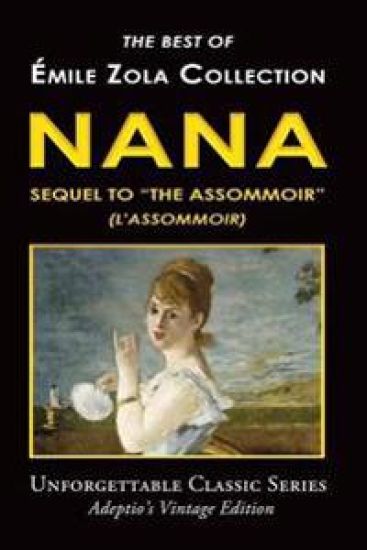
This is a new edition of "Nana, Sequel to The Assommoir (L'Assommoir)," originally published in 1880 by T. B. Peterson & Brothers, of Philadelphia, U. S. A. Part of Adeptio's Unforgettable Classic Series, this is not a facsimile reprint. Obvious typographical errors have been carefully corrected and the entire text has been reset and redesigned by Adeptio Editions to enhance readability, while respecting the original edition. Nana is a continuation of The Assommoir (L'Assommoir); but Nana in no way resembles The Assommoir. It is elaborated with the same care; it is as real, as intense, and as bold as its predecessor, but it places before us a totally different world, and with all the "brutal justice of a photograph." This time we are not conducted to the workshop and to the forge-to homes of poverty and drunkenness-or to the terrible places where the liquor that stupefies and embrutes is sold. mile Zola, instead; gives us in Nana, a careful study of the manners and life of that class, whose principal business in life is to be amused, which class, ordinary romance-writers designate as "men of elegant leisure." About the Author: mile- douard-Charles-Antoine Zola (1840-1902) was a journalist, a novelist, a playwright, and a political activist. He was one of the most influential French novelists of the 19th century and the founder of the literary and theatrical school of naturalism. Zola was a major figure in the political liberalization of France. During his youth in the south of France, Zola befriended Paul C zanne, his schoolmate and future renowned Post-Impressionist painter-best known for his incredibly varied painting style that influenced 20th century abstract art. Zola's first book, Contes Ninon (Stories for Ninon), was a collection of short stories dedicated to his imaginary childhood love, Ninon. He published his debut novel in 1865, La Confession de Claude, an autobiographical work that chronicled a man falling in love with a sex worker. The book drew the attention of the public as well as of the police, and it was banned in the social circles, causing Zola to lose his job. Zola went on to write Th r se Raquin (1867), his first major novel, which delves into intrigue, adultery, and murder; and the dark love story Madeleine F rat (1868), his last novel before he started his masterful Rougon-Macquart 20-novel series. mile Zola's works include novels, dramas, poetry, and criticism, among which is his famous Les Rougon-Macquart (1871-1893), a cycle of twenty novels which depict various aspects of life and society, such as The Fortune of the Rougons (La Fortune des Rougon) originally published in 1871 and the first novel of the series; The Rush For The Spoil (La Cur e), in 1872; The Conquest of Plassans (La Conqu te de Plassans), in 1874; The Assommoir - The Prelude to Nana (L'Assommoir), in 1877, the seventh novel of the series, about the suffering of the Parisian working-class; Nana (1880), the ninth installment, which deals with prostitution; Piping Hot (Pot-Bouille), in 1882, the tenth novel of the cycle and Zola's most sarcastic satire, which describes daily life in a newly constructed block of flats in late nineteenth-century Paris; The Ladies Paradise (1883), the eleventh novel (original title: Au Bonheur des Dames), which focuses on Octave Mouret, who, in Piping Hot , meets Caroline H douin, the owner of a small silk shop; Germinal (1885), the thirteenth novel in the series, which depicts the mining industry and is considered by some as his masterpiece; and The Soil (La Terre), in 1887-all published by Adeptio Editions. Zola's open letter to French president F lix Faure, under the headline J'Accuse... , published on the front page of the newspaper L'Aurore on January 13, 1898, charging various French officials with a "terrible miscarriage of justice," reopened the case of the Jewish army officer, Captain Alfred Dreyfus, who had been sentenced to Devil's Island.
Th r se Raquin is a novel (first published in 1867) and a play (first performed in 1873) by the French writer mile Zola. The novel was originally published in serial format in the journal L'Artiste and in book format in December of the same year.
One of Zola's most famous realistic novels, Therese Raquin is a clinically observed, sinister tale of adultery and murder among the lower classes in nineteenth-century Parisian society. Set in the claustrophobic atmosphere of a dingy haberdasher's shop in the passage du Pont-Neuf in Paris, this powerful novel tells how the heroine and her lover, Laurent, kill her husband, Camille, but are subsequently haunted by visions of the dead man and prevented from enjoying the fruits of their crime. Zola's shocking tale dispassionately dissects the motivations of his characters--mere "human beasts", who kill in order to satisfy their lust--and stands as a key manifesto of the French Naturalist movement, of which the author was the founding father. Published in 1867, this is Zola's most important work before the Rougon-Macquart series and introduces many of the themes that can be traced through the later novel cycle.
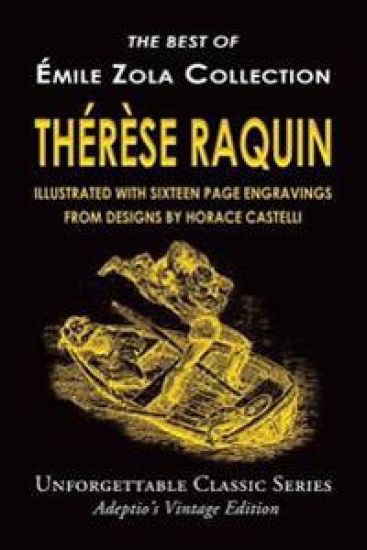
This is a new edition of "Th r se Raquin," originally published in 1887 by Vizetelly & Co., of London, England. Part of Adeptio's Unforgettable Classic Series, this is not a facsimile reprint. Obvious typographical errors have been carefully corrected and the entire text has been reset and redesigned by Adeptio Editions to enhance readability, while respecting the original edition. Th r se Raquin tells the story of a young woman, unhappily married to her first cousin by an overbearing aunt who may seem to be well-intentioned but in many ways is deeply selfish. Th r se's husband, Camille, is sickly and egocentric, and when the opportunity arises, Th r se enters into a turbulent and sordidly passionate affair with one of Camille's friends, Laurent. Th r se Raquin is considered one of Zola's masterpieces The novel was a huge commercial success and helped establish Zola's fame and reputation throughout France and the world. About the Author: mile- douard-Charles-Antoine Zola (1840-1902) was a journalist, a novelist, a playwright, and a political activist. He was one of the most influential French novelists of the 19th century and the founder of the literary and theatrical school of naturalism. Zola was a major figure in the political liberalization of France. During his youth in the south of France, Zola befriended Paul C zanne, his schoolmate and future renowned Post-Impressionist painter-best known for his incredibly varied painting style that influenced 20th century abstract art. Zola's first book, Contes Ninon (Stories for Ninon), was a collection of short stories dedicated to his imaginary childhood love, Ninon. He published his debut novel in 1865, La Confession de Claude, an autobiographical work that chronicled a man falling in love with a sex worker. The book drew the attention of the public as well as of the police, and it was banned in the social circles, causing Zola to lose his job. Zola went on to write Th r se Raquin (1867), his first major novel, which delves into intrigue, adultery, and murder; and the dark love story Madeleine F rat (1868), his last novel before he started his masterful Rougon-Macquart 20-novel series. mile Zola's works include novels, dramas, poetry, and criticism, among which is his famous Les Rougon-Macquart (1871-1893), a cycle of twenty novels which depict various aspects of life and society, such as The Fortune of the Rougons (La Fortune des Rougon) originally published in 1871 and the first novel of the series; The Rush For The Spoil (La Cur e), in 1872; The Conquest of Plassans (La Conqu te de Plassans), in 1874; The Assommoir - The Prelude to Nana (L'Assommoir), in 1877, the seventh novel of the series, about the suffering of the Parisian working-class; Nana (1880), the ninth installment, which deals with prostitution; Piping Hot (Pot-Bouille), in 1882, the tenth novel of the cycle and Zola's most sarcastic satire, which describes daily life in a newly constructed block of flats in late nineteenth-century Paris; The Ladies Paradise (1883), the eleventh novel (original title: Au Bonheur des Dames), which focuses on Octave Mouret, who, in Piping Hot , meets Caroline H douin, the owner of a small silk shop; Germinal (1885), the thirteenth novel in the series, which depicts the mining industry and is considered by some as his masterpiece; and The Soil (La Terre), in 1887-all published by Adeptio Editions. Zola's open letter to French president F lix Faure, under the headline J'Accuse... , published on the front page of the newspaper L'Aurore on January 13, 1898, charging various French officials with a "terrible miscarriage of justice," reopened the case of the Jewish army officer, Captain Alfred Dreyfus, who had been sentenced to Devil's Island. For that, Zola was himself sentenced to a year in prison but fled to England, returning one year later after Dreyfus' name had been cleared. Dreyfus was reinstated as an officer and publicly decora
mile Zola: Lourdes Edition Holzinger. Taschenbuch Berliner Ausgabe, 2017 Durchgesehener Neusatz mit einer Biographie des Autors bearbeitet und eingerichtet von Michael Holzinger Erstdruck: 1894. Hier in der bersetzung von Wilhelm Lilienthal, Verlag von Th. Knaur Nachf., Berlin 1894. Herausgeber der Reihe: Michael Holzinger Reihengestaltung: Viktor Harvion Umschlaggestaltung unter Verwendung des Bildes: James Tissot, Portrait eines Pilgers, 1894 Gesetzt aus der Minion Pro, 11 pt.
Full text. Quote: Everything insensibly tended towards their love, plunged them more and more deeply into a passion which they bore away with them whenever they parted, which was ever with them, which formed, as it were the only atmosphere they could breathe. And their excuse was their honesty; with eyes wide open they played this comedy of affection; not even a handclasp did they allow each other and their restraint infused unalloyed delight into the simple greetings with which they met.
Au bout de la rue Gu n gaud, lorsqu'on vient des quais, on trouve le passage du Pont-Neuf, une sorte de corridor troit et sombre qui va de la rue Mazarine la rue de Seine. Ce passage a trente pas de long et deux de large, au plus; il est pav de dalles jaun tres, us es, descell es, suant toujours une humidit acre; le vitrage qui le couvre, coup angle droit, est noir de crasse.
Full text. The Masterpiece is the tragic story of Claude Lantier, an ambitious and talented young artist who has come from the provinces to conquer Paris but is conquered instead by the flaws of his own genius. Set in the 1860s and 1870s, it is the most autobiographical of the twenty novels in Zola's Rougon-Macquart series. It provides a unique insight into Zola's career as a writer and his relationship with Cezanne, a friend since their schooldays in Aix-en-Provence. It also presents a well-documented account of the turbulent Bohemian world in which the Impressionists came to prominence despite the conservatism of the Academy and the ridicule of the general public.
texte int gral. Le moulin du p re Merlier, par cette belle soir e d' t , tait en grande f te. Dans la cour, on avait mis trois tables, plac es bout bout, et qui attendaient les convives. Tout le pays savait qu'on devait fiancer, ce jour-l , la fille Merlier, Fran oise, avec Dominique. Un mois encore et leurs noces seraient c l br es. H las, l'horizon, un sanglant orage se pr pare. Car les Prussiens sont l , qui marchent tout droit vers le paisible moulin...
d104e int gral. Une plong e dans le monde de l'art et des artistes, travers le portrait d'un peintre maudit, Claude Lantier, dont le personnage rappelle fortement Paul C zanne, grand ami de Zola. Extrait: Vous autres, si vous ratez une oeuvre, vous en tes quittes pour vous efforcer d'en faire une meilleure, personne ne vous accable; tandis que nous, les vieux, nous qui avons donn notre mesure, qui sommes forc s d' tre gaux nous-m mes, sinon de progresser, nous ne pouvons faiblir, sans culbuter dans la fosse commune... Va donc, homme c l bre, grand artiste, mange-toi la cervelle, br le ton sang, pour monter encore, toujours plus haut, toujours plus haut (...); et si tu sens que tu d clines, eh bien, ach ve de te briser, en roulant dans l'agonie de ton talent qui n'est plus de l' poque, dans l'oubli o tu es de tes oeuvres immortelles, perdu de ton effort impuissant cr er davantage