Kirjailija
Emile Zola
Kirjat ja teokset yhdessä paikassa: 2 184 kirjaa, julkaisuja vuosilta 1884–2026, suosituimpiin kuuluu Émile Zola Collection - The Ladies' Paradise. Vertaile teosten hintoja ja tarkista saatavuus suomalaisista kirjakaupoista.
Nimi esiintyy myös muodoissa: Émile Zola, Emile Zolá
2 184 kirjaa
Kirjojen julkaisuvuodet: 1884–2026.
This is a new edition of "Germinal," originally published in 1895 by Leonard Smithers for The Lutetian Society, of London, translated by Havelock Ellis. Part of the project Immortal Literature Series of classic literature, this is a new edition of the classic work published in 1895-not a facsimile reprint. Obvious typographical errors have been carefully corrected and the entire text has been reset and redesigned by Pen House Editions to enhance readability, while respecting the original edition. "Germinal," a bleak but nevertheless fascinatingly realistic and intriguing novel, tells the story of a coal-mining community in mid-nineteenth-century France. The main protagonist is a young man, tienne Lantier, who arrives at the fictional town of Montsou, in northern France, near the Belgium border, looking for a job. He finds work as a miner, having to labor long hours under miserable conditions. Passionate about socialism, and seeing the hopeless lives of his fellow miners-having to put up with reduced wages, harsh working conditions, and hunger-he ends up leading them to a violent strike. Thanks to Leonard Smithers (1861-1907)-a London publisher associated with the Decadent movement-and his Lutetian Society-a secret literary society-translators such as Havelock Ellis were able to provide British readers with translations of some of mile Zola's controversial novels, aiming at expanding the cultural horizons of the few lucky readers who had access to them. Considered by the overwhelming majority of critics as the best translator of Zola's "Germinal," Havelock Ellis (1859-1939) was a social activist, a physician and a psychologist, whose best-known works concern sexuality and criminology. In 1890 he published "The Criminal," a remarkable work on criminal anthropology. In 1897, he co-authored, with John Addington Symonds, "Sexual Inversion," the first medical text in English about homosexuality, another of his masterpieces. About the Author: mile Fran ois Zola (born in Paris in 1840; died in Paris in 1902) was a journalist, a novelist, a playwright, and a political activist. He was one of the most influential French novelists of the 19th century and the founder of the literary and theatrical school of naturalism. Zola was a major figure in the political liberalization of France. mile Zola's works include novels, dramas, poetry, and criticism, among which is his famous "Les Rougon-Macquart" (1871-1893), a cycle of twenty novels which depict various aspects of life and society, such as "The Fortune of the Rougons," (1871), the first of the series (original title: "La Fortune des Rougon"); "L'Assommoir" (1877), the seventh novel of the series, about the suffering of the Parisian working-class; "Nana" (1880), the ninth installment, which deals with prostitution; "Piping Hot ," the translation of "Pot-Bouille" (1882), the tenth novel of the cycle and Zola's most sarcastic satire, which describes daily life in a newly constructed block of flats in late nineteenth-century Paris; "The Ladies Paradise" (1883), the eleventh novel (original title: "Au Bonheur des Dames"), which focuses on Octave Mouret, who, in "Pot-Bouille," meets Caroline H douin, the owner of a small silk shop; and "Germinal" (1885), the thirteenth novel in the series, considered by some as his masterpiece. Zola's open letter to French president F lix Faure, under the headline "J'Accuse... ," published on January, 1898, charging various French officials with a "terrible miscarriage of justice," reopened the case of the Jewish army officer, Captain Alfred Dreyfus, who had been sentenced to Devil's Island. For that, Zola was himself sentenced to a year in prison but fled to England, returning one year later after Dreyfus' name had been cleared. Dreyfus was eventually reinstated as an officer and publicly decorated with the Legion of Honor.

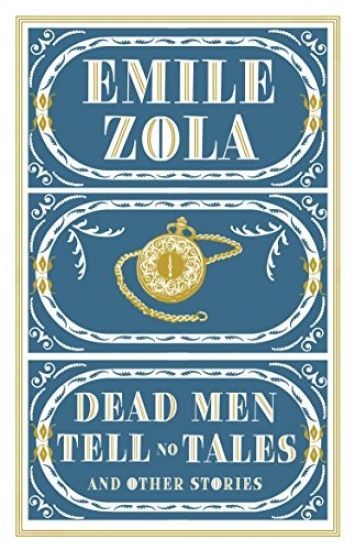
Dead Men Tell No Tales and Other Stories
Émile Zola
Alma Classics
2017
nidottu
Halvin toimitettuna 17,90 €
In contrast with the epic scope of the Rougon-Macquart novels, Zola’s short stories are concerned with the everyday aspects of human existence and the interests of ordinary people. From the cruel irony of ‘Captain Burle’ to the Rabelaisian exuberance of ‘Coqueville on the Spree’, these stories display the broad range of Zola’s imagination, using a variety of tones, from the quietly cynical to the compassionate, from the playful to the tragic. Contains:Dead Men Tell No TalesCoqueville on the SpreeCaptain BurleShellfish for Monsieur Chabre
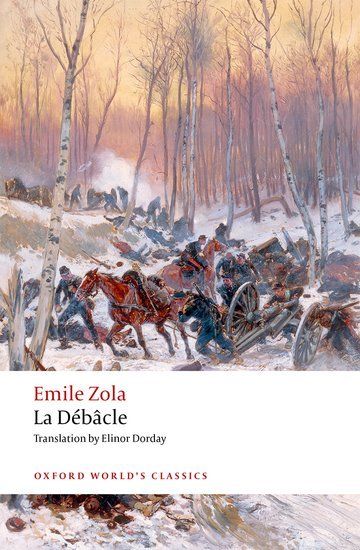
'My title speaks not merely of war, but also of the crumbling of a regime and the end of a world.' Émile Zola The penultimate novel of the Rougon-Macquart cycle, La Débâcle (1892) takes as its subject the dramatic events of the Franco-Prussian War and the Commune of 1870-1. During Zola's lifetime it was the bestselling of all his novels, praised by contemporaries for its epic sweep as well as for its attention to historical detail. La Débâcle seeks to explain why the Second Empire ended in a crushing military defeat and revolutionary violence. It focuses on ordinary soldiers, showing their bravery and suffering in the midst of circumstances they cannot control, and includes some of the most powerful descriptions Zola ever wrote. Zola skilfully integrates his narrative of events and the fictional lives of his characters to provide the finest account of this tragic chapter in the history of France. Often compared to War and Peace, La Débâcle has been described as a 'seminal' work for all modern depictions of war.
Most famous for his twenty-volume dissection of nineteenth-century French mores and society, the Rougon-Macquart novels, Zola was also an extremely accomplished short-story writer, as exemplified by the tales included in this volume. Concerned with the manifold aspects of everyday life and varying in their settings – from aristocratic drawing rooms to poverty-stricken garrets, from the hustle and bustle of Paris to the Provençal countryside of the author’s childhood – these stories will keep the reader riveted from the beginning to the end and surprise for their modernity. Contains:The Attack on the MillThe Girl Who Loves MeRentafoilDeath by AdvertisingStory of a MadmanBig MichuThe Way People DieA Flash in the PanAbsence Makes the Heart Grow FonderPriests and SinnersFair ExchangeThe Haunted House
Émile Zola Collection - The Rush For The Spoil (La Curée)
Émile Zola
Createspace Independent Publishing Platform
2017
nidottu
This is a new edition of "The Rush For The Spoil (La Cur e)," originally published in 1886 by Vizetelly & Co., of London, England. Part of Adeptio's Unforgettable Classic Series, this is not a facsimile reprint. Obvious typographical errors have been carefully corrected and the entire text has been reset and redesigned by Adeptio Editions to enhance readability, while respecting the original edition. "La Cur e" is the portion of the game thrown to the dogs after a hunt This novel is to a great extent distinct from its predecessor and prequel The Fortune of the Rougons The Rush For The Spoil (La Cur e) is a character study of three intriguing personalities. The edition has a preface by George Moore. The Rush For The Spoil (La Cur e) it is considered one of Zola's masterpieces The novel was a huge commercial success and helped establish Zola's fame and reputation throughout France and the world. About the Author: mile- douard-Charles-Antoine Zola (1840-1902) was a journalist, a novelist, a playwright, and a political activist. He was one of the most influential French novelists of the 19th century and the founder of the literary and theatrical school of naturalism. Zola was a major figure in the political liberalization of France. During his youth in the south of France, Zola befriended Paul C zanne, his schoolmate and future renowned Post-Impressionist painter-best known for his incredibly varied painting style that influenced 20th century abstract art. Zola's first book, Contes Ninon (Stories for Ninon), was a collection of short stories dedicated to his imaginary childhood love, Ninon. He published his debut novel in 1865, La Confession de Claude, an autobiographical work that chronicled a man falling in love with a sex worker. The book drew the attention of the public as well as of the police, and it was banned in the social circles, causing Zola to lose his job. Zola went on to write Th r se Raquin (1867), his first major novel, which delves into intrigue, adultery, and murder; and the dark love story Madeleine F rat (1868), his last novel before he started his masterful Rougon-Macquart 20-novel series. mile Zola's works include novels, dramas, poetry, and criticism, among which is his famous Les Rougon-Macquart (1871-1893), a cycle of twenty novels which depict various aspects of life and society, such as The Fortune of the Rougons (La Fortune des Rougon) originally published in 1871 and the first novel of the series; The Rush For The Spoil (La Cur e), in 1872; The Conquest of Plassans (La Conqu te de Plassans), in 1874; The Assommoir - The Prelude to Nana (L'Assommoir), in 1877, the seventh novel of the series, about the suffering of the Parisian working-class; Nana (1880), the ninth installment, which deals with prostitution; Piping Hot (Pot-Bouille), in 1882, the tenth novel of the cycle and Zola's most sarcastic satire, which describes daily life in a newly constructed block of flats in late nineteenth-century Paris; The Ladies Paradise (1883), the eleventh novel (original title: Au Bonheur des Dames), which focuses on Octave Mouret, who, in Piping Hot , meets Caroline H douin, the owner of a small silk shop; Germinal (1885), the thirteenth novel in the series, which depicts the mining industry and is considered by some as his masterpiece; and The Soil (La Terre), in 1887-all published by Adeptio Editions. Zola's open letter to French president F lix Faure, under the headline J'Accuse... , published on the front page of the newspaper L'Aurore on January 13, 1898, charging various French officials with a "terrible miscarriage of justice," reopened the case of the Jewish army officer, Captain Alfred Dreyfus, who had been sentenced to Devil's Island. For that, Zola was himself sentenced to a year in prison but fled to England, returning one year later after Dreyfus' name had been cleared. Dreyfus was eventually reinstated as an officer and publicly decorated with the Legion of
Émile Zola Collection - Stories for Ninon
Émile Zola
Createspace Independent Publishing Platform
2017
nidottu
This is a new edition of "Stories for Ninon," originally published in 1897 by William Heinemann, of London, England. Part of Adeptio's Unforgettable Classic Series, this is not a facsimile reprint. Obvious typographical errors have been carefully corrected and the entire text has been reset and redesigned by Adeptio Editions to enhance readability, while respecting the original edition. Stories for Ninon is Zola's first book, part of a collection of masterpieces that helped establish Zola's fame and reputation throughout France and the world. About the Author: mile- douard-Charles-Antoine Zola (1840-1902) was a journalist, a novelist, a playwright, and a political activist. He was one of the most influential French novelists of the 19th century and the founder of the literary and theatrical school of naturalism. Zola was a major figure in the political liberalization of France. During his youth in the south of France, Zola befriended Paul C zanne, his schoolmate and future renowned Post-Impressionist painter-best known for his incredibly varied painting style that influenced 20th century abstract art. Zola's first book, Contes Ninon (Stories for Ninon), was a collection of short stories dedicated to his imaginary childhood love, Ninon. He published his debut novel in 1865, La Confession de Claude, an autobiographical work that chronicled a man falling in love with a sex worker. The book drew the attention of the public as well as of the police, and it was banned in the social circles, causing Zola to lose his job. Zola went on to write Th r se Raquin (1867), his first major novel, which delves into intrigue, adultery, and murder; and the dark love story Madeleine F rat (1868), his last novel before he started his masterful Rougon-Macquart 20-novel series. mile Zola's works include novels, dramas, poetry, and criticism, among which is his famous Les Rougon-Macquart (1871-1893), a cycle of twenty novels which depict various aspects of life and society, such as The Fortune of the Rougons (La Fortune des Rougon) originally published in 1871 and the first novel of the series; The Rush For The Spoil (La Cur e), in 1872; The Conquest of Plassans (La Conqu te de Plassans), in 1874; The Assommoir - The Prelude to Nana (L'Assommoir), in 1877, the seventh novel of the series, about the suffering of the Parisian working-class; Nana (1880), the ninth installment, which deals with prostitution; Piping Hot (Pot-Bouille), in 1882, the tenth novel of the cycle and Zola's most sarcastic satire, which describes daily life in a newly constructed block of flats in late nineteenth-century Paris; The Ladies Paradise (1883), the eleventh novel (original title: Au Bonheur des Dames), which focuses on Octave Mouret, who, in Piping Hot , meets Caroline H douin, the owner of a small silk shop; Germinal (1885), the thirteenth novel in the series, which depicts the mining industry and is considered by some as his masterpiece; and The Soil (La Terre), in 1887-all published by Adeptio Editions. Zola's open letter to French president F lix Faure, under the headline J'Accuse... , published on the front page of the newspaper L'Aurore on January 13, 1898, charging various French officials with a "terrible miscarriage of justice," reopened the case of the Jewish army officer, Captain Alfred Dreyfus, who had been sentenced to Devil's Island. For that, Zola was himself sentenced to a year in prison but fled to England, returning one year later after Dreyfus' name had been cleared. Dreyfus was eventually reinstated as an officer and publicly decorated with the Legion of Honor.
Émile Zola Collection - The Conquest of Plassans; or, The Priest in the House
Émile Zola
Createspace Independent Publishing Platform
2017
nidottu
This is a new edition of "The Conquest of Plassans; or, The Priest in the House," originally published in 1887 by Vizetelly & Co., of London, England. Part of Adeptio's Unforgettable Classic Series, this is not a facsimile reprint. Obvious typographical errors have been carefully corrected and the entire text has been reset and redesigned by Adeptio Editions to enhance readability while respecting the original edition. The Conquest of Plassans; or, The Priest in the House is centered on the fictional Proven al town of Plassans, and its plot revolves around a sinister cleric's attempt at political intrigue with disastrous consequences for some of the townsfolk. This novel is, in many ways, a sequel to The Fortune of the Rougons. The Conquest of Plassans or, The Priest in the House is considered one of Zola's masterpieces The novel was a huge commercial success and helped establish Zola's fame and reputation throughout France and the world. About the Author: mile- douard-Charles-Antoine Zola (1840-1902) was a journalist, a novelist, a playwright, and a political activist. He was one of the most influential French novelists of the 19th century and the founder of the literary and theatrical school of naturalism. Zola was a major figure in the political liberalization of France. During his youth in the south of France, Zola befriended Paul C zanne, his schoolmate and future renowned Post-Impressionist painter-best known for his incredibly varied painting style that influenced 20th century abstract art. Zola's first book, Contes Ninon (Stories for Ninon), was a collection of short stories dedicated to his imaginary childhood love, Ninon. He published his debut novel in 1865, La Confession de Claude, an autobiographical work that chronicled a man falling in love with a sex worker. The book drew the attention of the public as well as of the police, and it was banned in the social circles, causing Zola to lose his job. Zola went on to write Th r se Raquin (1867), his first major novel, which delves into intrigue, adultery, and murder; and the dark love story Madeleine F rat (1868), his last novel before he started his masterful Rougon-Macquart 20-novel series. mile Zola's works include novels, dramas, poetry, and criticism, among which is his famous Les Rougon-Macquart (1871-1893), a cycle of twenty novels which depict various aspects of life and society, such as The Fortune of the Rougons (La Fortune des Rougon) originally published in 1871 and the first novel of the series; The Rush For The Spoil (La Cur e), in 1872; The Conquest of Plassans (La Conqu te de Plassans), in 1874; The Assommoir - The Prelude to Nana (L'Assommoir), in 1877, the seventh novel of the series, about the suffering of the Parisian working-class; Nana (1880), the ninth installment, which deals with prostitution; Piping Hot (Pot-Bouille), in 1882, the tenth novel of the cycle and Zola's most sarcastic satire, which describes daily life in a newly constructed block of flats in late nineteenth-century Paris; The Ladies Paradise (1883), the eleventh novel (original title: Au Bonheur des Dames), which focuses on Octave Mouret, who, in Piping Hot , meets Caroline H douin, the owner of a small silk shop; Germinal (1885), the thirteenth novel in the series, which depicts the mining industry and is considered by some as his masterpiece; and The Soil (La Terre), in 1887-all published by Adeptio Editions. Zola's open letter to French president F lix Faure, under the headline J'Accuse... , published on the front page of the newspaper L'Aurore on January 13, 1898, charging various French officials with a "miscarriage of justice," reopened the case of the Jewish army officer, Captain Alfred Dreyfus, who had been sentenced to Devil's Island. For that, Zola was himself sentenced to a year in prison but fled to England, returning one year later after Dreyfus' name had been cleared. Dreyfus was reinstated as an officer and decorated with
'I really don't understand how people can blame a priest so much, when he strays from the path.' The Sin of Abbé Mouret tells the compelling story of the young priest Serge Mouret. Striving after spiritual purity and sanctity, he lives a life of constant prayer, but his neglect of all physical needs leads to serious illness, followed by amnesia. No longer knowing he is a priest, he falls in love with his nurse Albine. Together, like a latter-day Adam and Eve, they roam through an Eden-like garden called the 'Paradou', seeking a forbidden tree in whose shade they will make love. Zola memorably shows their gradual awakening to sexuality, and his poetic descriptions of the luxuriant and beautiful Paradou create a lyrical celebration of Nature. When Serge regains his memory and recalls his priestly vows, anguish inevitably follows. The whole story, with its numerous biblical parallels, becomes a poetic reworking of the Fall of Man and a questioning of the very meaning of innocence and sin. Zola explores the conflict between Church and Nature, the sterility of the Church and the fertility of Nature. This new translation includes a wide-ranging and helpful introduction and explanatory notes.
Enfant Roi, Comédie Lyrique En 5 Actes. Paris, Opéra-Comique, 3 Mars 1905
Émile Zola
Hachette Livre - BNF
2017
pokkari
Émile Zola Collection - Madeleine Férat
Émile Zola
Createspace Independent Publishing Platform
2017
nidottu
This is a new edition of "Madeleine F rat," originally published in 1888 by Vizetelly & Co., of London, England. Part of Adeptio's Unforgettable Classic Series, this is not a facsimile reprint. Obvious typographical errors have been carefully corrected and the entire text has been reset and redesigned by Adeptio Editions to enhance readability, while respecting the original edition. Madeleine F rat tells the story of a young woman, divided between two men-her husband William and Jacques, a former lover. This is a strong novel, full of human sexuality that describes amazingly faithful the human emotions. The novel is one of the mile Zola's masterpieces About the Author: mile- douard-Charles-Antoine Zola (1840-1902) was a journalist, a novelist, a playwright, and a political activist. He was one of the most influential French novelists of the 19th century and the founder of the literary and theatrical school of naturalism. Zola was a major figure in the political liberalization of France. During his youth in the south of France, Zola befriended Paul C zanne, his schoolmate and future renowned Post-Impressionist painter-best known for his incredibly varied painting style that influenced 20th century abstract art. Zola's first book, Contes Ninon (Stories for Ninon), was a collection of short stories dedicated to his imaginary childhood love, Ninon. He published his debut novel in 1865, La Confession de Claude, an autobiographical work that chronicled a man falling in love with a sex worker. The book drew the attention of the public as well as of the police, and it was banned in the social circles, causing Zola to lose his job. Zola went on to write Th r se Raquin (1867), his first major novel, which delves into intrigue, adultery, and murder; and the dark love story Madeleine F rat (1868), his last novel before he started his masterful Rougon-Macquart 20-novel series. mile Zola's works include novels, dramas, poetry, and criticism, among which is his famous Les Rougon-Macquart (1871-1893), a cycle of twenty novels which depict various aspects of life and society, such as The Fortune of the Rougons (La Fortune des Rougon) originally published in 1871 and the first novel of the series; The Rush For The Spoil (La Cur e), in 1872; The Conquest of Plassans (La Conqu te de Plassans), in 1874; The Assommoir - The Prelude to Nana (L'Assommoir), in 1877, the seventh novel of the series, about the suffering of the Parisian working-class; Nana (1880), the ninth installment, which deals with prostitution; Piping Hot (Pot-Bouille), in 1882, the tenth novel of the cycle and Zola's most sarcastic satire, which describes daily life in a newly constructed block of flats in late nineteenth-century Paris; The Ladies Paradise (1883), the eleventh novel (original title: Au Bonheur des Dames), which focuses on Octave Mouret, who, in Piping Hot , meets Caroline H douin, the owner of a small silk shop; Germinal (1885), the thirteenth novel in the series, which depicts the mining industry and is considered by some as his masterpiece; and The Soil (La Terre), in 1887-all published by Adeptio Editions. Zola's open letter to French president F lix Faure, under the headline J'Accuse... , published on the front page of the newspaper L'Aurore on January 13, 1898, charging various French officials with a "terrible miscarriage of justice," reopened the case of the Jewish army officer, Captain Alfred Dreyfus, who had been sentenced to Devil's Island. For that, Zola was himself sentenced to a year in prison but fled to England, returning one year later after Dreyfus' name had been cleared. Dreyfus was eventually reinstated as an officer and publicly decorated with the Legion of Honor.
Les Rougon-Macquart", vaste fresque de 20 romans, raconte l'histoire d'une famille imaginaire, vivant en France sous le Second Empire (1851-1870). Cette oeuvre porte comme sous titre "Histoire naturelle et sociale d'une famille sous le Second Empire, rappelant ainsi les ambitions de Zola: " Les Rougon-Macquart personnifieront l' poque, l'empire lui-m me." Ce sera l'oeuvre principale de sa vie. Emile Zola va confronter deux familles qui apportent chacune leur caract re, leur secret, leur h r dit . Le but est d' tudier l'influence du milieu sur l'homme et les tares h r ditaires d'une famille sur cinq g n rations depuis l'anc tre Ad la de Fouquet n e en 1768. Il veut aussi d peindre cette soci t du Second Empire de la fa on la plus exhaustive possible, en n'oubliant aucune des composantes de cette soci t et en faisant une large place aux grandes transformations qui se produisirent cette poque (urbanisme parisien, grands magasins, d veloppement du chemin de fer, apparition du syndicalisme moderne, etc.) Cet ensemble de romans marque le triomphe du mouvement litt raire appel naturalisme, don t Zola est avec Edmond et Jules de Goncourt, puis Guy De Maupassant, le principal repr sentant. Les romans peuvent se lire de mani re ind pendante, mais, pour une meilleure compr hension de la chronologie, il est pr f rable de les lire dans l'ordre de parution. D'une mani re g n rale, La Fortune des Rougon est le roman d'ouverture qui annonce les principaux personnages de l'ensemble et Le Docteur Pascal en est le bilan final. Certains romans apparaissent comme des "suites": La Conqu te de Plassans d bouche sur La Faute de l'Abb Mouret; Pot-Bouille se prolonge par Au Bonheur des Dames; L'Argent prolonge La Cur e et la terre se continue par La D b cle. R sum Tome 10: "La D b cle" 19 me roman, voque la d route de l'arm e fran aise devant les prussiens Sedan durant la guerre franco-allemande de 1870. Le 4 septembre 1870 la Troisi me R publique succ de la chute de l'empire.
Émile Zola Collection - The Soil (La Terre)
Émile Zola
Createspace Independent Publishing Platform
2017
nidottu
Book This is a new edition of "The Soil (La Terre)," originally published in 1888 by Vizetelly & Co., of London, England. Part of Adeptio's Unforgettable Classic Series, this is not a facsimile reprint. Obvious typographical errors have been carefully corrected and the entire text has been reset and redesigned by Adeptio Editions to enhance readability, while respecting the original edition. The Soil (La Terre) has around one hundred characters Zola presents a realistic narrative of the poverty and cruelty of rural life in the late nineteenth century. The English translation brought such a clamor that Henry Vizetelly (the translator and publisher) was prosecuted and sentenced to three months incarceration. The Soil (La Terre) is considered one of Zola's masterpieces The novel was a huge commercial success and helped establish Zola's fame and reputation throughout France and the world. About the Author: mile- douard-Charles-Antoine Zola (1840-1902) was a journalist, a novelist, a playwright, and a political activist. He was one of the most influential French novelists of the 19th century and the founder of the literary and theatrical school of naturalism. Zola was a major figure in the political liberalization of France. During his youth in the south of France, Zola befriended Paul C zanne, his schoolmate and future renowned Post-Impressionist painter-best known for his incredibly varied painting style that influenced 20th century abstract art. Zola's first book, Contes Ninon (Stories for Ninon), was a collection of short stories dedicated to his imaginary childhood love, Ninon. He published his debut novel in 1865, La Confession de Claude, an autobiographical work that chronicled a man falling in love with a sex worker. The book drew the attention of the public as well as of the police, and it was banned in the social circles, causing Zola to lose his job. Zola went on to write Th r se Raquin (1867), his first major novel, which delves into intrigue, adultery, and murder; and the dark love story Madeleine F rat (1868), his last novel before he started his masterful Rougon-Macquart 20-novel series. mile Zola's works include novels, dramas, poetry, and criticism, among which is his famous Les Rougon-Macquart (1871-1893), a cycle of twenty novels which depict various aspects of life and society, such as The Fortune of the Rougons (La Fortune des Rougon) originally published in 1871 and the first novel of the series; The Rush For The Spoil (La Cur e), in 1872; The Conquest of Plassans (La Conqu te de Plassans), in 1874; The Assommoir - The Prelude to Nana (L'Assommoir), in 1877, the seventh novel of the series, about the suffering of the Parisian working-class; Nana (1880), the ninth installment, which deals with prostitution; Piping Hot (Pot-Bouille), in 1882, the tenth novel of the cycle and Zola's most sarcastic satire, which describes daily life in a newly constructed block of flats in late nineteenth-century Paris; The Ladies Paradise (1883), the eleventh novel (original title: Au Bonheur des Dames), which focuses on Octave Mouret, who, in Piping Hot , meets Caroline H douin, the owner of a small silk shop; Germinal (1885), the thirteenth novel in the series, which depicts the mining industry and is considered by some as his masterpiece; and The Soil (La Terre), in 1887-all published by Adeptio Editions. Zola's open letter to French president F lix Faure, under the headline J'Accuse... , published on the front page of the newspaper L'Aurore on January 13, 1898, charging various French officials with a "terrible miscarriage of justice," reopened the case of the Jewish army officer, Captain Alfred Dreyfus, who had been sentenced to Devil's Island. For that, Zola was himself sentenced to a year in prison but fled to England, returning one year later after Dreyfus' name had been cleared. Dreyfus was eventually reinstated as an officer and publicly decorated with the Legion of Honor.

La obra pertenece al estilo literario denominado naturalismo en la que Zola describe entre frutas, verduras, carnes, pescados, embutidos y quesos, la vida cotidiana de la sociedad parisina en torno al nuevo mercado central de Les Halles de Par s, gigantesco edificio met lico con muros de cristal, que fue una de las construcciones parisinas m s relevantes del II Imperio, construido entre 1854 y 1870 por V ctor Baltard y derribado cien a os despu s. En este bodeg n literario Zola narra el regreso de Florent (quien ha vivido deportado en Cayena durante a os) a una ciudad en la que vivi su juventud y en la que se reencuentra con su hermano menor Quenu, casado con Lisa Macquart. Florent se dedica contra su voluntad a ejercer de inspector de pescado en el mercado central y encuentra en su tiempo libre su verdadera vocaci n, la docencia y la pol tica. Con un grupo de correligionarios conspirar contra el Segundo Imperio y, al final, sus actividades le conducir n a una nueva deportaci n.