
Kirjailija
Ezra Pound
Kirjat ja teokset yhdessä paikassa: 145 kirjaa, julkaisuja vuosilta 1957–2026, suosituimpiin kuuluu Hugh Selwyn Mauberley. Vertaile teosten hintoja ja tarkista saatavuus suomalaisista kirjakaupoista.
145 kirjaa
Kirjojen julkaisuvuodet: 1957–2026.
This selection provides an excellent introduction to Ezra Pound's poetry for the general reader, and for the student of contemporary literature. It takes the place of the pioneer edition edited by T. S. Eliot which was published in 1928. A representative group of early poems is included; Hugh Selwyn Mauberley, Cathay and Homage to Sextus Propertius are printed complete; and there is a selection from the Cantos up to and including Drafts & Fragments (1969).
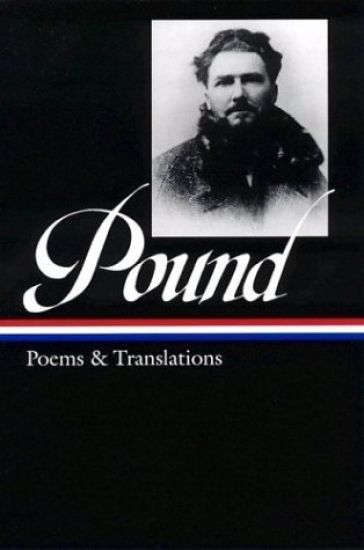
Ezra Pound: Poems & Translations (Loa #144)
Ezra Pound
Library of America
2003
sidottu
Halvin toimitettuna 35,40 €
Here in one volume is the biggest and best collection of Pound's poetry (excepting his long poem The Cantos) and translations ever assembled. Ranging from the text of the handmade first collection Hilda's Book (a gift to the poet H. D.) to his late translations of Horace, and containing dozens of items previously unavailable, Poems and Translations reveals the diversity and richness of a body of work marked by daring invention and resonant music. In such early volumes as Ripostes, Cathay, Lustra, and Hugh Selwyn Mauberley--as surely as in his later magisterial versions of The Confucian Odes and the Sophoclean dramas Women of Trachis and Elektra--Pound followed his own directive to "make it new," opening fresh formal pathways while exploring the most ancient traditions. Before, during, and after the controversies and catastrophes of his public career (culminating in his long residence in a Washington mental hospital while under indictment for treason), Pound remained capable of rare technical brilliance and indelible lyricism. Here are the lush early lyrics, echoing Browning and the Troubadours; the chiseled free verse of such masterpieces as "The Return," "Near Perigord," and "Homage to Sextus Propertius"; the dazzling translations that led Eliot to call Pound "the inventor of Chinese poetry for our time." The Chinese verse translations are supplemented by Pound's versions of the Confucian prose texts--The Analects, The Great Digest, and The Unwobbling Pivot--which he saw as crucial to his literary aims. An extensive chronology offers guidance to Pound's tumultuous life, and detailed notes clarify the many recondite allusions. LIBRARY OF AMERICA is an independent nonprofit cultural organization founded in 1979 to preserve our nation's literary heritage by publishing, and keeping permanently in print, America's best and most significant writing. The Library of America series includes more than 300 volumes to date, authoritative editions that average 1,000 pages in length, feature cloth covers, sewn bindings, and ribbon markers, and are printed on premium acid-free paper that will last for centuries.
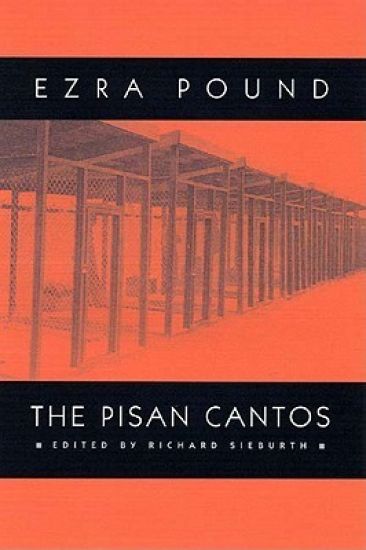
Ezra Pound's The Pisan Cantos was written in 1945, while the poet was being held in an American military detention center near Pisa, Italy, as a result of his pro-Fascist wartime broadcasts to America on Radio Rome. Imprisoned for some weeks in a wire cage open to the elements, Pound suffered a nervous collapse from the physical and emotional strain. Out of the agony of his own inferno came the eleven cantos that became the sixth book of his modernist epic, The Cantos, themselves conceived as a Divine Comedy for our time. The Pisan Cantos were published in 1948 by New Directions and in the following year were awarded the Bollingen Prize for poetry by the Library of Congress. The honor came amid violent controversy, for the dark cloud of treason still hung over Pound, incarcerated in St. Elizabeths Hospital for the Criminally Insane. Yet there is no doubt that The Pisan Cantos displays some of his finest and most affecting writing, marking an elegaic turn to the personal while synthesizing the philosophical and economic political themes of his previous cantos. They are now being published for the first time as a separate paperback, in a fully annotated edition prepared by Richard Sieburth, who also contributes a thoroughgoing introduction, making Pound's master-work fully accessible to students and general readers.
If the invention of literary modernism is usually attributed to Joyce, Eliot and Pound, it was Pound's personality and position in the artistic world that enabled the experiment to transform itself into an international movement. In 1926 Pound brought together the body of his shorter poems into a definitive collection which would illustrate the hallmarks of the new style. This collection, where Pound presented himself in a variety of characters or 'masks', was called Personae. In 1926, Personae's publication gave solidity to a movement; today the work stands as one of the classic texts of the twentieth century.
Machine Art and Other Writings presents previously unpublished and rare writings by one of the literary giants of the modernist period, Ezra Pound. Written from the late 1920s to the early part of the 1940s, these essays, selected by Maria Luisa Ardizzone and including “Machine Art,” “How To Write,” “European Paideuma,” and “Pragmatic Aesthetics,” are typically Poundian in style-irascible, eccentric, and by turns both engaging and cryptic. Importantly, these essays from Pound’s Italian years shed light both on the sections of the Cantos written in the late 1940s and on the underpinnings of his well-known anti-Semitism. The essays in this volume address Pound’s diverse aesthetic concerns, including his Vorticism and his criticism of Western metaphysics, his advancement of the machine as a new criterion for beauty, his encounter with the German Bauhaus movement, and his search for a type of writing ruled by mathematical rather than grammatical laws. Machine Art and Other Writings documents the wide proportions of Pound’s polemic against the abstractions of modernism and reveals the extent to which he was at odds with the metaphysical assumptions of his time. The volume, edited by Ardizzone, is the result of years of systematic and intensive study of Pound’s manuscripts, including glosses from the texts of his personal library. Proposing an unconventional approach to Pound studies that focuses on marginality and intertextuality, she subverts the canonical hierarchy of Pound’s works by revealing the power of texts considered marginalia. General readers, students and scholars in the fields of European and American modernism, aesthetics, the history of technology, and art history, as well as Pound specialists and the many poets and writers influenced by Pound, will greet the publication of Machine Art and Other Writings with interest and anticipation.
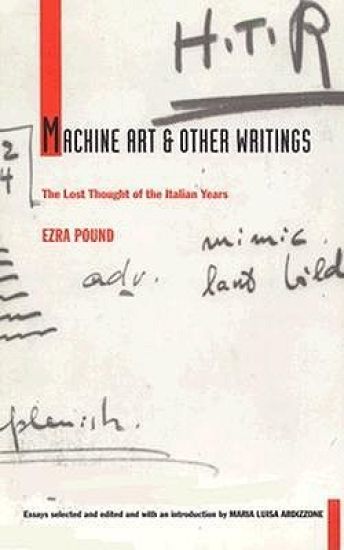
Machine Art and Other Writings presents previously unpublished and rare writings by one of the literary giants of the modernist period, Ezra Pound. Written from the late 1920s to the early part of the 1940s, these essays, selected by Maria Luisa Ardizzone and including “Machine Art,” “How To Write,” “European Paideuma,” and “Pragmatic Aesthetics,” are typically Poundian in style-irascible, eccentric, and by turns both engaging and cryptic. Importantly, these essays from Pound’s Italian years shed light both on the sections of the Cantos written in the late 1940s and on the underpinnings of his well-known anti-Semitism. The essays in this volume address Pound’s diverse aesthetic concerns, including his Vorticism and his criticism of Western metaphysics, his advancement of the machine as a new criterion for beauty, his encounter with the German Bauhaus movement, and his search for a type of writing ruled by mathematical rather than grammatical laws. Machine Art and Other Writings documents the wide proportions of Pound’s polemic against the abstractions of modernism and reveals the extent to which he was at odds with the metaphysical assumptions of his time. The volume, edited by Ardizzone, is the result of years of systematic and intensive study of Pound’s manuscripts, including glosses from the texts of his personal library. Proposing an unconventional approach to Pound studies that focuses on marginality and intertextuality, she subverts the canonical hierarchy of Pound’s works by revealing the power of texts considered marginalia. General readers, students and scholars in the fields of European and American modernism, aesthetics, the history of technology, and art history, as well as Pound specialists and the many poets and writers influenced by Pound, will greet the publication of Machine Art and Other Writings with interest and anticipation.
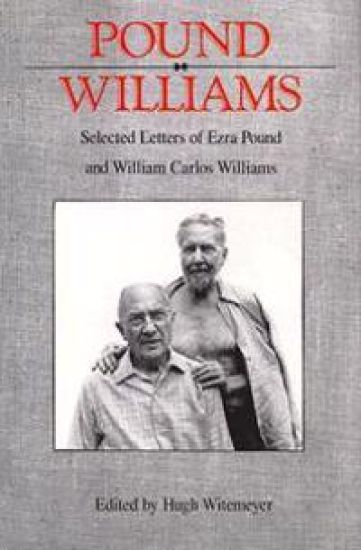
Pound/ Williams: Selected Correspondence of Ezra Pound and William Carlos Williams
Ezra Pound; William Carlos Williams; Hugh Witemeyer
NEW DIRECTIONS PUBLISHING CORPORATION
1996
sidottu
Ezra Pound and William Carlos Williams, two towering figures in American poetry, began their lifelong, and often contentious, friendship as students at the University of Pennsylvania. Their correspondence ran from 1907, the year Pound took up his virtually permanent residence in Europe, until Williams' death in 1963. The letters contribute an unparalleled documentary record of modern culture - a wealth of information about the lives and works of the two poets themselves; the literary and political movements in which they became involved and the impact of public events upon the arts; the activities of other writers and artists; and the world of small presses and little magazines that nourished the growth of modernism.
Presents a collection of letters between Ezra Pound and the owners and editors of ""The Dial"", Scofield Thayer and Sibley Watson, who, as ""The Dial"" became a premier international magazine of the 1920s, became leading players in the drama of modernism.
Even before establishing "New Directions", James Laughlin had met and studied with Ezra Pound. These selected letters capture the spirit of their growing relationship from pupil and teacher to publisher and author. Pound's correspondence summons up the inner man and the literary figure. Literature, music, friends and politics fill his pages.
Created in the aftermath of World War I, the poems ironically consider the place of the artist in "a botched civilization." "Homage to Sextus Propertius" (1917) is a free translation from the Latin, an homage to the Roman poet; praising its "enormous freedom and range of tone," Hugh Kenner remarked that "few more original poems exist in English." "Hugh Selwyn Mauberly" (1920) is described in A. Walton Litz's clear and helpful introduction as a "master document of literary modernism." It was also T. S. Eliot's favorite Pound poem: "I am quite certain of 'Mauberley, ' whatever else I am certain of... a great poem, a document of an epoch."
A Walking Tour in Southern France: Ezra Pound Among the Troubadours
Ezra Pound
NEW DIRECTIONS PUBLISHING CORPORATION
1992
nidottu
Rummaging through his papers in 1958, Ezra Pound came across a cache of notebooks dating back to the summer of 1912, when as a young man he had walked the troubadour landscape of southern France. Pound had been fascinated with the poetry of medieval Provence since his college days. His experiments with the complex lyric forms of Amaut Daniel, Bertran de Born, and others were included in his earliest books of poems; his scholarly pursuits in the field found their way into The Spirit of Romance (1910); and the troubadour mystique was to become a resonant motif of the Cantos. In the course of transcribing and emending the text of "Walking Tour 1912," editor Richard Sieburth retraced Pound's footsteps along the roads to the troubadour castles. "What this peripatetic editing process revealed," he writes, "was a remarkably readable account of a journey in search of the vanished voices of Provence that at the same time chronicled Pound's gradual discovery of himself as a modernist poet."
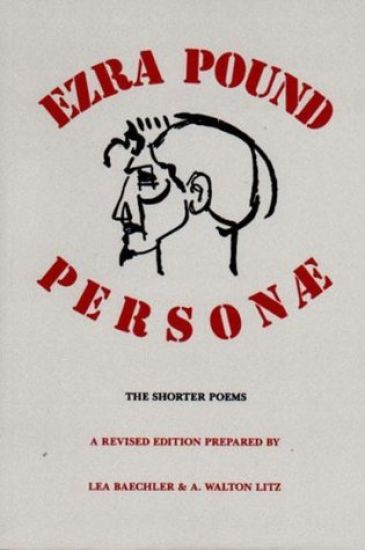
If the invention of literary modernism is usually attributed to James Joyce, T. S. Eliot and Ezra Pound, it was Pound alone who provided (in Hugh Kenner's words) "the synergetic presence") to convert individual experiment into an international movement. In 1926 Pound carefully sculpted his body of shorter poems into a definitive collection which would best show the concentration of force, the economy of means, and the habit of analysis that were, to him, the hallmarks of the new style. This collection, where Pound presented himself in a variety of characters or "masks," was called Personae. In 1926, Personae's publication gave solidity to a movement today the work stands as one of the classic texts of the twentieth century. Pound scholars Lea Baechler (of Columbia) and A. Walton Litz (Holmes Professor of English Literature at Princeton) have prepared a corrected text and supplied an informative "Note on the Text" explaining both Pound's original criteria for his selection and the volume's subsequent history.
An epic of great vision and complexity, Pound's Cantos addresses the profound human issues in history and in our time. Each of the nine groupings of poems can be seen as a fresh wave that swells out from and falls back upon the earlier cantos, extending them structurally, adding new layers of meaning. "A Draft of XXX Cantos" (1930), which introduces the work, thus anticipates the full Cantos' essential themes and provides the surest entry into Pound's encyclopedic masterpiece.
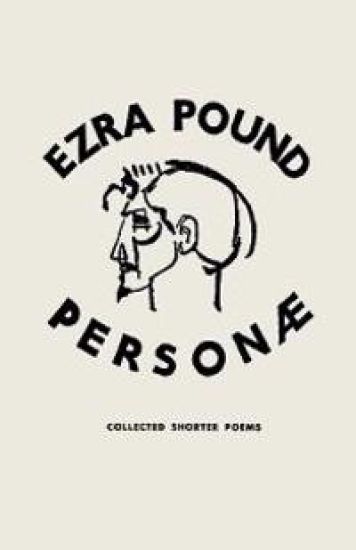
Personae: Revised Edition: Poetry
Lea Baechler; A. Walton Litz; Ezra Pound
NEW DIRECTIONS PUBLISHING CORPORATION
1990
sidottu
If the invention of literary modernism is usually attributed to James Joyce, T. S. Eliot, and Ezra Pound, it was Pound alone who provides (in Hugh Kenner's words) "the synergetic presence" to convert individual experiment into an international movement. In 1926, Pound carefully sculpted his body of shorter poems into a definitive collection that would best show the concentration of force, the economy of means, and the habit of analysis that were, to him, the hallmarks of the new style. This collection, where Pound presented himself in a variety of characters or "masks," was called Personae. In 1926, Personae's publication gave solidity to a movement; today the work stands as one of the classic texts of the twentieth century. Pound scholars Lea Baechler (of Columbia) and A. Walton Litz (Holmes Professor of English Literature at Princeton) have prepared a corrected text and supplied an informative "Note on the Text" explaining both Pound's original criteria for his selection and the volume's subsequent history.
Ezra Pound and Dorothy Shakespear: Their Letters
Ezra Pound; Dorothy Shakespear
NEW DIRECTIONS PUBLISHING CORPORATION
1984
sidottu
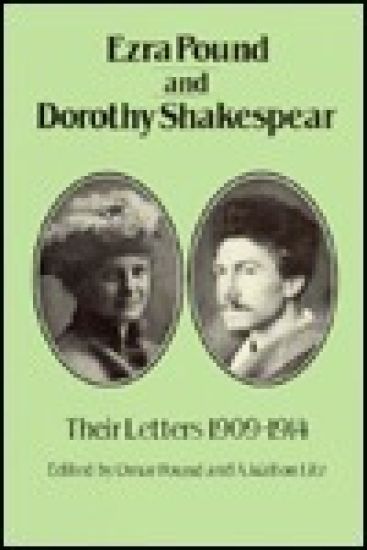
"'Ezra.' Listen to it--Ezra Ezra --And a third time--Ezra ... Some people have complained of untidy boots--how could they look at his boots, when there is his moving, beautiful face to watch " These words from the notebook of Dorothy Shakespear, dated February 16, 1909, record the entry into her life of the energetic young American, recently arrived in London, who was to become her husband--Ezra Pound. Their correspondence, begun the following year, extends over more than six decades, until the poet's death in 1972. All of these letters are of unusual literary interest, but those from before their marriage in April 1914 have a special importance, since few from this period have been published. The standard edition of The Selected Letters of Ezra Pound, edited by D. D. Paige, includes none from 1910-1911 and only a handful from 1912-1913, yet these were the crucial years in Pound's literary development and in the shaping of early modernism. The over two hundred letters and diary entries in Ezra Pound and Dorothy Shakespear: Their Letters 1909-1914 are published here for the first time. Taken together, they provide a detailed record of the poet's search for a new style and give a full portrait of a dynamic young expatriate who was simultaneously involved in two literary generations, the companion and close friend of Yeats and Ford Madox Hueffer as well as of Wyndham Lewis and the sculptor Gaudier-Brzeska. They also shed a poignant light on The Pisan Cantos of 1945, where amid the ruins of his life Pound recalled again and again the events and people described in these letters, as if the memory of 1909-1914 was the only stable point left in a disintegrating personal universe. The letters have been thoroughly annotated by Omar Pound, translator, and bibliographer of Wyndham Lewis, and by A. Walton Litz of Princeton University, the author of studies of James Joyce, Wallace Stevens, and other modern writers. The book includes: a biographical appendix, with particular emphasis on lesser-known people mentioned in the letters; some unpublished early poems by Pound transcribed by Dorothy into one of her notebooks; family charts, one of which shows Pound's ancestral origins; numerous unpublished illustrations; and an extensive index.
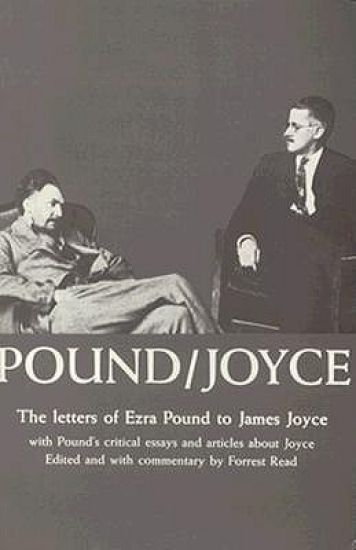
This is the record of one of the most interesting personal relationships of modern literature. Between 1913, when Yeats first called Joyce’s work to Pound’s attention, and 1920 there was a steady flow of letters, in which we see Pound finding publishers for Joyce, collecting money for him, defending him against censorship, even sending spare clothes. More than sixty letters from Pound to Joyce have survived, while those from Joyce to Pound will be found in the Viking Press Joyce correspondence volumes. Perhaps the most remarkable letters are those in which Pound gives his spontaneous reactions as the scripts of Dubliners, Portrait of the Artist, Exiles and Ulysses first reached him. We can then trace how these judgments were refined and amplified in the series of pieces that Pound wrote on Joyce for various magazines, the earliest sustained criticism of his work. And finally there are the later insights of the Rome broadcast of 1941 and the references to Joyce in The Pisan Cantos. Pound/Joyce has been edited, with an introduction, extensive running commentary, notes, and a wealth of related material from many sources, by Forrest Read, who is Professor of English at the University of North Carolina.
A gathering of Ezra Pound's writing, criticism, and reviews on art.
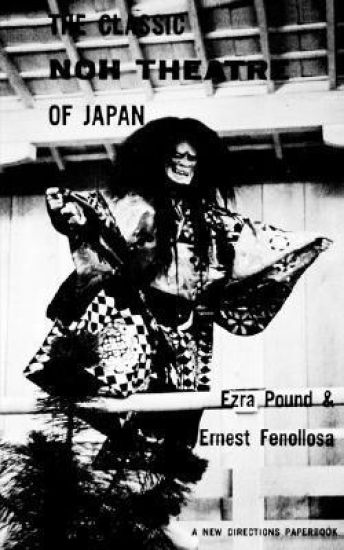
CLASSIC NOH THEATRE JAPAN PA
Ezra Pound; Ernest Fenollosa
New Directions Publishing Corporation
1979
nidottu
"First published in the United States in 1917 by Alfred A. Knopf. Inc., as Noh or Accomplishment, a study of the classical stage of Japan"--T.p. verso.
Ezra Pound and Music: The Complete Criticism
Ezra Pound
NEW DIRECTIONS PUBLISHING CORPORATION
1977
nidottu
Included here are all of Pound's concert reviews and statements; the biweekly columns written under the pen name William Atheling for The New Age in London; articles from other periodicals; the complete text of the 1924 landmark volume Antheil and the Treatise on Harmony; extracts from books and letters, and the poet's additional writings on the subject of music. The pieces are organized chronologically, with illuminating commentary, thorough footnotes, and an index. Three appendixes complete this comprehensive volume; an analysis of Pound's theories of "absolute rhythm" and "Great Bass;" a glossary of important musical personalities mentioned in the text and the composer George Antheil's 1924 appreciation, "Why a Poet Quit the Muses."