Kirjailija
Friedrich Nietzsche
Kirjat ja teokset yhdessä paikassa: 921 kirjaa, julkaisuja vuosilta 1885–2026, suosituimpiin kuuluu Näin puhui Zarathustra. Vertaile teosten hintoja ja tarkista saatavuus suomalaisista kirjakaupoista.
921 kirjaa
Kirjojen julkaisuvuodet: 1885–2026.
Written in response to a book on the origins of morality by his erstwhile friend Paul R e, the three essays comprising The Genealogy of Morals - all three advancing the critique of Christian morality set forth in Beyond Good and Evil - are among Nietzsche's most sustained and cohesive work. In the first essay - starting from a linguistic analysis of words such as "good," "bad," and "evil" - Nietzsche sets up a contrast between what he calls "master" morality and "slave" morality and shows how strength and action have often been replaced by passivity and nihilism. The next essay, looking into the origins of guilt and punishment, shows how the concept of justice was born - and how internalization of this concept led to the development of what people called "the soul." In the third essay, Nietzsche dissects the meaning of ascetic ideals. It is not Nietzsche's intention to reject ascetic ideals, "slave" morality, or internalized values out of hand; his main concern is to show that culture and morality, rather than being eternal verities, are human-made. Whether or not you agree with all of his conclusions, his writing is of such clarity and brilliance that you will find reading The Genealogy of Morals nothing short of exhilarating.
A collection of essays by Friedrich Nietzsche about Greek philosophy. Topics covered include The Greek State, The Greek Woman, On Music and Words, Homer's Contest, The Relation of Schopenhauer's Philosophy to a German Culture, Philosophy During the Tragic Age of the Greeks, and On Truth and Falsity in their Ultramoral Sense.
Nach seiner "Deformation" von Georg Trakls Gedichten in ORAKL setzt sich Daniele Pantano mit Friedrich Nietzsche in einer weiteren bung in konzeptueller Poetik und Performance-Theorie auseinander. HIMMEL-BIMMEL-BAM-BAM versetzt Nietzsches Dichtung ins 21. Jahrhundert, um Walter Benjamins Begriff der "Unterbrechung als] eines der grundlegenden Mittel aller Strukturierung" zu testen. In diesem Band zersetzt Pantano Nietzsches Gesammelte Gedichte, indem er alle Gedichte in einzelne Zeilen zerschneidet und das so entstandene "Textmaterial" umstrukturiert, die Zeilen in alphabetischer Reihenfolge nach ihren Wortanf ngen ordnet und diese Fragmente ber sechsundzwanzig Kapitel, d.h. die Buchstaben des Alphabets, organisiert. Der fertige Text ist, hnlich wie ORAKL, eine "kontrollierte Mutation" (Okla Elliott), die "au ergew hnliche Klang- und Sinnmontagen" (Piotr Gwiazda) hervorbringt und es erm glicht, Interpretation, Erz hlung und Bedeutung bei jeder Lekt re neu zu gestalten und zu ver ndern. Oder, wie Elisabeth Wandeler-Deck in ihrem Nachwort schreibt: "Dies zuckers sse Bimbambaumeln l sst eine bet rende, heftige Minimalmusik voll neuen Sprachsinns entstehen."
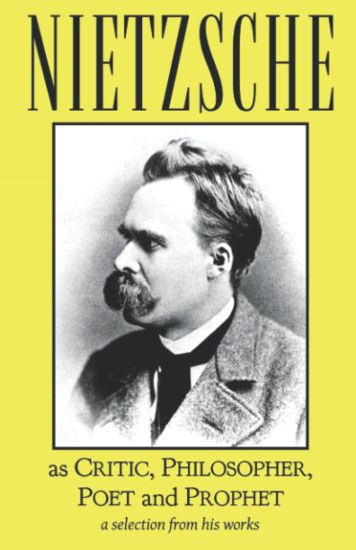
Nietzsche as Critic, Philosopher, Poet and Prophet
Friedrich Nietzsche
Rogue Scholar Press
2022
pokkari
The Anthology Which First Introduced Nietzsche to the English-speaking WorldOriginally published in 1901, the result of several years of translation work by the very first generation of Nietzscheans in Britain and America, Nietzsche as Critic, Philosopher, Poet and Prophet is a comprehensive selection of Nietzsche's writings, from The Birth of Tragedy through to the final works of 1888. Arranged topically with reference to the original sources, the book still stands as one of the finest anthologies of Nietzsche's writing in English and a worthwhile introduction to his thought on a wide range of subjects. This new edition also includes an appreciation of the editor and translator Thomas Common, whose tireless work promoting and translating Nietzsche over nearly twenty years was instrumental in bringing him to a wider audience.
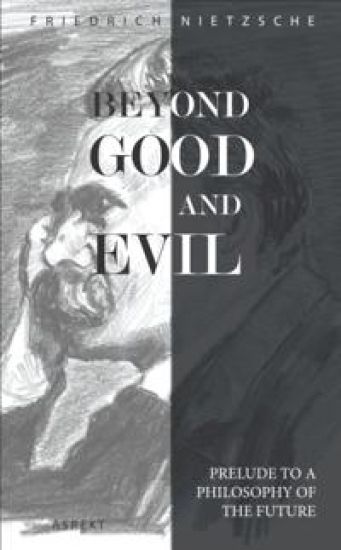
Beyond Good and Evil confirmed Nietzsche's position as the towering European philosopher of his age. The work dramatically rejects the tradition of Western thought with its notions of truth and God, good and evil. Nietzsche demonstrates that the Christian world is steeped in a false piety and infected with a 'slave morality'. With wit and energy, he turns from this critique to a philosophy that celebrates the present and demands that the individual imposes their own 'will to power' upon the world.
Homere Et La Philologie Classique: Encyclopedie de la Philologie Classique. Ecrits Philologiques, Tome IV
Friedrich Nietzsche
Les Belles Lettres
2022
nidottu
Philosophia facta est quAe philologia fuit (ce qui etait philologie est devenu philosophie) sont les derniers mots de la lecon inaugurale sur Homere et la philologie classique que Nietzsche prononca le 28 mai 1869, lors de son entree comme tres jeune professeur a l'Universite de Bale. Il s'agit de l'inversion d'une phrase de Seneque qui deplorait que ce qui autrefois etait philosophie etait desormais devenu philologie. A travers l'examen de la question homerique, Nietzsche enonce donc l'exigence de donner un sens philosophique au travail philologique. La meme expression revient dans l'avant-propos du cours Encyclopedie de la philologie classique que Nietzsche tint en 1871 et qui est publie ici pour la premiere fois en traduction francaise d'apres les manuscrits originaux. Le terme encyclopedie indique, selon l'usage de l'epoque, un compendium de la discipline et de ses methodes, une carte qui sert a s'orienter, comme l'ecrit Nietzsche. Dans le cadre de notre edition, ce volume fait egalement office d'introduction a d'autres cours tenus par Nietzsche, car un certain nombre de sujets ici presentes reapparaitront dans d'autres cours et ecrits. Mais surtout, cette Encyclopedie nous permet de comprendre quelle est la fonction philosophique de la philologie qui, en faisant revivre la culture de l'Antiquite, est en mesure de produire un renouvellement profond de la culture du present. On pourrait supposer que le renouvellement auquel Nietzsche fait allusion ici correspond a celui presente dans son premier livre, La Naissance de la tragedie, qu'il etait d'ailleurs en train d'ecrire a la meme periode. Mais la renaissance a laquelle pense le jeune professeur de philologie est en realite assez differente de celle enoncee par le philosophe et publiciste wagnerien. Ce cours nous restitue ainsi un Nietzsche inedit qui nous permet de mieux comprendre son detachement futur a l'egard du mythe germanique et de la metaphysique de l'artiste de La Naissance de la tragedie.
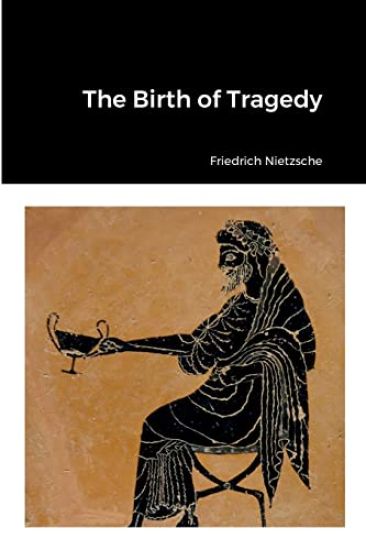
Nietzsche's first published book, The Birth of Tragedy is a compelling argument for the necessity of art in life. This landmark work of criticism is fueled by Nietzsche's enthusiasms for Greek tragedy, the philosophy of Schopenhauer and the music of Wagner, to whom the book was dedicated. Nietzsche outlines a distinction between two central forces in art: the Apolline, representing beauty and order, and the Dionysiac, a primal or ecstatic reaction to the sublime. He argues that the combination of these states produced the highest forms of music and tragic drama, which not only reveal the truth about suffering in life, but also provide a consolation for it.
L'Antéchrist, Imprécation contre le christianisme
Frédéric Nietzsche; Friedrich Nietzsche
BoD - Books on Demand
2022
pokkari
Beyond Good and Evil
Friedrich Nietzsche
General Press India
2022
nidottu
Halvin toimitettuna 26,40 €
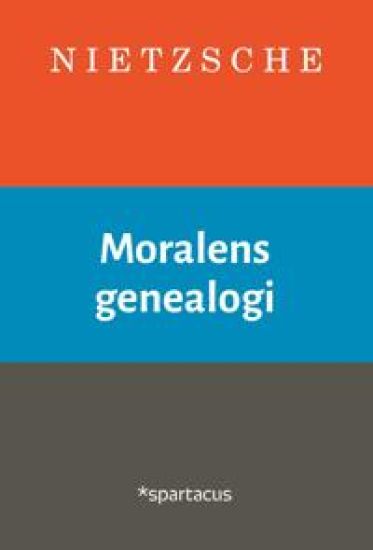
'Moralens genealogi' er boken hvor Nietzsche innfører det berømte skillet mellom herremoral og slavemoral. Slavemoralen fremtrer som misunnelse overfor den som er kreativ og livsdyktig. Nietzsche dyrker den sterke som lever sitt liv uavhengig av den gjengse moral, uten samvittighetsnag. Den dårlige samvittigheten er en sykdom, sier han. Hovedspørsmålet i 'Moralens genealogi' er hvorfor vi danner oss en moral overhodet, og hvordan dette setter stopper for oss når vi skal leve livet vårt. Boken er delt inn i tre avhandlinger hvor Nietzsche søker etter moralens opprinnelse: Hvem har skapt «godt» og «ondt»? Gud? Nei, sier Nietzsche. Metafysikken hjelper oss ikke når vi skal forsøke å besvare livets store spørsmål. Moral er noe rent historisk og basert på menneskelig erfaring. Genealogien viser oss at vi aldri kan komme fram til en sann, egentlig moral fri for de begrensningene tid og sted legger på den. 'Moralens genealogi' utkom for første gang i 1887 og er regnet som et hovedverk i vestlig moralfilosofi. Oversatt av Øystein Skar og med etterord av Ingeborg Owesen.
'Tragediens fødsel' er Nietzsches første bok. Her ser han på antikkens grunntrekk som klassisk filolog og filosof i forlengelsen av Schopenhauer. Det er den greske tragedien som er Nietzsches hovedanliggende. Det berømte skillet mellom det apollinske og det dionysiske som Nietzsche mener at livet alltid er en kamp mellom. Men dette er ikke først og fremst noen vitenskapelig studie, men et manifest, en filosofisk og estetisk erklæring som peker frem mot et brennpunkt i Nietzsches tenkning, moralkritikken. 'Tragediens fødsel' har et forord, «Forsøk på en selvkritikk», fra nyutgaven fra 1886, hvor Nietzsche reflekterer over sitt eget verk i etterkant. Oversatt av Øystein Skar og Eric Wiik («Forsøk på en selvkritikk»). Etterord av Ståle Wikshåland.
Thus Spoke Zarathustra, a work of philosophical fiction by Friedrich Nietzsche, was written between 1883 and 1885. Although the protagonist is ostensibly the actual Zoroaster, there is a little historical parallel to the character outside of a few sentences. The majority of the book is made up of speeches by Zarathustra on a range of topics, with the phrase "Thus spoke Zarathustra" finishing off each one. The hermit who created Zarathustra was motivated by the sun, which can only be happy when it shines on others. Many of the concepts that will be covered throughout the book are introduced in the prologue, which is the first chapter of the book. They discuss the themes of the death of God and the emergence of the bermensch while also introducing the idea of the will to power. While remaining alone in his cave, Zarathustra starts to become older. He receives a visit from a soothsayer one day who promises to tempt him into compassion. He comes to understand that the superior guy is everyone he has spoken to that day. The next morning, he sees a lion and a flock of doves outside his cave.
Den glada vetenskapen är en av Friedrich Nietzsches vackraste och mest personliga böcker. Den är ett mikrokosmos av allt det som Nietzsche brukar förknippas med: aforismer och storslagna diskussioner av filosofiska problem, etik och kunskapsteori, reflektioner om konst och Guds död, den eviga återkomsten och Zarathustra. "Oaktat sina ursinnigheter är den mera samtida än de flesta böcker som råkar vara skrivna nu." (Horace Engdahl, DN)