Kirjojen hintavertailu – 12 859 819 kirjaa ja 27 kauppaa

Kirjailija

Friedrich Nietzsche

Kirjat ja teokset yhdessä paikassa: 921 kirjaa, julkaisuja vuosilta 1885–2026, suosituimpiin kuuluu Näin puhui Zarathustra. Vertaile teosten hintoja ja tarkista saatavuus suomalaisista kirjakaupoista.

921 kirjaa

Kirjojen julkaisuvuodet: 1885–2026.

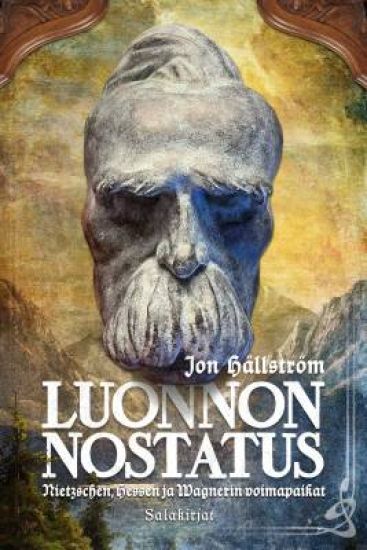
Luonnon nostatus - Nietzschen, Hessen ja Wagnerin voimapaikat

Luonnon nostatus - Nietzschen, Hessen ja Wagnerin voimapaikat

Jon Hällström; Friedrich Nietzsche

Salakirjat
2022
sidottu

Halvin toimitettuna 26,60 €

Nostaako luonto ihmistä? Näin uskoi Friedrich Nietzsche, joka elämänsä heikoimpana hetkenä löysi luvatun maansa Alpeilta ja koki henkisen renessanssin. Hän ei ollut etsinnässään yksin - myös Hermann Hesse ja Richard Wagner kurottivat pyhiinvaelluksillaan etelään Alpeille ja niiden yli Italiaan. Filosofian historian suurimpaan draamaan mahtuu pakomatkoja ja salaromansseja, erakkoutopioita ja poliittisia ääriliikkeitä, Jumalan kuolema ja Dionysoksen inkarnaatio. Mitä sadan vuoden takaisten etsijöiden voimapaikoille kuuluu tänään, vieläkö genius loci, paikan henki puhuu vakaville vaeltajille?
Beyond Good and Evil - Prelude to a Philosophy of the Future (Reader's Library Classics)
Insanity in individuals is something rare-but in groups, parties, nations, and epochs it is the rule. Nietzsche's famous work Beyond Good and Evil follows up on the morality ideas presented in his prior publication, Thus Spoke Zarathustra (1883), and further challenges the accepted standards previous philosophers held surrounding morality. This nine part work, which includes an entire chapter (Chapter IV) of short aphorisms, has become a mainstay in philosophical thinking.
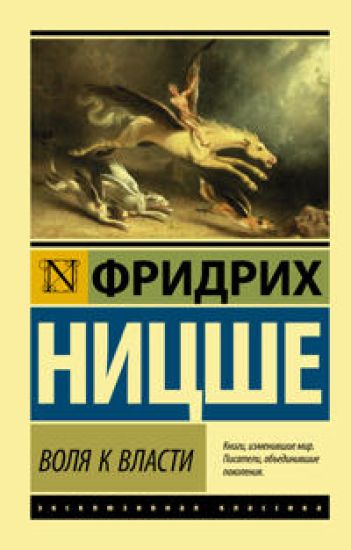
Volja k vlasti

Volja k vlasti

Friedrich Nietzsche

Ast
2021
nidottu
"Volja k vlasti" - venets filosofskogo tvorchestva Nitsshe. Ona ne byla zavershena im samim i vyshla v svet tolko posle ego smerti v rekonstruktsii, predprinjatoj ego sestroj E. Fjorster-Nitsshe i sotrudnikami Arkhiva Nitsshe. Tem ne menee, eta kniga vyzvala nastojaschij rezonans i burnye spory, okazav silnejshee vozdejstvie ne tolko na razvitie mirovoj filosofii, no i na ves khod istorii XX stoletija. Soglasno Nitsshe, volja k vlasti, buduchi "voploschennoj volej k zhizni", lezhit v osnove vsego suschego, javljaetsja "samoj vnutrennej suschnostju bytija", opredeljajuschim stimulom dejatelnosti i glavnoj sposobnostju cheloveka. A znachit trebuetsja kardinalnaja pereotsenka tsennostej kultury, religii i morali...
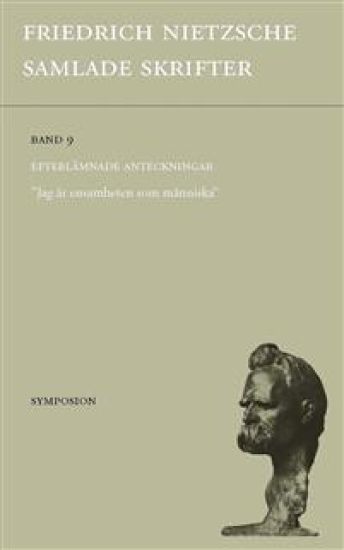
Samlade skrifter. Bd 9, Efterlämnade anteckningar

Samlade skrifter. Bd 9, Efterlämnade anteckningar

Friedrich Nietzsche; Peter Handberg

Brutus Östlings bokf Symposion
2021
nidottu
För första gången presenteras ett stort urval ur Nietzsches efterlämnade anteckningar på svenska. Störst fokus ligger på hans sista produktiva år under 1880-talets senare del. En stor del av texterna utgör förberedelser till det planerade verket med titeln Viljan till makt , som Nietzsche aldrig fullbordade men arbetade på in i det sista. Tematiken här är delvis densamma som i Nietzsches allra sista färdigställda skrifter (Fallet Wagner, Avgudaskymning, Antikrist och Ecce homo), kretsande kring nihilismens problem och samtidens décadence, kristendomens slavmoral och behovet av en omvärdering av alla värden, tillsammans med tillbakablickar på det egna livet och verket. Samtidigt fördjupar sig Nietzsche här, ännu mer än i de publicerade texterna, i sina ständiga frågor om språkets, verklighetens och kunskapens natur. Stilen växlar mellan utförda skisser, aforismer och korta anteckningar, som trots sin ibland oslipade karaktär ofta förmedlar Nietzsches grundtankar i en ovanligt koncis, destillerad form. För översättning och kommentarer till texterna svarar Jim Jakobsson; urvalet är gjort i samråd med redaktionen. Efterordet är skrivet av Peter Handberg. Med detta band är utgåvan av Friedrich Nietzsches Samlade skrifter på Symposion komplett, i sammanlagt tio band (breven i urval bundna i två delar).
BEYOND GOOD AND EVIL

BEYOND GOOD AND EVIL

Friedrich Nietzsche

Rupa Publications India Pvt. Ltd
2021
nidottu
The book which challenged the existing dogmas and principle of its times Containing 296 aphorisms, Friedrich Nietzsche's Beyond Good and Evil critiques Christian morality and the philosopher's ideas of truth, and explores his own philosophical take on human psychology. This book looks into concepts about 'the free spirit', nationalism, moral concepts of good and evil and the virtues of European culture. Nietzsche became an outspoken critic of German nationalism, anti-Semitism and religious dogmatism. Before collapsing and suffering a nervous breakdown in 1889, which left him in a vegetative state till 1900-the year of his death-Nietzsche wrote Beyond Good and Evil, On the Genealogy of Morality, Twilight of the Idols, The Antichrist, Ecce Homo, The Case of Wagner and Nietzsche Contra Wagner between 1886 and 1888.
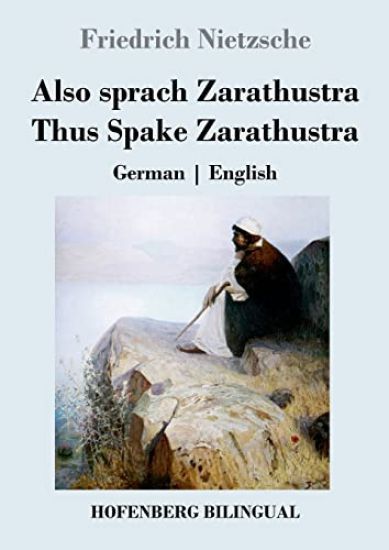
Also sprach Zarathustra / Thus Spake Zarathustra

Also sprach Zarathustra / Thus Spake Zarathustra

Friedrich Nietzsche

Henricus - Edition Deutsche Klassik GmbH, Berlin
2021
pokkari
Friedrich Nietzsche: Also sprach Zarathustra / Thus Spake Zarathustra. German English Zweisprachige Ausgabe. bersetzt von Thomas Common Erstdrucke: Chemnitz (E. Schmeitzner) 1883 (1. und 2. Teil); Chemnitz (E. Schmeitzner) 1884 (3. Teil); Leipzig (C. G. Naumann) 1885 (4. Teil, Privatdruck); Leipzig 1892 (1. vollst ndige Ausgabe, herausgegeben von P. Gast, d. i. Heinrich K selitz). Neuausgabe. Gro format, 210 x 297 mm Herausgegeben von Karl-Maria Guth. Berlin 2021. Umschlaggestaltung von Thomas Schultz-Overhage unter Verwendung des Bildes: Wassilij Dimitriewitsch Polenow, Meditation auf dem Berg, 1900. Gesetzt aus der Minion Pro, 11 pt. Henricus - Edition Deutsche Klassik GmbH ber den Autor: 1844 in R cken als Sohn eines lutherischen Pfarrers geboren, w chst Friedrich Wilhelm Nietzsche nach dem fr hen Tod des Vaters im sogenannten Naumburger Frauenhaushalt mit Mutter, Schwester, Gro mutter, zwei ledigen Tanten und dem Dienstm dchen auf. Nach dem mit knapper Not bestandenen Abitur studiert er Philologie zun chst in Bonn, dann in Leipzig. 1868 wird er als Einj hrig-Freiwilliger der preu ischen Artillerie durch einen schweren Reitunfall dienstunf hig und erh lt 1869 eine au erordentliche Professur an der Universit t Basel. Er verkehrt im Hause Richard Wagners in Tribschen, den er zun chst verehrt und sp ter radikal ablehnt. hnlich geht es ihm mit Arthur Schopenhauer, dessen Philosophie ihn zun chst fasziniert, er dann aber grundlegend mit ihm bricht. 35-j hrig geht er mit angeschlagener Gesundheit in Pension, lebt als freier Autor in Sils-Maria und verbringt die Wintermonate in Italien. Er verliebt sich in die junge Louise von Salom , die jedoch seinen Heiratsantrag ablehnt. Geplagt von immer st rkeren Krankheitssch ben zieht er sich immer weiter zur ck in eine weitgehende Isolation. Nach ersten Anzeichen beginnenden Gr enwahns erleidet er im Januar des Jahres 1889 - wohl infolge einer Syphiliserkrankung - einen geistigen Zusammenbruch und wird in eine Irr
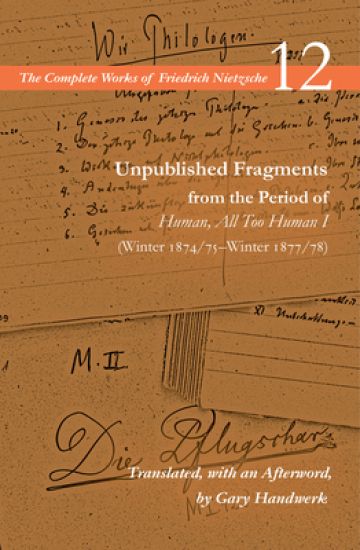
Unpublished Fragments from the Period of Human, All Too Human I (Winter 1874/75–Winter 1877/78)
This volume in The Complete Works presents the first English translations of Nietzsche's unpublished notebooks from Winter 1874/1875 through 1878, the period in which he developed the mixed aphoristic-essayistic mode that continued across the rest of his career. These notebooks comprise a range of different materials, including early drafts and near-final versions of aphorisms that would appear in both volumes of Human, All Too Human. Additionally, there are extensive notes for a never-completed Unfashionable Observation that was to be titled "We Philologists," early drafts for the final sections of "Richard Wagner in Bayreuth," plans for other possible publications, and detailed reading notes on philologists, philosophers, and historians of his era, including Friedrich August Wolf, Eugen Dühring, and Jacob Burckhardt. Through this volume, readers gain insight into Nietzsche's emerging sense of himself as a composer of complexly orchestrated, stylistically innovative philosophical meditations—influenced by, but moving well beyond, the modes used by aphoristic precursors such as Goethe, La Rochefoucauld, Vauvenargues, and Schopenhauer. Further, these notebooks allow readers to trace more closely Nietzsche's development of ideas that remain central to his mature philosophy, such as the contrast between free and constrained spirits, the interplay of national, supra-national, and personal identities, and the cultural centrality of the process of Bildung as formation, education, and cultivation. With this latest book in the series, Stanford continues its English-language publication of the famed Colli-Montinari edition of Nietzsche's complete works, which include the philosopher's notebooks and early unpublished writings. Scrupulously edited so as to establish a new standard for the field, each volume includes an Afterword that presents and contextualizes the material it contains.
Beyond Good and Evil

Beyond Good and Evil

Friedrich Nietzsche

DIAMOND BOOKS
2021
nidottu
The book, beyond good & evil, is written by a philosopher, Freidrich Nietzsche (15th October 1844 - 25th August, 1900). he was a German philosopher. He was a composer, poet, writer, and philologist also. Although he started his career as a philologist then he switched over to philosophy. He became the youngest person ever to hold the chair of classical philology at the University of Basel. But due to his health problem he couldn't continue. in the book, Nietzsche has criticizes the past philosophers due to lacking in their critics quality and also their accepting dogmatic concepts blindly. It narrates about leaving traditional morality, which the author subjects to a destructive critique. He suggest fearless confrontation against the perilous condition of modern individual. It is a comprehensive overview of nietzsche's mature philosophy. Nietzsche asks the question, "What compel us to assume there exists any essential antithesis between 'true' and 'false'?" he discusses the complexities of the German soul. He praises France as "the seat of European most spiritual and refined culture and the leading school of taste." in prophetic statement, Nietzsche proclaims that "the time for petty politics is the things of past; the very next century will bring with it the struggle for mystery over the whole Earth.
Beyond Good and Evil

Beyond Good and Evil

Friedrich Nietzsche

Insight Publica
2021
pokkari
Beyond Good and Evil confirmed Nietzsche's position as the towering European philosopher of his age. The work dramatically rejects the tradition of Western thought with its notions of truth and God, good and evil. Nietzsche demonstrates that the Christian world is steeped in a false piety and infected with a 'slave morality'. With wit and energy, he turns from this critique to a philosophy that celebrates the present and demands that the individual imposes their own 'will to power' upon the world.
Early Greek Philosophy & Other Essays; Collected Works, Volume Two
This book has been considered important throughout the human history, and so that this work is never forgotten we have made efforts in its preservation by republishing this book in a modern format for present and future generations. This whole book has been reformatted, retyped and designed. These books are not made of scanned copies of their original work and hence the text is clear and readable.