

Kirjailija
Friedrich Nietzsche
Kirjat ja teokset yhdessä paikassa: 921 kirjaa, julkaisuja vuosilta 1885–2026, suosituimpiin kuuluu Näin puhui Zarathustra. Vertaile teosten hintoja ja tarkista saatavuus suomalaisista kirjakaupoista.
921 kirjaa
Kirjojen julkaisuvuodet: 1885–2026.

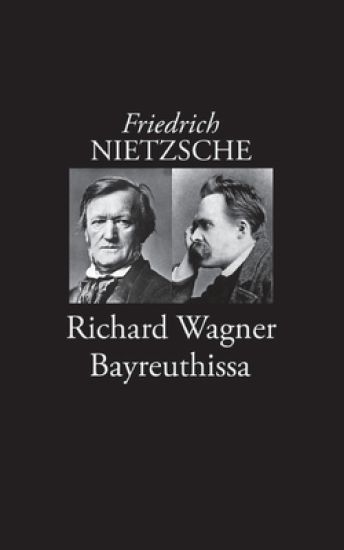
Friedrich Nietzschen Ep ajanmukaisia tutkisteluja ilmestyi nelj ss osassa vuosina 1873-1876. Nelj s ja viimeinen osa, Richard Wagner Bayreuthissa, ilmestyi 1876. T m parahiksi Bayreuthin ensimm isille musiikkijuhlille valmistunut juhlasaarna on my h stynyt teos siin mieless , ett sit kirjoittaessaan Nietzsche oli jo j tt m ss wagnerilaisuuden taakseen ja itsen istym ss Wagnerista. T h n kirjaan Nietzsche maalasi oman ihanteensa mukaisen Wagnerin, joka, kuten h n varmasti jo tiesi, ei vastannut todellista Wagneria.
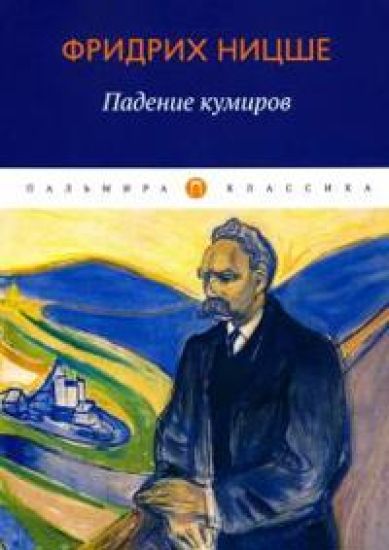
V knigu voshli tri izvestnejshikh sochinenija nemetskogo filosofa Fridrikha Nitsshe (1844-1900), opublikovannye v 1888 godu: "Padenie kumirov", "Antikhrist" i "Esse homo". V nikh on izlagaet osnovnye polozhenija svoego mirovozzrenija, podvergshego kritike tsennosti sovremennoj emu zapadnoj kultury. Perevodchik: Flerova V., Antonovskij Ju., O. I. S.

God is Dead. God Remains Dead. And We Have Killed Him.
Friedrich Nietzsche
Penguin Classics
2020
nidottu
Halvin toimitettuna 14,50 €
'We have left dry land and put out to sea! We have burned the bridge behind us - what is more, we have burned the land behind us!'Nietzsche's devastating demolition of religion would have seismic consequences for future generations. With God dead, he envisages a brilliant future for humanity: one in which individuals would at last be responsible for their destinies. One of twenty new books in the bestselling Penguin Great Ideas series. This new selection showcases a diverse list of thinkers who have helped shape our world today, from anarchists to stoics, feminists to prophets, satirists to Zen Buddhists.

Ce titre (Le cr puscule des idoles ou Comment on philosophe avec un marteau) aux accents wagn riens est embl matique de la pens e nietzsch enne. Pratiquant la philosophie coups de marteau, Nietzsche cherche avant tout pr cipiter la fin d'un monde et le d clin de ses croyances. Depuis Socrate, l'homme th orique, soucieux d' difier des syst mes conformes aux exigences de la raison, semble avoir triomph de l'homme tragique, assumant, l'instar de Dionysos, les contradictions de la vie. Ainsi, la philosophie, la morale puis la science, au fil des si cles, sont parvenues b tir de remarquables constructions th oriques visant occulter le caract re incertain et prot iforme du devenir et satisfaire le go t commun des hommes pour l'ordre et la coh rence. La religion du progr s, notre foi en la Providence, les inventions de la philosophie de l'Histoire, le credo scientiste sont autant d'expressions d'un seul et m me besoin de fictions consolatrices. Dans un style tincelant et apocalyptique, Nietzsche nous fait ici clairement pressentir l'effondrement d'un monde. Un ouvrage tr s "fin de si cle" pour les amoureux du soleil couchant.--Paul Klein (Babelio) Extrait: De tout temps les sages ont port le m me jugement sur la vie: elle ne vaut rien... Toujours et partout on a entendu sortir de leur bouche la m me parole, une parole pleine de doute, pleine de m lancolie, pleine de fatigue de la vie, pleine de r sistance contre la vie. Socrate lui-m me a dit en mourant: Vivre c'est tre longtemps malade: je dois un coq Esculape lib rateur. Socrate en avait assez
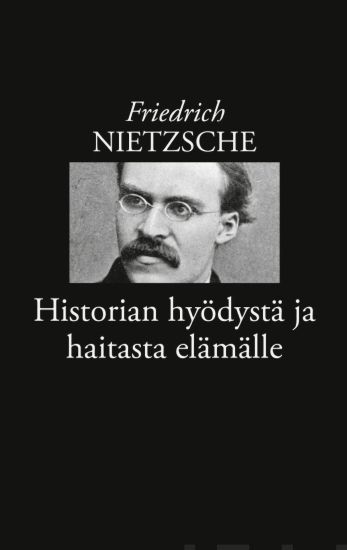
Historian hyödystä ja haitasta elämälle
Friedrich Nietzsche
Books on Demand
2020
pokkari
Halvin toimitettuna 21,00 €
Friedrich Nietzschen Epäajanmukaisia tutkisteluja ilmestyi neljässä osassa vuosina 1873-1876. Toinen osa, Historian hyödystä ja haitasta elämälle, ilmestyi 1874. Tämä pieni historianfilosofinen tutkielma on säilyttänyt epäajanmukaisuutensa kenties paremmin kuin nelikon muut osat: se on niistä vähiten sidoksissa oman aikansa ilmiöihin. Ehkä juuri siitä johtuu, että jälkimaailma on kiinnittänyt eniten huomiota juuri tähän tutkisteluun.


This volume, which the author called "the most personal of all my books," features the largest collection of Nietzsche's published poetry. It also offers an extensive, sophisticated treatment of his core philosophical themes and views as well as the ideas that proved most influential to later philosophers. Thought-provoking discussions address art and morality, knowledge and truth, the intellectual conscience, and the origin of logic.
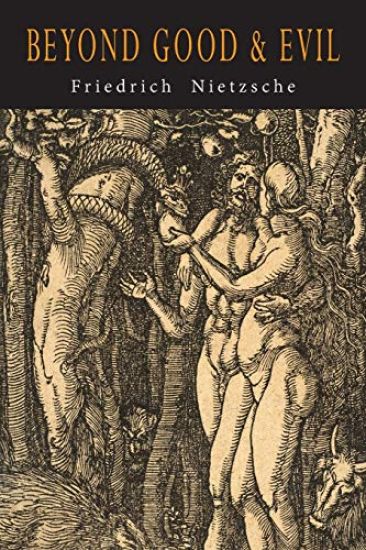
Do you want to read Beyond Good and Evil? If so then keep reading... Beyond Good and Evil: Prelude to a Philosophy of the Future is a book by philosopher Friedrich Nietzsche, first published in 1886. It draws on and expands the ideas of his previous work, Thus Spoke Zarathustra, but with a more critical and polemical approach. In Beyond Good and Evil, Nietzsche accuses past philosophers of lacking critical sense and blindly accepting dogmatic premises in their consideration of morality. Specifically, he accuses them of founding grand metaphysical systems upon the faith that the good man is the opposite of the evil man, rather than just a different expression of the same basic impulses that find more direct expression in the evil man. The work moves into the realm "beyond good and evil" in the sense of leaving behind the traditional morality which Nietzsche subjects to a destructive critique in favour of what he regards as an affirmative approach that fearlessly confronts the perspectival nature of knowledge and the perilous condition of the modern individual. What are you waiting for Beyond Good and Evil is one click away, select the "Buy Now" button in the top right corner NOW

Beyond Good and Evil
Friedrich Nietzsche
Camel Publishing House
2020
pokkari
Halvin toimitettuna 22,00 €
Do you want to read Beyond Good and Evil? If so then keep reading... Beyond Good and Evil: Prelude to a Philosophy of the Future is a book by philosopher Friedrich Nietzsche, first published in 1886. It draws on and expands the ideas of his previous work, Thus Spoke Zarathustra, but with a more critical and polemical approach. In Beyond Good and Evil, Nietzsche accuses past philosophers of lacking critical sense and blindly accepting dogmatic premises in their consideration of morality. Specifically, he accuses them of founding grand metaphysical systems upon the faith that the good man is the opposite of the evil man, rather than just a different expression of the same basic impulses that find more direct expression in the evil man. The work moves into the realm "beyond good and evil" in the sense of leaving behind the traditional morality which Nietzsche subjects to a destructive critique in favour of what he regards as an affirmative approach that fearlessly confronts the perspectival nature of knowledge and the perilous condition of the modern individual. What are you waiting for Beyond Good and Evil is one click away, select the "Buy Now" button in the top right corner NOW
Do you want to read Beyond Good and Evil? If so then keep reading... Beyond Good and Evil: Prelude to a Philosophy of the Future is a book by philosopher Friedrich Nietzsche, first published in 1886. It draws on and expands the ideas of his previous work, Thus Spoke Zarathustra, but with a more critical and polemical approach. In Beyond Good and Evil, Nietzsche accuses past philosophers of lacking critical sense and blindly accepting dogmatic premises in their consideration of morality. Specifically, he accuses them of founding grand metaphysical systems upon the faith that the good man is the opposite of the evil man, rather than just a different expression of the same basic impulses that find more direct expression in the evil man. The work moves into the realm "beyond good and evil" in the sense of leaving behind the traditional morality which Nietzsche subjects to a destructive critique in favour of what he regards as an affirmative approach that fearlessly confronts the perspectival nature of knowledge and the perilous condition of the modern individual. What are you waiting for Beyond Good and Evil is one click away, select the "Buy Now" button in the top right corner NOW

Do you want to read Beyond Good and Evil? If so then keep reading... Beyond Good and Evil: Prelude to a Philosophy of the Future is a book by philosopher Friedrich Nietzsche, first published in 1886. It draws on and expands the ideas of his previous work, Thus Spoke Zarathustra, but with a more critical and polemical approach. In Beyond Good and Evil, Nietzsche accuses past philosophers of lacking critical sense and blindly accepting dogmatic premises in their consideration of morality. Specifically, he accuses them of founding grand metaphysical systems upon the faith that the good man is the opposite of the evil man, rather than just a different expression of the same basic impulses that find more direct expression in the evil man. The work moves into the realm "beyond good and evil" in the sense of leaving behind the traditional morality which Nietzsche subjects to a destructive critique in favour of what he regards as an affirmative approach that fearlessly confronts the perspectival nature of knowledge and the perilous condition of the modern individual. What are you waiting for Beyond Good and Evil is one click away, select the "Buy Now" button in the top right corner NOW
Do you want to read Beyond Good and Evil? If so then keep reading... Beyond Good and Evil: Prelude to a Philosophy of the Future is a book by philosopher Friedrich Nietzsche, first published in 1886. It draws on and expands the ideas of his previous work, Thus Spoke Zarathustra, but with a more critical and polemical approach. In Beyond Good and Evil, Nietzsche accuses past philosophers of lacking critical sense and blindly accepting dogmatic premises in their consideration of morality. Specifically, he accuses them of founding grand metaphysical systems upon the faith that the good man is the opposite of the evil man, rather than just a different expression of the same basic impulses that find more direct expression in the evil man. The work moves into the realm "beyond good and evil" in the sense of leaving behind the traditional morality which Nietzsche subjects to a destructive critique in favour of what he regards as an affirmative approach that fearlessly confronts the perspectival nature of knowledge and the perilous condition of the modern individual. What are you waiting for Beyond Good and Evil is one click away, select the "Buy Now" button in the top right corner NOW

Do you want to read Beyond Good and Evil? If so then keep reading... Beyond Good and Evil: Prelude to a Philosophy of the Future is a book by philosopher Friedrich Nietzsche, first published in 1886. It draws on and expands the ideas of his previous work, Thus Spoke Zarathustra, but with a more critical and polemical approach. In Beyond Good and Evil, Nietzsche accuses past philosophers of lacking critical sense and blindly accepting dogmatic premises in their consideration of morality. Specifically, he accuses them of founding grand metaphysical systems upon the faith that the good man is the opposite of the evil man, rather than just a different expression of the same basic impulses that find more direct expression in the evil man. The work moves into the realm "beyond good and evil" in the sense of leaving behind the traditional morality which Nietzsche subjects to a destructive critique in favour of what he regards as an affirmative approach that fearlessly confronts the perspectival nature of knowledge and the perilous condition of the modern individual. What are you waiting for Beyond Good and Evil is one click away, select the "Buy Now" button in the top right corner NOW
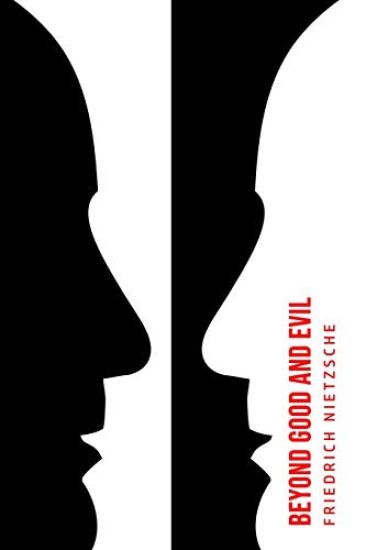
Do you want to read Beyond Good and Evil? If so then keep reading... Beyond Good and Evil: Prelude to a Philosophy of the Future is a book by philosopher Friedrich Nietzsche, first published in 1886. It draws on and expands the ideas of his previous work, Thus Spoke Zarathustra, but with a more critical and polemical approach. In Beyond Good and Evil, Nietzsche accuses past philosophers of lacking critical sense and blindly accepting dogmatic premises in their consideration of morality. Specifically, he accuses them of founding grand metaphysical systems upon the faith that the good man is the opposite of the evil man, rather than just a different expression of the same basic impulses that find more direct expression in the evil man. The work moves into the realm "beyond good and evil" in the sense of leaving behind the traditional morality which Nietzsche subjects to a destructive critique in favour of what he regards as an affirmative approach that fearlessly confronts the perspectival nature of knowledge and the perilous condition of the modern individual. What are you waiting for Beyond Good and Evil is one click away, select the "Buy Now" button in the top right corner NOW

Do you want to read Beyond Good and Evil? If so then keep reading... Beyond Good and Evil: Prelude to a Philosophy of the Future is a book by philosopher Friedrich Nietzsche, first published in 1886. It draws on and expands the ideas of his previous work, Thus Spoke Zarathustra, but with a more critical and polemical approach. In Beyond Good and Evil, Nietzsche accuses past philosophers of lacking critical sense and blindly accepting dogmatic premises in their consideration of morality. Specifically, he accuses them of founding grand metaphysical systems upon the faith that the good man is the opposite of the evil man, rather than just a different expression of the same basic impulses that find more direct expression in the evil man. The work moves into the realm "beyond good and evil" in the sense of leaving behind the traditional morality which Nietzsche subjects to a destructive critique in favour of what he regards as an affirmative approach that fearlessly confronts the perspectival nature of knowledge and the perilous condition of the modern individual. What are you waiting for Beyond Good and Evil is one click away, select the "Buy Now" button in the top right corner NOW

Do you want to read Beyond Good and Evil? If so then keep reading... Beyond Good and Evil: Prelude to a Philosophy of the Future is a book by philosopher Friedrich Nietzsche, first published in 1886. It draws on and expands the ideas of his previous work, Thus Spoke Zarathustra, but with a more critical and polemical approach. In Beyond Good and Evil, Nietzsche accuses past philosophers of lacking critical sense and blindly accepting dogmatic premises in their consideration of morality. Specifically, he accuses them of founding grand metaphysical systems upon the faith that the good man is the opposite of the evil man, rather than just a different expression of the same basic impulses that find more direct expression in the evil man. The work moves into the realm "beyond good and evil" in the sense of leaving behind the traditional morality which Nietzsche subjects to a destructive critique in favour of what he regards as an affirmative approach that fearlessly confronts the perspectival nature of knowledge and the perilous condition of the modern individual. What are you waiting for Beyond Good and Evil is one click away, select the "Buy Now" button in the top right corner NOW