Kirjojen hintavertailu – 12 859 818 kirjaa ja 27 kauppaa

Kirjailija

Friedrich Nietzsche

Kirjat ja teokset yhdessä paikassa: 921 kirjaa, julkaisuja vuosilta 1885–2026, suosituimpiin kuuluu Näin puhui Zarathustra. Vertaile teosten hintoja ja tarkista saatavuus suomalaisista kirjakaupoista.

921 kirjaa

Kirjojen julkaisuvuodet: 1885–2026.

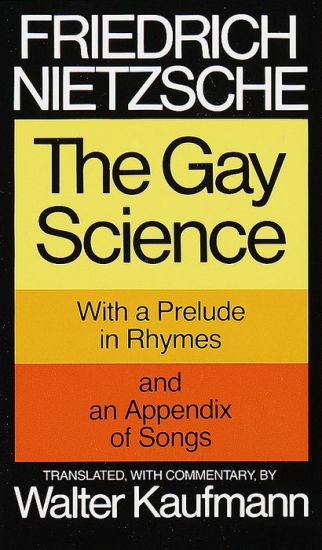
The Gay Science

The Gay Science

Friedrich Nietzsche

Random House USA Inc
1974
pokkari

Halvin toimitettuna 18,70 €

Nietzsche called The Gay Science "the most personal of all my books." It was here that he first proclaimed the death of God--to which a large part of the book is devoted--and his doctrine of the eternal recurrence. Walter Kaufmann's commentary, with its many quotations from previously untranslated letters, brings to life Nietzsche as a human being and illuminates his philosophy. The book contains some of Nietzsche's most sustained discussions of art and morality, knowledge and truth, the intellectual conscience and the origin of logic. Most of the book was written just before Thus Spoke Zarathustra, the last part five years later, after Beyond Good and Evil. We encounter Zarathustra in these pages as well as many of Nietzsche's most interesting philosophical ideas and the largest collection of his own poetry that he himself ever published. Walter Kaufmann's English versions of Nietzsche represent one of the major translation enterprises of our time. He is the first philosopher to have translated Nietzsche's major works, and never before has a single translator given us so much of Nietzsche.
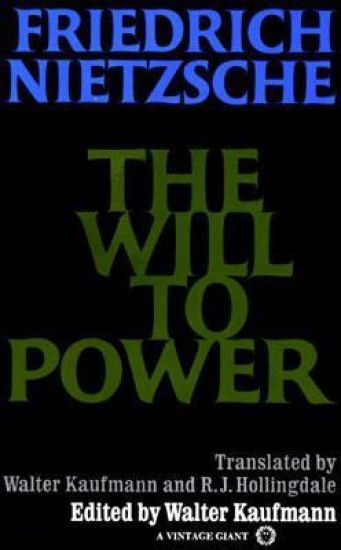
The Will to Power

The Will to Power

Friedrich Nietzsche

Random House USA Inc
1968
pokkari

Halvin toimitettuna 22,00 €

Represents a selection from Nietzche's notebooks to find out what he wrote on nihilism, art, morality, religion, and the theory of knowledge, among others.
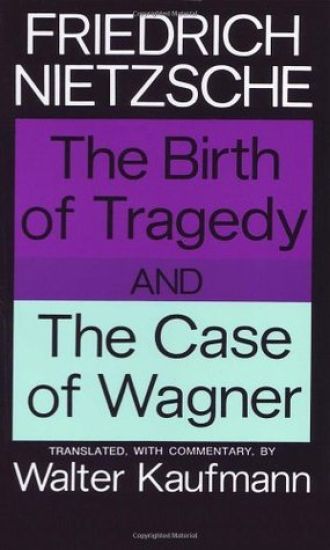
The Birth of Tragedy and The Case of Wagner

The Birth of Tragedy and The Case of Wagner

Friedrich Nietzsche

Random House USA Inc
1967
pokkari

Halvin toimitettuna 17,90 €

Two representative and important works in one volume by one of the greatest German philosophers. The Birth of Tragedy (1872) was Nietzsche's first book. Its youthful faults were exposed by Nietzsche in the brilliant "Attempt at a Self-Criticism" which he added to the new edition of 1886. But the book, whatever its excesses, remains one of the most relevant statements on tragedy ever penned. It exploded the conception of Greek culture that was prevalent down through the Victorian era, and it sounded themes developed in the twentieth century by classicists, existentialists, psychoanalysts, and others. The Case of Wagner (1888) was one Nietzsche's last books, and his wittiest. In attitude and style it is diametrically opposed to The Birth of Tragedy. Both works transcend their ostensible subjects and deal with art and culture, as well as the problems of the modern age generally. Each book in itself gives us an inadequate idea of its author; together, they furnish a striking image of Nietzsche's thought. The distinguished translations by Walter Kaufmann superbly reflect in English Nietzsche's idiom and the vitality of his style. Professor Kaufmann has also furnished running footnote commentaries, relevant passages from Nietzsche's correspondence, a bibliography, and, for the first time in any edition, an extensive index to each book.
The Antichrist

The Antichrist

Friedrich Nietzsche

Binker North
1895
sidottu
The Antichrist is a German philosophy classic by the philosopher Friedrich Nietzsche, originally published in 1895. Although it was written in 1888, its controversial content made Franz Overbeck and Heinrich K selitz delay its publication, along with Ecce Homo. The German title can be translated into English as both "The Anti-Christ" and "The Anti-Christian". The book, however, is a polemic against institutionalized Christianity, not against Christ. Nietzsche claimed in the Foreword to have written the book for a very limited readership. In order to understand the book, he asserted that the reader "... must be honest in intellectual matters to the point of hardness to so much as endure my seriousness, my passion." The reader should be above politics and nationalism. Also, the usefulness or harmfulness of truth should not be a concern. Characteristics such as "Strength which prefers questions for which no one today is sufficiently daring; courage for the forbidden" are also needed. He disdained all other readers. In 1, Nietzsche expressed his dissatisfaction with modernity. He disliked the contemporary "lazy peace," "cowardly compromise," "tolerance" and "resignation." This related to Schopenhauer's claim that knowledge of the inner nature of the world and life results in "... perfect resignation, which is the innermost spirit of Christianity ... ." Nietzsche introduced his concept of will to power in 2. He defined the concepts of good, bad and happiness in relation to the will to power. "What is good? -- All that heightens the feeling of power, the will to power, power itself in man. What is bad? All that proceeds from weakness. What is happiness?-The feeling that power increases-that a resistance is overcome." Nietzsche's words were provocative and shocking in passages such as: "The weak and ill-constituted shall perish: first principle of our philanthropy. And one shall help them to do so. What is more harmful than any vice? -- Active sympathy for the ill-constituted and weak -- Christianity ... ." This is an example of Nietzsche's reaction against Schopenhauer, who had based all morality on compassion. Nietzsche, on the contrary, praised "... virtue free of moralic acid."

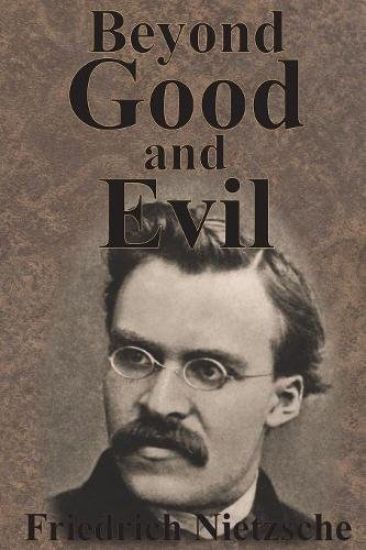
Beyond Good And Evil

Beyond Good And Evil

Friedrich Nietzsche

Chump Change
1885
pokkari

Halvin toimitettuna 15,90 €

Unabridged English value reproduction of Beyond Good And Evil by Friedrich Nietzsche and translated by Helen Zimmern. This philosophical classic is a must read because of its fearless approach to how knowledge is formed. Beyond Good And Evil asks, is truth absolute? Do humans invent ways to fortify already held views or truly seek the truth? Are the powerful more 'right' than the weak? Or is Nietzsche writing down page after page to hear himself talk? Let the reader decide in this slim volume with full text and footnotes, produced at an affordable price. TABLE OF CONTENTSPREFACE 3 CHAPTER I. PREJUDICES OF PHILOSOPHERS 4 CHAPTER II. THE FREE SPIRIT 13 CHAPTER III. THE RELIGIOUS MOOD 21 CHAPTER IV. APOPHTHEGMS AND INTERLUDES 28 CHAPTER V. THE NATURAL HISTORY OF MORALS 33 CHAPTER VI. WE SCHOLARS 41 CHAPTER VII. OUR VIRTUES 49 CHAPTER VIII. PEOPLES AND COUNTRIES 59 CHAPTER IX. WHAT IS NOBLE? 68 FROM THE HEIGHTS 82
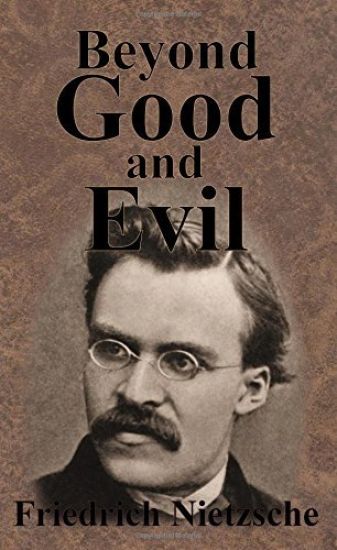
Beyond Good And Evil

Beyond Good And Evil

Friedrich Nietzsche

Chump Change
1885
sidottu
Unabridged English value reproduction of Beyond Good And Evil by Friedrich Nietzsche and translated by Helen Zimmern. This philosophical classic is a must read because of its fearless approach to how knowledge is formed. Beyond Good And Evil asks, is truth absolute? Do humans invent ways to fortify already held views or truly seek the truth? Are the powerful more 'right' than the weak? Or is Nietzsche writing down page after page to hear himself talk? Let the reader decide in this slim volume with full text and footnotes, produced at an affordable price. TABLE OF CONTENTSPREFACE 3 CHAPTER I. PREJUDICES OF PHILOSOPHERS 4 CHAPTER II. THE FREE SPIRIT 13 CHAPTER III. THE RELIGIOUS MOOD 21 CHAPTER IV. APOPHTHEGMS AND INTERLUDES 28 CHAPTER V. THE NATURAL HISTORY OF MORALS 33 CHAPTER VI. WE SCHOLARS 41 CHAPTER VII. OUR VIRTUES 49 CHAPTER VIII. PEOPLES AND COUNTRIES 59 CHAPTER IX. WHAT IS NOBLE? 68 FROM THE HEIGHTS