

Kirjailija
Friedrich Wilhelm Nietzsche
Kirjat ja teokset yhdessä paikassa: 783 kirjaa, julkaisuja vuosilta 1886–2026, suosituimpiin kuuluu The Antichrist. Vertaile teosten hintoja ja tarkista saatavuus suomalaisista kirjakaupoista.
783 kirjaa
Kirjojen julkaisuvuodet: 1886–2026.

A genealogy of morals: Poems is an unchanged, high-quality reprint of the original edition of 1899. Hansebooks is editor of the literature on different topic areas such as research and science, travel and expeditions, cooking and nutrition, medicine, and other genres. As a publisher we focus on the preservation of historical literature. Many works of historical writers and scientists are available today as antiques only. Hansebooks newly publishes these books and contributes to the preservation of literature which has become rare and historical knowledge for the future.
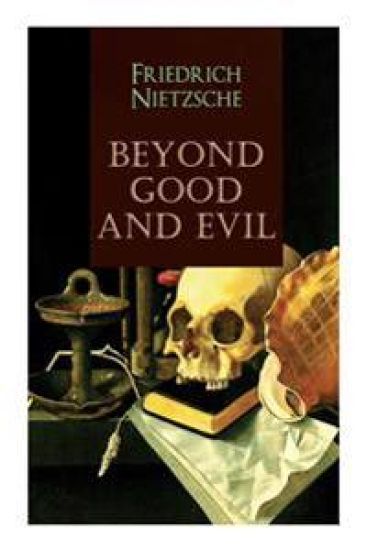
Beyond Good and Evil
Friedrich Wilhelm Nietzsche; Helen Zimmern
E-Artnow
2020
pokkari
Halvin toimitettuna 14,60 €

Thus Spoke Zarathustra: A Book for All and None
Friedrich Wilhelm Nietzsche
Reprint Publishing
2020
nidottu

Beyond Good and Evil: Prelude to a Philosophy of the Future (German: Jenseits von Gut und B se: Vorspiel einer Philosophie der Zukunft) is a book by philosopher Friedrich Nietzsche that expands the ideas of his previous work, Thus Spoke Zarathustra, with a more critical and polemical approach. It was first published in 1886. In Beyond Good and Evil, Nietzsche accuses past philosophers of lacking critical sense and blindly accepting dogmatic premises in their consideration of morality. Specifically, he accuses them of founding grand metaphysical systems upon the faith that the good man is the opposite of the evil man, rather than just a different expression of the same basic impulses that find more direct expression in the evil man. The work moves into the realm "beyond good and evil" in the sense of leaving behind the traditional morality which Nietzsche subjects to a destructive critique in favour of what he regards as an affirmative approach that fearlessly confronts the perspectival nature of knowledge and the perilous condition of the modern individual. Of the four "late-period" writings of Nietzsche, Beyond Good and Evil most closely resembles the aphoristic style of his middle period. In it he exposes the deficiencies of those usually called "philosophers" and identifies the qualities of the "new philosophers" imagination, self-assertion, danger, originality, and the "creation of values". He then contests some of the key presuppositions of the old philosophic tradition like "self-consciousness", "knowledge", "truth", and "free will", explaining them as inventions of the moral consciousness. In their place, he offers the "will to power" as an explanation of all behavior this ties into his "perspective of life", which he regards as "beyond good and evil", denying a universal morality for all human beings. Religion and the master and slave moralities feature prominently as Nietzsche re-evaluates deeply held humanistic beliefs, portraying even domination, appropriation and injury to the weak as not universally objectionable.

Beyond Good and Evil: Prelude to a Philosophy of the Future is a book by philosopher Friedrich Nietzsche, first published in 1886. It draws on and expands the ideas of his previous work, Thus Spoke Zarathustra, but with a more critical and polemical approach. In Beyond Good and Evil, Nietzsche accuses past philosophers of lacking critical sense and blindly accepting dogmatic premises in their consideration of morality. Specifically, he accuses them of founding grand metaphysical systems upon the faith that the good man is the opposite of the evil man, rather than just a different expression of the same basic impulses that find more direct expression in the evil man. The work moves into the realm "beyond good and evil" in the sense of leaving behind the traditional morality which Nietzsche subjects to a destructive critique in favour of what he regards as an affirmative approach that fearlessly confronts the perspectival nature of knowledge and the perilous condition of the modern individual.

A bien des gards, Par-del le bien et le mal est une synth se compl te de la philosophie de Nietzsche sa maturit , et plus particuli rement de sa pens e morale. Le livre se compose de 296 aphorismes, d'une longueur tr s variable. Ces aphorismes sont regroup s th matiquement en neuf chapitres diff rents. Bien que chaque aphorisme puisse tre lu et analys de mani re ind pendante, on peut voir une progression lin aire entre les aphorismes et au sein des chapitres.

On ne m'a pas demand - mais on aurait d me demander -, ce que signifie dans ma bouche, dans la bouche du premier immoraliste, le nom de Zarathoustra, car c'est juste le contraire qui fait le caract re norm ment unique de ce Perse dans l'histoire. Zarathoustra, le premier, a vu dans la lutte du bien et du mal la vraie roue motrice du cours des choses. La transposition en m taphysique de la morale con ue comme force, cause, fin en soi, telle est son oeuvre. Mais cette question pourrait au fond tre consid r e d j comme une r ponse. Zarathoustra cr a cette fatale erreur qu'est la morale; par cons quent il doit aussi tre le premier reconna tre son erreur.


The complete works of Friedrich Nietzsche; A Book for free Spirits (Part I)
Friedrich Wilhelm Nietzsche
Alpha Edition
2020
pokkari
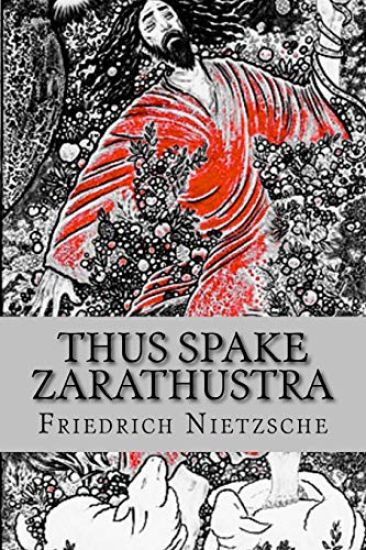
Thus Spake Zarathustra: A Book for All and None
Friedrich Wilhelm Nietzsche
Createspace Independent Publishing Platform
2020
nidottu
Also sprach Zarathustra" redirects here. For the tone poem by Richard Strauss, see Also sprach Zarathustra (Strauss). For the oil painting cycle by Lena Hades, see Also Sprach Zarathustra Thus Spoke Zarathustra: A Book for All and None (German: Also sprach Zarathustra: Ein Buch f r Alle und Keinen, also translated as Thus Spake Zarathustra) is a philosophical novel by German philosopher Friedrich Nietzsche, composed in four parts between 1883 and 1885 and published between 1883 and 1891. Much of the work deals with ideas such as the "eternal recurrence of the same", the parable on the "death of God", and the "prophecy" of the bermensch, which were first introduced in The Gay Science. The book chronicles the fictitious travels and speeches of Zarathustra. Zarathustra's namesake was the founder of Zoroastrianism, usually known in English as Zoroaster . Nietzsche is clearly portraying a "new" or "different" Zarathustra, one who turns traditional morality on its head. He goes on to characterize "what the name of Zarathustra means in my mouth, the mouth of the first immoralist: "
Nietzsche S mtliche Werke: Ausnahmslos Alle Werke Von Friedrich Wilhelm Nietzsche In Einer Bindung In Chronologischer Reihenfolge - S mtliche Werke von Friedrich Nietzsche Als Gesamtausgabe In Einem BandInhaltsverzeichnisDie Geburt der Trag die oder Griechentum und Pessimismus8Versuch einer Selbstkritik8Vorwort an Richard Wagner11Die Geburt der Trag die aus dem Geiste der Musik11Unzeitgem e Betrachtungen42David Strau . Der Bekenner und der Schriftsteller42Vom Nutzen und Nachteil der Historie f r das Leben61Vorwort61Schopenhauer als Erzieher81Richard Wagner in Bayreuth102Menschliches, Allzumenschliches - Ein Buch f r freie Geister120Erster Band120Vorrede120Erstes Hauptst ck. Von den ersten und letzten Dingen123Zweites Hauptst ck. Zur Geschichte der moralischen Empfindungen130Drittes Hauptst ck. Das religi se Leben142Viertes Hauptst ck. Aus der Seele der K nstler und Schriftsteller150F nftes Hauptst ck. Anzeichen h herer und niederer Kultur161Sechstes Hauptst ck. Der Mensch im Verkehr174Siebentes Hauptst ck. Weib und Kind182Achtes Hauptst ck. Ein Blick auf den Staat187Neuntes Hauptst ck. Der Mensch mit sich allein195
This book has been considered by academicians and scholars of great significance and value to literature. This forms a part of the knowledge base for future generations. So that the book is never forgotten we have represented this book in a print format as the same form as it was originally first published. Hence any marks or annotations seen are left intentionally to preserve its true nature.


In 1869, at the age of twenty-four, Friedrich Nietzsche was appointed a professor of classical philology at the University of Basel, a remarkable position for one of his age. The Birth of Tragedy, published in 1872, was his first significant publication. It did little, however, to help his reputation as a scholar; his views were controversial and aroused strong criticism in some quarters. Nietzsche later reissued The Birth of Tragedy in 1886 under the title The Birth of Tragedy, or Hellenism and Pessimism, introducing it with "An Attempt at a Self-Criticism." This audiobook includes this preface.
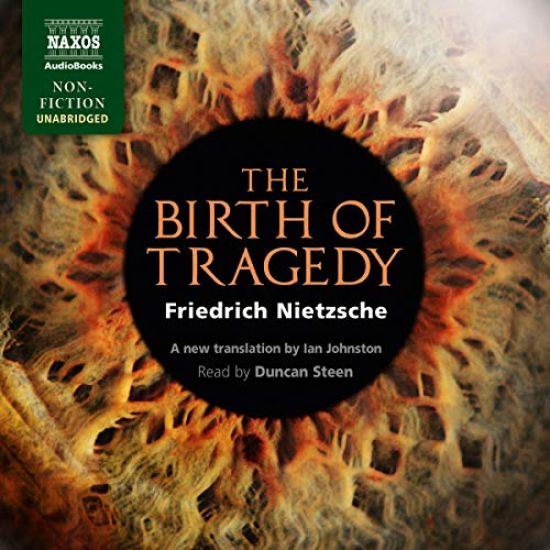
In 1869, at the age of twenty-four, Friedrich Nietzsche was appointed a professor of classical philology at the University of Basel, a remarkable position for one of his age. The Birth of Tragedy, published in 1872, was his first significant publication. It did little, however, to help his reputation as a scholar; his views were controversial and aroused strong criticism in some quarters. Nietzsche later reissued The Birth of Tragedy in 1886 under the title The Birth of Tragedy, or Hellenism and Pessimism, introducing it with "An Attempt at a Self-Criticism." This audiobook includes this preface.


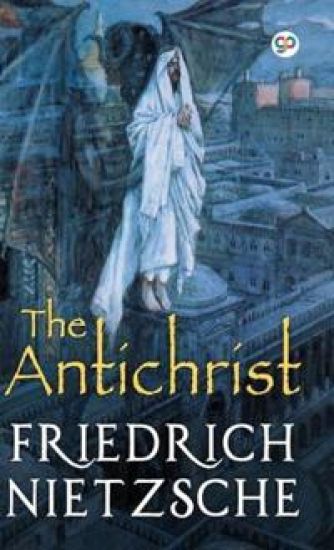
The Antichrist' is Friedrich Nietzsche's great masterpiece, wherein Nietzsche attacks Christianity as a blight on humanity. This classic is essential reading for anyone wishing to understand Nietzsche and his place within the history of philosophy. Nietzsche claimed that to understand this philosophy, the reader should be above politics and nationalism. Also, the usefulness or harmfulness of truth should not be a concern.

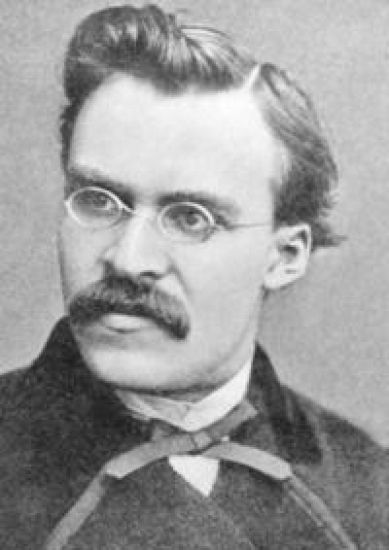
German philosopher, Friedrich Nietzsche was one the most controversial figures of the 19th century. His evocative writings on religion, morality, culture, philosophy, and science were often polemic attacks against the established views of his time. Nietzsche demonstrates that the Christian world is steeped in a false piety and infected with a 'slave morality'. With wit and energy, he turns from this critique to a philosophy that celebrates the present and demands that the individual imposes their own 'will to power' upon the world. As he asserts, the initial form of morality arises from the warrior nature of the ruling castes of ancient civilizations, who viewed themselves as good because of their wealth and power in contrast to the weakness of those that they enslaved.