
Kirjailija
Friedrich Wilhelm Nietzsche
Kirjat ja teokset yhdessä paikassa: 783 kirjaa, julkaisuja vuosilta 1886–2026, suosituimpiin kuuluu The Antichrist. Vertaile teosten hintoja ja tarkista saatavuus suomalaisista kirjakaupoista.
783 kirjaa
Kirjojen julkaisuvuodet: 1886–2026.
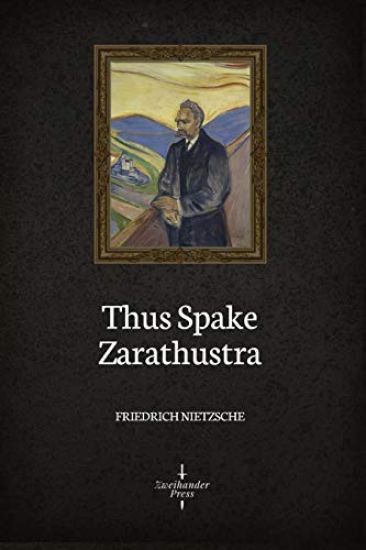
Thus Spake Zarathustra (Illustrated)
Friedrich Wilhelm Nietzsche
Independently Published
2019
nidottu
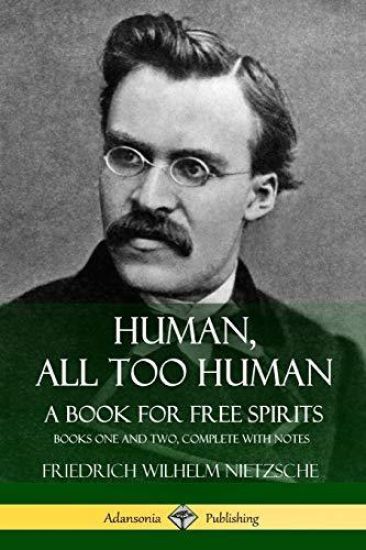
Human, All Too Human, A Book for Free Spirits: Books One and Two, Complete with Notes
Friedrich Wilhelm Nietzsche; Alexander Harvey; Paul Victor Cohn
Lulu.com
2019
nidottu
Halvin toimitettuna 24,50 €
Human, All Too Human is the first book by Friedrich Nietzsche to use the aphoristic style that would become emblematic of his most famous philosophy. This compact and inexpensive print edition ensures that you can absorb and appreciate these philosophical insights at little expense. His style, combining Nietzsche's vehement brand of argument with keynote nihilistic energy, is evident. Quickfire, furious nature of the points made in some respects foreshadow later works in which these qualities are enhanced still further. For the clinical yet perceptive style present in this early work, Nietzsche's adherents compare Human, All Too Human to the earliest works of psychology. Throughout the text, Nietzsche examines human traits and behaviours in a series of short passages, presenting a number of posits and philosophic arguments in each. The shortest of these are only a single paragraph, while the longest run for several.

The Birth Of Tragedy Or Hellenism And Pessimism
Friedrich Wilhelm Nietzsche
Lector House
2019
pokkari
This book is a result of an effort made by us towards making a contribution to the preservation and repair of original classic literature. In an attempt to preserve, improve and recreate the original content, we have worked towards: 1. Type-setting & Reformatting: The complete work has been re-designed via professional layout, formatting and type-setting tools to re-create the same edition with rich typography, graphics, high quality images, and table elements, giving our readers the feel of holding a 'fresh and newly' reprinted and/or revised edition, as opposed to other scanned & printed (Optical Character Recognition - OCR) reproductions. 2. Correction of imperfections: As the work was re-created from the scratch, therefore, it was vetted to rectify certain conventional norms with regard to typographical mistakes, hyphenations, punctuations, blurred images, missing content/pages, and/or other related subject matters, upon our consideration. Every attempt was made to rectify the imperfections related to omitted constructs in the original edition via other references. However, a few of such imperfections which could not be rectified due to intentional\unintentional omission of content in the original edition, were inherited and preserved from the original work to maintain the authenticity and construct, relevant to the work. We believe that this work holds historical, cultural and/or intellectual importance in the literary works community, therefore despite the oddities, we accounted the work for print as a part of our continuing effort towards preservation of literary work and our contribution towards the development of the society as a whole, driven by our beliefs. We are grateful to our readers for putting their faith in us and accepting our imperfections with regard to preservation of the historical content. HAPPY READING

This book is a result of an effort made by us towards making a contribution to the preservation and repair of original classic literature. In an attempt to preserve, improve and recreate the original content, we have worked towards: 1. Type-setting & Reformatting: The complete work has been re-designed via professional layout, formatting and type-setting tools to re-create the same edition with rich typography, graphics, high quality images, and table elements, giving our readers the feel of holding a 'fresh and newly' reprinted and/or revised edition, as opposed to other scanned & printed (Optical Character Recognition - OCR) reproductions. 2. Correction of imperfections: As the work was re-created from the scratch, therefore, it was vetted to rectify certain conventional norms with regard to typographical mistakes, hyphenations, punctuations, blurred images, missing content/pages, and/or other related subject matters, upon our consideration. Every attempt was made to rectify the imperfections related to omitted constructs in the original edition via other references. However, a few of such imperfections which could not be rectified due to intentional\unintentional omission of content in the original edition, were inherited and preserved from the original work to maintain the authenticity and construct, relevant to the work. We believe that this work holds historical, cultural and/or intellectual importance in the literary works community, therefore despite the oddities, we accounted the work for print as a part of our continuing effort towards preservation of literary work and our contribution towards the development of the society as a whole, driven by our beliefs. We are grateful to our readers for putting their faith in us and accepting our imperfections with regard to preservation of the historical content. HAPPY READING
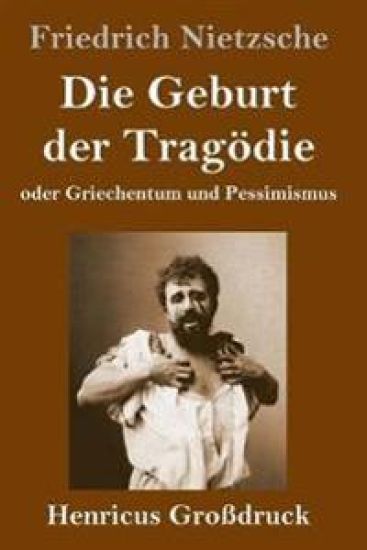
Friedrich Nietzsche: Die Geburt der Trag die oder Griechentum und Pessimismus Lesefreundlicher Gro druck in 16-pt-Schrift Gro format, 210 x 297 mm Berliner Ausgabe, 2019 Durchgesehener Neusatz mit einer Biographie des Autors bearbeitet und eingerichtet von Theodor Borken Entstanden 1869/71. Erstdruck unter dem Titel Die Geburt der Trag die aus dem Geiste der Musik, Leipzig (E. W. Fritzsch) 1872. Neuausgabe unter dem Titel Die Geburt der Trag die oder Griechentum und Pessimismus mit der Vorrede Versuch einer Selbstkritik, Leipzig (E. W. Fritzsch) 1886. Textgrundlage ist die Ausgabe: Friedrich Nietzsche: Werke in drei B nden. Band 1, Herausgegeben von Karl Schlechta. M nchen: Hanser, 1954. Umschlaggestaltung von Thomas Schultz-Overhage unter Verwendung des Bildes: Albert Greiner, Der geblendete dipus, um 1900. Gesetzt aus der Minion Pro, 16 pt. Henricus Edition Deutsche Klassik UG (haftungsbeschr nkt)
BEYOND GOOD AND EVIL - Prelude to a Philosophy of the Future
Friedrich Wilhelm Nietzsche; Helen Zimmern
E-Artnow
2019
pokkari
THUS SPOKE ZARATHUSTRA - A Book for All and None (World Classics Series)
Friedrich Wilhelm Nietzsche; Thomas Common
E-Artnow
2019
pokkari

Also sprach Zarathustra ist ein dichterisch-philosophisches Werk. Im 'Zarathustra' nimmt Nietzsche eine grunds tzliche sprach- und erkenntnistheoretische Reflexion auf seine eigene Philosophie vor, indem er die M glichkeit untersucht, sein Philosophieren zu lehren und als Lehre verbreiten zu k nnen. Die gedankliche Grundbewegung des ganzen Werkes ist die eines Scheiterns im Lehren. Gerade aus diesem Scheitern werden wichtige Grundz ge von Nietzsches philosophischem Denken deutlicher erkennbar. Inhalt: - Zarathustras Vorrede - Die Reden Zarathustras - Von den drei Verwandlungen - Von den Lehrst hlen der Tugend - Von den Hinterweltlern - Von den Ver chtern des Leibes - Von den Freuden- und Leidenschaften - Vom bleichen Verbrecher - Vom Lesen und Schreiben - Vom Baum am Berge - Von den Predigern des Todes - Vom Krieg und Kriegsvolke - Vom neuen G tzen - Von den Fliegen des Marktes - Von der Keuschheit - Vom Freunde - Von tausend und einem Ziele - Von der N chstenliebe - Vom Wege des Schaffenden - Von alten und jungen Weiblein - Vom Bi der Natter - Von Kind und Ehe - Vom freien Tode - Von der schenkenden Tugend - Zweiter Teil. Also sprach Zarathustra - Das Kind mit dem Spiegel - Auf den gl ckseligen Inseln - Von den Mitleidigen - Von den Priestern - Von den Tugendhaften - Vom Gesindel - Von den Taranteln - Von den ber hmten Weisen - Das Nachtlied - Das Tanzlied - Das Grablied - Von der Selbst- berwindung - Von den Erhabenen - Vom Lande der Bildung - Von der unbefleckten Erkenntnis - Von den Gelehrten - Von den Dichtern - Von gro en Ereignissen - Der Wahrsager - Von der Erl sung - Von der Menschen-Klugheit - Die stillste Stunde - Dritter Teil. Also sprach Zarathustra - Der Wanderer - Vom Gesicht und R tsel - Von der Seligkeit wider Willen - Vor Sonnen-Aufgang - Von der verkleinernden Tugend...
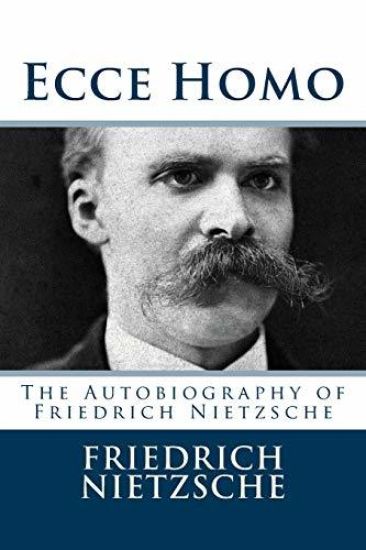
Ecce Homo: The Autobiography of Friedrich Nietzsche
Friedrich Wilhelm Nietzsche
Createspace Independent Publishing Platform
2018
nidottu
Ecce Homo is the last original book written by philosopher Friedrich Nietzsche before his final years of insanity that lasted until his death in 1900. It was written in 1888 and was not published until 1908. According to one of Nietzsche's most prominent English translators, Walter Kaufmann, the book offers "Nietzsche's own interpretation of his development, his works, and his significance." The book contains several chapters with ironic self-laudatory titles, such as "Why I Am So Wise", "Why I Am So Clever", "Why I Write Such Good Books" and "Why I Am a Destiny". Walter Kaufmann, in his biography Nietzsche: Philosopher, Psychologist, Antichrist noticed the internal parallels, in form and language, to Plato's Apology which documented the Trial of Socrates. In effect, Nietzsche was putting himself on trial with this work, and his sardonic judgments and chapter headings are mordant, mocking, self-deprecating, sly, and they turn this trial against his future accusers, distorters, and superficial judges.
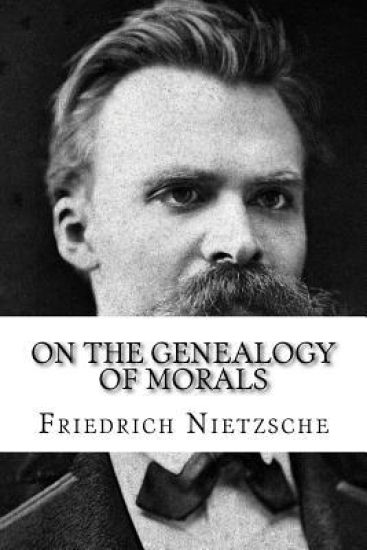
On the Genealogy of Morals
Friedrich Wilhelm Nietzsche
Createspace Independent Publishing Platform
2018
nidottu
On the Genealogy of Morals is an 1887 book by German philosopher Friedrich Nietzsche. It consists of a preface and three interrelated essays that expand and follow through on concepts Nietzsche sketched out in Beyond Good and Evil (1886). The three Abhandlungen trace episodes in the evolution of moral concepts with a view to confronting "moral prejudices", specifically those of Christianity and Judaism. Some Nietzsche scholars consider Genealogy to be a work of sustained brilliance and power as well as his masterpiece. Since its publication, it has influenced many authors and philosophers.

The Antichrist is a book by the philosopher Friedrich Nietzsche, originally published in 1895. Although it was written in 1888, its controversial content made Franz Overbeck and Heinrich K selitz delay its publication, along with Ecce Homo. The German title can be translated into English as either The Anti-Christ or The Anti-Christian, depending on how the German word Christ is translated. Nietzsche claimed in the foreword to have written the book for a very limited readership. In order to understand the book, he asserted that the reader "...must be honest in intellectual matters to the point of hardness to so much as endure my seriousness, my passion." The audience should be above politics and nationalism. Also, the usefulness or harmfulness of truth should not be a concern. Characteristics such as "strength which prefers questions for which no one today is sufficiently daring; courage for the forbidden" are also needed. He disdained all other readers.