Kirjojen hintavertailu – 12 859 819 kirjaa ja 27 kauppaa

Kirjailija

Friedrich Wilhelm Nietzsche

Kirjat ja teokset yhdessä paikassa: 783 kirjaa, julkaisuja vuosilta 1886–2026, suosituimpiin kuuluu The Antichrist. Vertaile teosten hintoja ja tarkista saatavuus suomalaisista kirjakaupoista.

783 kirjaa

Kirjojen julkaisuvuodet: 1886–2026.
The Antichrist

The Antichrist

Friedrich Wilhelm Nietzsche
Createspace Independent Publishing Platform
2018
nidottu
The Antichrist is a book by the philosopher Friedrich Nietzsche, originally published in 1895. Although it was written in 1888, its controversial content made Franz Overbeck and Heinrich K selitz delay its publication, along with Ecce Homo. The German title can be translated into English as either The Anti-Christ or The Anti-Christian, depending on how the German word Christ is translated. Nietzsche claimed in the Foreword to have written the book for a very limited readership. In order to understand the book, he asserted that the reader "... must be honest in intellectual matters to the point of hardness to so much as endure my seriousness, my passion." The reader should be above politics and nationalism. Also, the usefulness or harmfulness of truth should not be a concern. Characteristics such as "Strength which prefers questions for which no one today is sufficiently daring; courage for the forbidden" are also needed. He disdained all other readers.
The Antichrist

The Antichrist

Friedrich Wilhelm Nietzsche

Createspace Independent Publishing Platform
2018
nidottu
The Antichrist is a book by the philosopher Friedrich Nietzsche, originally published in 1895. Although it was written in 1888, its controversial content made Franz Overbeck and Heinrich K selitz delay its publication, along with Ecce Homo. The German title can be translated into English as either The Anti-Christ or The Anti-Christian, depending on how the German word Christ is translated.
The Antichrist

The Antichrist

Friedrich Wilhelm Nietzsche

Lulu.com
2018
pokkari
The famed philosopher Friedrich Nietzsche delivers a scathing critique of Christianity in this infamous little tome, wherein he expounds upon his idea that Christian morality, far from improving the moralistic and ethical weltanschauuang of Western man, has actually conspired to strangle it beneath an incense-reeking floodtide of ennui, weakness, and exultation of the "lowly and botched" at the expense of the strong. Nietzsche, a proponent of the warrior virtues of man, a teacher of the philosophy of "Darwinian struggle," which sees the world in terms of Predator and Prey--was an erudite thinker and wordsmith the likes of which has rarely been equaled in all of history. Love or despise this book, as you read it, you will not soon forget its every subtle, severe proclamation.
Human, All Too Human

Human, All Too Human

Friedrich Wilhelm Nietzsche

Big Nest
2018
pokkari
The book is Nietzsche's first in the aphoristic style that would come to dominate his writings, discussing a variety of concepts in short paragraphs or sayings. Reflecting an admiration of Voltaire as a free thinker, but also a break in his friendship with composer Richard Wagner two years earlier. Friedrich Wilhelm Nietzsche was a German philologist, philosopher, cultural critic, poet and composer. He wrote several critical texts on religion, morality, contemporary culture, philosophy and science, displaying a fondness for metaphor, irony and aphorism. He was twenty four when he was appointed to the Chair of Classical Philology at the University of Basel, the youngest individual to have held this position.
Beyond Good and Evil

Beyond Good and Evil

Friedrich Wilhelm Nietzsche

Big Nest
2018
pokkari
Beyond Good and Evil refers to the traditional morality which Nietzsche subjects to a destructive critique in favour of what he regards as an affirmative approach that fearlessly confronts the perspectival nature of knowledge and the perilous condition of the modern individual. Friedrich Wilhelm Nietzsche was a German philologist, philosopher, cultural critic, poet and composer. He wrote several critical texts on religion, morality, contemporary culture, philosophy and science, displaying a fondness for metaphor, irony and aphorism. He was twenty four when he was appointed to the Chair of Classical Philology at the University of Basel, the youngest individual to have held this position.
The Antichrist

The Antichrist

Friedrich Wilhelm Nietzsche

Big Nest
2018
pokkari
This book belongs to the most rare of men. Perhaps not one of them is yet alive. The conditions under which any one understands me, and necessarily understands me--I know them only too well. Even to endure my seriousness, my passion, he must carry intellectual integrity to the verge of hardness. He must be accustomed to living on mountain tops--and to looking upon the wretched gabble of politics and nationalism as beneath him. He must have become indifferent; he must never ask of the truth whether it brings profit to him or a fatality to him.... Friedrich Wilhelm Nietzsche was a German philologist, philosopher, cultural critic, poet and composer. He wrote several critical texts on religion, morality, contemporary culture, philosophy and science, displaying a fondness for metaphor, irony and aphorism. He was twenty four when he was appointed to the Chair of Classical Philology at the University of Basel, the youngest individual to have held this position.
Thus Spake Zarathustra

Thus Spake Zarathustra

Friedrich Wilhelm Nietzsche

Big Nest
2018
pokkari
The book chronicles the fictitious travels and speeches of Zarathustra. Zarathustra's namesake was the founder of Zoroastrianism, usually known in English as Zoroaster. Nietzsche is clearly portraying a new or different Zarathustra, one who turns traditional morality on its head. Friedrich Wilhelm Nietzsche was a German philologist, philosopher, cultural critic, poet and composer. He wrote several critical texts on religion, morality, contemporary culture, philosophy and science, displaying a fondness for metaphor, irony and aphorism. He was twenty four when he was appointed to the Chair of Classical Philology at the University of Basel, the youngest individual to have held this position.
Beyond Good and Evil

Beyond Good and Evil

Friedrich Wilhelm Nietzsche

Createspace Independent Publishing Platform
2018
nidottu
Beyond Good and Evil by Friedrich Nietzsche and translated by Helen Zimmern. Beyond Good and Evil: Prelude to a Philosophy of the Future is a book by philosopher Friedrich Nietzsche that expands the ideas of his previous work, Thus Spoke Zarathustra, with a more critical and polemical approach. It was first published in 1886. Friedrich Wilhelm Nietzsche was a German philosopher, cultural critic, composer, poet, philologist, and a Latin and Greek scholar whose work has exerted a profound influence on Western philosophy and modern intellectual history. He began his career as a classical philologist before turning to philosophy. He became the youngest ever to hold the Chair of Classical Philology at the University of Basel in 1869 at the age of 24.
Ecce Homo

Ecce Homo

Friedrich Wilhelm Nietzsche

Createspace Independent Publishing Platform
2018
nidottu
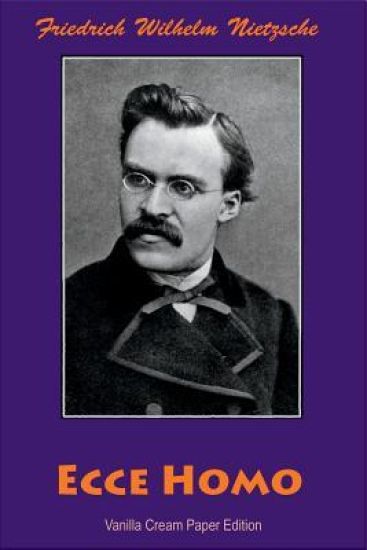
Rare edition with unique illustrations and elegant classic cream paper. In late 1888, only weeks before his final collapse into madness, Nietzsche (1844-1900) set out to compose his autobiography, and Ecce Homo remains one of the most intriguing yet bizarre examples of the genre ever written. In this extraordinary work Nietzsche traces his life, work and development as a philosopher, examines the heroes he has identified with, struggled against and then overcome - Schopenhauer, Wagner, Socrates, Christ - and predicts the cataclysmic impact of his 'forthcoming revelation of all values'. Both self-celebrating and self-mocking, penetrating and strange, Ecce Homo gives the final, definitive expression to Nietzsche's main beliefs and is in every way his last testament. This book is some sort of an autobiography of F. Nietzsche with his own short comments on his books, his literary and musical preferences, Christianity and the future of mankind. He also explains why he is a true immoralist.
The Twilight of the Idols: How to Philosophize with a Hammer

The Twilight of the Idols: How to Philosophize with a Hammer

Friedrich Wilhelm Nietzsche

Createspace Independent Publishing Platform
2018
nidottu

Halvin toimitettuna 16,40 €

The Twilight of the Idols by Friedrich Nietzsche or, How to Philosophise with the Hammer. The Antichrist, Notes to Zarathustra, and Eternal Recurrence and translated By Anthony M. Ludovici. Twilight of the Idols, or, How to Philosophize with a Hammer is a book by Friedrich Nietzsche, written in 1888, and published in 1889. Nietzsche criticizes German culture of the day as unsophisticated and nihilistic, and shoots some disapproving arrows at key French, British, and Italian cultural figures who represent similar tendencies. In contrast to all these alleged representatives of cultural "decadence", Nietzsche applauds Caesar, Napoleon, Goethe, Thucydides and the Sophists as healthier and stronger types. The book states the transvaluation of all values as Nietzsche's final and most important project, and gives a view of antiquity wherein the Romans for once take precedence over the ancient Greeks.
The Dawn of Day: Daybreak: Thoughts on the Prejudices of Morality

The Dawn of Day: Daybreak: Thoughts on the Prejudices of Morality

Friedrich Wilhelm Nietzsche

Createspace Independent Publishing Platform
2018
nidottu
The Dawn of Day by Friedrich Nietzsche and translated by John McFarland Kennedy. The Dawn of Day or Daybreak; English: The Dawn of Day/ Daybreak: Thoughts on the Prejudices of Morality) is an 1881 book by the German philosopher Friedrich Nietzsche. The Nietzsche scholar Keith Ansell-Pearson writes that Dawn is the least studied of all of Nietzsche's works. When Nietzsche called his book The Dawn of Day, he was far from giving it a merely fanciful title to attract the attention of that large section of the public which judges books by their titles rather than by their contents. The Dawn of Day represents, figuratively, the dawn of Nietzsche's own philosophy. Hitherto he had been considerably influenced in his outlook, if not in his actual thoughts, by Schopenhauer, Wagner, and perhaps also Comte. Human, all-too-Human, belongs to a period of transition. After his rupture with Bayreuth, Nietzsche is, in both parts of that work, trying to stand on his own legs, and to regain his spiritual freedom; he is feeling his way to his own philosophy. The Dawn of Day, written in 1881 under the invigorating influence of a Genoese spring, is the dawn of this new Nietzsche. "With this book I open my campaign against morality," he himself said later in his autobiography, the Ecce Homo.
The Antichrist

The Antichrist

Friedrich Wilhelm Nietzsche

Createspace Independent Publishing Platform
2018
nidottu
Rare edition with unique illustrations and elegant classic cream paper. This work is both an unrestrained attack on Christianity and a further exposition of Nietzsche's will-to-power philosophy so dramatically presented in Zarathustra. Christianity, says Nietzsche, represents "everything weak, low, and botched; it has made an ideal out of antagonism towards all the self-preservative instincts of strong life." By contrast, Nietzsche defines good as: "All that enhances the feeling of power, the Will to Power, and power itself in man. What is bad?-All that proceeds from weakness. What is happiness?-The feeling that power is increasing, -that resistance has been overcome." In attempting to redefine the basis of Western values by demolishing what Nietzsche saw as the crippling influence of the Judeo-Christian tradition, THE ANTICHRIST has proved to be highly controversial and continuously stimulating to later generations of philosophers. Includes unique illustrations.