Kirjailija
G. K. Chesterton
Kirjat ja teokset yhdessä paikassa: 2 054 kirjaa, julkaisuja vuosilta 1900–2026, suosituimpiin kuuluu A Miscellany of Poems by G. K. Chesterton. Vertaile teosten hintoja ja tarkista saatavuus suomalaisista kirjakaupoista.
Nimi esiintyy myös muodoissa: G K Chesterton, G.K. Chesterton, G.K Chesterton, G. K Chesterton
2 054 kirjaa
Kirjojen julkaisuvuodet: 1900–2026.
The Man Who Knew Too Much: From behind the overhanging rock came a noise and rush like that of a railway train; and a great motorcar appeared. For the fraction of a flash it seemed to leave the ledge of rock like a flying ship; then the very sky seemed to turn over like a wheel, and it lay a ruin amid the tall grasses below. A little lower the figure of a man with gray hair lay tumbled down the steep green slope, his limbs lying all at random, and his face turned away. He was unquestionably dead. The blood flowed in the grass from a hopelessly fatal fracture at the back of the skull; but the face, which was turned to the sun, was uninjured and strangely arresting in itself. It was one of those cases of a strange face so unmistakable as to feel familiar. . . .
The Innocence of Father Brown
G. K. Chesterton
Wildside Press
2004
sidottu
Halvin toimitettuna 36,30 €
"How in Tartarus," cried Flambeau, "did you ever hear of the spiked bracelet?" "Oh, one's little flock, you know!" said Father Brown, arching his eyebrows rather blankly. "When I was a curate in Hartlepool, there were three of them with spiked bracelets." . . . Not long after he published ORTHODOXY, G. K. Chesterton moved from London to Beaconsfield, and met Father O'Connor. O'Connor had a shrewd insight to the darker side of man's nature, and a mild appearance to go with it -- and together those came together to become Chesterton's unassuming Father Brown. Chesterton loved the character, and the magazones he wrote for loved the stories. THE INNOCENCE OF FATHER BROWN was the first collection of them, and it's a great lot of fun. "Father Brown is a direct challenge to the conventional detective and in many ways he is more amusing and ingenious." -- Saturday Review
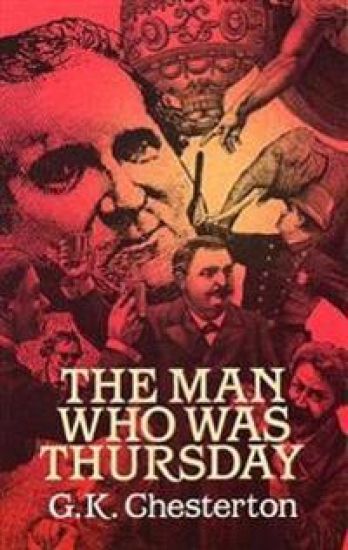
Is THE MAN WHO WAS THURSDAY a gripping adventure story of murderous criminals and brilliant policemen, or something deeper. . . ? We can't discuss the book's denoument here in the cover copy, but this title tempts us. Let us instead say that the book gave us an inevitable and moving experience as the investigators finally discovered who Sunday is.
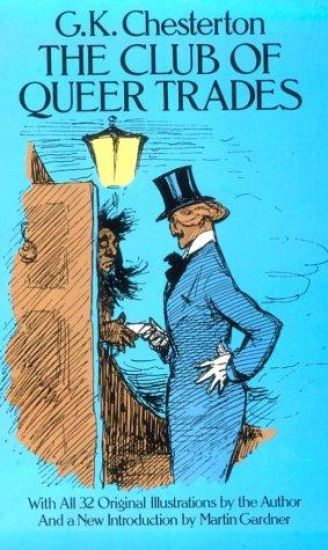
The Club of Queer Trades
G. K. Chesterton
Dover Publications Inc.
2003
nidottu
Halvin toimitettuna 15,90 €
THE CLUB OF QUEER TRADES is G. K. Chesterton's first mystery. It is the story of a club with a membership requirement that is eccentric and typically English: no one can join unless he has created a brand-new profession. So what are the new ways to earn a living? One man offers himself as a butt for repartee, another provides suitable romance for lonely souls.
G. K. Chesterton's surreal masterpiece is a psychological thriller that centers on seven anarchists in turn-of-the-century London who call themselves by the names of the days of the week. Chesterton explores the meanings of their disguised identities in what is a fascinating mystery and, ultimately, a spellbinding allegory. As Jonathan Lethem remarks in his Introduction, The real characters are the ideas. Chesterton's nutty agenda is really quite simple: to expose moral relativism and parlor nihilism for the devils he believes them to be. This wouldn't be interesting at all, though, if he didn't also show such passion for giving the devil his due. He animates the forces of chaos and anarchy with every ounce of imaginative verve and rhetorical force in his body.
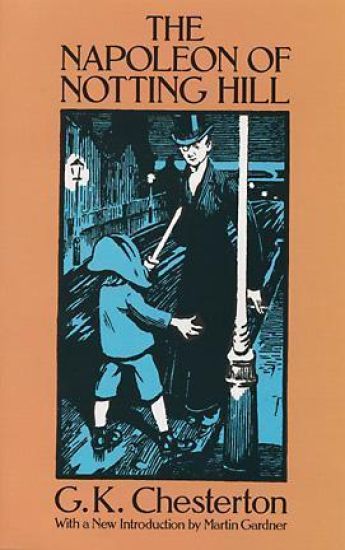
The Napoleon of Notting Hill
G. K. Chesterton
Dover Publications Inc.
2003
nidottu
Halvin toimitettuna 18,80 €
A comical futurist fantasy, first published in 1904, about a tradition-loving suburban London community of the 1980s at war with its modernizing neighbors. Chesterton's splendid storytelling gifts and his sympathies for the plight of small nations trying to remain independent are strongly in evidence. 7 illustrations by W. Graham Robertson. New Introduction by Martin Gardner.
Evan Maclan is a passionate and fiery young Catholic. He is outraged one day by an editorial he reads in The Atheist and vents his anger by smashing the window of the paper's office. He then challenges the editor, Turnbull, to a duel. The feuding men are thwarted at every turn in their attempt to find a suitable place for their fight. While the search goes on they continue their theological debate. They eventually arrive at a position of acceptance and mutual understanding before the story reaches its extremely powerful conclusion.
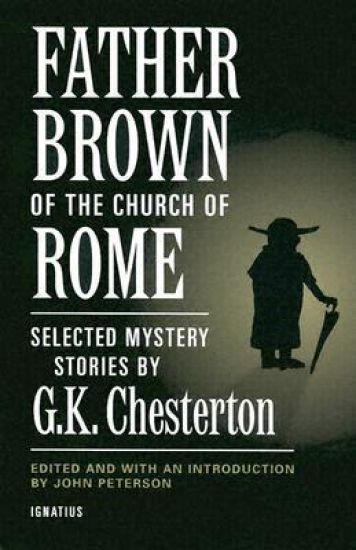
Father Brown of the Church of Rome: Selected Mystery Stories
John Peterson; G. K. Chesterton
IGNATIUS PRESS
2002
nidottu
This is a unique collection of ten of Chesterton's famous Father Brown stories which puts special emphasis on the role that Brown's Catholic faith played in helping him solve the murder mysteries. As Dorothy Sayers once wrote, Chesterton was "the first man of our time to introduce the great name of God into a detective story ... to enlarge the boundaries of the detective story by making it deal with death and real wickedness and real, that is to say, divine judgment." This paperback Father Brown edition includes generous footnotes (not available in other editions) which help to clarify the literary and historical allusions made by Father Brown. It is based on the texts of the original editions by Chesterton for assurance of complete authenticity, and is set in easily readable type. These are excellent short detective yarns in the classic British tradition of Sherlock Holmes - puzzling concoctions of mysterious crimes, dubious suspects and ambiguous clues. They are among the very best of the Father Brown stories.
Chesterton Day by DayHere's G. K. Chesterton's 1912 classic collection of quotes from his writings up to that time, one for each day of the year. In this newly typeset edition, there are notes shedding light on events dimmed by the passage of time, a bibliography of the texts quoted and a detailed 17-page index. (This book was also published as A Chesterton Calendar and The Wit and Wisdom of G. K. Chesterton.)Here are samples from the book:The Christian ideal has not been tried and found wanting. It has been found difficult; and left untried.--January 13Darwinism can be used to back up two mad moralities, but it cannot be used to back up a single sane one. The kinship and competition of all living creatures can be used as a reason for being insanely cruel or insanely sentimental; but not for a healthy love of animals. --January 22Modesty has moved from the organ of ambition. Modesty has settled upon the organ of convictionÑwhere it was never meant to be. A man was meant to be doubtful about himself, but undoubting about the truth: this has been exactly reversed. . . The old humility was a spur that prevented a man from stopping: not a nail in his boot that prevented him from going on. For the old humility made a man doubtful about his efforts, which might make him work harder. But the new humility makes a man doubtful about his aims, which will make him stop working altogether. --April 2It is not by any means self-evident upon the face of it that an institution like the liberty of speech is right or just. It is not natural or obvious to let a man utter follies and abominations which you believe to be bad for mankind any more than it is natural or obvious to let a man dig up a part of the public road, or infect half a town with typhoid fever. The theory of free speech, that truth is so much larger and stranger and more many-sided than we know of, that it is very much better at all costs to hear every oneÕs account of it, is a theory which has been justified upon the whole by experiment, but which remains a very daring and even a very surprising theory. It is really one of the great discoveries of the modern time; but once admitted, it is a principle that does not merely affect politics, but philosophy, ethics, and finally, poetry. --May 9It was Huxley and Herbert Spencer and Bradlaugh who brought me back to orthodox theology. They sowed in my mind my first wild doubts of doubt. Our grandmothers were quite right when they said that Tom Paine and the Freethinkers unsettled the mind. They do. They unsettled mine horribly. The rationalists made me question whether reason was of any use whatever; and when I had finished Herbert Spencer I had got as far as doubting (for the first time) whether evolution had occurred at all. As I laid down the last of Colonel Ingersolls atheistic lectures, the dreadful thought broke into my mind, ÔAlmost thou persuadest me to be a Christian. December 21
Here, together in a single volume, are the two biographies that many critics consider to be Chesterton's best and the best short portraits ever written of these two great saints. St. Francis of Assisi was first published in 1923, shortly after Chesterton was received into the Catholic Church. It is a profoundly Catholic work, explaining and illuminating the life of St. Francis in a way no other biography has. The spiritual kinship the author felt with his subject enables the reader to delve into insights on the character of Francis that have eluded many. St. Thomas Aquinas was written later in Chesterton's career. It also is enriched by the author's unique ability to see the world through the saint's eyes, a view that shows us Aquinas in a fresh way. Chesterton's pen brings the author of the Summa vividly to life.
G. K. Chesterton's surreal masterpiece is a psychological thriller that centers on seven anarchists in turn-of-the-century London who call themselves by the names of the days of the week. Chesterton explores the meanings of their disguised identities in what is a fascinating mystery and, ultimately, a spellbinding allegory. As Jonathan Lethem remarks in his Introduction, "The real characters are the ideas. Chesterton's nutty agenda is really quite simple: to expose moral relativism and parlor nihilism for the devils he believes them to be. This wouldn't be interesting at all, though, if he didn't also show such passion for giving the devil his due. He animates the forces of chaos and anarchy with every ounce of imaginative verve and rhetorical force in his body."
In the second decade of the twentieth century, an idea became all too fashionable among those who feel it is their right to set social trends. Wealthy families took it on as a pet cause, generously bankrolling its research. The New York Times praised it as a wonderful "new science." Scientists, such as the brilliant plant biologist, Luther Burbank, praised it unashamedly. Educators as prominent as Charles Elliot, President of Harvard University, promoted it as a solution to social ills. America's public schools did their part. In the 1920s, almost three-fourths of high school social science textbooks taught its principles. Not to be outdone, judges and physicians called for those principles to be enshrined into law. Congress agree, passing the 1924 immigration law to exclude from American shores the people of Eastern and Southern Europe that the idea branded as inferior. In 1927, the U. S. Supreme Court joined the chorus, ruling by a lopsided vote of 8 to 1 that the sterilization of unwilling men and women was constitutional. That idea was eugenics and in the English-speaking world it had virtually no critics among the "chattering classes." When he wrote this book, Chesterton stood virtually alone against the intellectual world of his day. Yet to his eternal credit, he showed no sign of being intimidated by the prestige of his foes. On the contrary, he thunders against eugenics, ranking it one of the great evils of modern society. And, in perhaps one of the most chillingly accurate prophecies of the century, he warns that the ideas that eugenics had unleashed were likely to bear bitter fruit in another nation. That nation was Germany, the "very land of scientific culture from which the ideal of a Superman had come." In fact, the very group that Nazism tried to exterminate, Eastern European Jews, and the group it targeted for later extermination, the Slavs, were two of those whose biological unfitness eugenists sought so eagerly to confirm. What are sometimes called the "excesses" of Nazism drove the open advocacy of eugenics underground. But there's little evidence that the elements of society who once trumpeted the idea have changed their mind. Dr. Alan Guttmacher provides a good example. The fact that he had been Vice-President of the American Eugenics Association was no hindrance to his assuming the Presidency of Planned ParenthoodÐWorld Population in 1962. And his seedy past did not keep Congress from providing millions of dollars in federal funds to Planned Parenthood. Nor did it stop the Supreme Court from carrying out the central item in Dr. Guttmacher's political agendaÑlegalized abortion. Many of those who now admit that eugenics was evil have trouble explaining why so few of its advocates were every exposed and why so many are still honored. As the title suggests, eugenics is not the only evil that Chesterton blasts. Socialism gets some brilliantly worded broadsides and Chesterton, in complete fairness, does not spare capitalism. He also attacks the scientifically justified regimentation that others call the "health police." The same rationalizations that justified eugenics, he notes, can also be used to deprive a working man of his beer or any man of his pipe. Although it was first published in 1922, there's a startling relevance to what Chesterton had to say about mettlesome bureaucrats who deprive life of its little pleasures and freedoms. His tale about an unfortunate man fired because "his old cherry-briar" "might set the water-works on fire" is priceless. That tale illustrates Chesterton's brilliant use of humor, a knack his foes were quick to realize. In their review of his book, Birth Control News griped, "His tendency is reactionary, and as he succeeds in making most people laugh, his influence in the wrong direction is considerable. Eugenics Review was even blunter. "The only interest in this book," they said, "is pathological. It is a revelation of the ineptitude to which ignorance and blind prejudice may reduce an intelligent man." History has been far kinder to Chesterton than to his critics. It's now generally agree that eugenics was born of evolution and the "ignorance and blind prejudice" of social elites. But never forget that Chesterton was the first to say so, condemning what many of his peers praised. The completely new edition of Chesterton's classic includes almost fifty pages from the writings of Chesterton's opponents. They illustrate just how accurate his attacks on eugenists were. For researchers, it also includes a detailed, 13-page index.

The beloved fictional detective Father Brown solves 12 of his most puzzling cases in this copiously annotated edition. This first collection of Father Brown mysteries, widely considered the author's best, includes "The Blue Cross" "The Hammer of God," "The Eye of Apollo" and more.