Kirjailija
G. K. Chesterton
Kirjat ja teokset yhdessä paikassa: 2 054 kirjaa, julkaisuja vuosilta 1900–2026, suosituimpiin kuuluu A Miscellany of Poems by G. K. Chesterton. Vertaile teosten hintoja ja tarkista saatavuus suomalaisista kirjakaupoista.
Nimi esiintyy myös muodoissa: G K Chesterton, G.K. Chesterton, G.K Chesterton, G. K Chesterton
2 054 kirjaa
Kirjojen julkaisuvuodet: 1900–2026.
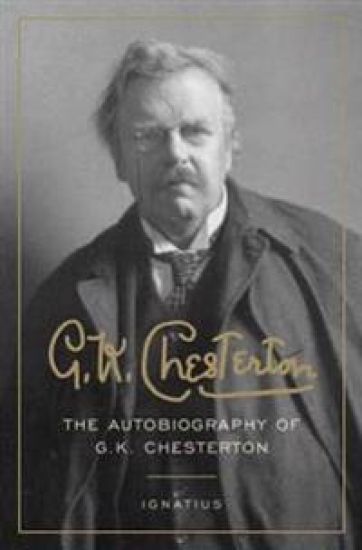
Here is a special two-in-one book that is both by G. K. Chesterton and about Chesterton. This volume offers an irresistible opportunity to see who this remarkable man really was. Chesterton was one of the most stimulating and well-loved writers of the 20th century. His 100 books, and hundreds of essays and columns on a great variety of themes have made G. K. Chesterton the most widely quoted writers of modern times. Here is Chesterton in his own words, in a book he preferred not to write, but did so near the end of his life after much insistence by friends and admirers. Critic Sydney Dark wrote after Chesterton died that "perhaps the happiest thing that happened in Gilbert Chesterton's extraordinarily happy life was that his autobiography was finished a few weeks before his death. It is a stimulating, exciting, tremendously interesting book. It is a draught--indeed, several draughts one after the other--of human and literary champagne."
The Innocence and Wisdom of Father Brown (Barnes & Noble Library of Essential Reading)
G. K. Chesterton
Barnes Noble Inc
2005
pokkari
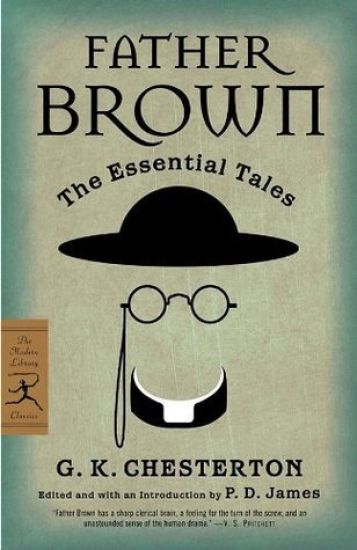
Contrary to first impressions, G. K. Chesterton's "Father Brown" is not senile, nor easily rattled. In fact, this village priest wanders into challenges that pale in comparison to the things he has heard through the screen of the confessional. For to hear Father Brown tell it, crime is a manifestation of sin: the criminal must be caught, but he or she must also be saved; the culprit has to be locked up, but the spirit must be freed.
In these twelve classic detective stories exclusively selected and introduced by bestselling author P. D. James, Father Brown uses his intuition and common sense to unmask villains, capture crooks, and solve one puzzling case after another.
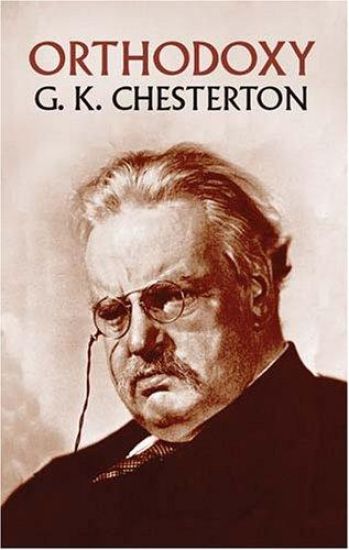
"Orthodoxy, as author G. K. Chesterton employs the term here, means "right opinion." In this, the masterpiece of his brilliant literary career, Chesterton applies the concept of correct reasoning to his acceptance of Christian faith. Written in a down-to-earth and familiar style, "Orthodoxy nevertheless presents formal, scholarly arguments. Paradox and contradiction, Chesterton maintains, do not constitute barriers to belief; imagination and intuition are as relevant to the processes of thought and understanding as logic and rationality. He defines his insights with thought-provoking analogies, personal anecdotes, and engaging humor, making his century-old book a work of enduring charm and persuasion. Unabridged republication of the classic 1908 edition.
The Man Who Was Thursday (Barnes & Noble Library of Essential Reading)
G. K. Chesterton
Barnes Noble Inc
2004
pokkari
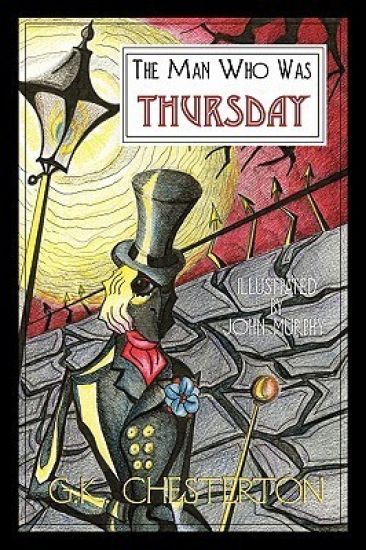
"The Man Who Was Thursday: A Nightmare 1908" is the most renowned and critically acclaimed novel by the prolific G. K. Chesterton. Equal parts mystery, suspense story, allegory, and farce, it is considered a classic of the spy genre while at the same time almost constitutes a genre of its own. Each rereading of "The Man Who Was Thursday", the hero, Gabriel Syme, is Chesterton's ideal of the virtuous Common Man. He must infiltrate and try to thwart an anarchist cell, whose heart is the mysterious and ambiguous Sunday, man whose powers seem almost godlike. Syme's mission lead him through the back ways of Victorian London and on a wild Chase through the French country-side, and adventure at once madcap, surreal, and cosmically important. More than just charming tale of Dickensian characters and a mysterious man who was supposed to be 'Thursday', "The Man Who Was Thursday" asks the dark questions: Will the human race survive? It is a question as relevant at the start of the twenty-first century as it was at the beginning of the twentieth.
This edition of Chesterton's masterpiece and most famous novel, The Man Who Was Thursday, explicates and enriches the complete text with extensive footnotes, together with an introductory essay on the metaphysical meaning of Chesterton's profound allegory. Martin Gardner sees the novel's anarchists as symbols of our God-given free will, and the mysterious Sunday as representing Nature, with its strange mixture of good and evil when considered as distinct from God, as a mask hiding the transcendental face of the creator. The book also includes a bibliography listing the novel's many earlier editions and stage dramatizations, as well as numerous illustrations that further illuminate the text. Illustrated