Kirjojen hintavertailu – 12 859 819 kirjaa ja 27 kauppaa

Kirjailija

G. K. Chesterton

Kirjat ja teokset yhdessä paikassa: 2 054 kirjaa, julkaisuja vuosilta 1900–2026, suosituimpiin kuuluu A Miscellany of Poems by G. K. Chesterton. Vertaile teosten hintoja ja tarkista saatavuus suomalaisista kirjakaupoista.

Nimi esiintyy myös muodoissa: G K Chesterton, G.K. Chesterton, G.K Chesterton, G. K Chesterton

2 054 kirjaa

Kirjojen julkaisuvuodet: 1900–2026.

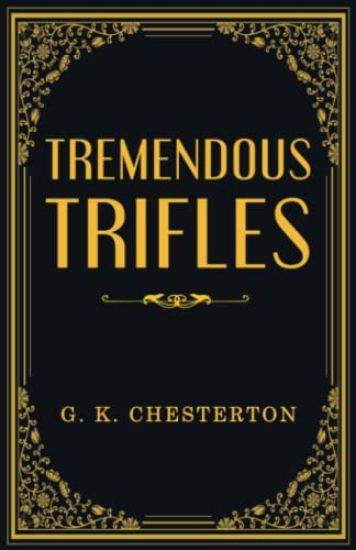
Tremendous Trifles

Tremendous Trifles

G K Chesterton

Classy Publishing
2023
nidottu
Probably Chesterton's most popular book of essays. The thirty-nine short essays that make up Chesterton's delightful book. Among this collection: "A Piece of Chalk", where a drawing exercise turns into a lesson on the nature of truth, "Twelve Men", an explanation on why we have juries made of our peers and not professional jurors, "The Dragon's Grandmother", on why we should read fairy tales to our children along with many more endearing reflections. Chesterton looks at ordinary things and asks us to see how extraordinary they are-the contents of his pockets, the items in a railway station, pedestrians in the street. What appear to be trifles are actually tremendous, and he uses them as a springboard to expound on Christianity, the nuclear family, democracy, and the like with supreme clarity and wit. The essays gathered here are a testament to G. K. Chesterton's faith-not his faith in religion or a higher power, but in the ability to discover something wonderful in the objects, the experiences, and the people that cross our paths every single day. With his unique brand of humor and insight, he demonstrates how the commonplace adds enormous value to the landscape of daily life. Chesterton's commentaries first published nearly a century ago-remain fresh today.
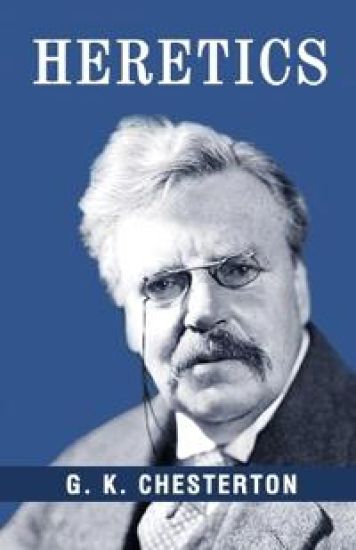
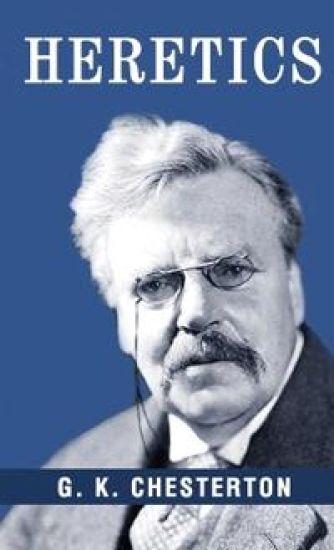
Heretics

Heretics

G K Chesterton

Classy Publishing
2023
nidottu
In Heretics, the topics Chesterton debates are as universal to the "vague moderns" of the 21st century as they were to those of the 20th. Focusing on "heretics" - those who pride themselves on their superiority to Christian views - Chesterton appraises prominent figures who fall into that category from the literary and art worlds. Luminaries such as Rudyard Kipling, George Bernard Shaw, H. G. Wells, and James McNeill Whistler come under the author's scrutiny, where they meet with equal measures of his characteristic wisdom and good humor. The topics he touches upon range from cosmology to anthropology to soteriology and he argues against French nihilism, German humanism, English utilitarianism, the syncretism of 'the vague modern', Social Darwinism, eugenics and the arrogance and misanthropy of the European intelligentsia. Together with Orthodoxy, this book is regarded as central to his corpus of moral theology.
The Everlasting Man

The Everlasting Man

G K Chesterton

Classy Publishing
2023
nidottu
"There are two ways of getting home; and one of them is to stay there. The other is to walk round the whole world till we come back to the same place." -G. K. Chesterton What, if anything, is it that makes the human uniquely human? This, in part, is the question that G. K. Chesterton starts with exploration of human history in this classic. Responding to the evolutionary materialism of his contemporary H. G. Wells, Chesterton in this work affirms human uniqueness and the unique message of the Christian faith. Writing at a time when social Darwinism was increasingly popular, Chesterton argued that the idea that society has been steadily progressing from a starting point of primitivism towards civilization, and of Jesus Christ as simply another charismatic figure, is completely inaccurate. Chesterton saw in Christianity a rare blending of philosophy and mythology, which he felt satisfies both the mind and the heart. Here, as so often in Chesterton, we sense a lived, awakened faith. All that he writes derives from a keen intellect guided by the heart's own knowledge.
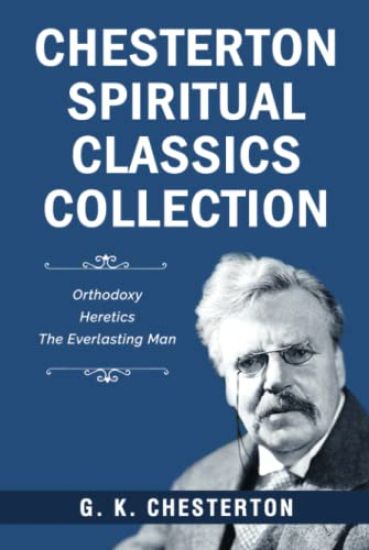
Chesterton Spiritual Classics Collection

Chesterton Spiritual Classics Collection

G K Chesterton

Classy Publishing
2023
sidottu
Three Books in One The three great apologies of G. K. Chesterton in one volume: Orthodoxy, Heretics & The Everlasting Man. This collection combines three of G. K. Chesterton's most recognized works into one convenient volume. This is perfect volume for Chesterton lovers, and students. Included in this book: OrthodoxyHereticsThe Everlasting ManIn Orthodoxy, G. K. Chesterton gives a stirring defense of Christianity. Chesterton fought against the reductionist materialism with laughter, joy, and gratitude for the beauty of the world God has given us. We usually think of orthodoxy and the tenets of the Christian faith as dry, arbitrary, and perhaps even nonsensical. Chesterton shows that orthodoxy is beautiful and fits perfectly the strange, quirky world. For those of us who do not pay any attention to the strangeness of the world, this book is essential reading. The world may not have fairies, but it does have the sun, rivers, trees, and the sky, and they are as strange as anything we will find in a fairy tale. Read this book, then go outside and marvel. In Heretics, the topics Chesterton debates are as universal to the "vague moderns" of the 21st century as they were to those of the 20th. Focusing on "heretics" - those who pride themselves on their superiority to Christian views - Chesterton appraises prominent figures who fall into that category from the literary and art worlds. Luminaries such as Rudyard Kipling, George Bernard Shaw, H. G. Wells, and James McNeill Whistler come under the author's scrutiny, where they meet with equal measures of his characteristic wisdom and good humor. The topics he touches upon range from cosmology to anthropology to soteriology and he argues against French nihilism, German humanism, English utilitarianism, the syncretism of 'the vague modern', Social Darwinism, eugenics and the arrogance and misanthropy of the European intelligentsia. Together with Orthodoxy, this book is regarded as central to his corpus of moral theology. What, if anything, is it that makes the human uniquely human? This, in part, is the question that G. K. Chesterton starts with exploration of human history in this classic. Responding to the evolutionary materialism of his contemporary H. G. Wells, Chesterton in this work affirms human uniqueness and the unique message of the Christian faith. Writing at a time when social Darwinism was increasingly popular, Chesterton argued that the idea that society has been steadily progressing from a starting point of primitivism towards civilization, and of Jesus Christ as simply another charismatic figure, is completely inaccurate. Chesterton saw in Christianity a rare blending of philosophy and mythology, which he felt satisfies both the mind and the heart. Here, as so often in Chesterton, we sense a lived, awakened faith. All that he writes derives from a keen intellect guided by the heart's own knowledge.
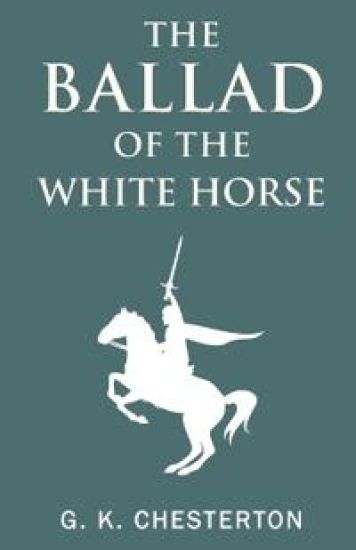
The Ballad of the White Horse

The Ballad of the White Horse

G K Chesterton

Classy Publishing
2023
nidottu
The Ballad of the White Horse is one of the last great epic poems in the English language. In the dark times before a unified England, warring tribes roved and sparred for territory across the British Isles. The Ballad of the White Horse records the deeds and military accomplishments of Alfred the Great as he defeats the invading Danes at the Battle of Ethandun. The poem follows the battle-from the gathering of the chiefs to the last war cry-with a care to rhythm, sound, and language that makes it a magnificent work of art as well as a vital piece of English history. Chesterton incorporates brilliant imagination, atmosphere, moral concern, chronological continuity, wisdom and fancy. He makes his stanzas reverberate with sound, and hurries his readers into the heart of the battle.
Chesterton Spiritual Classics Collection

Chesterton Spiritual Classics Collection

G K Chesterton

Classy Publishing
2023
nidottu
Three Books in One The three great apologies of G. K. Chesterton in one volume: Orthodoxy, Heretics & The Everlasting Man. This collection combines three of G. K. Chesterton's most recognized works into one convenient volume. This is perfect volume for Chesterton lovers, and students. Included in this book: - Orthodoxy - Heretics - The Everlasting Man In Orthodoxy, G. K. Chesterton gives a stirring defense of Christianity. Chesterton fought against the reductionist materialism with laughter, joy, and gratitude for the beauty of the world God has given us. We usually think of orthodoxy and the tenets of the Christian faith as dry, arbitrary, and perhaps even nonsensical. Chesterton shows that orthodoxy is beautiful and fits perfectly the strange, quirky world. For those of us who do not pay any attention to the strangeness of the world, this book is essential reading. The world may not have fairies, but it does have the sun, rivers, trees, and the sky, and they are as strange as anything we will find in a fairy tale. Read this book, then go outside and marvel. In Heretics, the topics Chesterton debates are as universal to the "vague moderns" of the 21st century as they were to those of the 20th. Focusing on "heretics" - those who pride themselves on their superiority to Christian views - Chesterton appraises prominent figures who fall into that category from the literary and art worlds. Luminaries such as Rudyard Kipling, George Bernard Shaw, H. G. Wells, and James McNeill Whistler come under the author's scrutiny, where they meet with equal measures of his characteristic wisdom and good humor. The topics he touches upon range from cosmology to anthropology to soteriology and he argues against French nihilism, German humanism, English utilitarianism, the syncretism of 'the vague modern', Social Darwinism, eugenics and the arrogance and misanthropy of the European intelligentsia. Together with Orthodoxy, this book is regarded as central to his corpus of moral theology. What, if anything, is it that makes the human uniquely human? This, in part, is the question that G. K. Chesterton starts with exploration of human history in this classic. Responding to the evolutionary materialism of his contemporary H. G. Wells, Chesterton in this work affirms human uniqueness and the unique message of the Christian faith. Writing at a time when social Darwinism was increasingly popular, Chesterton argued that the idea that society has been steadily progressing from a starting point of primitivism towards civilization, and of Jesus Christ as simply another charismatic figure, is completely inaccurate. Chesterton saw in Christianity a rare blending of philosophy and mythology, which he felt satisfies both the mind and the heart. Here, as so often in Chesterton, we sense a lived, awakened faith. All that he writes derives from a keen intellect guided by the heart's own knowledge. Gilbert Keith Chesterton was an English writer, philosopher, Christian apologist, a literary and art critic. He has been referred to as the ""prince of paradox"". Of his writing style, Time observed: ""Whenever possible, Chesterton made his points with popular sayings, proverbs, allegories-first carefully turning them inside out."" Chesterton created the fictional priest-detective Father Brown, and wrote on apologetics. Even some of those who disagree with him have recognised the wide appeal of such works as Orthodoxy and The Everlasting Man. Chesterton routinely referred to himself as an orthodox Christian, and came to identify this position more and more with Catholicism, eventually converting to Roman Catholicism from high church Anglicanism. Biographers have identified him as a successor to such Victorian authors as Matthew Arnold, Thomas Carlyle, John Henry Newman and John Ruskin.