Kirjojen hintavertailu – 12 859 824 kirjaa ja 27 kauppaa
Kirjailija
G. K. Chesterton
Kirjat ja teokset yhdessä paikassa: 2 054 kirjaa, julkaisuja vuosilta 1900–2026, suosituimpiin kuuluu A Miscellany of Poems by G. K. Chesterton. Vertaile teosten hintoja ja tarkista saatavuus suomalaisista kirjakaupoista.
Nimi esiintyy myös muodoissa: G K Chesterton, G.K. Chesterton, G.K Chesterton, G. K Chesterton
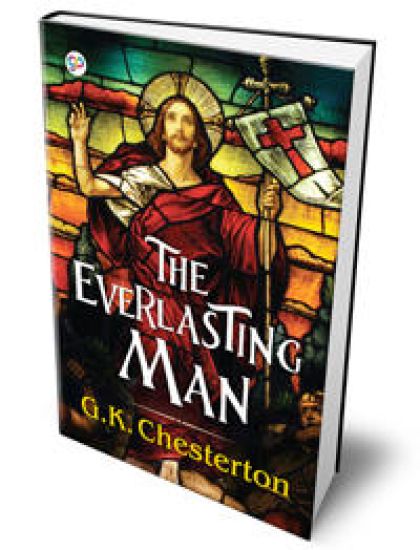
In this book G. K. Chesterton explains how religion-a blend of philosophy and mythology-satisfies both the human intellect and the spirit, and sets man starkly apart from any other living creature. Addressing evolution, feminism, and cultural relativism within the context of religion, the book also examines religious skepticism. According to Chesterton, the shape of the key is not important. What matters is that it fits the lock and opens the door. An emphatic affirmation of Christian faith, The Everlasting Man is leavened with the author's characteristic wit and wisdom, and appeals to the mind as well as the heart.
A shadowy cabal of anarchists has risen in London, and Scotland Yard is determined to bring them down. When Gabriel Syme joins the undercover detail tasked with infiltrating the anarchists' operations, he soon finds himself sitting on their Supreme Council with the code name "Thursday." But as Syme unearths the Council's true nature, it slowly becomes clear that no one in this battle between law and chaos is as they seem - and that Scotland Yard may have created the very problem they're trying to solve. Challenge all assumptions and uncover the truth in this absorbing adaptation of the 1908 satire by G. K. Chesterton.
David Bentley Hart; Chris Arnade; Eugene McCarraher; Brandon M. Terry; Eberhard Arnold; G. K. Chesterton; Maria Hengeveld; John Rhodes; Harold Muñoz; Susannah Black; Jason Landsel
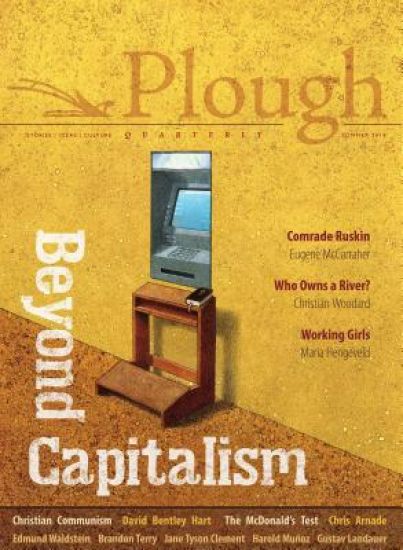
Is there a better way than capitalism? A much-cited recent poll found that more young Americans have a positive view of socialism than of capitalism. There’s a sense of newly opened possibilities: Might this be the moment for a mass movement of solidarity to overthrow the tyranny of concentrated power and wealth? But what exactly is this cause? Socialism’s champions know how to take effective whacks at capitalism, but diagnosis is not yet the cure. This issue of Plough springs from a conviction that there is a better answer beyond capitalism and socialism, a freely chosen life of sharing and caring that overcomes economic exploitation, a way of life that is both thoroughly practical and independent of the state. This vision is much older than Adam Smith and Karl Marx; it lies at the heart of Jesus’ Sermon on the Mount and throughout the New Testament, as well as in the writings of the Old Testament prophets. It is exemplified by the communal life of the first church in Jerusalem, in which “all who believed were together and had all things in common; they would sell their possessions and goods and distribute the proceeds to all, as any had need” (Acts 2:44–45). Also in this issue: poetry by Jane Tyson Clement; reviews of books by Jennifer Berry Hawes, Robert Macfarlane, Emily Bazelon, and John Connell; and art and photography by Wassily Kandinsky, N. C. Wyeth, Deborah Batt, Kari Nielsen, Chris Arnade, William Morris, Hilzías Salazar, Amedeo Modigliani, Benjamin Meader, Bianca Berends, Elise Palmigiani, and Danny Burrows. Plough Quarterly features stories, ideas, and culture for people eager to put their faith into action. Each issue brings you in-depth articles, interviews, poetry, book reviews, and art to help you put Jesus’ message into practice and find common cause with others.
This book is a result of an effort made by us towards making a contribution to the preservation and repair of original classic literature. In an attempt to preserve, improve and recreate the original content, we have worked towards: 1. Type-setting & Reformatting: The complete work has been re-designed via professional layout, formatting and type-setting tools to re-create the same edition with rich typography, graphics, high quality images, and table elements, giving our readers the feel of holding a 'fresh and newly' reprinted and/or revised edition, as opposed to other scanned & printed (Optical Character Recognition - OCR) reproductions. 2. Correction of imperfections: As the work was re-created from the scratch, therefore, it was vetted to rectify certain conventional norms with regard to typographical mistakes, hyphenations, punctuations, blurred images, missing content/pages, and/or other related subject matters, upon our consideration. Every attempt was made to rectify the imperfections related to omitted constructs in the original edition via other references. However, a few of such imperfections which could not be rectified due to intentional\unintentional omission of content in the original edition, were inherited and preserved from the original work to maintain the authenticity and construct, relevant to the work. We believe that this work holds historical, cultural and/or intellectual importance in the literary works community, therefore despite the oddities, we accounted the work for print as a part of our continuing effort towards preservation of literary work and our contribution towards the development of the society as a whole, driven by our beliefs. We are grateful to our readers for putting their faith in us and accepting our imperfections with regard to preservation of the historical content. HAPPY READING
Chesterton en su juventud fue agn stico militante, al casarse con su esposa, protestante practicante, termino por acercarse al cristianismo. Luego, con el pasar de los a os se acerc cada vez m s al Cristianismo. Volvi a la religi n de su infancia, al anglicanismo. G. K. Chesterton, en los a os 20, siguiendo con la defensa de su renovada creencia, cada vez se adentraba m s y m s en los escritos patr sticos. Durante el a o 1921 Chesterton no public ning n libro, pero s se dedic mucho al peri dico "The New Witness". Durante esa poca mantuvo una constante correspondencia con Maurice Baring, el Padre John O'Connor y el Padre Ronald Knox, quienes lo ayudaron mucho a ir de a poco cambiando su pensamiento anglo-cat lico hacia la fe que ellos, todos conversos a su vez al catolicismo profesaban. Y termin por convertirse a la Iglesia cat lica, en la cual ingres en 1922. La conversi n de Chesterton al catolicismo caus un revuelo semejante al que provoc la del cardenal John Henry Newman o la de Ronald Knox y muchos otros personajes reconocidos en el mundo protestante. Chesterton es bien conocido por su apolog tica razonada e incluso algunos de los que no est n de acuerdo con l han reconocido el atractivo universal de obras como la Ortodoxia y el Hombre Eterno. George Bernard Shaw, el "enemigo amistoso" de Chesterton seg n Time, dijo de l: "Era un hombre de genio colosal". La presente obra es una colecci n con razonamientos escritos, en forma de art culos, referentes al tema.
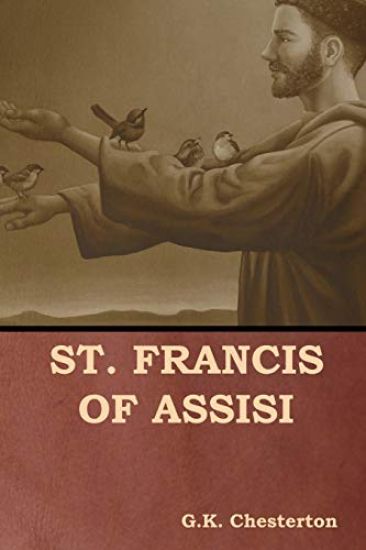
Francis of Assisi is, after Mary of Nazareth, perhaps the greatest saint in the Christian calendar, and one of the most influential men in the whole of human history. By universal acclaim, this biography by G. K. Chesterton is considered the best appreciation of Francis's life--the one that gets to the heart of the matter. For Chesterton, Francis is a great paradoxical figure, a man who loved women but vowed himself to chastity; an artist who loved the pleasures of the natural world as few have loved them, but vowed himself to the most austere poverty, stripping himself naked in the public square so all could see that he had renounced his worldly goods; a clown who stood on his head in order to see the world aright. Chesterton gives us Francis in his world-the riotously colorful world of the High Middle Ages, a world with more pageantry and romance than we have seen before or since. Here is the Francis who tried to end the Crusades by talking to the Saracens, and who interceded with the emperor on behalf of the birds. Here is the Francis who inspired a revolution in art that began with Giotto and a revolution in poetry that began with Dante. Here is the Francis who prayed and danced with pagan abandon, who talked to animals, who invented the creche.
Francis of Assisi is, after Mary of Nazareth, perhaps the greatest saint in the Christian calendar, and one of the most influential men in the whole of human history. By universal acclaim, this biography by G. K. Chesterton is considered the best appreciation of Francis's life--the one that gets to the heart of the matter. For Chesterton, Francis is a great paradoxical figure, a man who loved women but vowed himself to chastity; an artist who loved the pleasures of the natural world as few have loved them, but vowed himself to the most austere poverty, stripping himself naked in the public square so all could see that he had renounced his worldly goods; a clown who stood on his head in order to see the world aright. Chesterton gives us Francis in his world-the riotously colorful world of the High Middle Ages, a world with more pageantry and romance than we have seen before or since. Here is the Francis who tried to end the Crusades by talking to the Saracens, and who interceded with the emperor on behalf of the birds. Here is the Francis who inspired a revolution in art that began with Giotto and a revolution in poetry that began with Dante. Here is the Francis who prayed and danced with pagan abandon, who talked to animals, who invented the creche.
Tremendous Trifles is an unchanged, high-quality reprint of the original edition . Hansebooks is editor of the literature on different topic areas such as research and science, travel and expeditions, cooking and nutrition, medicine, and other genres. As a publisher we focus on the preservation of historical literature. Many works of historical writers and scientists are available today as antiques only. Hansebooks newly publishes these books and contributes to the preservation of literature which has become rare and historical knowledge for the future.