
Kirjailija
G. K. Chesterton
Kirjat ja teokset yhdessä paikassa: 2 054 kirjaa, julkaisuja vuosilta 1900–2026, suosituimpiin kuuluu A Miscellany of Poems by G. K. Chesterton. Vertaile teosten hintoja ja tarkista saatavuus suomalaisista kirjakaupoista.
Nimi esiintyy myös muodoissa: G K Chesterton, G.K. Chesterton, G.K Chesterton, G. K Chesterton
2 054 kirjaa
Kirjojen julkaisuvuodet: 1900–2026.

Utopia of Usurers and Other Essays
G. K. Chesterton
Createspace Independent Publishing Platform
2018
nidottu
"A drove of cattle came into a village called Swords; and was stopped by the rioters."-Daily Paper. In the place called Swords on the Irish road It is told for a new renown How we held the horns of the cattle, and how We will hold the horns of the devils now Ere the lord of hell with the horn on his brow Is crowned in Dublin town. Light in the East and light in the West, And light on the cruel lords, On the souls that suddenly all men knew, And the green flag flew and the red flag flew, And many a wheel of the world stopped, too, When the cattle were stopped at Swords.


In Manalive we follow the madcap adventure of Innocent Smith. Innocent Smith is a man who keeps the commandments but breaks all the conventions, and while doing so he shows us just how absurd those conventions are. Follow him as he breaks into his own house, and then carries on a torrid affair with his own wife. Enjoy a picnic on the roof and then leave home just for the sake of returning home. A joyous and uplifting book.

In Manalive we follow the madcap adventure of Innocent Smith. Innocent Smith is a man who keeps the commandments but breaks all the conventions, and while doing so he shows us just how absurd those conventions are. Follow him as he breaks into his own house, and then carries on a torrid affair with his own wife. Enjoy a picnic on the roof and then leave home just for the sake of returning home. A joyous and uplifting book.
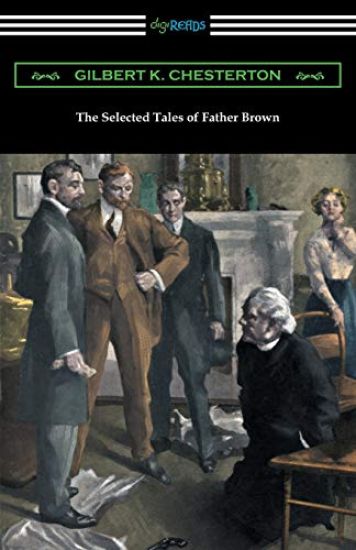
Early 20th century English author Gilbert Keith Chesterton may be best remembered for his stories which feature the character of an English priest and detective named Father Brown. While the character was based on a real life priest who was involved in Chesterton's own conversion of faith, the adventures and mysteries that Father Brown solves are purely fictional. Collected together here are fifteen of Chesterton's most thrilling Father Brown tales which were first collected in "The Innocence of Father Brown" and "The Wisdom of Father Brown". What is interesting about Father Brown is that he does not rely on deductive reasoning like other famous detectives, namely Sherlock Holmes. Instead, Father Brown relies on intuition. He puts himself into the mind of the perpetrator and figures out the criminal's steps along the way. Part of what makes him a great detective is that Father Brown is never shocked by the atrocities that he sees. As a priest, he says that he has already heard about all the awful things people do and think; nothing surprises him anymore. He also refuses to believe in any supernatural explanations and instead focuses on a case's reasonable explanation. "The Selected Tales of Father Brown" collects together some of Chesterton's best Father Brown mysteries in a volume printed on premium acid-free paper.

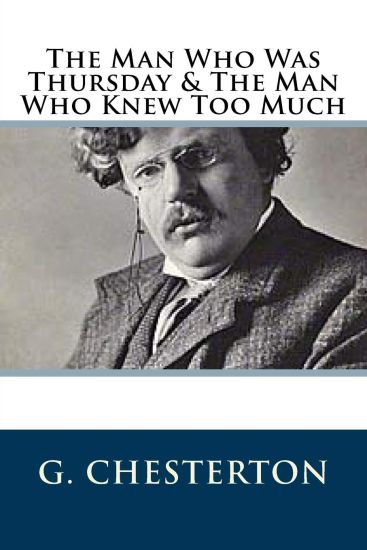
The Man Who Was Thursday & The Man Who Knew Too Much
G. K. Chesterton
Createspace Independent Publishing Platform
2018
nidottu
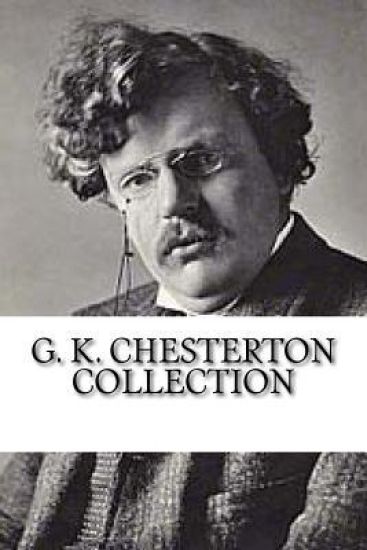
G. K. Chesterton Collection: What's Wrong with the World, Orthodoxy, and Heretics
G. K. Chesterton
Createspace Independent Publishing Platform
2018
nidottu


What's Wrong with the World
G. K. Chesterton
Createspace Independent Publishing Platform
2018
nidottu
A book of modern social inquiry has a shape that is somewhat sharply defined. It begins as a rule with an analysis, with statistics, tables of population, decrease of crime among Congregationalists, growth of hysteria among policemen, and similar ascertained facts; it ends with a chapter that is generally called "The Remedy." It is almost wholly due to this careful, solid, and scientific method that "The Remedy" is never found. For this scheme of medical question and answer is a blunder; the first great blunder of sociology. It is always called stating the disease before we find the cure. But it is the whole definition and dignity of man that in social matters we must actually find the cure before we find the disease.