Kirjojen hintavertailu – 12 859 824 kirjaa ja 27 kauppaa

Kirjailija

G. K. Chesterton

Kirjat ja teokset yhdessä paikassa: 2 054 kirjaa, julkaisuja vuosilta 1900–2026, suosituimpiin kuuluu A Miscellany of Poems by G. K. Chesterton. Vertaile teosten hintoja ja tarkista saatavuus suomalaisista kirjakaupoista.

Nimi esiintyy myös muodoissa: G K Chesterton, G.K. Chesterton, G.K Chesterton, G. K Chesterton

2 054 kirjaa

Kirjojen julkaisuvuodet: 1900–2026.

Father Brown (Gesammelte Krimis)

Father Brown (Gesammelte Krimis)

G K Chesterton

E-Artnow
2017
pokkari
Father Brown ist ein Geistlicher, der mit psychologischem Einf hlungsverm gen und durch logische Schl sse auch die scheinbar mysteri sesten Kriminalf lle l st. Im Gegensatz zu anderen bekannten Romanhelden wie Sherlock Holmes und Agatha Christies Hercule Poirot steht bei Brown nicht so sehr die u ere Logik des Tatherganges, sondern die innere Logik und Motivation des T ters im Vordergrund. Brown ist ein englischer katholischer Pfarrer, der als Hobby Kriminalf lle l st. Dies gelingt ihm, indem er sich in den T ter hineinversetzt, dabei das Verbrechen selbst begeht, wie er sagt. Dabei ist er aber weniger daran interessiert, Verbrecher der irdischen Gerechtigkeit auszuliefern, sondern er will sie zu Gott f hren; eine freiwillige Beichte des T ters gen gt ihm. Dabei spielt es f r ihn keine Rolle, welches Amt diese Person bekleidet. Inhalt: - Das blaue Kreuz - Das Hundeorakel - Der geheime Garten - Israel Gows Ehre - Der Unsichtbare - Mi gestaltet - Die verd chtigen Tritte - Die Sternschnuppen - Die S nden des Prinzen Saradin - Der Hammer Gottes - Das Zeichen des zerbrochenen Schwertes - Die drei Todeswerkzeuge - Ein Pfeil vom Himmel - Der gefl gelte Dolch - Das Verh ngnis der Darnaways - Das Wunder in der Mondstra e - Das goldene Kreuz - Gilbert Keith Chesterton (1874-1936) war ein englischer Schriftsteller und Journalist. In seinen Romanen, Essays und Kriminalgeschichten setzte sich Chesterton intensiv mit modernen Philosophien und Denkrichtungen auseinander.
lo que esta mal en el mundo

lo que esta mal en el mundo

G. K. Chesterton

Createspace Independent Publishing Platform
2017
nidottu
Con su habitual estilo sarc stico, Gilbert Keith Chesterton le da un repaso a la sociedad post victoriana en la que vive y, desde su perspectiva cat lica, analiza los puntos sustanciales que considera dignos de cr tica. Con un lenguaje period stico y manifiestamente ir nico, el autor recorre todos los aspectos humanos de la idiosincrasia brit nica, desde el fen meno sufragista al socialismo, pasando por la educaci n, el clasismo, el capitalismo, el evolucionismo y un sinn mero de '-ismos' hasta llegar a las paradojas de un mundo que para l es m s contradictorio que el anterior. Estamos ante una obra fundamental para entender el pa s, la poca pero, sobre todo, para disfrutar de la prosa de un autor que no ha perdido la vigencia merced a su estilo y tem ticas.
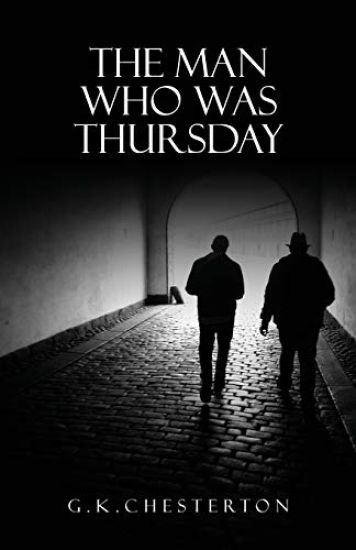
The Man Who Was Thursday: a Nightmare

The Man Who Was Thursday: a Nightmare

G. K. Chesterton

Createspace Independent Publishing Platform
2017
nidottu
The Man Who Was Thursday: A Nightmare is a novel by G. K. Chesterton, first published in 1908. The book has been referred to as a metaphysical thriller. Although it deals with anarchists, the novel is not an exploration or rebuttal of anarchist thought; Chesterton's ad hoc construction of "Philosophical Anarchism" is distinguished from ordinary anarchism and is referred to several times not so much as a rebellion against government but as a rebellion against God.
The Man Who Was Thursday

The Man Who Was Thursday

G. K. Chesterton

Createspace Independent Publishing Platform
2017
nidottu
The Man Who Was Thursday: A Nightmare is a metaphysical thriller that was first published by G. K Chesterton in 1908. The plot begins when Gabriel Syme first gets recruited to a secret anarchist division of Scotland Yard. Heavy with both Christian and religious allegories, the book then follows Syme during his time spent in the division. Rife with optimism, The Man Who Was Thursday is a larger story strung together by solid writing and themes of faith. In this way, the book serves as a great, thrilling tale of transformation, which explores the notion of poetry, the written word and finding light in the dark.
The Club of Queer Trades

The Club of Queer Trades

G. K. Chesterton

Createspace Independent Publishing Platform
2017
nidottu
Full text. A delightful collection of detective stories by G. K. Chesterton. Each quirky story, featuring the 'mystic' former judge Basil Grant, reveals a practitioner of an entirely new profession, and member of the ''Club of Queer Trades''. To gain admittance one must have invented a unique means of earning a living and the subsequent trade being the main source of income.
Heretics

Heretics

G. K. Chesterton

Createspace Independent Publishing Platform
2017
nidottu
Nothing more strangely indicates an enormous and silent evil of modern society than the extraordinary use which is made nowadays of the word "orthodox." In former days the heretic was proud of not being a heretic. It was the kingdoms of the world and the police and the judges who were heretics. He was orthodox. He had no pride in having rebelled against them; they had rebelled against him. The armies with their cruel security, the kings with their cold faces, the decorous processes of State, the reasonable processes of law-all these like sheep had gone astray. The man was proud of being orthodox, was proud of being right. If he stood alone in a howling wilderness he was more than a man; he was a church. He was the centre of the universe; it was round him that the stars swung. All the tortures torn out of forgotten hells could not make him admit that he was heretical. But a few modern phrases have made him boast of it. He says, with a conscious laugh, "I suppose I am very heretical," and looks round for applause. The word "heresy" not only means no longer being wrong; it practically means being clear-headed and courageous. The word "orthodoxy" not only no longer means being right; it practically means being wrong. All this can mean one thing, and one thing only. It means that people care less for whether they are philosophically right. For obviously a man ought to confess himself crazy before he confesses himself heretical. The Bohemian, with a red tie, ought to pique himself on his orthodoxy. The dynamiter, laying a bomb, ought to feel that, whatever else he is, at least he is orthodox.
Breve historia de Inglaterra

Breve historia de Inglaterra

G. K. Chesterton

Createspace Independent Publishing Platform
2017
nidottu
La Breve historia de Inglaterra es un alarde glorioso, un esfuerzo no intentado nunca y conseguido gracias a la limpidez, la fuerza sint tica y la agilidad mental que caracterizan al famoso escritor ingl s. Lo corriente, lo usual es que las historias sean desarrolladas por eruditos y especialistas; de aqu que nadie haya escrito una historia con miras al pueblo o desde el punto de vista del p blico. Las que solemos llamar historias populares m s bien debieran llamarse antipopulares. Todas, casi sin excepci n, est n concebidas en contra del pueblo o lo ignoran o intentan demostrar laboriosamente sus errores. Estas palabras del autor son exact simas, y llevan, adem s, la marca genuina de su temperamento.
The New Jerusalem

The New Jerusalem

G. K. Chesterton

Createspace Independent Publishing Platform
2017
nidottu
In 1919, the famous British pundit and polymath traveled to Palestine to write this philosophical travelogue. He fell in love with Jerusalem, and in the book is quite accepting of the religious and cultural values of the people inhabiting the area. Throughout these controversial passages, he explores the differences between the three major religions. Even more interesting is his analysis of conflicts between Jews and Muslims, which is now considered prophetic.
The Man Who Was Thursday

The Man Who Was Thursday

G K Chesterton

Suzeteo Enterprises
2017
sidottu
G. K. Chesterton was one of the most prolific writers of the 20th century, writing across numerous genres. His many newspaper columns, his detective stories, his philosophical analysis, and his theological exposition once made him a household name. Though not as well known today, each generation discovers Chesterton anew, and in doing so, finds that Chesterton's writings, even if it is his fiction, apply in their time as well as in Chesterton's time. Chesterton's 1908 clever classic, "The Man Who Was Thursday: A Nightmare," is as good of an introduction into Chesterton as any.
Heretics: With Study Questions

Heretics: With Study Questions

G. K. Chesterton

Thebiblepeople.com
2017
nidottu
Chesterton's No-Holds-Barred Critique of Man-Centered Philosophy "We direly need another Chesterton today. ... In a time when culture and faith have drifted even further apart, we could use his brilliance, his entertaining style, and above all his generous and joyful spirit." author Philip Yancey. The companion to G. K. Chesterton's classic Christian book, Orthodoxy. What if abook published in 1905 held the key to understanding today's debates about God, atheism, relativism and philosophy? Are you confused (and perhaps challenged) by the philosophical and religious debates of our time? Do you need help knowing how to discuss religion and philosophy with your nextdoor neighbor? Do you want to better understand the world's beliefs through the wit and wisdom of one of Christianity's greatest writers? G. K. Chesterton's Heretics is for anyone who wants to broaden their understanding of philosophy while staying grounded in God's Word. G. K. Chesterton wrote Heretics in the early 1900s to address what he considered the heresies of his day, but it soon was overshadowed by his follow-up classic book, Orthodoxy (1908). Chesterton, though, considered the two books companion pieces. Heretics is as relevant today as it was a century ago. In Heretics, Chesterton: Confronts the heresies of his day with his trademark no-holding-back wit: "In former days the heretic was proud of not being a heretic," he writes, asserting that "heresy" was no longer taboo. "All this can mean one thing, and one thing only. It means that people care less for whether they are philosophically right. For obviously a man ought to confess himself crazy before he confesses himself heretical." Critiques, by name, the heretics of his day. Among them: H. G. Wells, Bernard Shaw, and Lowes Dickinson. Wells believed "that there are no secure and reliable ideas upon which we can rest." Shaw taught that the "golden rule is that there is no golden rule." Dickinson was a "provocative" supporter of paganism. Chesterton wrote, "The most practical and important thing about a man is still his view of the universe." Explains his belief in Christianity, in typical Chesterton style. "All the empires and the kingdoms of the world] have failed, because ... they were founded by strong men and upon strong men. But this one thing, the historic Christian Church, was founded on a weak man, and for that reason it is indestructible. For no chain is stronger than its weakest link." Chesterton refutes relativism, rationalism, paganism and other man-centered philosophies that were popular during his day -- philosophies that may be even more trendy and prominent in our modern world. Scroll up to buy and find out why C. S. Lewis himself called Chesterton one of the greatest apologists of his time