Kirjojen hintavertailu – 12 859 824 kirjaa ja 27 kauppaa
Kirjailija
G. K. Chesterton
Kirjat ja teokset yhdessä paikassa: 2 054 kirjaa, julkaisuja vuosilta 1900–2026, suosituimpiin kuuluu A Miscellany of Poems by G. K. Chesterton. Vertaile teosten hintoja ja tarkista saatavuus suomalaisista kirjakaupoista.
Nimi esiintyy myös muodoissa: G K Chesterton, G.K. Chesterton, G.K Chesterton, G. K Chesterton
A Collection of Songs by Gilbert Keith Chesterton. The Englishman 4 Wine and Water 6 The Song against Grocers 8 The Rolling English Road 11 The Song of Quoodle 14 Pioneers, O Pioneers 16 The Logical Vegetarian 18 "The Saracen's Head" 20 The Good Rich Man 22 The Song against Songs 25 Me Heart 27 The Song of the Oak 29 The Road to Roundabout 32 The Song of the Strange Ascetic 35 The Song of Right and Wrong 37 Who Goes Home? 39
The Club of Queer Trades is a collection of stories by G. K. Chesterton first published in 1905. Each story in the collection is centered on a person who is making his living by some novel and extraordinary means (a "queer trade")
I. The Unpresentable Appearance of Colonel Crane 4 II. The Improbable Success of Mr. Owen Hood 43 III. The Unobtrusive Traffic of Captain Pierce 88 IV. The Elusive Companion of Parson White 123 V. The Exclusive Luxury of Enoch Oates 159 VI. The Unthinkable Theory of Professor Green 191 VII. The Unprecedented Architecture of Commander Blair 228 VIII. The Ultimate Ultimatum of the League of the Long Bow 265 Chapter I The Unpresentable Appearance of Colonel Crane These tales concern the doing of things recognized as impossible to do; impossible to believe; and, as the weary reader may well cry aloud, impossible to read about. Did the narrator merely say that they happened, without saying how they happened, they could easily be classified with the cow who jumped over the moon or the more introspective individual who jumped down his own throat. In short, they are all tall stories; and though tall stories may also be true stories, there is something in the very phrase appropriate to such a topsy-turvydom; for the logician will presumably class a tall story with a corpulent epigram or a long-legged essay. It is only proper that such impossible incidents should begin in the most prim and prosaic of all places, and apparently with the most prim and prosaic of all human beings. The place was a straight suburban road of strictly-fenced suburban houses on the outskirts of a modern town. The time was about twenty minutes to eleven on Sunday morning, when a procession of suburban families in Sunday clothes were passing decorously up the road to church. And the man was a very respectable retired military man named Colonel Crane, who was also going to church, as he had done every Sunday at the same hour for a long stretch of years. There was no obvious difference between him and his neighbours, except that he was a little less obvious. His house was only called White Lodge, and was, therefore, less alluring to the romantic passer-by than Rowanmere on the one side or Heatherbrae on the other. He turned out spick and span for church as if for parade; but he was much too well dressed to be pointed out as a well-dressed man. He was quite handsome in a dry, sun-baked style; but his bleached blond hair was a colourless sort that could look either light brown or pale grey; and though his blue eyes were clear, they looked out a little heavily under lowered lids. Colonel Crane was something of a survival. He was not really old; indeed he was barely middle-aged; and had gained his last distinctions in the great war. But a variety of causes had kept him true to the traditional type of the old professional soldier, as it had existed before 1914; when a small parish would have only one colonel as it had only one curate. It would be quite unjust to call him a dug-out; indeed, it would be much truer to call him a dug-in. For he had remained in the traditions as firmly and patiently as he had remained in the trenches. He was simply a man who had no taste for changing his habits, and had never worried about conventions enough to alter them. One of his excellent habits was to go to church at eleven o'clock, and he therefore went there; and did not know that there went with him something of an old-world air and a passage in the history of England. As he came out of his front door, however, on that particular morning, he was twisting a scrap of paper in his fingers and frowning with somewhat unusual perplexity.
Gilbert Keith Chesterton, (29 May 1874 - 14 June 1936), better known as G. K. Chesterton, was an English writer, poet, philosopher, dramatist, journalist, orator, lay theologian, biographer, and literary and art critic. Chesterton is often referred to as the "prince of paradox". Time magazine has observed of his writing style: "Whenever possible Chesterton made his points with popular sayings, proverbs, allegories-first carefully turning them inside out
Perhaps the most light-hearted of all Chesterton's "serious" works, Manalive pits a group of disillusioned young people against Mr. Innocent Smith, a bubbly, high-spirited gentleman who literally falls into their midst. Later accused of murder and denounced for philandering everywhere he goes, Smith prompts his newfound acquaintances to recognize an important idea in most unexpected ways.
I. The Unpresentable Appearance of Colonel Crane 4 II. The Improbable Success of Mr. Owen Hood 22 III. The Unobtrusive Traffic of Captain Pierce 43 IV. The Elusive Companion of Parson White 59 V. The Exclusive Luxury of Enoch Oates 76 VI. The Unthinkable Theory of Professor Green 91 VII. The Unprecedented Architecture of Commander Blair 108 VIII. The Ultimate Ultimatum of the League of the Long Bow 126 Chapter I The Unpresentable Appearance of Colonel Crane These tales concern the doing of things recognized as impossible to do; impossible to believe; and, as the weary reader may well cry aloud, impossible to read about. Did the narrator merely say that they happened, without saying how they happened, they could easily be classified with the cow who jumped over the moon or the more introspective individual who jumped down his own throat. In short, they are all tall stories; and though tall stories may also be true stories, there is something in the very phrase appropriate to such a topsy-turvydom; for the logician will presumably class a tall story with a corpulent epigram or a long-legged essay. It is only proper that such impossible incidents should begin in the most prim and prosaic of all places, and apparently with the most prim and prosaic of all human beings. The place was a straight suburban road of strictly-fenced suburban houses on the outskirts of a modern town. The time was about twenty minutes to eleven on Sunday morning, when a procession of suburban families in Sunday clothes were passing decorously up the road to church. And the man was a very respectable retired military man named Colonel Crane, who was also going to church, as he had done every Sunday at the same hour for a long stretch of years. There was no obvious difference between him and his neighbours, except that he was a little less obvious. His house was only called White Lodge, and was, therefore, less alluring to the romantic passer-by than Rowanmere on the one side or Heatherbrae on the other. He turned out spick and span for church as if for parade; but he was much too well dressed to be pointed out as a well-dressed man. He was quite handsome in a dry, sun-baked style; but his bleached blond hair was a colourless sort that could look either light brown or pale grey; and though his blue eyes were clear, they looked out a little heavily under lowered lids. Colonel Crane was something of a survival. He was not really old; indeed he was barely middle-aged; and had gained his last distinctions in the great war. But a variety of causes had kept him true to the traditional type of the old professional soldier, as it had existed before 1914; when a small parish would have only one colonel as it had only one curate. It would be quite unjust to call him a dug-out; indeed, it would be much truer to call him a dug-in. For he had remained in the traditions as firmly and patiently as he had remained in the trenches. He was simply a man who had no taste for changing his habits, and had never worried about conventions enough to alter them. One of his excellent habits was to go to church at eleven o'clock, and he therefore went there; and did not know that there went with him something of an old-world air and a passage in the history of England. As he came out of his front door, however, on that particular morning, he was twisting a scrap of paper in his fingers and frowning with somewhat unusual perplexity.
Horatio Herbert Kitchener was Irish by birth but English by extraction, being born in County Kerry, the son of an English colonel. The fanciful might see in this first and accidental fact the presence of this simple and practical man amid the more mystical western problems and dreams which were very distant from his mind, an element which clings to all his career and gives it an unconscious poetry. He had many qualities of the epic hero, and especially this-that he was the last man in the world to be the epic poet. There is something almost provocative to superstition in the way in which he stands at every turn as the symbol of the special trials and the modern transfiguration of England; from this moment when he was born among the peasants of Ireland to the moment when he died upon the sea, seeking at the other end of the world the other great peasant civilisation of Russia. Yet at each of these symbolic moments he is, if not as unconscious as a symbol, then as silent as a symbol; he is speechless and supremely significant, like an ensign or a flag. The superficial picturesqueness of his life, at least, lies very much in this-that he was like a hero condemned by fate to act an allegory. We find this, for instance, in one of the very first and perhaps one of the most picturesque of all the facts that are recorded or reported of him. As a youth, tall, very shy and quiet, he was only notable for intellectual interests of the soberest and most methodical sort, especially for the close study of mathematics. This also, incidentally, was typical enough, for his work in Egypt and the Soudan, by which his fame was established, was based wholly upon such calculations. It was not merely mathematical but literally geometrical. His work bore the same relation to Gordon's that a rigid mathematical diagram bears to a rough pencil sketch on which it is based. Yet the student thus bent on the strictest side of his profession, studying it at Woolwich and entering the Engineers as the most severely scientific branch of the army, had as a first experience of war something so romantic that it has been counted incredible, yet something so relevant to the great reality of to-day that it might have been made up centuries after his death, as a myth is made up about a god. He happened to be in France in the most tragic hour that France has ever known or, please God, will ever know. She was bearing alone the weight of that alien tyranny, of that hopeless and almost lifeless violence, which the other nations have since found to be the worst of all the terrors which God tolerates in this world. She trod that winepress alone; and of the peoples there were none to help her. In 1870 the Prussian had already encircled Paris, and General Chanzy was fighting against enormous odds to push northwards to its relief, when his army was joined by the young and silent traveller from England. All that was in Kitchener's mind or motives will perhaps never be known.
Horatio Herbert Kitchener was Irish by birth but English by extraction, being born in County Kerry, the son of an English colonel. The fanciful might see in this first and accidental fact the presence of this simple and practical man amid the more mystical western problems and dreams which were very distant from his mind, an element which clings to all his career and gives it an unconscious poetry. He had many qualities of the epic hero, and especially this-that he was the last man in the world to be the epic poet. There is something almost provocative to superstition in the way in which he stands at every turn as the symbol of the special trials and the modern transfiguration of England; from this moment when he was born among the peasants of Ireland to the moment when he died upon the sea, seeking at the other end of the world the other great peasant civilisation of Russia. Yet at each of these symbolic moments he is, if not as unconscious as a symbol, then as silent as a symbol; he is speechless and supremely significant, like an ensign or a flag. The superficial picturesqueness of his life, at least, lies very much in this-that he was like a hero condemned by fate to act an allegory. We find this, for instance, in one of the very first and perhaps one of the most picturesque of all the facts that are recorded or reported of him. As a youth, tall, very shy and quiet, he was only notable for intellectual interests of the soberest and most methodical sort, especially for the close study of mathematics. This also, incidentally, was typical enough, for his work in Egypt and the Soudan, by which his fame was established, was based wholly upon such calculations. It was not merely mathematical but literally geometrical. His work bore the same relation to Gordon's that a rigid mathematical diagram bears to a rough pencil sketch on which it is based. Yet the student thus bent on the strictest side of his profession, studying it at Woolwich and entering the Engineers as the most severely scientific branch of the army, had as a first experience of war something so romantic that it has been counted incredible, yet something so relevant to the great reality of to-day that it might have been made up centuries after his death, as a myth is made up about a god. He happened to be in France in the most tragic hour that France has ever known or, please God, will ever know. She was bearing alone the weight of that alien tyranny, of that hopeless and almost lifeless violence, which the other nations have since found to be the worst of all the terrors which God tolerates in this world. She trod that winepress alone; and of the peoples there were none to help her. In 1870 the Prussian had already encircled Paris, and General Chanzy was fighting against enormous odds to push northwards to its relief, when his army was joined by the young and silent traveller from England. All that was in Kitchener's mind or motives will perhaps never be known.
The Complete Father Brown Mysteries includes 24 stories featuring G. K. Chesterton's eponymous Roman Catholic sleuth. These mysteries are the original source material for the current hit BBC TV show Father Brown starring Mark Williams.
The Complete Father Brown Mysteries includes 24 stories featuring G. K. Chesterton's eponymous Roman Catholic sleuth. These mysteries are the original source material for the current hit BBC TV show Father Brown starring Mark Williams.
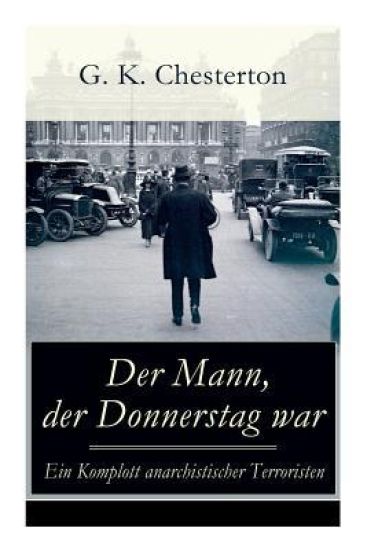
Der Roman The Man Who Was Thursday von 1908 (dt. 1910 als Der Mann, der Donnerstag war) ist eine politische Satire, die der Phantastischen Literatur zugerechnet werden kann: Ein Komplott anarchistischer Terroristen am Anfang des 20. Jahrhunderts entwickelt sich darin, unter zunehmender Verfremdung der Wirklichkeit, in ein verr ckt-g ttliches Spektakel. Wie in anderen seiner Schriften wendet sich Chesterton auch in diesem Roman theologisch-philosophischen Fragen zu. Gilbert Keith Chesterton (1874-1936) war ein englischer Schriftsteller und Journalist. In seinen Romanen, Essays und Kurzgeschichten setzte sich Chesterton intensiv mit modernen Philosophien und Denkrichtungen auseinander. Bekannt sind seine oft gewagten Gedankenspr nge und sein Zusammenbringen scheinbar unvereinbarer Ideen, oft mit berraschenden Ergebnissen.
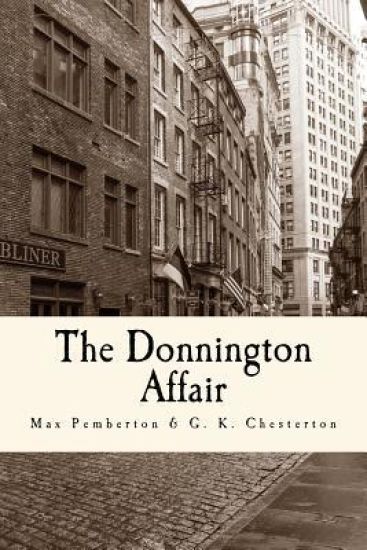
The Donnington Affair was first published in the October edition of The Premier magazine. The story was published in two parts. Max Pemberton wrote the first part of the novel and asked other famous authors, notably G. K. Chesterton, to finish the story; which he did. This is the complete story, both the first and second part by both Max Pemberton and G. K. Chesterton. Odin's Library Classics is dedicated to bringing the world the best of humankind's literature from throughout the ages. Carefully selected, each work is unabridged from classic works of fiction, nonfiction, poetry, or drama.
This contains the first 8 of the 12 stories in the published book The Man Who Knew Too Much and Other Stories. In these 8 detective thrillers, the main protagonist is Horne Fisher. (The omitted four are individual stories with separate heroes/detectives.) Due to close relationships with the leading political figures in the land, Fisher knows too much about the private politics behind the public politics of the day. This knowledge is a burden to him because he is able to uncover the injustices and corruptions of the murders in each story, but in most cases the real killer gets away with the killing because to bring him openly to justice would create a greater chaos: starting a war, reinciting Irish rebellions, or removing public faith in the government. A film of the same title was made in 1934 and remade in 1956, both directed by Alfred Hitchcock, but the films had nothing at all in common (except the title) with these short stories. Hitchcock decided to use the title simply because he had the rights for some of the stories. (Reference: Wikipedia)
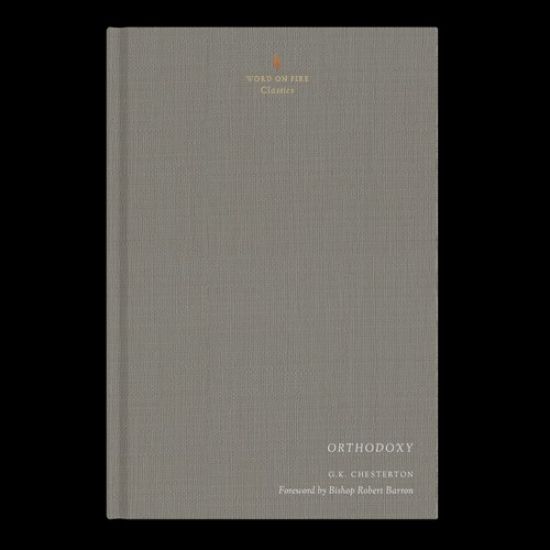
Lauded as a classic of Christian apologetics, G. K. Chesterton's Orthodoxy recounts his personal journey from agnosticism to the faith. Writing from within a culture marked by materialism and suspicion of the supernatural, Chesterton argues for coming to know the divine storyteller behind the great story of life, insisting that only the Christian claim can fundamentally satisfy the longings of the human heart. Orthodoxy aims to rediscover the faith as startling, romantic, and new, embracing the radical paradoxes of Christianity rather than settling for a bland middle ground. With his characteristic wit and wisdom, Chesterton invites readers into his own story of falling in love with God.
All Things Considered by G. K. ChestertonA Collection of Short Classic EssaysCONTENTSTHE CASE FOR THE EPHEMERALCOCKNEYS AND THEIR JOKESTHE FALLACY OF SUCCESSON RUNNING AFTER ONE'S HATTHE VOTE AND THE HOUSECONCEIT AND CARICATUREPATRIOTISM AND SPORT. AN ESSAY ON TWO CITIES. FRENCH AND ENGLISHTHE ZOLA CONTROVERSYOXFORD FROM WITHOUTWOMANTHE MODERN MARTYRON POLITICAL SECRECYTHOUGHTS AROUND KOEPENICKTHE BOYON THE CRYPTIC AND THE ELLIPTICTHE WORSHIP OF THE WEALTHYTHE METHUSELAHITETHE ERROR OF IMPARTIALITYFAIRY TALESTOM JONES AND MORALITYTHE MAID OF ORLEANSA DEAD POETCHRISTMAS
12 Biographies presented by Gilbert Keith (G. K.) Chesterton Charlotte Bronte 4 William Morris and his School 10 The Optimism of Byron 17 Pope and the Art of Satire 23 Francis 31 Rostand 38 Charles II 44 Stevenson 50 Thomas Carlyle 55 Tolstoy and the Cult of Simplicity 63 Savonarola 74 The Position of Sir Walter Scott 79
This edition contains the original and unabridged text of Orthodoxy by G. K. Chesterton. Orthodoxy, by G. K. Chesterton, has become a classic of Christian apologetics. Chesterton considered this book a companion to his other work, Heretics, writing it expressly in response to G. S. Street's criticism of the earlier work, "that he was not going to bother about his theology until I had really stated mine". In the book's preface Chesterton states the purpose is to "attempt an explanation, not of whether the Christian faith can be believed, but of how he personally has come to believe it." In it, Chesterton presents an original view of Christian religion. He sees it as the answer to natural human needs, the "answer to a riddle" in his own words, and not simply as an arbitrary truth received from somewhere outside the boundaries of human experience. The book was written when Chesterton was an Anglican. He converted to Catholicism 14 years later. Chesterton chose the title, Orthodoxy, to focus instead on the plainness of the Apostles' Creed, though he admitted the general sound of the title was "a thinnish sort of thing".
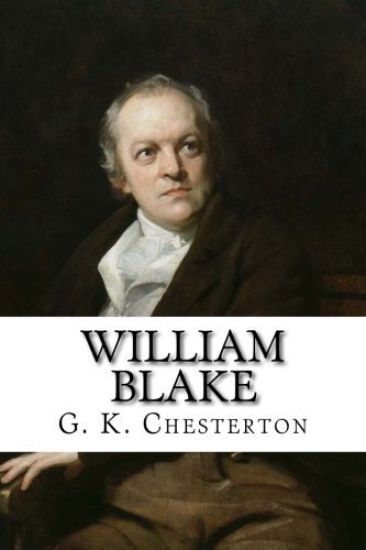
William Blake is the illustrated edition of the 1910 work of criticism of William Blake. William Blake would have been the first to understand that the biography of anybody ought really to begin with the words, "In the beginning God created heaven and earth." If we were telling the story of Mr Jones of Kentish Town, we should need all the centuries to explain it. We cannot comprehend even the name "Jones," until we have realised that its commonness is not the commonness of vulgar but of divine things; for its very commonness is an echo of the adoration of St John the Divine. The adjective "Kentish" is rather a mystery in that geographical connection; but the word Kentish is not so mysterious as the awful and impenetrable word "town." We shall have rent up the roots of prehistoric mankind and seen the last revolutions of modern society before we really know the meaning of the word "town." So every word we use comes to us coloured from all its adventures in history, every phase of which has made at least a faint alteration. The only right way of telling a story is to begin at the beginning-at the beginning of the world. Therefore all books have to be begun in the wrong way, for the sake of brevity. If Blake wrote the life of Blake it would not begin with any business about his birth or parentage.
Aus dem Buch: "Der Mann in dem gediegenen seidenen Zylinder war die Verk rperung seidiger Geschmeidigkeit und Gediegenheit. Er war ein gro er, glatter, gelangweilt aussehender (und wie manche sagten, langweiliger) Mann mit glattem, blondem Haar und sch nen, aber ausdruckslosen Gesichtsz gen, ein junger, erfolgreicher Arzt namens Warner. Obgleich seine Glattheit und Blondheit zuerst ihn etwas einf ltig erscheinen lie en, war er es keineswegs. Wie Rosamund Hunt die einzige von den Hausgenossen war, die viel Geld besa , war er der einzige, der es bisher zu einer gewissen Ber hmtheit gebracht hatte. Seine Abhandlung Das wahrscheinliche Vorhandensein von Schmerzempfindungen bei den niedrigsten Lebewesen war in wissenschaftlichen Kreisen allgemein als ein ebenso gediegenes wie k hnes Werk begr t worden. Kurzum, er hatte zweifellos Verstand, und vielleicht war es nicht seine Schuld, wenn seine Intelligenz so versteckt war, da man Lust versp rte, sie mit einem Sch rhaken hervorzuzerren." Gilbert Keith Chesterton (1874-1936) war ein englischer Schriftsteller und Journalist. In seinen Romanen, Essays und Kurzgeschichten setzte sich Chesterton intensiv mit modernen Philosophien und Denkrichtungen auseinander. Bekannt sind seine oft gewagten Gedankenspr nge und sein Zusammenbringen scheinbar unvereinbarer Ideen, oft mit berraschenden Ergebnissen.