Kirjojen hintavertailu – 12 859 824 kirjaa ja 27 kauppaa
Kirjailija
G. K. Chesterton
Kirjat ja teokset yhdessä paikassa: 2 054 kirjaa, julkaisuja vuosilta 1900–2026, suosituimpiin kuuluu A Miscellany of Poems by G. K. Chesterton. Vertaile teosten hintoja ja tarkista saatavuus suomalaisista kirjakaupoista.
Nimi esiintyy myös muodoissa: G K Chesterton, G.K. Chesterton, G.K Chesterton, G. K Chesterton
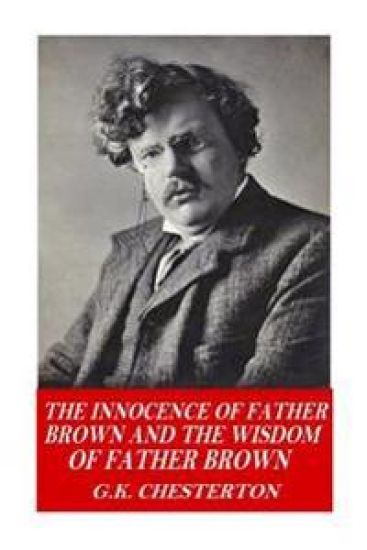
Gilbert Keith Chesterton, KC*SG (29 May 1874 - 14 June 1936), better known as G. K. Chesterton, was an English writer, poet, philosopher, dramatist, journalist, orator, lay theologian, biographer, and literary and art critic. Chesterton is often referred to as the "prince of paradox". Time magazine has observed of his writing style: "Whenever possible Chesterton made his points with popular sayings, proverbs, allegories-first carefully turning them inside out." Chesterton is well known for his fictional priest-detective Father Brown, and for his reasoned apologetics. Even some of those who disagree with him have recognised the wide appeal of such works as Orthodoxy and The Everlasting Man. Chesterton, as a political thinker, cast aspersions on both Progressivism and Conservatism, saying, "The whole modern world has divided itself into Conservatives and Progressives. The business of Progressives is to go on making mistakes. The business of the Conservatives is to prevent the mistakes from being corrected." Chesterton routinely referred to himself as an "orthodox" Christian, and came to identify this position more and more with Catholicism, eventually converting to Catholicism from High Church Anglicanism. George Bernard Shaw, Chesterton's "friendly enemy" according to Time, said of him, "He was a man of colossal genius." Biographers have identified him as a successor to such Victorian authors as Matthew Arnold, Thomas Carlyle, Cardinal John Henry Newman, and John Ruskin. Chesterton was born in Campden Hill in Kensington, London, the son of Marie Louise, n e Grosjean, and Edward Chesterton. He was baptised at the age of one month into the Church of England, though his family themselves were irregularly practising Unitarians. According to his autobiography, as a young man Chesterton became fascinated with the occult and, along with his brother Cecil, experimented with Ouija boards. Chesterton was educated at St Paul's School, then attended the Slade School of Art to become an illustrator. The Slade is a department of University College London, where Chesterton also took classes in literature, but did not complete a degree in either subject.
Gilbert Keith Chesterton (29 May 1874 - 14 June 1936), better known as G. K. Chesterton, was an English writer, poet, philosopher, dramatist, journalist, orator, lay theologian, biographer, and literary and art critic. Chesterton is often referred to as the "prince of paradox." Time magazine has observed of his writing style: "Whenever possible Chesterton made his points with popular sayings, proverbs, allegories-first carefully turning them inside out." Chesterton was born in Campden Hill in Kensington, London, the son of Marie Louise, n e Grosjean, and Edward Chesterton. He was baptised at the age of one month into the Church of England, though his family themselves were irregularly practising Unitarians. According to his autobiography, as a young man Chesterton became fascinated with the occult and, along with his brother Cecil, experimented with Ouija boards.
Written at the defining moment when Ireland was heading toward complete national independence, Chesterton's study of the Irish question demonstrates that if both the English and the Irish had modified their attitudes slightly, subsequent Anglo-Irish relations could have been radically improved. Unlike most historians, he tackles the question from an ideological, philosophical, and religious standpoint. As a Roman Catholic and a lover of English nationalism, Chesterton shared many sentiments with the Irish. Written objectively and frankly, this is an important work for any student of English/Irish history as well as an excellent study of the effects of ideology and religion on society. Gilbert Keith Chesterton, KC*SG (29 May 1874 - 14 June 1936), better known as G. K. Chesterton, was an English writer, poet, philosopher, dramatist, journalist, orator, lay theologian, biographer, and literary and art critic. Chesterton is often referred to as the "prince of paradox". Time magazine has observed of his writing style: "Whenever possible Chesterton made his points with popular sayings, proverbs, allegories-first carefully turning them inside out." Chesterton is well known for his fictional priest-detective Father Brown, and for his reasoned apologetics. Even some of those who disagree with him have recognised the wide appeal of such works as Orthodoxy and The Everlasting Man. Chesterton, as a political thinker, cast aspersions on both Progressivism and Conservatism, saying, "The whole modern world has divided itself into Conservatives and Progressives. The business of Progressives is to go on making mistakes. The business of the Conservatives is to prevent the mistakes from being corrected." Chesterton routinely referred to himself as an "orthodox" Christian, and came to identify this position more and more with Catholicism, eventually converting to Catholicism from High Church Anglicanism. George Bernard Shaw, Chesterton's "friendly enemy" according to Time, said of him, "He was a man of colossal genius." Biographers have identified him as a successor to such Victorian authors as Matthew Arnold, Thomas Carlyle, Cardinal John Henry Newman, and John Ruskin.
Chesterton admiraba a Conan Doyle y por supuesto a las historias de Sherlock Holmes. Sin embargo, con el padre Brown logr un personaje que se aleja y muchas veces se opone a las caracter sticas de Holmes. Ya hemos esbozado el aspecto del personaje central: sacerdote cat lico, obeso y bonach n, que, a diferencia de Holmes, no resuelve los casos mediante el an lisis l gico sino por su intuici n y el conocimiento del alma humana. Otro de los puntos donde marca una diferencia sustancial, es que Flambeau, el ayudante del padre Brown, es curiosamente un expresidiario. Los cuentos que contiene este volumen son los siguientes: "La resurrecci n del padre Brown", "La flecha del cielo", "El or culo del perro", "El milagro de la 'Luna Creciente'", "La maldici n de la cruz de oro", "El pu al alado", "La condenaci n de los Darnaway" y "El fantasma de Gideon Wise".
Gilbert Keith Chesterton, KC*SG (29 May 1874 - 14 June 1936), better known as G. K. Chesterton, was an English writer, poet, philosopher, dramatist, journalist, orator, lay theologian, biographer, and literary and art critic. Chesterton is often referred to as the "prince of paradox". Time magazine has observed of his writing style: "Whenever possible Chesterton made his points with popular sayings, proverbs, allegories-first carefully turning them inside out." Chesterton is well known for his fictional priest-detective Father Brown, and for his reasoned apologetics. Even some of those who disagree with him have recognised the wide appeal of such works as Orthodoxy and The Everlasting Man. Chesterton, as a political thinker, cast aspersions on both Progressivism and Conservatism, saying, "The whole modern world has divided itself into Conservatives and Progressives. The business of Progressives is to go on making mistakes. The business of the Conservatives is to prevent the mistakes from being corrected." Chesterton routinely referred to himself as an "orthodox" Christian, and came to identify this position more and more with Catholicism, eventually converting to Catholicism from High Church Anglicanism. George Bernard Shaw, Chesterton's "friendly enemy" according to Time, said of him, "He was a man of colossal genius." Biographers have identified him as a successor to such Victorian authors as Matthew Arnold, Thomas Carlyle, Cardinal John Henry Newman, and John Ruskin.... Charles Frederick Gurney Masterman PC (24 October 1873 - 17 November 1927) was a radical Liberal Party politician, intellectual and man of letters, He worked closely with such Liberal leaders as David Lloyd George and Winston Churchill in designing social welfare projects, including the National Insurance Act of 1911. During the First World War, he played a central role in the main government propaganda agency....
Gilbert Keith Chesterton, KC*SG (29 May 1874 - 14 June 1936), better known as G. K. Chesterton, was an English writer, poet, philosopher, dramatist, journalist, orator, lay theologian, biographer, and literary and art critic. Chesterton is often referred to as the "prince of paradox". Time magazine has observed of his writing style: "Whenever possible Chesterton made his points with popular sayings, proverbs, allegories-first carefully turning them inside out." Chesterton is well known for his fictional priest-detective Father Brown, and for his reasoned apologetics. Even some of those who disagree with him have recognised the wide appeal of such works as Orthodoxy and The Everlasting Man. Chesterton, as a political thinker, cast aspersions on both Progressivism and Conservatism, saying, "The whole modern world has divided itself into Conservatives and Progressives. The business of Progressives is to go on making mistakes. The business of the Conservatives is to prevent the mistakes from being corrected." Chesterton routinely referred to himself as an "orthodox" Christian, and came to identify this position more and more with Catholicism, eventually converting to Catholicism from High Church Anglicanism. George Bernard Shaw, Chesterton's "friendly enemy" according to Time, said of him, "He was a man of colossal genius." Biographers have identified him as a successor to such Victorian authors as Matthew Arnold, Thomas Carlyle, Cardinal John Henry Newman, and John Ruskin. Chesterton was born in Campden Hill in Kensington, London, the son of Marie Louise, n e Grosjean, and Edward Chesterton. He was baptised at the age of one month into the Church of England, though his family themselves were irregularly practising Unitarians. According to his autobiography, as a young man Chesterton became fascinated with the occult and, along with his brother Cecil, experimented with Ouija boards. Chesterton was educated at St Paul's School, then attended the Slade School of Art to become an illustrator. The Slade is a department of University College London, where Chesterton also took classes in literature, but did not complete a degree in either subject.
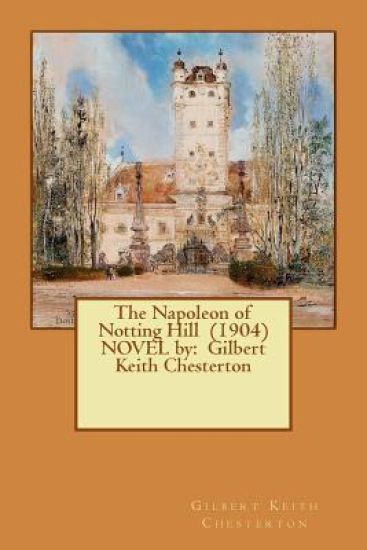
The Napoleon of Notting Hill is a novel written by G. K. Chesterton in 1904, set in a nearly unchanged London in 1984. Although the novel is set in the future, it is, in effect, set in an alternative reality of Chesterton's own period, with no advances in technology or changes in the class system or attitudes. It postulates an impersonal government, not described in any detail, but apparently content to operate through a figurehead king, randomly chosen. The dreary succession of randomly selected Kings of England is broken up when Auberon Quin, who cares for nothing but a good joke, is chosen. To amuse himself, he institutes elaborate costumes for the provosts of the districts of London. All are bored by the King's antics except for one earnest young man who takes the cry for regional pride seriously - Adam Wayne, the eponymous Napoleon of Notting Hill. While the novel is humorous (one instance has the King sitting on top of an omnibus and speaking to it as to a horse: "Forward, my beauty, my Arab," he said, patting the omnibus encouragingly, "fleetest of all thy bounding tribe"), it is also an adventure story. Chesterton is not afraid to let blood be drawn in his battles, fought with sword and halberd in the London streets between neighbouring boroughs; Wayne thinks up some ingenious strategies, and Chesterton does not shrink from the death in combat of some of his characters. Finally, the novel is philosophical, contemplating the value and meaning of man's actions and the virtue of respect for one's enemies. Gilbert Keith Chesterton, KC*SG (29 May 1874 - 14 June 1936), better known as G. K. Chesterton, was an English writer, poet, philosopher, dramatist, journalist, orator, lay theologian, biographer, and literary and art critic. Chesterton is often referred to as the "prince of paradox". Time magazine has observed of his writing style: "Whenever possible Chesterton made his points with popular sayings, proverbs, allegories-first carefully turning them inside out." Chesterton is well known for his fictional priest-detective Father Brown, and for his reasoned apologetics. Even some of those who disagree with him have recognised the wide appeal of such works as Orthodoxy and The Everlasting Man. Chesterton, as a political thinker, cast aspersions on both Progressivism and Conservatism, saying, "The whole modern world has divided itself into Conservatives and Progressives. The business of Progressives is to go on making mistakes. The business of the Conservatives is to prevent the mistakes from being corrected." Chesterton routinely referred to himself as an "orthodox" Christian, and came to identify this position more and more with Catholicism, eventually converting to Catholicism from High Church Anglicanism. George Bernard Shaw, Chesterton's "friendly enemy" according to Time, said of him, "He was a man of colossal genius." Biographers have identified him as a successor to such Victorian authors as Matthew Arnold, Thomas Carlyle, Cardinal John Henry Newman, and John Ruskin. Chesterton was born in Campden Hill in Kensington, London, the son of Marie Louise, n e Grosjean, and Edward Chesterton. He was baptised at the age of one month into the Church of England, though his family themselves were irregularly practising Unitarians. According to his autobiography, as a young man Chesterton became fascinated with the occult and, along with his brother Cecil, experimented with Ouija boards.
The Man Who Was Thursday: A Nightmare is a novel by G. K. Chesterton, first published in 1907. The book is sometimes referred to as a metaphysical thriller. In Edwardian era London, Gabriel Syme is recruited at Scotland Yard to a secret anti-anarchist police corps. Lucian Gregory, an anarchistic poet, lives in the suburb of Saffron Park. Syme meets him at a party and they debate the meaning of poetry. Gregory argues that revolt is the basis of poetry. Syme demurs, insisting the essence of poetry is not revolution but law. He antagonises Gregory by asserting that the most poetical of human creations is the timetable for the London Underground. He suggests Gregory isn't really serious about anarchism, which so irritates Gregory that he takes Syme to an underground anarchist meeting place, revealing his public endorsement of anarchy is a ruse to make him seem harmless, when in fact he is an influential member of the local chapter of the European anarchist council. The central council consists of seven men, each using the name of a day of the week as a cover; the position of Thursday is about to be elected by Gregory's local chapter. Gregory expects to win the election but just before, Syme reveals to Gregory after an oath of secrecy, that he is a secret policeman. Fearful Syme may use his speech in evidence of a prosecution, Gregory's weakened words fail to convince the local chapter that he is sufficiently dangerous for the job. Syme makes a rousing anarchist speech and wins the vote. He is sent immediately as the chapter's delegate to the central council. In his efforts to thwart the council, Syme eventually discovers that the other five members are also undercover detectives; each was employed just as mysteriously and assigned to defeat the Council. They soon find out they were fighting each other and not real anarchists; such was the mastermind plan of their president, Sunday. In a surreal conclusion, Sunday is unmasked as only seeming to be terrible; in fact, he is a force of good like the detectives. Sunday is unable to give an answer to the question of why he caused so much trouble and pain for the detectives. Gregory, the only real anarchist, seems to challenge the good council. His accusation is that they, as rulers, have never suffered like Gregory and their other subjects and so their power is illegitimate. Syme refutes the accusation immediately, because of the terrors inflicted by Sunday on the rest of the council. The dream ends when Sunday is asked if he has ever suffered. His last words, "can ye drink of the cup that I drink of?", is the question Jesus asks St. James and St. John in the Gospel of Mark, chapter 10, vs 38-39, to challenge their commitment in becoming his disciples... Gilbert Keith Chesterton, KC*SG (29 May 1874 - 14 June 1936), better known as G. K. Chesterton, was an English writer, poet, philosopher, dramatist, journalist, orator, lay theologian, biographer, and literary and art critic. Chesterton is often referred to as the "prince of paradox". Time magazine has observed of his writing style: "Whenever possible Chesterton made his points with popular sayings, proverbs, allegories-first carefully turning them inside out." Chesterton is well known for his fictional priest-detective Father Brown, and for his reasoned apologetics. Even some of those who disagree with him have recognised the wide appeal of such works as Orthodoxy and The Everlasting Man. Chesterton, as a political thinker, cast aspersions on both Progressivism and Conservatism, saying, "The whole modern world has divided itself into Conservatives and Progressives. The business of Progressives is to go on making mistakes. The business of the Conservatives is to prevent the mistakes from being corrected." Chesterton routinely referred to himself as an "orthodox" Christian, and came to identify this position more and more with Catholicism, eventually converting to Catholicism from High Church Anglicanism....
The Man Who Knew Too Much A prolific and popular writer, G. K. Chesterton (1874-1936) is best known as the creator of detective-priest Father Brown (even though Chesterton's mystery stories constitute only a small fraction of his writings). The eight adventures in this classic British mystery trace the activities of Horne Fisher, the man who knew too much, and his trusted friend Harold March. Although Horne's keen mind and powerful deductive gifts make him a natural sleuth, his inquiries have a way of developing moral complications. Notable for their wit and sense of wonder, these tales offer an evocative portrait of upper-crust society in pre-World War I England.
This contains the first 8 of the 12 stories in the published book The Man Who Knew Too Much and Other Stories. In these 8 detective thrillers, the main protagonist is Horne Fisher. (The omitted four are individual stories with separate heroes/detectives.)Due to close relationships with the leading political figures in the land, Fisher knows too much about the private politics behind the public politics of the day. This knowledge is a burden to him because he is able to uncover the injustices and corruptions of the murders in each story, but in most cases the real killer gets away with the killing because to bring him openly to justice would create a greater chaos: starting a war, reinciting Irish rebellions, or removing public faith in the government.