Kirjojen hintavertailu – 12 859 818 kirjaa ja 27 kauppaa
Kirjailija
G. K. Chesterton
Kirjat ja teokset yhdessä paikassa: 2 054 kirjaa, julkaisuja vuosilta 1900–2026, suosituimpiin kuuluu A Miscellany of Poems by G. K. Chesterton. Vertaile teosten hintoja ja tarkista saatavuus suomalaisista kirjakaupoista.
Nimi esiintyy myös muodoissa: G K Chesterton, G.K. Chesterton, G.K Chesterton, G. K Chesterton
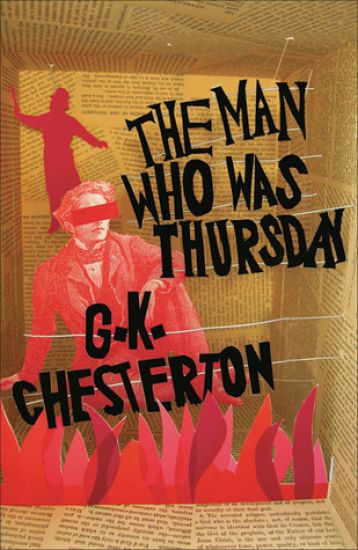
A group of anarchists are under surveillance by Scotland Yard in Chesterton's hugely popular metaphysical thriller. The Supreme Anarchists Council is dedicated to overthrowing the world order. To keep their identities a secret, each of them has been named a day of the week. Gabriel Syme, an eccentric poet, is recruited by Scotland Yard to infiltrate the group. He tracks down the six men and manages to win a place on the council. But in a bizarre and surreal twist of events, Syme realises that five of the six members are not at all what they seem . . .
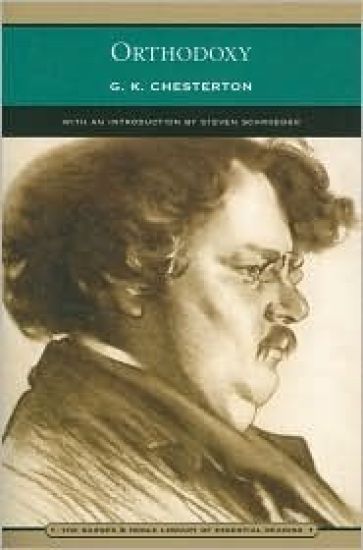
Chesterton's "Orthodoxy" is not an explanation 'of whether the Christian Faith can be believed, but of how he personally has come to believe it'. He begins with a description of how he sets out to find a new anchor for his thought in an age of uncertainty and discovers at every step along the way that what he thought was new is exactly what the Church confesses in the "Apostles' Creed". While the motto of the modern world is 'believe in yourself', the movement of the Creed directs one's belief outside oneself to a maker, a redeemer and a sanctifier of heaven and earth and to a community of believers. Chesterton notes that those 'who really believe in themselves are all in lunatic asylums', and this leads him to a remarkable exploration of madness, which he says is the absence, not of reason, but of imagination. Seeking freedom, he finds the Church, but he defines the Church, via the cross, as throwing its arms open rather than drawing a circle around itself.
G K Chestertons legendariska galghumoristiska terroristroman Mannen som var Torsdag i nyöversättning av Görgen Antonsson och med ett efterord om Chestertons liv och verk av Peter Glas. Chestertons ambition måste ha varit att utforska den mardrömslika möjligheten att fundamentet för vår skenbart trygga vardag när som helst kan rasa, och kommer att göra det om den goda viljan hos det redan marginaliserade fåtalet överintelligenta sviktar.
G. K. Chesterton, the "Prince of Paradox," is at his witty best in this collection of twenty essays and articles from the turn of the twentieth century. Focusing on "heretics" -- those who pride themselves on their superiority to conservative views -- Chesterton appraises prominent figures who fall into that category from the literary and art worlds. Luminaries such as Rudyard Kipling, George Bernard Shaw, H. G. Wells, and James McNeill Whistler come under the author's scrutiny, where they meet with equal measures of his characteristic wisdom and good humor. In addition to incisive assessments of well-known individuals ("Mr. Rudyard Kipling and Making the World Small" and "Mr. H. G. Wells and the Giants"), these essays contain observations on the wider world. "On Sandals and Simplicity," "Science and the Savages," "On Certain Modern Writers and the Institution of the Family," "On Smart Novelists and the Smart Set," and "Slum Novelists and the Slums" reflect the main themes of Chesterton's life's work. Heretics roused the ire of some critics for censuring contemporary philosophies without providing alternatives; the author responded a few years later with a companion volume, Orthodoxy (also available from Dover Publications). Sardonic, jolly, and generous, both books are vintage Chesterton.
In this book, Chesterton's brilliance as a writer and thinker again shine through as he explains his understanding of Catholicism and the Catholic Church and how its appeal to reason and truth eventually won him over. For Chesterton, two essentials lay at the heart of conversion, and without these, a man misses the point of it all. He describes these in his own words: "One is that he believes it to be solid objective truth, which is true whether he likes it or not; and the other is that he seeks liberation from his sins." That is why Chesterton became a Catholic, and what he describes in his unique and colorful way in this book.