Kirjojen hintavertailu – 12 859 828 kirjaa ja 27 kauppaa
Kirjailija
George Berkeley
Kirjat ja teokset yhdessä paikassa: 300 kirjaa, julkaisuja vuosilta 1960–2026, suosituimpiin kuuluu A Letter to T----- P---, Esq; From the Author of Siris. Containing Some Farther Remarks on the Virtues of Tar-Water, and the Methods for Preparing and Using It.. Vertaile teosten hintoja ja tarkista saatavuus suomalaisista kirjakaupoista.
George Berkeley (12 March 1685 - 14 January 1753) - known as Bishop Berkeley (Bishop of Cloyne) - was an Irish philosopher whose primary achievement was the advancement of a theory he called "immaterialism" (later referred to as "subjective idealism" by others). This theory denies the existence of material substance and instead contends that familiar objects like tables and chairs are only ideas in the minds of perceivers and, as a result, cannot exist without being perceived. Berkeley is also known for his critique of abstraction, an important premise in his argument for immaterialism. Berkeley was the namesake of the city of Berkeley, California, which is most famous as the home of the University of California, Berkeley. Berkeley College, one of Yale University's 14 residential colleges, is named after George Berkeley. In 1709, Berkeley published his first major work, An Essay towards a New Theory of Vision, in which he discussed the limitations of human vision and advanced the theory that the proper objects of sight are not material objects, but light and colour. This foreshadowed his chief philosophical work, A Treatise Concerning the Principles of Human Knowledge, in 1710, which, after its poor reception, he rewrote in dialogue form and published under the title Three Dialogues between Hylas and Philonous in 1713. In this book, Berkeley's views were represented by Philonous (Greek: "lover of mind"), while Hylas (Greek: "matter") embodies the Irish thinker's opponents, in particular John Locke. Berkeley argued against Isaac Newton's doctrine of absolute space, time and motion in De Motu (On Motion), published 1721. His arguments were a precursor to the views of Mach and Einstein. In 1732, he published Alciphron, a Christian apologetic against the free-thinkers, and in 1734, he published The Analyst, a critique of the foundations of calculus, which was influential in the development of mathematics. His last major philosophical work, Siris (1744), begins by advocating the medicinal use of tar water and then continues to discuss a wide range of topics, including science, philosophy, and theology. Interest in Berkeley's work increased after World War II because he tackled many of the issues of paramount interest to philosophy in the 20th century, such as the problems of perception, the difference between primary and secondary qualities, and the importance of language. (wikipedia.org)
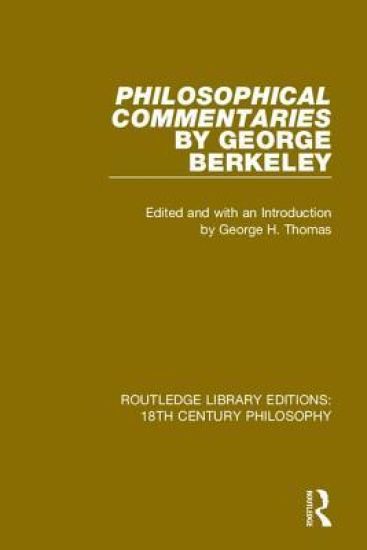
This edition of George Berkeley’s Philosophical Commentaries, first published in 1989, provides an accurate transcription of Berkeley’s manuscript, and introduction to set it in perspective, extensive notes to aid in interpreting it, and a full index to facilitate the use of it.
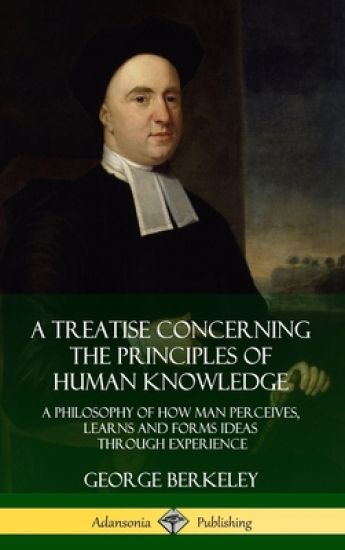
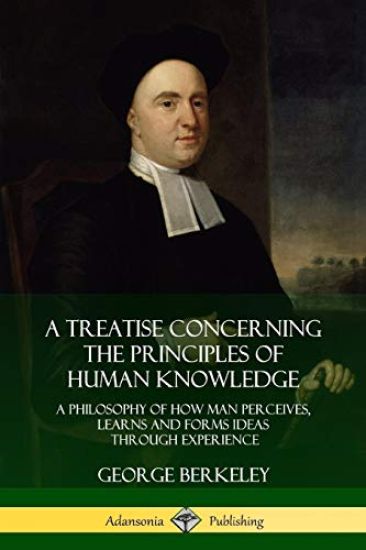
Introduction 1. Philosophy being nothing else but THE STUDY OF WISDOM AND TRUTH, it may with reason be expected that those who have spent most time and pains in it should enjoy a greater calm and serenity of mind, a greater clearness and evidence of knowledge, and be less disturbed with doubts and difficulties than other men. Yet so it is, we see the illiterate bulk of mankind that walk the high-road of plain common sense, and are governed by the dictates of nature, for the most part easy and undisturbed. To them nothing THAT IS FAMILIAR appears unaccountable or difficult to comprehend. They complain not of any want of evidence in their senses, and are out of all danger of becoming SCEPTICS. But no sooner do we depart from sense and instinct to follow the light of a superior principle, to reason, meditate, and reflect on the nature of things, but a thousand scruples spring up in our minds concerning those things which before we seemed fully to comprehend. Prejudices and errors of sense do from all parts discover themselves to our view; and, endeavouring to correct these by reason, we are insensibly drawn into uncouth paradoxes, difficulties, and inconsistencies, which multiply and grow upon us as we advance in speculation, till at length, having wandered through many intricate mazes, we find ourselves just where we were, or, which is worse, sit down in a forlorn Scepticism. 2. The cause of this is thought to be the obscurity of things, or the natural weakness and imperfection of our understandings. It is said, the faculties we have are few, and those designed by nature for the SUPPORT and comfort of life, and not to penetrate into the INWARD ESSENCE and constitution of things. Besides, the mind of man being finite, when it treats of things which partake of infinity, it is not to be wondered at if it run into absurdities and contradictions, out of which it is impossible it should ever extricate itself, it being of the nature of infinite not to be comprehended by that which is finite. 3. But, perhaps, we may be too partial to ourselves in placing the fault originally in our faculties, and not rather in the wrong use we make of them. IT IS A HARD THING TO SUPPOSE THAT RIGHT DEDUCTIONS FROM TRUE PRINCIPLES SHOULD EVER END IN CONSEQUENCES WHICH CANNOT BE MAINTAINED or made consistent. We should believe that God has dealt more bountifully with the sons of men than to give them a strong desire for that knowledge which he had placed quite out of their reach. This were not agreeable to the wonted indulgent methods of Providence, which, whatever appetites it may have implanted in the creatures, doth usually furnish them with such means as, if rightly made use of, will not fail to satisfy them. Upon the whole, I am inclined to think that the far greater part, if not all, of those difficulties which have hitherto amused philosophers, and blocked up the way to knowledge, are entirely owing to ourselves--that we have first raised a dust and then complain we cannot see. 4. My purpose therefore is, to try if I can discover what those Principles are which have introduced all that doubtfulness and uncertainty, those absurdities and contradictions, into the several sects of philosophy; insomuch that the wisest men have thought our ignorance incurable, conceiving it to arise from the natural dulness and limitation of our faculties. And surely it is a work well deserving our pains to make a strict inquiry concerning the First Principles of Human Knowledge, to sift and examine them on all sides, especially since there may be some grounds to suspect that those lets and difficulties, which stay and embarrass the mind in its search after truth, do not spring from any darkness and intricacy in the objects, or natural defect in the understanding, so much as from false Principles which have been insisted on, and might have been avoided.
Introduction 1. Philosophy being nothing else but THE STUDY OF WISDOM AND TRUTH, it may with reason be expected that those who have spent most time and pains in it should enjoy a greater calm and serenity of mind, a greater clearness and evidence of knowledge, and be less disturbed with doubts and difficulties than other men. Yet so it is, we see the illiterate bulk of mankind that walk the high-road of plain common sense, and are governed by the dictates of nature, for the most part easy and undisturbed. To them nothing THAT IS FAMILIAR appears unaccountable or difficult to comprehend. They complain not of any want of evidence in their senses, and are out of all danger of becoming SCEPTICS. But no sooner do we depart from sense and instinct to follow the light of a superior principle, to reason, meditate, and reflect on the nature of things, but a thousand scruples spring up in our minds concerning those things which before we seemed fully to comprehend. Prejudices and errors of sense do from all parts discover themselves to our view; and, endeavouring to correct these by reason, we are insensibly drawn into uncouth paradoxes, difficulties, and inconsistencies, which multiply and grow upon us as we advance in speculation, till at length, having wandered through many intricate mazes, we find ourselves just where we were, or, which is worse, sit down in a forlorn Scepticism. 2. The cause of this is thought to be the obscurity of things, or the natural weakness and imperfection of our understandings. It is said, the faculties we have are few, and those designed by nature for the SUPPORT and comfort of life, and not to penetrate into the INWARD ESSENCE and constitution of things. Besides, the mind of man being finite, when it treats of things which partake of infinity, it is not to be wondered at if it run into absurdities and contradictions, out of which it is impossible it should ever extricate itself, it being of the nature of infinite not to be comprehended by that which is finite. 3. But, perhaps, we may be too partial to ourselves in placing the fault originally in our faculties, and not rather in the wrong use we make of them. IT IS A HARD THING TO SUPPOSE THAT RIGHT DEDUCTIONS FROM TRUE PRINCIPLES SHOULD EVER END IN CONSEQUENCES WHICH CANNOT BE MAINTAINED or made consistent. We should believe that God has dealt more bountifully with the sons of men than to give them a strong desire for that knowledge which he had placed quite out of their reach. This were not agreeable to the wonted indulgent methods of Providence, which, whatever appetites it may have implanted in the creatures, doth usually furnish them with such means as, if rightly made use of, will not fail to satisfy them. Upon the whole, I am inclined to think that the far greater part, if not all, of those difficulties which have hitherto amused philosophers, and blocked up the way to knowledge, are entirely owing to ourselves--that we have first raised a dust and then complain we cannot see. 4. My purpose therefore is, to try if I can discover what those Principles are which have introduced all that doubtfulness and uncertainty, those absurdities and contradictions, into the several sects of philosophy; insomuch that the wisest men have thought our ignorance incurable, conceiving it to arise from the natural dulness and limitation of our faculties. And surely it is a work well deserving our pains to make a strict inquiry concerning the First Principles of Human Knowledge, to sift and examine them on all sides, especially since there may be some grounds to suspect that those lets and difficulties, which stay and embarrass the mind in its search after truth, do not spring from any darkness and intricacy in the objects, or natural defect in the understanding, so much as from false Principles which have been insisted on, and might have been avoided.
George Berkeley's investigation of human epistemology remains one of the most respected of its time - this edition contains the treatise in full, complete with the author's preface. One of Berkeley's most important beliefs was that of immaterialism. The meaning being that nothing material exists unless it is perceived by something or someone. Distinct from solipsism - the belief that only the self exists - Berkeley's view is that material items are ideas formed by distinct conscious minds; the concept of reality being simply the summation of shared ideas rather than physical objects fascinated philosophers of the era. Much of Berkeley's philosophy is framed by then-new discoveries in the field of physics. The concepts of color and light thus have a frequent bearing on the overall thesis; disagreeing with Isaac Newton on the subject of space, it was later that Berkeley's contrarian opinions on matters such as calculus and free-thinking gained him further renown.
George Berkeley's investigation of human epistemology remains one of the most respected of its time - this edition contains the treatise in full, complete with the author's preface. One of Berkeley's most important beliefs was that of immaterialism. The meaning being that nothing material exists unless it is perceived by something or someone. Distinct from solipsism - the belief that only the self exists - Berkeley's view is that material items are ideas formed by distinct conscious minds; the concept of reality being simply the summation of shared ideas rather than physical objects fascinated philosophers of the era. Much of Berkeley's philosophy is framed by then-new discoveries in the field of physics. The concepts of color and light thus have a frequent bearing on the overall thesis; disagreeing with Isaac Newton on the subject of space, it was later that Berkeley's contrarian opinions on matters such as calculus and free-thinking gained him further renown.
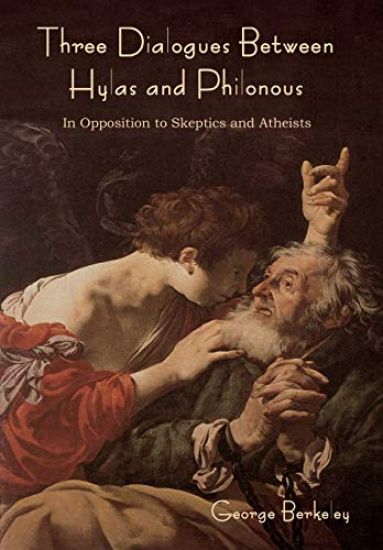
George Berkeley ( 12 March 1685 - 14 January 1753) - known as Bishop Berkeley (Bishop of Cloyne) - was an Irish philosopher whose primary achievement was the advancement of a theory he called "immaterialism" (later referred to as "subjective idealism" by others). This theory denies the existence of material substance and instead contends that familiar objects like tables and chairs are only ideas in the minds of perceivers and, as a result, cannot exist without being perceived. Berkeley is also known for his critique of abstraction, an important premise in his argument for immaterialism. Berkeley College, one of Yale University's 14 residential colleges, is named after George Berkeley. In 1709, Berkeley published his first major work, An Essay towards a New Theory of Vision, in which he discussed the limitations of human vision and advanced the theory that the proper objects of sight are not material objects, but light and colour. This foreshadowed his chief philosophical work, A Treatise Concerning the Principles of Human Knowledge, in 1710, which, after its poor reception, he rewrote in dialogue form and published under the title Three Dialogues between Hylas and Philonous in 1713.
A Treatise Concerning the Principles of Human Knowledge (commonly called Treatise when referring to Berkeley's works) is a 1710 work, in English, by Irish Empiricist philosopher George Berkeley. This book largely seeks to refute the claims made by Berkeley's contemporary John Locke about the nature of human perception. Whilst, like all the Empiricist philosophers, both Locke and Berkeley agreed that we are having experiences, regardless of whether material objects exist, Berkeley sought to prove that the outside world (the world which causes the ideas one has within one's mind) is also composed solely of ideas. Berkeley did this by suggesting that "Ideas can only resemble Ideas" - the mental ideas that we possess can only resemble other ideas (not material objects) and thus the external world consists not of physical form, but rather of ideas. This world is (or, at least, was) given logic and regularity by some other force, which Berkeley concludes is God.
A caution against socinianism given in a discourse By George Berkeley A caution against socinianism given in a discourse: preached at the cathedral and metropolitical church of Christ, Canterbury; on Good Friday, 1787. ... By George Berkeley. ... Berkeley, George, 1733-1795. 15, 1]p.; 8. Canterbury:: printed for Simmons and Kirkby, T. Smith, and Flackton and Marrable; and for --- Gardner, 1787. Note: With a half-title. Note: Reproduction of original from the British Library. Note: English Short Title Catalog, ESTCT77989. Note: Electronic data. Farmington Hills, Mich.: Thomson Gale, 2003. Page image (PNG). Digitized image of the microfilm version produced in Woodbridge, CT by Research Publications, 1982-2002 (later known as Primary Source Microfilm, an imprint of the Gale Group). We are delighted to publish this classic book as part of our extensive Classic Library collection. Many of the books in our collection have been out of print for decades, and therefore have not been accessible to the general public. The aim of our publishing program is to facilitate rapid access to this vast reservoir of literature, and our view is that this is a significant literary work, which deserves to be brought back into print after many decades. The contents of the vast majority of titles in the Classic Library have been scanned from the original works. To ensure a high quality product, each title has been meticulously hand curated by our staff. Our philosophy has been guided by a desire to provide the reader with a book that is as close as possible to ownership of the original work. We hope that you will enjoy this wonderful classic work, and that for you it becomes an enriching experience.
The Querist, Containing Several Queries, Proposed to the Consideration of the Public Hardcover - April 19, 2018 by George Berkeley The 18th century was a wealth of knowledge, exploration and rapidly growing technology and expanding record-keeping made possible by advances in the printing press. In its determination to preserve the century of revolution, Gale initiated a revolution of its own: digitization of epic proportions to preserve these invaluable works in the largest archive of its kind. Now for the first time these high-quality digital copies of original 18th century manuscripts are available in print, making them highly accessible to libraries, undergraduate students, and independent scholars. This collection reveals the history of English common law and Empire law in a vastly changing world of British expansion. Dominating the legal field is the Commentaries of the Law of England by Sir William Blackstone, which first appeared in 1765. Reference works such as almanacs and catalogues continue to educate us by revealing the day-to-day workings of society. We are delighted to publish this classic book as part of our extensive Classic Library collection. Many of the books in our collection have been out of print for decades, and therefore have not been accessible to the general public. The aim of our publishing program is to facilitate rapid access to this vast reservoir of literature, and our view is that this is a significant literary work, which deserves to be brought back into print after many decades. The contents of the vast majority of titles in the Classic Library have been scanned from the original works. To ensure a high quality product, each title has been meticulously hand curated by our staff. Our philosophy has been guided by a desire to provide the reader with a book that is as close as possible to ownership of the original work. We hope that you will enjoy this wonderful classic work, and that for you it becomes an enriching experience.