Kirjailija
George Bernard Shaw
Kirjat ja teokset yhdessä paikassa: 606 kirjaa, julkaisuja vuosilta 1972–2026, suosituimpiin kuuluu Love Among the Artists (An Autobiographical Novel of G. B. Shaw). Vertaile teosten hintoja ja tarkista saatavuus suomalaisista kirjakaupoista.
Nimi esiintyy myös muodoissa: George Bernard Shaw
606 kirjaa
Kirjojen julkaisuvuodet: 1972–2026.
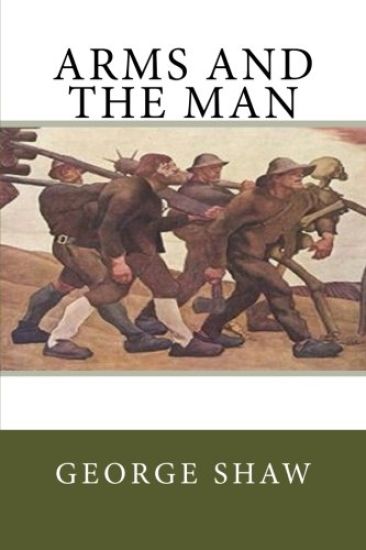
Be swept off your feet by one of the most charming, witty romantic comedies ever written. Stuck in a backwater town, Raina Petkoff craves more out of life. Having read every book in the library, including all the romance novels, she's sure there is more in store for her, she wants adventure, she wants love, she wants to get the hell out of town. So, when a charming Swiss soldier on the hop from the battlefield clambers into her bedroom, what's a clever, practical-minded girl to do? Offer him sanctuary, feed him chocolate and fall in love. It's only natural. The problem is, she's already engaged. To the most eligible man in town. Raina needs to decide if she stays true to her gallant fiance, or if she elopes with this dashing, mysterious stranger.
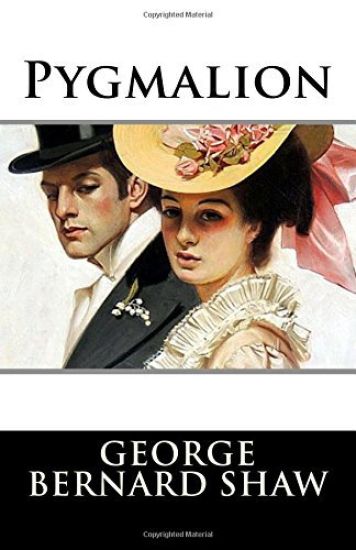
Pygmalion George Bernard Shaw (1856 - 1950) Pygmalion (1913) is a play by George Bernard Shaw based on the Greek myth of the same name. It tells the story of Henry Higgins, a professor of phonetics (based on phonetician Henry Sweet), who makes a bet with his friend Colonel Pickering that he can successfully pass off a Cockney flower girl, Eliza Doolittle, as a refined society lady by teaching her how to speak with an upper class accent and training her in etiquette. In the process, Higgins and Doolittle grow close, but she ultimately rejects his domineering ways and declares she will marry Freddy Eynsford-Hill --- a young, poor, gentleman. - The play was later the basis for the successful movie adaptation "My Fair Lady" with Audrey Hepburn as Eliza and Rex Harrison as Prof. Higgins.
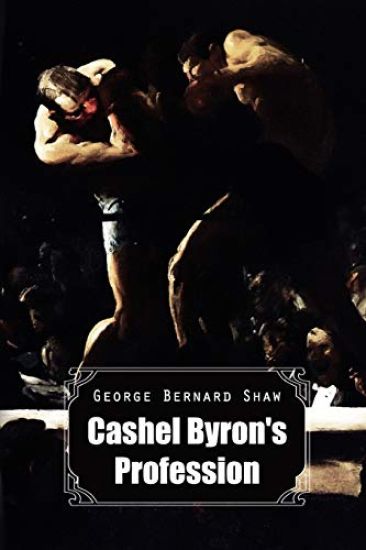
Cashel Byron's Profession
George Bernard Shaw
Createspace Independent Publishing Platform
2015
nidottu

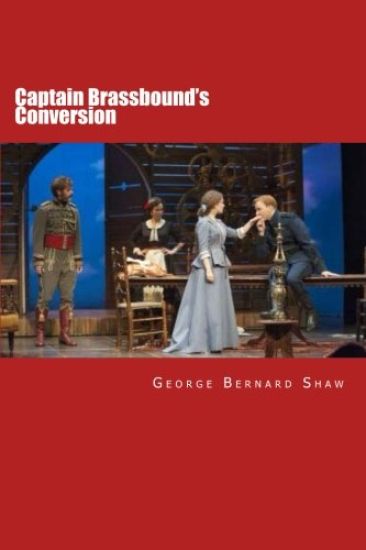
Captain Brassbound's Conversion
George Bernard Shaw
Createspace Independent Publishing Platform
2015
nidottu
Pygmalion & Arms and the Man: Special Edition: 2 plays in one book
George Bernard Shaw
Createspace Independent Publishing Platform
2014
nidottu
The Admirable Bashville
George Bernard Shaw
Createspace Independent Publishing Platform
2014
nidottu
The Admirable Bashville; Or, Constancy Unrewarded Being the Novel of Cashel Byron's Profession Done into a Stage Play in Three Acts and in Blank Verse, with a Note on Modern Prize Fighting is a classic George Bernard Shaw drama about prize fighting/boxing. Cashel Byron's Profession is George Bernard Shaw's fourth novel. The novel was written in 1882 and after rejection by several publishers it was published in serialized form in a socialist magazine. The novel was later published as a book in England and the United States. Shaw wrote five novels early in his career and then abandoned them to pursue politics, drama criticism and eventually play writing. The Admirable Bashville (1901), a short play based loosely on this novel, was written to protect American copyrights after the novel became unexpectedly successful in the United States. The novel follows Cashel Byron, a world champion prizefighter, as he tries to woo wealthy aristocrat Lydia Carew without revealing his illegal profession. Lydia is portrayed as a moral and intelligent woman (although "priggish" according to Shaw) and is constantly contrasted with the "ruffian" Cashel. Lydia was advised by her recently deceased father to find a husband with a profession, as opposed to an idle gentleman or an art critic like her father. Cashel's childhood ends when he runs away from school to Australia and becomes apprentice to an ex-world champion boxer. When Cashel goes to England to secure his world title in that country he meets Lydia at her country manor. After much miscommunication and drawing room comedy, Cashel gives up boxing and succeeds in marrying Lydia. As in his postscript to "Pygmalion" (1912), in which he describes Eliza Doolittle's future life, Shaw chose to portray the Byron marriage in a realistic manner and narrates how Lydia comes to regard Cashel as "one of the children". According to "Note on Modern Prizefighting" (1901) Shaw intended the fights described in Cashel Byron's Profession to turn the public away from the sport but the novel is written in such a light-hearted tone this unlikely result never materialized
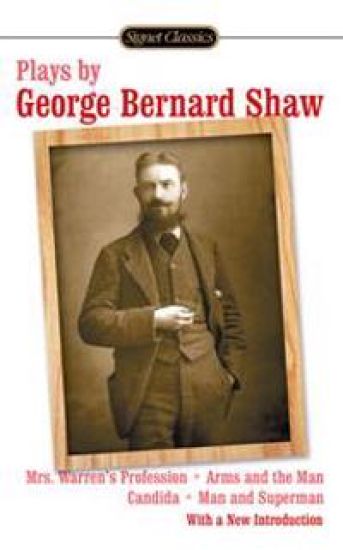
Mrs. Warren's Profession/Arms and the Man/Candida/Man and Superman
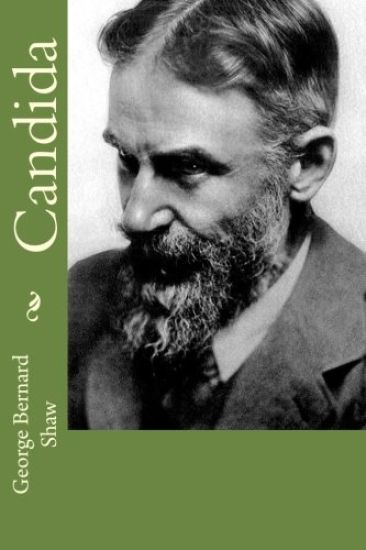
Candida, a comedy by playwright George Bernard Shaw, was written in 1894 and first published in 1898, as part of his Plays Pleasant. The central characters are clergyman James Morell, his wife Candida and a youthful poet, Eugene Marchbanks, who tries to win Candida's affections. The play questions Victorian notions of love and marriage, asking what a woman really desires from her husband. The cleric is a Christian Socialist, allowing Shaw-himself a Fabian Socialist-to weave political issues, current at the time, into the story. Shaw attempted but failed to have a London production of the play put on in the 1890s, but there were two small provincial productions. However, in late 1903 actor Arnold Daly had such a great success with the play that Shaw would write by 1904 that New York was seeing "an outbreak of Candidamania". The Royal Court Theatre in London performed the play in six matinees in 1904. The same theatre staged several other of Shaw's plays from 1904 to 1907, including further revivals of Candida. The play is set in the northeast suburbs of London in the month of October. It tells the story of Candida, the wife of a famous clergyman, the Reverend James Mavor Morell. Morell is a Christian Socialist, popular in the Church of England, but Candida is responsible for much of his success. Candida returns home briefly from a trip to London with Eugene Marchbanks, a young poet who wants to rescue her from what he presumes to be her dull family life. Marchbanks is in love with Candida and believes she deserves something more than just complacency from her husband. He considers her divine, and his love eternal. In his view, it is quite improper and humiliating for Candida to have to attend to petty household chores. Morell believes Candida needs his care and protection, but the truth is quite the contrary. Ultimately, Candida must choose between the two gentlemen. She reasserts her preference for the "weaker of the two" who, after a momentary uncertainty, turns out to be her husband Morell. The play was first performed at the Theatre Royal, South Shields on 30 March 1895. It was revived by the Independent Theatre Company, at Her Majesty's, Aberdeen on 30 July 1897. It was first performed in London at the Stage Society, The Strand, on 1 July 1900. However, it was not until late 1903, when Arnold Daly mounted a production in New York that the play became a success. Daly's production was quickly followed by one in London. The first public performance in London was on 26 April 1904, at the Royal Court The play was so popular in 1904 that the phenomenon was referred to as "Candidamania". In the words of The New York Sun, A new complaint has become widespread. It may be described as 'Candidamania.' It is a contagious disease, frequently caught in street cars, elevated trains, department stores, restaurants, and other places where people talk about what they did the night before. 'Have you seen Candida' is the question of the hour. Thousands are dragging their friends to see Mr. Shaw's play."