Kirjailija
George Bernard Shaw
Kirjat ja teokset yhdessä paikassa: 606 kirjaa, julkaisuja vuosilta 1972–2026, suosituimpiin kuuluu Love Among the Artists (An Autobiographical Novel of G. B. Shaw). Vertaile teosten hintoja ja tarkista saatavuus suomalaisista kirjakaupoista.
Nimi esiintyy myös muodoissa: George Bernard Shaw
606 kirjaa
Kirjojen julkaisuvuodet: 1972–2026.
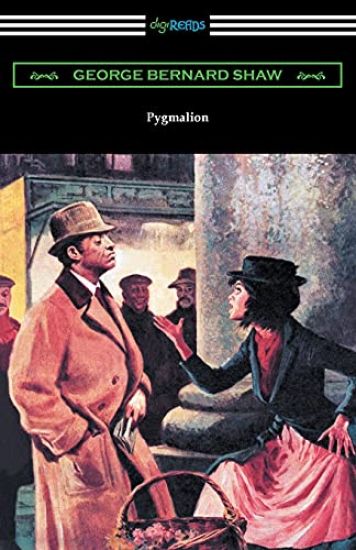
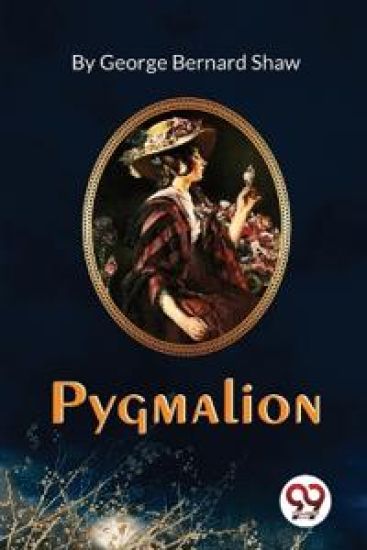
Pygmalion's audiences in 1914 were both enthralled and scandalized by it. In addition to being a razor-sharp critique of the British class system and a declaration of Shaw's feminist beliefs, this fantastically funny retelling of the traditional story of the sculptor who falls in love with his ideal female statue. My Fair Lady, the musical version of one of Bernard Shaw's most well-known plays ''Pygmalion'', was a great sensation both on Broadway and in London and New York. An updated and extensively revised version of the Pygmalion and Galatea myth from ancient Greece, the 20th-century fable pokes fun at the antiquated British class system. In Shaw's skillful adaptation, Professor Henry Higgins, a linguist, accepts a bet that he can transform a clumsy cockney flower seller into an educated young woman by merely teaching her better speech and manners. While convincing society that his construct is a mysterious royal figure, the professor also falls in love with his attractive invention. Pygmalion, one of the most well-known comedies in the English language, blends Shaw's witty dialogue and great playwriting skills with the alluring idea of the developing butterfly. It continues to be regularly performed and forms the basis of college theater programs.

An Unsocial Socialist (A Humorous Take on the Socialism of Victorian England)
George Bernard Shaw
OK Publishing
2022
Nidottu
A Humorous Take on the Socialism of Victorian England
Le Parfait Wagnerien Et Autres Ecrits Sur Wagner
George Bernard Shaw
Les Belles Lettres
2022
nidottu
Hormis Pygmalion, dans sa version cinematographique My Fair Lady, l'oeuvre de Bernard Shaw est aujourd'hui presque completement inconnue du public francais. Parmi les melomanes, rares sont ceux qui ont lu le Parfait wagnerien ou qui en connaissent meme l'existence; plus rares encore ceux qui savent que ce celebre essai etait le fruit d'une familiarite professionnelle avec la musique. C'est en effet comme critique musical, et rapidement l'un des plus talentueux d'Europe, que Shaw est entre dans la carriere journalistique et litteraire. Pendant pres d'une vingtaine d'annees (de 1876 a 1894), il a tenu avec un brio croissant une chronique musicale reguliere dans la presse londonienne; et meme lorsqu'il cessa cette activite, il n'en continua pas moins a publier, de temps a autre, des articles marquants. Wagner et les interpretes wagneriens de son temps constituant le massif central de ses ecrits sur la musique, ceux qui en traitent ont ete ici rassembles. Mais cette anthologie ne devrait pas interesser seulement les wagneriens. Comme, dans les articles de Shaw, Wagner voisine souvent avec d'autres compositeurs precedents ou contemporains; et que ses principaux interpretes outre-Manche, tant a l'opera qu'au concert, venaient principalement de l'etranger et s'illustraient aussi dans d'autres repertoires, c'est une large part de la creation et de la vie musicales europeennes dans la seconde moitie du XIXe siecle qui s'y trouvent evoquee par un critique d'une independance de jugement et d'une verve incomparables.
The life of fifteenth-century heroine Joan of Arc is the stuff of legend, and her cruel death (burnt at the stake aged just nineteen) led to her being declared a martyr, granting her an extraordinary legacy. Following her canonisation in 1920, and against a history of overly romanticised retellings of the story, Bernard Shaw put pen to paper to give a more accurate account, without resorting to demonising her persecutors; as he writes in his preface, 'there are no villains in the piece'. It was an immediate success, securing him the Nobel Prize for Literature, although critics were initially divided by this frank approach – T. S. Eliot was outraged, saying, 'instead of the saint or the strumpet of the legends he has turned her into a great middle-class reformer.' Nonetheless – or perhaps even because of this controversy – Saint Joan is considered one of Shaw's finest and most important plays. This edition has an introduction by Simon Mundy, who has spent several years as Vice-President of PEN International's Writers for Peace Committee, and extensive explanatory notes.
Androcles and the Lion is a 1912 play written by George Bernard Shaw. The play is Shaw's retelling of the tale of Androcles, a slave who is saved by the requiting mercy of a lion. In the play, Shaw portrays Androcles to be one of the many Christians being led to the Colosseum for torture. Characters in the play exemplify several themes and takes on both modern and supposed early Christianity, including the cultural clash between Jesus' teachings and traditional Roman values. The play was written at a time when the Christian Church was an important influence on society and there was strong pressure on non-believers in public life. The reversal of roles in the play possibly served to evoke empathy from his targeted audience. The characters also represent different "types" of Christian believers. The journey and outcome of each of the characters make it clear which believers Shaw sympathizes with the most, especially with Lavinia.
First performed in 1905 and published in 1907, "Major Barbara" is a dramatic play by the famed Irish playwright and activist George Bernard Shaw. The story centers around its title character who, as an officer in the Salvation Army, becomes disenchanted by the increasing social problems that she sees and the willingness of her organization to accept money from armament manufacturers. Barbara is disillusioned about the good work the Salvation Army is doing when she discovers they have taken money from men like her father, who has become wealthy selling weapons, and a whisky distiller. Barbara's views change over the course of this three-act play and she begins to believe that her time would be better spent helping to convert the working class to Christianity than by attempting to help the poor with nothing more than donations of bread and soup. In the end, she marries the new owner of her father's munitions factory and has convinced herself that helping the factory workers will be more fulfilling. "Major Barbara" is considered one of Shaw's most controversial works for its harsh criticism against religious institutions and charities for failing to properly address the problems of modern society and poverty. This edition is printed on premium acid-free paper.
The Complete Plays of George Bernard Shaw (1893-1921), 34 Complete and Unabridged Plays Including
George Bernard Shaw
Oxford City Press
2021
pokkari
George Bernard Shaw was a satirical genius, ruthlessly exposing hypocrisy, and creating moral dilemmas for the reader to mull on. These are biting, witty, sometimes rude, highly intelligent plays. This collection of thirty-four of his plays is an Omnibus that will give hours of pleasure to the reader.
Arms and the Man, The Devil's Disciple, and Caesar and Cleopatra
George Bernard Shaw
Oxford University Press
2021
nidottu
The three plays in this volume are some of George Bernard Shaw's most popular and frequently performed works. They demonstrate the development of Shavian comedy and contain early formulations of his idea of the Superman, an extraordinary individual who catalyzes the evolution of mankind. Arms and the Man (1894) was Shaw's first commercial success and the first public confirmation that he could make playwriting his profession. It is the first of what Shaw called his "pleasant plays',comedies that critique idealism in general rather than specific social problems (as his earlier plays did). Specifically, Shaw undermines the romance of wartime courage, reckless heroism, and nationalist pride among British spectators while using the Serbo-Bulgarian War of 1886 as an exotic veneer. Shaw wrote The Devil's Disciple (1897) for William Terriss, an actor known for his swashbuckling roles who had requested a play that would 'contain every "surefire" melodramatic situation' --mistaken identities, terrifying adventures and last-second escapes, and frequent emotional outpourings.. Caesar and Cleopatra (1898) is Shaw's revision of Shakespeare's Julius Caesar and Antony and Cleopatra as well as a fusion of the pragmatism and unconventionality of the heroes of Arms and the Man and The Devil's Disciple into a portrait of jocular, morally serious leadership.
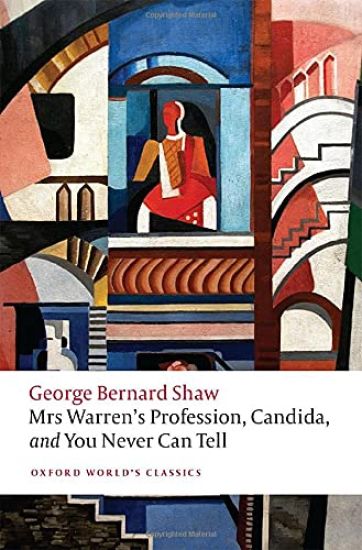
Mrs Warren's Profession, Candida, and You Never Can Tell
George Bernard Shaw
Oxford University Press
2021
nidottu
Mrs Warren's Profession, Candida, and You Never Can Tell are plays which give a clear sense of the range of Shaw's first forays into playwriting. Together they showcase his early negotiations between his political and social concerns and the constraints and possibilities of the British stage at the fin de siècle. These plays are bound together by shared concerns with gender roles, sexuality, concepts of familial and social duty, and how all these are shaped by wider financial, political, literary, philosophical and theatrical influences. Mrs Warren's Profession is the best known of Shaw's 'Plays Unpleasant', his first exercises in using the theatre as a means to awaken the consciences of morally complacent audiences. Written in 1893 in angry response to the success of A. W. Pinero's sensational hit The Second Mrs Tanqueray and a revival of Dumas's La dame aux camélias, Mrs Warren's Profession did not receive a public performance in Britain until 1925. Shaw's provocative response to the sentimental 'fallen woman' plays that dominated the fin-de-siècle stage was a play in which prostitution was presented not as a question of female sexual morality, but as a direct result of the systematic economic exploitation of women. Candida (1894), by contrast, was categorised by Shaw as one of his 'Plays Pleasant', but the label was characteristically deceptive. The play appeared at first sight to offer audiences a reassuringly familiar drama of a marriage threatened by an interloper but ultimately reaffirmed when the wife recognises her true place and her dangerous admirer is sent out into the cold. But, as critics have noted, the play was a re-working by Shaw of Ibsen's A Doll's House in which the husband played the part of the over-protected doll, unaware of the real power dynamics of his marriage. You Never Can Tell (1897) was Shaw's seaside comedy of manners, complete with an all-knowing waiter, exuberant twins, a lovelorn dentist, a long-lost father, lashings of food, and a comic catchphrase to provide the title. Shaw took all these familiar elements of Victorian farce and reworked them into a modern play of ideas, in which etiquette and ideologies collide. Just as in Wilde's The Importance of Being Earnest (a comparison which Shaw always stubbornly rejected), questions of class, marriage, manners, money, sex and identity underpin the plot of love-at-first-sight, mislaid parents and reunited families.
HarperCollins is proud to present its incredible range of best-loved, essential classics. George Bernard Shaw’s classic play and satire of the British class system, first performed in 1913.
When Julius Caesar arrives in Egypt and finds Cleopatra in hiding, he encourages her to return to the palace and embrace her role as queen. Shaw depicts an unlikely pair that bond over a common goal. As Roman forces invade Egypt, Julius Caesar stumbles across a young Cleopatra hiding amongst the statues. He initially conceals his identity, as the queen expresses concern over Caesar and his impending army. When he convinces her to return to the palace, she soon discovers his true name. Following a brief exchange, the young woman is relieved as Caesar has quelled her worst fears. Yet, in the midst of a Roman occupation, Cleopatra and her brother Ptolemy engage in a bitter battle for the Egyptian throne. In Caesar and Cleopatra, George Bernard Shaw explores the unique dynamic between two of history’s most notable figures. It’s a cynical but entertaining view of the political warfare that ravaged Ancient Egypt. With his sharp prose, Shaw revitalizes the classic story and its infamous characters. With an eye-catching new cover, and professionally typeset manuscript, this edition of Caesar and Cleopatra is both modern and readable.
Man and Superman, John Bull's Other Island, and Major Barbara
George Bernard Shaw
Oxford University Press
2021
nidottu
Nobel Laureate George Bernard Shaw remains one of the world's most important and popular writers. His plays are regularly performed around the world, from the boards of Broadway and the West End to regional, community, and college stages. The three plays selected here are widely considered to be three of the most important in the canon of modern British theatre: Man and Superman: a four-act comedy for serious people, staged in part at Royal court in 1905, it is one of the early works of Modernism to take an ancient myth and restage it in contemporary mode (and its influence extends across world literature, palpable in writings from Mann to Joyce). Its story of how a sensitive woman compels a superman-figure to adjust to her needs and those of the real world provides an updated commentary on Nietzsche's still-fashionable notions of ubermensch; and its famous third act introduces a persistent Shavian theme, which goes back as far as earliest religious literature-that the truly damned are those who are happy in hell. John Bull's Other Island takes up that idea: to the visionary, hell may be the ultimate modern dream of efficiency and rational administration, as manifested in a colonial Ireland run by liberal exploiters. Commissioned by WB Yeats to mark the opening of Ireland's National Theatre, the Abbey, the play was promptly refused by its Directors (who disliked its mechanical mockeries of mechanism but may have missed its visionary qualities). It was performed to huge acclaim in London in November 1904 and it made Shaw famous, the supreme example of the Playwright as Thinker and, ever afterwards, one of the most valued commentators on Anglo-Irish relations. Major Barbara: a three-act drama which in classic Shavian style unmasks the motivation of puritan idealists and dedicated industrialists, this work (like the previous two) pits a strong woman against a sardonic, practical man. Having exposed the mendacity of apostles of efficiency, Shaw seems then to submit to their doctrine, arguing that a pure private charity towards the destitute is no adequate substitute. Like the previous two works, this is a problem play, in the course of which the audience sympathy is aroused and then repelled in all directions. The suggestion that it may be acceptable to take money from tainted sources, such as arms manufacturers, caused much debate in 1905---and even more after the carnage wrought by mechanized guns in World War One.
When professor of phonetics Henry Higgins wagers with Colonel Pickering that he could teach even a gutter-mouthed flower seller how to speak like a duchess, little does he expect that his social experiment will be riddled with difficulties, and that behind her cockney parlance the girl in question, Eliza Doolittle, has a mind, ideas and aspirations of her own. Things come to a crux when the creature starts to rebel against her creator – and the scene is set for a play that questions the class system, social appearances and the role of women in society. Universally regarded as Shaw’s most successful work, Pygmalion – here presented in its definitive 1941 version, with footnotes indicating the textual variants from the first volume edition of 1916 – has spawned a great number of adaptations, among them the famous 1956 Broadway musical My Fair Lady, and shows ancient myth’s undiminished ability to find new incarnations in modern life.
This book has been considered important throughout the human history, and so that this work is never forgotten we have made efforts in its preservation by republishing this book in a modern format for present and future generations. This whole book has been reformatted, retyped and designed. These books are not made of scanned copies of their original work and hence the text is clear and readable.