Kirjojen hintavertailu – 12 859 824 kirjaa ja 27 kauppaa
Kirjailija
George MacDonald
Kirjat ja teokset yhdessä paikassa: 1 736 kirjaa, julkaisuja vuosilta 1848–2026, suosituimpiin kuuluu Malcolm. Vertaile teosten hintoja ja tarkista saatavuus suomalaisista kirjakaupoista.
Phantastes - Vol. II.: A Faerie Romance is an unchanged, high-quality reprint of the original edition of 1874. Hansebooks is editor of the literature on different topic areas such as research and science, travel and expeditions, cooking and nutrition, medicine, and other genres. As a publisher we focus on the preservation of historical literature. Many works of historical writers and scientists are available today as antiques only. Hansebooks newly publishes these books and contributes to the preservation of literature which has become rare and historical knowledge for the future.
Phantastes - Vol. I.: A Faerie Romance is an unchanged, high-quality reprint of the original edition of 1874. Hansebooks is editor of the literature on different topic areas such as research and science, travel and expeditions, cooking and nutrition, medicine, and other genres. As a publisher we focus on the preservation of historical literature. Many works of historical writers and scientists are available today as antiques only. Hansebooks newly publishes these books and contributes to the preservation of literature which has become rare and historical knowledge for the future.
In this sequel to the classic fantasy The Princess and the Goblin, Curdie is given a strange gift: he can read a person's character by touching their hands. But he's not sure what good that is when the kingdom starts falling apart. Along with his trusty monster, Curdie must decide what to believe, who to help, and who to fight when the king grows mysteriously sick and the princess is helpless. Enjoyable for all ages, The Princess and Curdie is a clever fable of falsehood versus truth and appearance versus reality. "Most myths were made in prehistoric times, and, I suppose, not consciously made by individuals at all. But every now and then there occurs in the modern world a genius...who can make such a story. MacDonald is the greatest genius of this kind whom I know." --C. S. Lewis "Surely, George MacDonald is the grandfather of us all--all of us who struggle to come to terms with truth through fantasy." --Madeleine L'Engle "The magical, the fairy story...may be a vehicle of mystery. This is what George MacDonald attempted, achieving stories of power and beauty." --J. R. R. Tolkien
George MacDonald (10 December 1824 - 18 September 1905) was a Scottish author, poet, and Christian minister. He was a pioneering figure in the field of fantasy literature and the mentor of fellow writer Lewis Carroll. His writings have been cited as a major literary influence by many notable authors including W. H. Auden, C. S. Lewis, J. R. R. Tolkien, Walter de la Mare, E. Nesbit and Madeleine L'Engle. C. S. Lewis wrote that he regarded MacDonald as his "master" "Picking up a copy of Phantastes one day at a train-station bookstall, I began to read. A few hours later," said Lewis, "I knew that I had crossed a great frontier." G. K. Chesterton cited The Princess and the Goblin as a book that had "made a difference to my whole existence". Elizabeth Yates wrote of Sir Gibbie, "It moved me the way books did when, as a child, the great gates of literature began to open and first encounters with noble thoughts and utterances were unspeakably thrilling." Even Mark Twain, who initially disliked MacDonald, became friends with him, and there is some evidence that Twain was influenced by MacDonald. Christian author Oswald Chambers wrote in his Christian Disciplines that "it is a striking indication of the trend and shallowness of the modern reading public that George MacDonald's books have been so neglected". In addition to his fairy tales, MacDonald wrote several works on Christian apologetics including several that defended a view that has been described as Christian Universalism. George MacDonald was born on 10 December 1824 at Huntly, Aberdeenshire, Scotland. His father, a farmer, was one of the MacDonalds of Glen Coe, and a direct descendant of one of the families that suffered in the massacre of 1692. The Doric dialect of the Aberdeenshire area appears in the dialogue of some of his non-fantasy novels. MacDonald grew up in an unusually literate environment: one of his maternal uncles was a notable Celtic scholar, editor of the Gaelic Highland Dictionary and collector of fairy tales and Celtic poetry. His paternal grandfather had supported the publication of an Ossian edition, the controversial Celtic text believed by some to have contributed to the starting of European Romanticism. MacDonald's step-uncle was a Shakespeare scholar, and his paternal cousin another Celtic academic. Both his parents were readers, his father harbouring predilections for Newton, Burns, Cowper, Chalmers, Coleridge and Darwin, to quote a few, while his mother had received a classical education which included multiple languages. MacDonald grew up in the Congregational Church, with an atmosphere of Calvinism. However, MacDonald's family was atypical, with his paternal grandfather a Catholic-born, fiddle-playing, Presbyterian elder; his paternal grandmother an Independent church rebel; his mother was a sister to the Gallic-speaking radical who became Moderator of the disrupting Free Church, while his step-mother, to whom he was also very close, was the daughter of a Celtic Episcopalian minister. MacDonald graduated from the University of Aberdeen, citation needed] and then went to London, studying at Highbury College for the Congregational ministry.
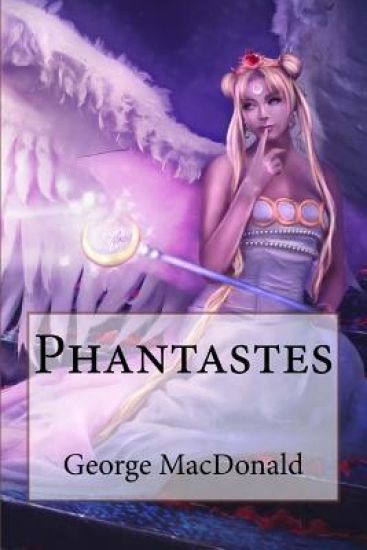
Phantastes: A Faerie Romance for Men and Women is a fantasy novel written by George MacDonald, first published in London in 1858. IThis was the first prose work published by MacDonald. Because of its limited financial success, MacDonald saw himself forced to turn to writing realistic novels. Phantastes, however, exerted a strong influence on fantasy authors of later generations: for example, C. S. Lewis in his book Suprised by Joy claimed that his imagination had been "baptized" by reading it. The story centers on the character Anodos ("pathless" or "ascent" in Greek) and takes its inspiration from German Romanticism, particularly Novalis. The story concerns a young man who is pulled into a dreamlike world and there hunts for his ideal of female beauty, embodied by the "Marble Lady". Anodos lives through many adventures and temptations while in the other world, until he is finally ready to give up his ideals. In its themes and overall storyline, Phantastes is a kind of dry run for MacDonald's later novel Lilith.
George MacDonald (10 December 1824 - 18 September 1905) was a Scottish author, poet, and Christian minister. He was a pioneering figure in the field of fantasy literature and the mentor of fellow writer Lewis Carroll. His writings have been cited as a major literary influence by many notable authors including W. H. Auden, C. S. Lewis, J. R. R. Tolkien, Walter de la Mare, E. Nesbit and Madeleine L'Engle. 1] C. S. Lewis wrote that he regarded MacDonald as his "master" "Picking up a copy of Phantastes one day at a train-station bookstall, I began to read. A few hours later," said Lewis, "I knew that I had crossed a great frontier." G. K. Chesterton cited The Princess and the Goblin as a book that had "made a difference to my whole existence". Elizabeth Yates wrote of Sir Gibbie, "It moved me the way books did when, as a child, the great gates of literature began to open and first encounters with noble thoughts and utterances were unspeakably thrilling." Even Mark Twain, who initially disliked MacDonald, became friends with him, and there is some evidence that Twain was influenced by MacDonald. citation needed] Christian author Oswald Chambers wrote in his Christian Disciplines that "it is a striking indication of the trend and shallowness of the modern reading public that George MacDonald's books have been so neglected". In addition to his fairy tales, MacDonald wrote several works on Christian apologetics including several that defended a view that has been described as Christian Universalism. George MacDonald was born on 10 December 1824 at Huntly, Aberdeenshire, Scotland. His father, a farmer, was one of the MacDonalds of Glen Coe, and a direct descendant of one of the families that suffered in the massacre of 1692. citation needed] The Doric dialect of the Aberdeenshire area appears in the dialogue of some of his non-fantasy novels.
George MacDonald (10 December 1824 - 18 September 1905) was a Scottish author, poet, and Christian minister. He was a pioneering figure in the field of fantasy literature and the mentor of fellow writer Lewis Carroll. His writings have been cited as a major literary influence by many notable authors including W. H. Auden, C. S. Lewis, J. R. R. Tolkien, Walter de la Mare, E. Nesbit and Madeleine L'Engle. C. S. Lewis wrote that he regarded MacDonald as his "master" "Picking up a copy of Phantastes one day at a train-station bookstall, I began to read. A few hours later," said Lewis, "I knew that I had crossed a great frontier." G. K. Chesterton cited The Princess and the Goblin as a book that had "made a difference to my whole existence". Elizabeth Yates wrote of Sir Gibbie, "It moved me the way books did when, as a child, the great gates of literature began to open and first encounters with noble thoughts and utterances were unspeakably thrilling."
George MacDonald (10 December 1824 - 18 September 1905) was a Scottish author, poet, and Christian minister. He was a pioneering figure in the field of fantasy literature and the mentor of fellow writer Lewis Carroll. His writings have been cited as a major literary influence by many notable authors including W. H. Auden, C. S. Lewis, J. R. R. Tolkien, Walter de la Mare, E. Nesbit and Madeleine L'Engle. 1] C. S. Lewis wrote that he regarded MacDonald as his "master" "Picking up a copy of Phantastes one day at a train-station bookstall, I began to read. A few hours later," said Lewis, "I knew that I had crossed a great frontier." G. K. Chesterton cited The Princess and the Goblin as a book that had "made a difference to my whole existence". Elizabeth Yates wrote of Sir Gibbie, "It moved me the way books did when, as a child, the great gates of literature began to open and first encounters with noble thoughts and utterances were unspeakably thrilling."