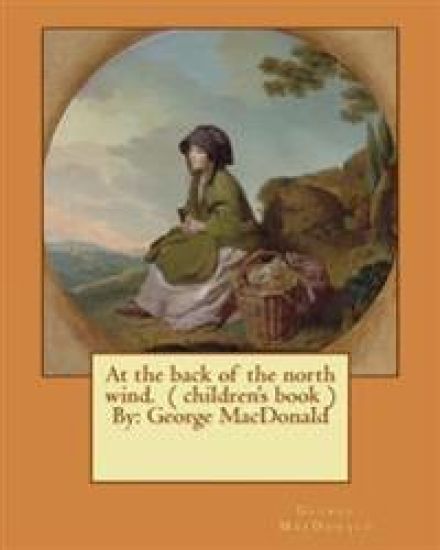
Kirjojen hintavertailu – 12 859 824 kirjaa ja 27 kauppaa

Kirjailija

George MacDonald

Kirjat ja teokset yhdessä paikassa: 1 736 kirjaa, julkaisuja vuosilta 1848–2026, suosituimpiin kuuluu Malcolm. Vertaile teosten hintoja ja tarkista saatavuus suomalaisista kirjakaupoista.

1 736 kirjaa

Kirjojen julkaisuvuodet: 1848–2026.

At the back of the north wind. By: George MacDonald (ILLUSTRATED): children's book

At the back of the north wind. By: George MacDonald (ILLUSTRATED): children's book

George MacDonald

Createspace Independent Publishing Platform
2017
nidottu
At the Back of the North Wind is a children's book written by Scottish author George MacDonald. It was serialized in the children's magazine Good Words for the Young beginning in 1868 and was published in book form in 1871. It is a fantasy centered on a boy named Diamond and his adventures with the North Wind. Diamond travels together with the mysterious Lady North Wind through the nights. The book includes the fairy tale Little Daylight, which has been pulled out as an independent work, or separately, added to other collections of his fairy tales.. George MacDonald (10 December 1824 - 18 September 1905) was a Scottish author, poet, and Christian minister. He was a pioneering figure in the field of fantasy literature and the mentor of fellow writer Lewis Carroll. His writings have been cited as a major literary influence by many notable authors including W. H. Auden, C. S. Lewis, J. R. R. Tolkien, Walter de la Mare, E. Nesbit and Madeleine L'Engle. C. S. Lewis wrote that he regarded MacDonald as his "master" "Picking up a copy of Phantastes one day at a train-station bookstall, I began to read. A few hours later," said Lewis, "I knew that I had crossed a great frontier." G. K. Chesterton cited The Princess and the Goblin as a book that had "made a difference to my whole existence". Elizabeth Yates wrote of Sir Gibbie, "It moved me the way books did when, as a child, the great gates of literature began to open and first encounters with noble thoughts and utterances were unspeakably thrilling." Even Mark Twain, who initially disliked MacDonald, became friends with him, and there is some evidence that Twain was influenced by MacDonald. Christian author Oswald Chambers (1874-1917) wrote in Christian Disciplines, vol. 1, (pub. 1934) that "it is a striking indication of the trend and shallowness of the modern reading public that George MacDonald's books have been so neglected". In addition to his fairy tales, MacDonald wrote several works on Christian apologetics including several that defended his view of Christian Universalism.
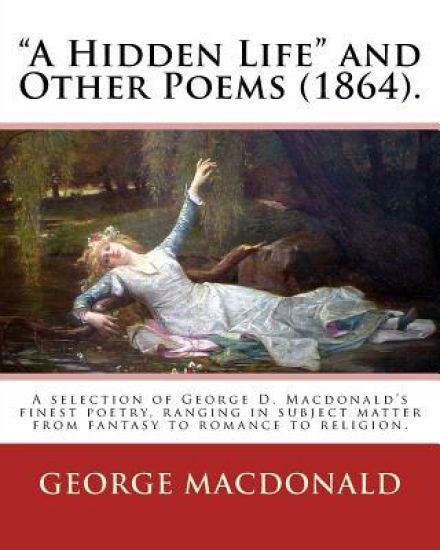
"A Hidden Life" and Other Poems (1864). By: George MacDonald: A selection of George D. Macdonald's finest poetry, ranging in subject matter from fanta
A selection of George D. Macdonald's finest poetry, ranging in subject matter from fantasy to romance to religion. George MacDonald (10 December 1824 - 18 September 1905) was a Scottish author, poet, and Christian minister. He was a pioneering figure in the field of fantasy literature and the mentor of fellow writer Lewis Carroll. His writings have been cited as a major literary influence by many notable authors including W. H. Auden, C. S. Lewis, J. R. R. Tolkien, Walter de la Mare, E. Nesbit and Madeleine L'Engle. C. S. Lewis wrote that he regarded MacDonald as his "master" "Picking up a copy of Phantastes one day at a train-station bookstall, I began to read. A few hours later," said Lewis, "I knew that I had crossed a great frontier." G. K. Chesterton cited The Princess and the Goblin as a book that had "made a difference to my whole existence". Elizabeth Yates wrote of Sir Gibbie, "It moved me the way books did when, as a child, the great gates of literature began to open and first encounters with noble thoughts and utterances were unspeakably thrilling." Even Mark Twain, who initially disliked MacDonald, became friends with him, and there is some evidence that Twain was influenced by MacDonald. Christian author Oswald Chambers (1874-1917) wrote in Christian Disciplines, vol. 1, (pub. 1934) that "it is a striking indication of the trend and shallowness of the modern reading public that George MacDonald's books have been so neglected". In addition to his fairy tales, MacDonald wrote several works on Christian apologetics including several that defended his view of Christian Universalism.

Annals of a Quiet Neighbourhood . By: George MacDonald: Novel (World's classic's)

Annals of a Quiet Neighbourhood . By: George MacDonald: Novel (World's classic's)

George MacDonald

Createspace Independent Publishing Platform
2017
nidottu
A work of faith and hope, repentance and redemption, this novel, set in Marshmallows, a rural location in Victorian England, is the story of a young vicar, Harry Walton, beginning work in his first parish. As he wins the confidence and affection of his parishioners he also comes to know the web of entanglements and sorrows that bind many of them, including the lovely and evasive young woman who lives with her mother and niece in stately Oldcastle Hall, the center of some of the neighborhood's longest hidden secrets., George MacDonald (10 December 1824 - 18 September 1905) was a Scottish author, poet, and Christian minister. He was a pioneering figure in the field of fantasy literature and the mentor of fellow writer Lewis Carroll. His writings have been cited as a major literary influence by many notable authors including W. H. Auden, C. S. Lewis, J. R. R. Tolkien, Walter de la Mare, E. Nesbit and Madeleine L'Engle. C. S. Lewis wrote that he regarded MacDonald as his "master" "Picking up a copy of Phantastes one day at a train-station bookstall, I began to read. A few hours later," said Lewis, "I knew that I had crossed a great frontier." G. K. Chesterton cited The Princess and the Goblin as a book that had "made a difference to my whole existence". Elizabeth Yates wrote of Sir Gibbie, "It moved me the way books did when, as a child, the great gates of literature began to open and first encounters with noble thoughts and utterances were unspeakably thrilling." Even Mark Twain, who initially disliked MacDonald, became friends with him, and there is some evidence that Twain was influenced by MacDonald. Christian author Oswald Chambers (1874-1917) wrote in Christian Disciplines, vol. 1, (pub. 1934) that "it is a striking indication of the trend and shallowness of the modern reading public that George MacDonald's books have been so neglected". In addition to his fairy tales, MacDonald wrote several works on Christian apologetics including several that defended his view of Christian Universalism.
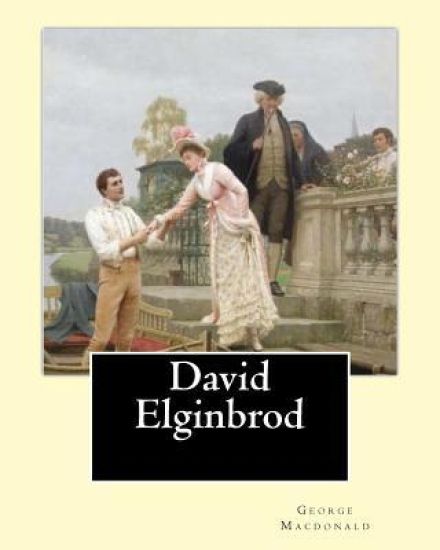
David Elginbrod. By: George Macdonald: To The Memory of Lady Noel Byron

David Elginbrod. By: George Macdonald: To The Memory of Lady Noel Byron

George MacDonald

Createspace Independent Publishing Platform
2017
nidottu
David Elginbrod is an 1863 novel by George MacDonald. It is MacDonald's first realistic novel. A novel of Scottish country life, in the dialect of Aberdeen. A story of humble life, centering in two saintly personalities, a dignified and pious Scottish peasant, and his daughter. A vein of mysticism runs through the story, and mesmerism and electro-biology are introduced. Anne Isabella Noel Byron, 11th Baroness Wentworth and Baroness Byron (n e Milbanke; 17 May 1792 - 16 May 1860), nicknamed Annabella, was the wife of poet George Gordon Byron, more commonly known as Lord Byron. A highly educated and strictly religious woman, she seemed an unlikely match for the amoral and agnostic poet, and their marriage soon ended in acrimony. Lady Byron's reminiscences, published after her death by Harriet Beecher Stowe, revealed her fears about an alleged incest Lord Byron had with his half-sister. The scandal about Lady Byron's suspicions accelerated Byron's intentions to leave England and return to the Mediterranean where he had lived in 1810. Their daughter Ada worked as a mathematician with Charles Babbage, precursor of computer science. Lady Byron had felt that an education in mathematics and logic would counteract any possible inherited tendency towards Lord Byron's insanity and romantic excess. George MacDonald (10 December 1824 - 18 September 1905) was a Scottish author, poet, and Christian minister. He was a pioneering figure in the field of fantasy literature and the mentor of fellow writer Lewis Carroll. His writings have been cited as a major literary influence by many notable authors including W. H. Auden, C. S. Lewis, J. R. R. Tolkien, Walter de la Mare, E. Nesbit and Madeleine L'Engle. C. S. Lewis wrote that he regarded MacDonald as his "master" "Picking up a copy of Phantastes one day at a train-station bookstall, I began to read. A few hours later," said Lewis, "I knew that I had crossed a great frontier." G. K. Chesterton cited The Princess and the Goblin as a book that had "made a difference to my whole existence". Elizabeth Yates wrote of Sir Gibbie, "It moved me the way books did when, as a child, the great gates of literature began to open and first encounters with noble thoughts and utterances were unspeakably thrilling." Even Mark Twain, who initially disliked MacDonald, became friends with him, and there is some evidence that Twain was influenced by MacDonald. Christian author Oswald Chambers (1874-1917) wrote in Christian Disciplines, vol. 1, (pub. 1934) that "it is a striking indication of the trend and shallowness of the modern reading public that George MacDonald's books have been so neglected". In addition to his fairy tales, MacDonald wrote several works on Christian apologetics including several that defended his view of Christian Universalism.

The Flight of the Shadow (1891). By: George Macdonald: (Original Classics)

The Flight of the Shadow (1891). By: George Macdonald: (Original Classics)

George MacDonald

Createspace Independent Publishing Platform
2017
nidottu
"In The Flight of the Shadow]... Dr. MacDonald is bound even less than usual by the commonplace of conventional life, and in it are to be found some of the most strikingly imaginative and mystical of his nature pictures, and symbolisms, as where he describes the horizon looking like a 'void between a cataclysm and the moving afresh of the Spirit of God upon the face of the waters.' "Later... the sight of a rider on a white horse, dimly seen in a storm, awakes the thought of 'Death returning home on the eve of the great dawn, worn with his age-long work, pleased that it was over, and no more need of him.' "It is with a kind of chastened pity that the flower-like heroine of this book speaks of those who 'are afraid of loneliness, and hate God's lovely dark.' "These are the same souls who shrink from the idea of death; yet, says Dr. MacDonald, 'no one can be living a true life to whom dying is a terror' from 'What's Mine's Mine']." George MacDonald (10 December 1824 - 18 September 1905) was a Scottish author, poet, and Christian minister. He was a pioneering figure in the field of fantasy literature and the mentor of fellow writer Lewis Carroll. His writings have been cited as a major literary influence by many notable authors including W. H. Auden, C. S. Lewis, J. R. R. Tolkien, Walter de la Mare, E. Nesbit and Madeleine L'Engle. C. S. Lewis wrote that he regarded MacDonald as his "master" "Picking up a copy of Phantastes one day at a train-station bookstall, I began to read. A few hours later," said Lewis, "I knew that I had crossed a great frontier." G. K. Chesterton cited The Princess and the Goblin as a book that had "made a difference to my whole existence". Elizabeth Yates wrote of Sir Gibbie, "It moved me the way books did when, as a child, the great gates of literature began to open and first encounters with noble thoughts and utterances were unspeakably thrilling." Even Mark Twain, who initially disliked MacDonald, became friends with him, and there is some evidence that Twain was influenced by MacDonald. Christian author Oswald Chambers (1874-1917) wrote in Christian Disciplines, vol. 1, (pub. 1934) that "it is a striking indication of the trend and shallowness of the modern reading public that George MacDonald's books have been so neglected". In addition to his fairy tales, MacDonald wrote several works on Christian apologetics including several that defended his view of Christian Universalism.

Lilith (1895). By: George MacDonald: Fantasy novel

Lilith (1895). By: George MacDonald: Fantasy novel

George MacDonald

Createspace Independent Publishing Platform
2017
nidottu
Lilith is a fantasy novel written by Scottish writer George MacDonald and first published in 1895. Its importance was recognized in its later revival in paperback by Ballantine Books as the fifth volume of the Ballantine Adult Fantasy series in September 1969. Lilith is considered among the darkest of MacDonald's works, and among the most profound. It is a story concerning the nature of life, death, and salvation. In the story, MacDonald mentions a cosmic sleep that heals tortured souls, preceding the salvation of all. MacDonald was a Christian universalist, believing that all will eventually be saved. However, in this story, divine punishment is not taken lightly, and salvation is hard-won. Mr. Vane, the protagonist of Lilith, owns a library that seems to be haunted by the former librarian, who looks much like a raven from the brief glimpses he catches of the wraith. After finally encountering the supposed ghost, the mysterious Mr. Raven, Vane learns that Raven had known his father; indeed, Vane's father had visited the strange parallel universe from which Raven comes and goes and now resides therein. Vane follows Raven into the world through a mirror (this symbolistic realm is described as "the region of the seven dimensions", a term taken from Jacob Boehme). Inside the world, Vane learns of a house of beds where the dreamers sleep until the end of the world in death: a good death, in which life is found. Vane's grandfather refused to sleep there and is, instead, forced to do battle with skeletons in a haunted wood. After a treacherous journey through a valley (where the moon is the only thing to keep him safe), Mr. Vane meets the Little Ones, children who never grow up, remaining pure children or becoming selfish and getting bigger and dumber, turning into "bags" or bad giants. After conversing with Lona, the eldest of the children, Mr. Vane decides to help them, and sets off to gather more information, although the Raven (who is also Adam) has warned Mr. Vane that he needs to sleep along with the dreamers before he can really help them. While on his journey, he meets Lilith, Adam's first wife and the princess of Bulika. 2] Vane, although nearly blinded by Lilith's beauty and charms, eventually leads the Little Ones in a battle against Bulika. Lona, Vane's love, turns out to be Lilith's daughter, and is killed by her own mother. Lilith, however, is captured and brought to Adam and Eve at the house of death, where they struggle to make her open her hand, fused shut, in which she holds the water the Little Ones need to grow. Only when she gives it up can Lilith join the sleepers in blissful dreams, free of sin. After a long struggle, Lilith bids Adam cut her hand from her body; it is done, Lilith sleeps, and Vane is sent to bury the hand; water flows from the hole and washes the land over. Vane is then allowed to join the Little Ones, already asleep, in their dreaming. He takes his bed, next to Lona's, and finds true life in death. Mr. Vane awakens in his home, then is afterwards unsure that he is really awake, but actually dreaming that he is awake. He does not attempt to re-enter the parallel world but waits "all the days of (his) appointed time ...till (his) change come"..... George MacDonald (10 December 1824 - 18 September 1905) was a Scottish author, poet, and Christian minister. He was a pioneering figure in the field of fantasy literature and the mentor of fellow writer Lewis Carroll.
The Wise Woman: A Parable (1875). By: George MacDonald: Children's literature (Original Classics)
The Wise Woman: A Parable, is a fairy tale novel by George MacDonald. George MacDonald (10 December 1824 - 18 September 1905) was a Scottish author, poet, and Christian minister. He was a pioneering figure in the field of fantasy literature and the mentor of fellow writer Lewis Carroll. His writings have been cited as a major literary influence by many notable authors including W. H. Auden, C. S. Lewis, J. R. R. Tolkien, Walter de la Mare, E. Nesbit and Madeleine L'Engle. C. S. Lewis wrote that he regarded MacDonald as his "master" "Picking up a copy of Phantastes one day at a train-station bookstall, I began to read. A few hours later," said Lewis, "I knew that I had crossed a great frontier." G. K. Chesterton cited The Princess and the Goblin as a book that had "made a difference to my whole existence". Elizabeth Yates wrote of Sir Gibbie, "It moved me the way books did when, as a child, the great gates of literature began to open and first encounters with noble thoughts and utterances were unspeakably thrilling." Even Mark Twain, who initially disliked MacDonald, became friends with him, and there is some evidence that Twain was influenced by MacDonald. Christian author Oswald Chambers (1874-1917) wrote in Christian Disciplines, vol. 1, (pub. 1934) that "it is a striking indication of the trend and shallowness of the modern reading public that George MacDonald's books have been so neglected". In addition to his fairy tales, MacDonald wrote several works on Christian apologetics including several that defended his view of Christian Universalism.

The Princess and the Goblin (1872).By: George MacDonald: illustrated By: Jessie Willcox Smith (1863-1935), (children's book )
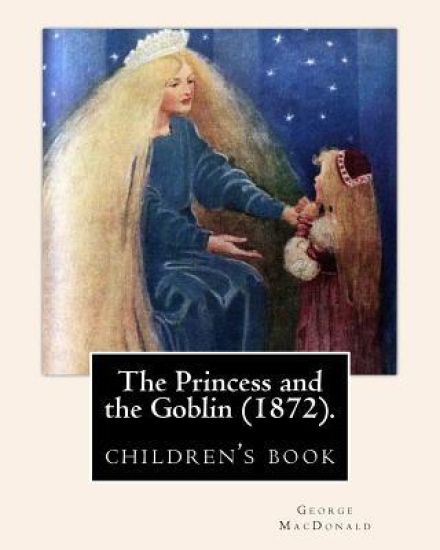
The Princess and the Goblin is a children's fantasy novel by George MacDonald. It was published in 1872 by Strahan & Co. The sequel to this book is The Princess and Curdie. Anne Thaxter Eaton writes in A Critical History of Children's Literature that The Princess and the Goblin and its sequel "quietly suggest in every incident ideas of courage and honor." Jeffrey Holdaway, in the New Zealand Art Monthly, said that both books start out as "normal fairytales but slowly become stranger", and that they contain layers of symbolism similar to that of Lewis Carroll's work. Eight-year-old Princess Irene lives a lonely life in a castle in a wild, desolate, mountainous kingdom, with only her nursemaid, Lootie, for company. Her father, the king, is normally absent, and her mother is dead. Unknown to her, the nearby mines are inhabited by a race of goblins, long banished from the kingdom and now anxious to take revenge on their human neighbors. One rainy day, the princess explores the castle and discovers a beautiful, mysterious lady, who identifies herself as Irene's namesake and great-great-grandmother. The next day, Princess Irene persuades her nursemaid to take her outside. After dark they are chased by goblins and rescued by the young miner, Curdie, whom Irene befriends. At work with the rest of the miners, Curdie overhears the goblins talking, and their conversation reveals to Curdie the secret weakness of goblin anatomy: they have very soft, vulnerable feet. Curdie sneaks into the Great Hall of the goblin palace to eavesdrop on their general meeting, and hears that the goblins intend to flood the mine if a certain other part of their plan should fail. He later conveys this news to his father. In the palace, Princess Irene injures her hand, which her great-great-grandmother heals. A week later Irene is about to see her great-great-grandmother again, but is frightened by a long-legged cat and escapes up the mountain; whereupon the light from her great-great-grandmother's tower leads her home, where her great-great-grandmother gives Irene a ring attached to a thread invisible except to herself, which thereafter connects her constantly to home. When Curdie explores the goblins' domain, he is discovered by the goblins and stamps on their feet with great success; but when he tries to stamp on the Queen's feet she is uninjured due to her stone shoes. The goblins imprison Curdie, thinking he will die of starvation; but Irene's magic thread leads her to his rescue, and Curdie steals one of the goblin queen's stone shoes. Irene takes Curdie to see her great-great-grandmother and be introduced; but she is only visible to Irene. Curdie later learns that the goblins are digging a tunnel in the mines towards the king's palace, where they plan to abduct the Princess and marry her to goblin prince Harelip. Curdie warns the palace guards about this, but is imprisoned instead and contracts a fever through a wound in his leg, until Irene's great-great-grandmother heals the wound. Meanwhile, the goblins break through the palace floor and come to abduct the princess; but Curdie escapes from his prison room and stamps on the goblins' feet. Upon the goblins' retreat, Irene is believed a captive; but Curdie follows the magic thread to her refuge at his own house, and restores her to the king. When the goblins flood the mines, the water enters the palace, and Curdie warns the others; but the goblins are drowned. The king asks him to serve as a bodyguard; but Curdie refuses, saying he cannot leave his mother and father, and instead accepts a new red petticoat for his mother, as a reward. Jessie Willcox Smith (September 6, 1863 - May 3, 1935) was one of the most prominent female illustrators in the United States during the Golden Age of American illustration. George MacDonald (10 December 1824 - 18 September 1905) was a Scottish author, poet, and Christian minister.
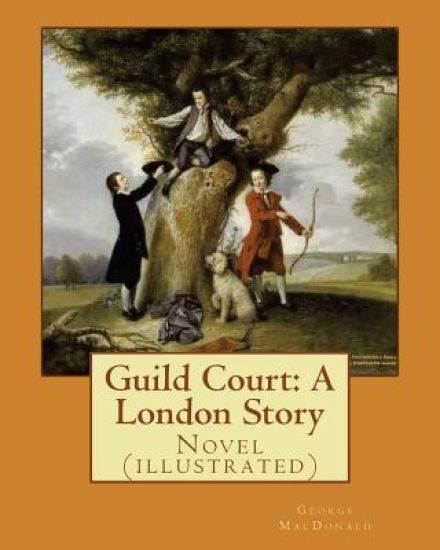
Guild Court: A London Story. By: George MacDonald: Novel (illustrated)

Guild Court: A London Story. By: George MacDonald: Novel (illustrated)

George MacDonald

Createspace Independent Publishing Platform
2017
nidottu
George MacDonald (10 December 1824 - 18 September 1905) was a Scottish author, poet, and Christian minister. He was a pioneering figure in the field of fantasy literature and the mentor of fellow writer Lewis Carroll. His writings have been cited as a major literary influence by many notable authors including W. H. Auden, C. S. Lewis, J. R. R. Tolkien, Walter de la Mare, E. Nesbit and Madeleine L'Engle. C. S. Lewis wrote that he regarded MacDonald as his "master" "Picking up a copy of Phantastes one day at a train-station bookstall, I began to read. A few hours later," said Lewis, "I knew that I had crossed a great frontier." G. K. Chesterton cited The Princess and the Goblin as a book that had "made a difference to my whole existence". Elizabeth Yates wrote of Sir Gibbie, "It moved me the way books did when, as a child, the great gates of literature began to open and first encounters with noble thoughts and utterances were unspeakably thrilling." Even Mark Twain, who initially disliked MacDonald, became friends with him, and there is some evidence that Twain was influenced by MacDonald. Christian author Oswald Chambers (1874-1917) wrote in Christian Disciplines, vol. 1, (pub. 1934) that "it is a striking indication of the trend and shallowness of the modern reading public that George MacDonald's books have been so neglected". In addition to his fairy tales, MacDonald wrote several works on Christian apologetics including several that defended his view of Christian Universalism.
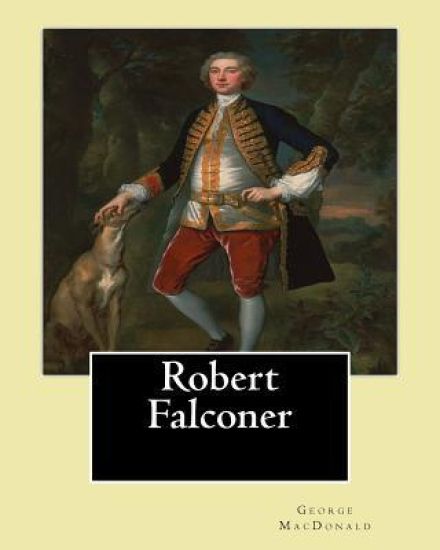
Robert Falconer. By; George MacDonald: Novel

Robert Falconer. By; George MacDonald: Novel

George MacDonald

Createspace Independent Publishing Platform
2017
nidottu
George MacDonald (10 December 1824 - 18 September 1905) was a Scottish author, poet, and Christian minister. He was a pioneering figure in the field of fantasy literature and the mentor of fellow writer Lewis Carroll. His writings have been cited as a major literary influence by many notable authors including W. H. Auden, C. S. Lewis, J. R. R. Tolkien, Walter de la Mare, E. Nesbit and Madeleine L'Engle. C. S. Lewis wrote that he regarded MacDonald as his "master" "Picking up a copy of Phantastes one day at a train-station bookstall, I began to read. A few hours later," said Lewis, "I knew that I had crossed a great frontier." G. K. Chesterton cited The Princess and the Goblin as a book that had "made a difference to my whole existence". Elizabeth Yates wrote of Sir Gibbie, "It moved me the way books did when, as a child, the great gates of literature began to open and first encounters with noble thoughts and utterances were unspeakably thrilling." Even Mark Twain, who initially disliked MacDonald, became friends with him, and there is some evidence that Twain was influenced by MacDonald. Christian author Oswald Chambers (1874-1917) wrote in Christian Disciplines, vol. 1, (pub. 1934) that "it is a striking indication of the trend and shallowness of the modern reading public that George MacDonald's books have been so neglected". In addition to his fairy tales, MacDonald wrote several works on Christian apologetics including several that defended his view of Christian Universalism.