Kirjojen hintavertailu – 12 859 818 kirjaa ja 27 kauppaa

Kirjailija

Giordano Bruno

Kirjat ja teokset yhdessä paikassa: 109 kirjaa, julkaisuja vuosilta 1975–2026, suosituimpiin kuuluu Le Opere Italiane Di Giordano Bruno, Volume 2.... Vertaile teosten hintoja ja tarkista saatavuus suomalaisista kirjakaupoista.

109 kirjaa

Kirjojen julkaisuvuodet: 1975–2026.

Oeuvres Completes III - de la Cause, Du Principe Et de l'Un
English summary: This volume presents a new translation of Cause, Principle and Unity by Giordano Bruno. As stated by the author, "as in art, forms vary infinitely (if that is possible), it is always the same matter that persists under themotherwise, in nature, where the forms change infinitely and succeed one another, matter remains always the same." French description: "De meme que dans l'art, les formes varient a l'infini (si cela est possible), c'est toujours une meme matiere qui persiste sous elles - la forme de l'arbre, par exemple, etant suivie de celle du tronc, puis de celle de la troupe, de la planche, du siege, de l'escabeau, de la caisse, du peigne, et ainsi de suite, cependant que l'etre du bois persiste toujours -, il n'en va pas autrement dans la nature, ou, les formes changeant a l'infini et se succedant l'une l'autre, la matiere reste toujours la meme ...] Ce qui etait semence devient herbe, et que ce qui etait herbe devient epi, ce qui etait epi devient pain, ce qui etait pain devient chyle, chyle sang, le sang semence, la semence embryon, l'embryon homme, l'homme cadavre, le cadavre terre, la terre pierre ou autre chose, et ainsi de suite, pour en arriver a revetir toutes les choses naturelles." Giordano Bruno
Sobre el Infinito Universo y los Mundos

Sobre el Infinito Universo y los Mundos

Giordano Bruno

Createspace Independent Publishing Platform
2016
nidottu
En 1548, cuatro d cadas despu s de la publicaci n de De Revolutionibus de Cop rnico, Giordano Bruno propuso una nueva cosmolog a, una nueva metaf sica y una nueva ontolog a acorde con la astronom a copernicana. Del infinito: el universo y los mundos sustituye el mundo ordenado y finito de Arist teles por un universo homog neo e infinito sin centro ni circunferencia limitadora, sin Dios creador trascendente, que pueda considerarse l mismo dotado de caracter sticas divinas del infinito y que evoluciona en el tiempo y el espacio.
Four Works On Llull

Four Works On Llull

Scott Gosnell; Giordano Bruno

Createspace Independent Publishing Platform
2015
pokkari
Ramon Lull or Llull created his Art during the 13th century as a method for debating and converting the Islamic kingdoms of North Africa and the Jewish population of Europe, following a vision experienced atop Mount Randa. The Art utilized what is now called combinatoric logic to produce arguments on any subject from simple, mechanical rules, without appeals to authority or existing literature. As such, it forms an important precursor to modern programing languages. In its own right, and through these commentaries by Giordano Bruno, it influenced Gottfried Leibniz and others seeking a universal, logical language; through them, it influenced Boole and later logicians. This is the first English translation of these works. This edition was first published on the 415th anniversary of Bruno's deat
Oeuvres Completes. Documents I. Le Proces

Oeuvres Completes. Documents I. Le Proces

Giordano Bruno

Les Belles Lettres
2014
nidottu
Traduction d'un ouvrage publie en Italie en 1993, du a Luigi Firpo, un des meilleurs experts italiens de l'histoire intellectuelle des XVI-XVIIe siecles, voici l'edition a peu pres definitive des pieces du proces d'inquisition de Giordano Bruno. On connait les principaux episodes de la carriere de Bruno: sortie de l'ordre dominicain (1575) fuite a Geneve passage a Toulouse et Paris, ou il jouit d'une certaine paix sejour en Angleterre chez l'ambassadeur de France (Michel de La Mauvissiere, son principal mecene) retour en France, affrontement avec les milieux aristoteliciens de Paris depart precipite pour l'Allemagne, ou il erre de ville en ville (Francfort, Wittenberg), en Boheme (Prague) retour en Allemagne (Francfort) et, enfin, le retour au pays natal, Venise et Padoue, en aout 1591, apres une quinzaine d'annees de peregrination au cours desquelles il a publie une vingtaine d'ouvrages latins et sept en italien, approche le roi de France, l'Empereur Rodolphe II et la Reine Elizabeth. Pour son malheur, il a ete invite a Venise par un certain Mocenigo, rejeton d'une grande famille venitienne, a la recherche de "connaissances secretes" qui pourraient l'aider a faire bonne figure dans la societe. Celui-ci prend rapidement peur devant la liberte de pensee religieuse de Bruno, qui n'hesite pas a critiquer clairement les dogmes fondamentaux du christianisme (filiation divine, virginite de Marie, creation du monde, culte des saints etc.). Craignant que Bruno ne le quitte sans lui avoir revele ses secrets, Mocenigo le denonce a l'inquisition le 23 mai 1592. Commence alors un proces, qui s'achevera par la mort de Bruno sur le bzcher, a Rome, le 17 fevrier 1600. Dans une considerable preface (150 pages), ou le proces est reconstitue methodiquement et son developpement explique, Firpo fait justice de nombreux mythes (torture de Bruno, entretiens avec Campanella en prison, role nefaste de Bellarmin etc.). Viennent ensuite tous les textes permettant de reconstituer ce proces (edition critique et traduction francaise) et d'un petit nombre de notes (en particulier sur les nombreux personnages qui interviennent dans l'affaire) Parmi les documents les plus importants, citons les trois denonciations successives de Mocenigo le texte meme des six interrogatoires de Venise (les "constituts") les interrogatoires des temoins venitiens (editeurs, academiciens) les documents de l'extradition de Bruno le tres important "Sommario" de mars 1598 (resume de l'etat d'avancement du proces) les decrets de condamnation (incomplet) le recit de la mort de Bruno par Schoppe, qui y a assiste, etc.
Opere Complete / Oeuvres Completes III/1: de La Causa, Principio Et Uno / de La Cause, Du Principe Et de L'Un
English summary: "Just like art, forms vary infinitely (if that is possible), but it is always an invariable matter that remains unchanged - the form of the tree, for example, is followed by that of the trunk, then by that of the plank, the chair, the stool, the crate, the brush and so on, yet the essence of the wood remains unchanged - it does not disappear in nature, where forms change infinitely and supersede one another; matter always remains the same. The seed becomes herb, the bread become chyle, chyle blood, the blood sperm, the sperm embryo, the embryo man, the man cadaver, the cadaver earth, the earth rock (or something else), and so on, to eventually encompass all natural things." - Giordano Bruno Italian and French text. French description: De meme que dans l'art, les formes varient a l'infini (si cela est possible), c'est toujours une meme matiere qui persiste sous elles--la forme de l'arbre, par exemple, etant suivie de celle du tronc, puis de celle de la troupe, de la planche, du siege, de l'escabeau, de la caisse, du peigne, et ainsi de suite, cependant que l'etre du bois persiste toujours -, il n'en va pas autrement dans la nature, ou, les formes changeant a l'infini et se succedant l'une l'autre, la matiere reste toujours la meme a] Ce qui etait semence devient herbe, et que ce qui etait herbe devient epi, ce qui etait epi devient pain, ce qui etait pain devient chyle, chyle sang, le sang semence, la semence embryon, l'embryon homme, l'homme cadavre, le cadavre terre, la terre pierre ou autre chose, et ainsi de suite, pour en arriver a revetir toutes les choses naturelles. Giordano Bruno

On the Infinite, the Universe and the Worlds

On the Infinite, the Universe and the Worlds

Giordano Bruno

Createspace Independent Publishing Platform
2014
pokkari

Halvin toimitettuna 23,30 €

In 1584, while living in the household of Michel de Castelnau, the French Ambassador to the court of Queen Elizabeth of England, Giordano Bruno completed three books of cosmological dialogues: The Ash Wednesday Supper; On Cause, Principle and Unity; and the current volume, On the Infinite, the Universe and the Worlds. Drawing on the work of Lucretius, Nicholas da Cusa, Nicholas Copernicus and others, Bruno developed the theory of an infinitely extensive universe, filled with stars like our sun and planets like our own. Giordano Bruno's heretical ideas and forceful personality led to a turbulent life in which he travelled to most of the great academic and cultural centers of Europe, culminating in his trial and execution by the Roman Inquisition in 1600. Recently, this work and Giordano Bruno were referenced in the new series of Cosmos.
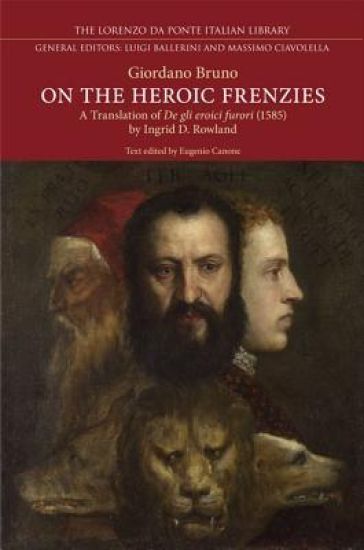
On the Heroic Frenzies

On the Heroic Frenzies

Giordano Bruno

University of Toronto Press
2013
sidottu
Italian astronomer and Dominican friar Giordano Bruno (1548–1600), found guilty of heresy by the Roman Inquisition and burned at the stake, has long been an enigma of early modern European philosophy. His central 1586 work On the Heroic Frenzies has shown a particular need for a fresh examination. This vibrant bilingual edition, annotated by celebrated Bruno scholar Ingrid D. Rowland, features the text in its original Italian alongside an elegant, accurate English translation. On the Heroic Frenzies is at once a philosophical dialogue, an anthology of love poetry, and a collection of sonnets, songs, and emblems – sometimes borrowed from other writers, but primarily Bruno’s own. Rowland’s detailed introduction and extensive footnotes highlight the philosophical sources, Biblical allusions, and biographical elements that make Bruno’s work both richly conceived and often challenging to understand. Providing cohesive insights into Bruno’s text, Rowland’s edition of On the Heroic Frenzies is a helpful guide for those new to his work.
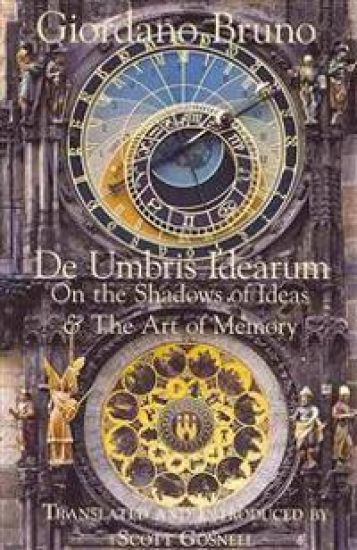
De Umbris Idearum

De Umbris Idearum

Giordano Bruno

Createspace Independent Publishing Platform
2013
pokkari

Halvin toimitettuna 22,30 €

English edition. To memorize anything, distribute vivid, emotionally stirring imagined images around a piece of familiar architecture. This is the method of loci, or memory palace method, first developed in classical antiquity. Giordano Bruno perfected the art in the late 16th Century. He published a series of books on the subject, beginning with De Umbris Idearum (On the Shadows of Ideas). His work and life would lead him across the major centers of Renaissance Europe, to the patronage of kings and nobles, the scorn and envy of academics, and ultimately to his imprisonment and execution at the hands of the Roman Inquisition in 1600. Bruno's works have been reprinted periodically since his death. The current edition is the first complete English translation to be published.