Kirjojen hintavertailu – 12 859 818 kirjaa ja 27 kauppaa
Kirjailija
Hans Ulrich Obrist
Kirjat ja teokset yhdessä paikassa: 91 kirjaa, julkaisuja vuosilta 2006–2026, suosituimpiin kuuluu Judy Chicago: Revelations. Vertaile teosten hintoja ja tarkista saatavuus suomalaisista kirjakaupoista.
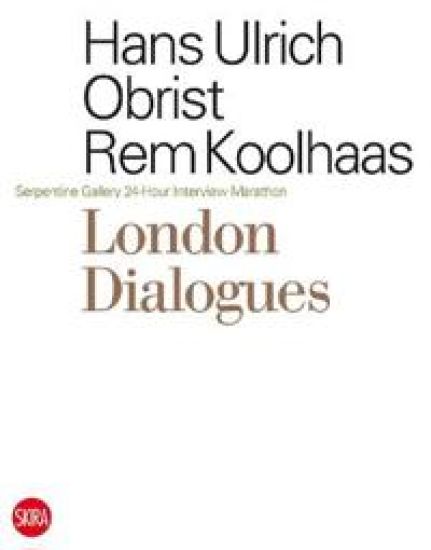
This volume inaugurates a new series of publications edited by three leading authors on the world's architectural and artistic scene: H. U. Obrist, Rem Koolhaas and Stefano Boeri. This series of dialogues conducted by Hans Ulrich Obrist and Rem Koolhaas is dedicated to the most topical subjects on the international scene. Protagonists of the British architectural, political, and artistic scene, including Brian Eno, Zaha Hadid, Doris Lessing, Damien Hirst, and Gilbert and George, amongst others, have been invited to speak about the near future.
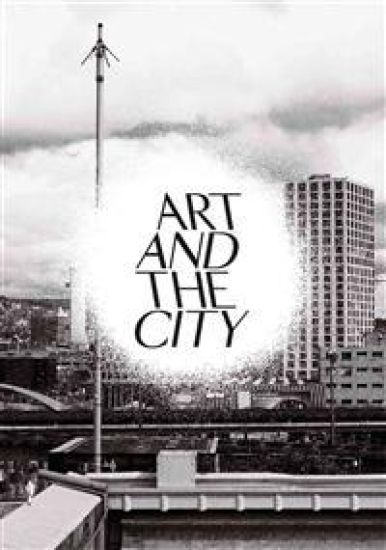
"Art and the City" explores the condition of public art in cities. Divided into two volumes shrinkwrapped together--one of color plates, the other of critical discussion--it includes works by artists such as Doug Aitken, Ai Weiwei, Los Carpinteros, Martin Creed, Frank Stella and Oscar Tuazon.
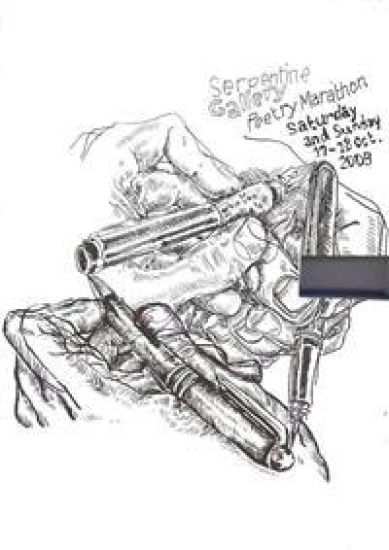
Hans Ulrich Obrist's 2009 Poetry Marathon was an ambitious two-day poetry event held in Kazuyo Sejima and Ryue Nishizawa's summer pavilion at the Serpentine Gallery, with performances from leading poets, writers, artists, philosophers, scholars and musicians. Intended as a continuation of the overlap between twentieth-century poetry and art in Dada, Cubism, Surrealism, the New York Schools and Fluxus, this ambitious occasion is now commemorated in this 728-page volume. Poetry Marathon includes contributions from Sean Bonney, Tracey Emin, Brian Eno, James Fenton, Gilbert & George, John Giorno, Dominique Gonzalez-Foerster, Kenneth Goldsmith, Eugen Gomringer, Richard Hell, Geoffrey Hill, Joan Jonas, August Kleinzahler, Nick Laird, Sean Landers, Jonas Mekas, Maria Mirabel, Eileen Myles, Philippe Parreno, Holly Pester, Jeremy Reed, Gerhard Ruhm, Barry Schwabsky and Agnes Varda, among many others.
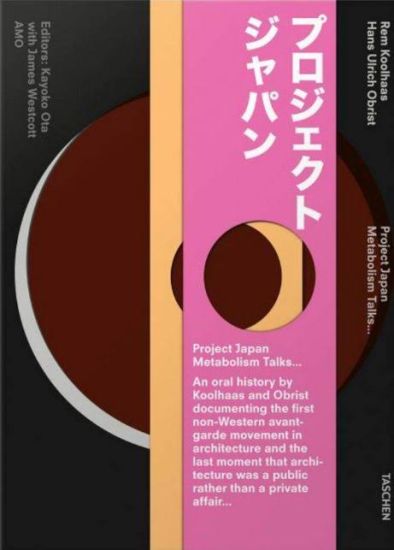
“Once there was a nation that went to war, but after they conquered a continent their own country was destroyed by atom bombs... then the victors imposed democracy on the vanquished. For a group of apprentice architects, artists, and designers, led by a visionary, the dire situation of their country was not an obstacle but an inspiration to plan and think... although they were very different characters, the architects worked closely together to realize their dreams, staunchly supported by a super-creative bureaucracy and an activist state... after 15 years of incubation, they surprised the world with a new architecture—Metabolism—that proposed a radical makeover of the entire land... Then newspapers, magazines, and TV turned the architects into heroes: thinkers and doers, thoroughly modern men… Through sheer hard work, discipline, and the integration of all forms of creativity, their country, Japan, became a shining example... when the oil crisis initiated the end of the West, the architects of Japan spread out over the world to define the contours of a post-Western aesthetic....” —Rem Koolhaas / Hans Ulrich Obrist Between 2005 and 2011, architect Rem Koolhaas and curator Hans Ulrich Obrist interviewed the surviving members of Metabolism—the first non-Western avant-garde, launched in Tokyo in 1960, in the midst of Japan’s postwar miracle. Project Japan features hundreds of never-before-seen images—master plans from Manchuria to Tokyo, intimate snapshots of the Metabolists at work and play, architectural models, magazine excerpts, and astonishing sci-fi urban visions—telling the 20th-century history of Japan through its architecture. From the tabula rasa of a colonized Manchuria in the 1930s, a devastated Japan after the war, and the establishment of Metabolism at the 1960 World Design Conference in Tokyo to the rise of Kisho Kurokawa as the first celebrity architect, the apotheosis of Metabolism at Expo ’70 in Osaka, and its expansion into the Middle East and Africa in the 1970s: The result is a vivid documentary of the last moment when architecture was a public rather than a private affair. Oral history by Rem Koolhaas and Hans Ulrich Obrist Extensive interviews with Arata Isozaki, Toshiko Kato, Kiyonori Kikutake, Noboru Kawazoe, Fumihiko Maki, Kisho Kurokawa, Kenji Ekuan, Atsushi Shimokobe, and Takako and Noritaka Tange Hundreds of never-before-seen images, architectural models, and magazine excerpts Layout by award-winning Dutch designer Irma Boom Further reading
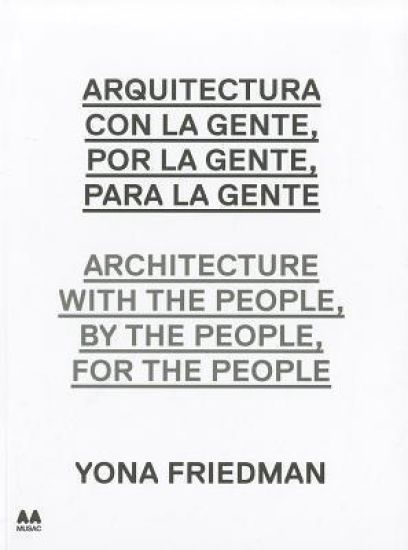
This monograph, second in the collection featuring artists and architects who maintain a critical view of the contemporary world, is devoted to the distinguished Hungarian architect, living and working in Paris, Yona Friedman. Yona Friedman's work spans urban models, theoretical texts and animated films. He has participated in several biennial art exhibitions, including Shanghai, Venice and Documenta 11. His visionary, ground-breaking ideas have been at the forefront for several generations of architects and urban planners, and have clearly influenced the likes of Kenzo Tange, Arata Isozaki or Bernard Tschumi. While Friedman is still active and remains socially committed, his most important ideas stem from the fifties and sixties. In 1956, he published his "Manifeste de l'architecture Mobile," which set an urban structure on piles suitable for areas where building had not been not possible. This text was in turn used as the founding document of the Groupe d'etude d'architecture mobile (GEAM). He developed urban concepts such as La ville spatiale-the Spatial City where dwellings are freely distributed by the citizens thanks to low-cost, reusable mobile models. In 1965, along with Ionel Schein, Walter Jonas and others, he founded the Groupe International d'Architecture Prospective (GIAP).
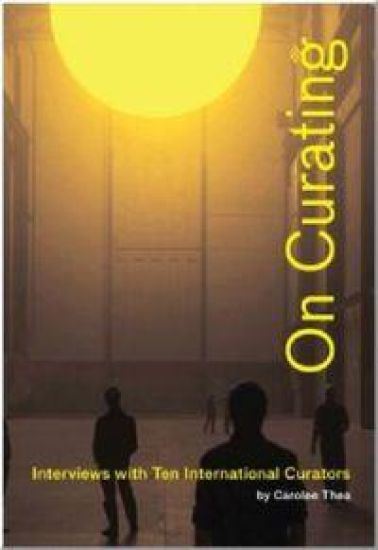
On Curating, Carolee Thea's second volume of interviews with ten of today's leading curators, explores the intellectual convictions and personal visions that lay the groundwork for the most prestigious and influential exhibitions in the world today. Among the aesthetic and theoretical issues raised are the relationship between artist and curator, globalism, post-colonialism, capitalism, the future of cultural tourism and the biennial as spectacle or utopian ideal. As Thea notes in her introduction, "the biennial or mega-exhibition--a laboratory for experimentation, investigation and aesthetic liberation--is where the curators' experience and knowledge are tested. As they negotiate venues for artistic expression, intellectual critiques and humanistic concerns in their own societies and others, they are challenged by the certainties and uncertainties of a constantly evolving future." Thea's interviewees are Joseph Backstein, Carolyn Christov-Bakargiev, Okwui Enwezor, Charles Esche, Massimiliano Gioni, RoseLee Goldberg, Mary Jane Jacob, Pi Li, Virginia Perez-Ratton and Rirkrit Tiravanija. On Curating also includes 50 color illustrations of relevant works by (among others) Kutlug Ataman, Tamy Ben-Tor, John Bock, Cao Fei, Olafur Eliasson, Isaac Julien, Francois & Philippe Parreno, Yvonne Rainer, Michael Rakowitz, Doris Salcedo, Allan Sekula, Yinka Shonibare and Francesca Woodman. Carolee Thea is a curator, critic, art historian and independent scholar. Her first book, Foci: Interviews with Ten International Curators was published in 2001. She is contributing editor at ArtAsiaPacific and Sculpture magazine and was the English editor of Atlántica 45. Her articles, reviews and interviews have been published in many arts journals, among them Parkett, Artforum.com, The New Art Examiner, Modern Painters, Artnet.com, ZSijue 21 Beijing, Heresies, Tema Celeste, Parachute and ArtNews.
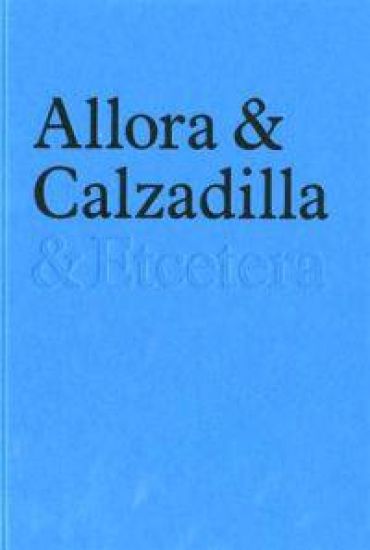
This impeccably designed artist's book presents a selection of images collected by Puerto Rican artists Allora & Calzadilla over the course of a decade. A parallel component to the duo's practice, the collection is presented as a succession of intuitively arranged pairings that offers insight into their thinking and methodology. & Etcetera reveals a contradictory but revelatory and absorbing system of interests and motivations.
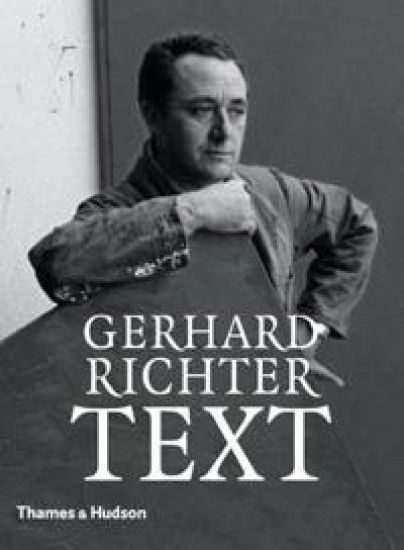
Gerhard Richter is one of the foremost artists of his generation. This book provides a wider selection of Richters texts, from all periods of his career. It includes letters and interviews; private reflections from personal correspondence; and, excerpts from journals discussing the intentions, subjects, methods and sources of his works.
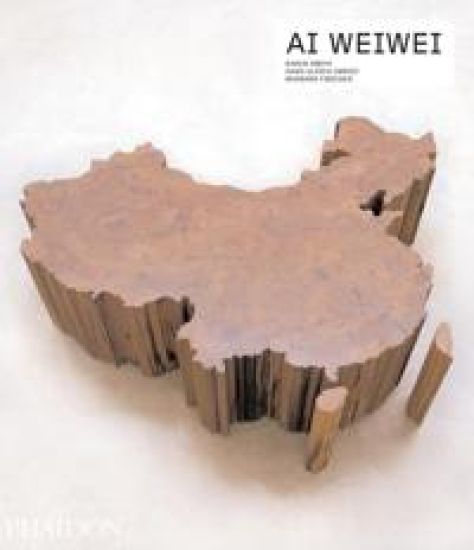
Ai Weiwei (b. 1957) is truly an artist for the twenty-first century. In his sculptures he refashions artefacts and antiques into surprising, sometimes monumental constructions such as Template (2007): hundreds of wooden doors and windows taken from demolished Ming and Qing dynasty temples and arranged into a massive outdoor sculpture. As much as these materials look to the past, they also speak of the present, because never before (and probably never again) have they been available in such abundance. Like his benches carved from centuries-old temple beams, Template is a sly commentary on the speed with which China's building boom is obliterating its past. (When Template collapsed in a rainstorm two weeks after its unveiling at Documenta 12, the artist embraced its demise as a clever artistic twist.) In China today, making art that's critical of current cultural and economic policies is not a particularly safe career move. But Ai's father, the poet Ai Qing, walked a similar path, absorbing European avant-garde styles while studying in 1930s Paris and later standing by them in the face of Communist opposition, a move that eventually led to his exile to the distant provincial town where his son Weiwei came to be born and raised. In the late 1970s Ai Weiwei moved to Beijing, banding together with other pro-democracy artists in a loose collective known as the Stars Group. In 1981, following government retaliation against one of their exhibitions, Ai moved to New York, where he attended art school and lived the life of the bohemian for twelve years, his East Village apartment serving as a base for countless visiting Chinese artists. When his father became ill in 1993 Ai returned to China, settling in Beijing and finally taking up his art career in earnest. Weiwei's artistic forebears belong primarily to the Western modernist avant-garde (Duchamp and Beuys are particularly relevant). But Ai has equally and increasingly been influenced by modernist architecture and contemporary urban planning, citing the need for an ideal for living in a country where runaway economic development has shown little regard for the everyday life of the individual. In stark contrast to the glass-and-steel high-rises going up around Beijing, the art galleries, ateliers and homes Ai designs are boxy and modest, made from brick and other vernacular materials. Their resolution of Eastern and Western styles is a fitting parallel to his antique readymade sculptures. At a time when the West is finally discovering Chinese contemporary art, Ai is one of the few to have transcended the label 'Chinese artist'. In part thanks to his gallery Urs Meile (Lucerne and Beijing), Ai has won the support of strong European collectors. His work is increasingly being shown at major venues around the world (Kunsthalle Bern, Kunsthaus Graz, Tate Liverpool) and included in major international exhibitions (the Moscow Biennial, the Guangzhou Triennale, Documenta). A complex, multi-faceted artist, Ai is poised to make a deep impact on contemporary art far beyond China's borders. In the interview Hans Ulrich Obrist discusses Ai Weiwei’s life and motivations, his childhood in a rural province close to the Russian border, his underground political work, his move to New York in the 80s and consequent return to China in the 90s, and his break within the art world. Karen Smith’s survey examines the evolution of Ai Weiwei’s work from the early paintings, drawings, and sculptures pieces through his most recent installations and architectural work, including the cotton-made sculpture World Map (Biennale of Sydney, 2006), the wooden doors and windows structure Template (Documenta 12, 2007) and his collaboration with the Swiss firm Herzog & de Meuron for the Beijing National Stadium for the 2008 Summer Olympics. Bernard Fibicher focuses on Working Progress (Fountain of Light) (2007), a site-specific sculpture for Tate Liverpool inspired by Tatlin’s Monument to the Third International (1919) and that takes the form of a spectacular chandelier.
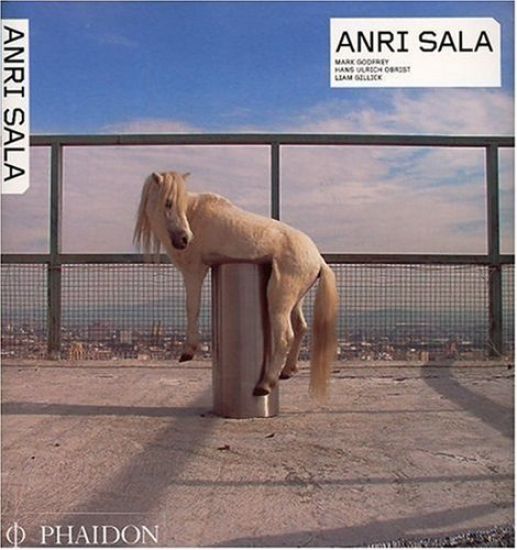
Anri Sala (b. 1974) creates hauntingly simple videos that explore the roles language and vision play in fractured contemporary society. Anri Sala is represented by Galerie Chantal Crousel (Paris), Hauser & Wirth (Zurich/London) and Marian Goodman Gallery (New York).
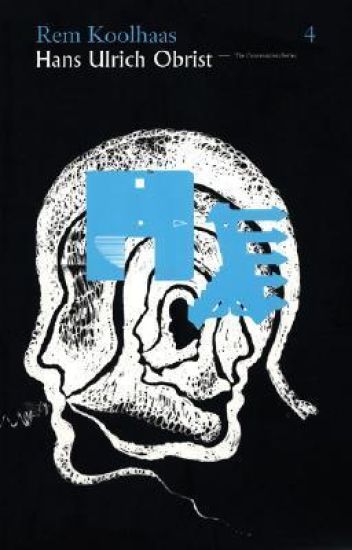
Rem Koolhass is the optimistic and bold theoretician of contemporary architecture. In his talks with Hans-Ulrich Obrist, he discusses his work in China - amongst others; his spectacular and controversial concept for the headquarters of China Central Television in Beijing; and his designs for Prada shops, where consumption is staged like art. This book looks at Koolhaas' role as counselor for the EU, as well as his views on architecture as metaphor and on the development of urbanism in the slipstream of globalization. "The Conversation Series" of titles presents a number of interviews between Hans Ulrich Obrist and leading figures in art and architecture, including Robert Crumb, John Chamberlain, Rosemarie Trockel, Wolfgang Tillmans, Zaha Hadid, Gilbert, and George.