

Kirjailija
Henry Adams
Kirjat ja teokset yhdessä paikassa: 322 kirjaa, julkaisuja vuosilta 1982–2026, suosituimpiin kuuluu The Education of Henry Adams. Vertaile teosten hintoja ja tarkista saatavuus suomalaisista kirjakaupoista.
322 kirjaa
Kirjojen julkaisuvuodet: 1982–2026.



Reprint of the original, first published in 1871.
Reprint of the original, first published in 1871.
Reprint of the original, first published in 1871.
Reprint of the original, first published in 1871.


Democracy: An American Novel (1880) is a novel by Henry Adams. Published anonymously, Democracy: An American Novel draws on Adams’ experience as a political journalist in Washington, DC who worked to expose corruption in American government. Although fictional, the novel is viewed as a commentary on the presidential administrations of the 1870s and political atmospheres surrounding each. “For reasons which many persons thought ridiculous, Mrs. Lightfoot Lee decided to pass the winter in Washington. She was in excellent health, but she said that the climate would do her good. In New York she had troops of friends, but she suddenly became eager to see again the very small number of those who lived on the Potomac. It was only to her closest intimates that she honestly acknowledged herself to be tortured by ennui.” Madeleine Lee, a young widow from a prominent clerical family, moves from New York to Washington, DC in search of a better life. There, she hosts a popular salon and draws the attention of several suitors. While John Carrington, an honest man from a working-class background, shows true romantic feelings, Silas P. Ratcliffe, an aspiring politician, proves dangerously attractive. As their competition grows heated, Madeleine begins losing interest in the life of fame and fortune she has pursued for herself. With a beautifully designed cover and professionally typeset manuscript, this edition of Henry Adams’ Democracy: An American Novel is a classic of American literature reimagined for modern readers.

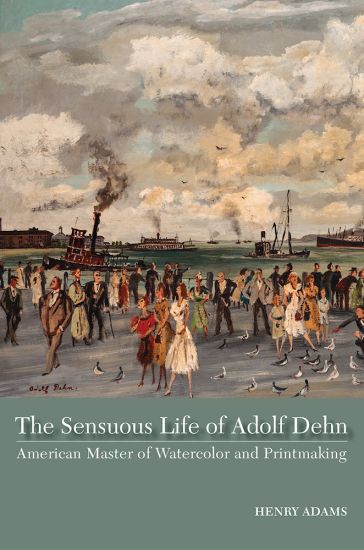
Adolf Dehn belongs to a group of distinguished midcentury American artists who were eclipsed by Abstract Expressionism and the following movements in American art. His lithographs of the Roaring Twenties introduced a note of social satire into American printmaking. He was one of the most gifted and innovative printmakers of the American Scene movement of the 1930s and one of the most significant American watercolorists. In this wide-ranging biography, Henry Adams explores how a once central figure can come to be forgotten. Noting that Dehn's watercolor Spring in Central Park has been widely reproduced on calendars, postcards, and other Metropolitan Museum of Art souvenirs, Adams asks why it is that some artists are celebrated as key figures while others, even those who created images that form an integral part of our visual culture, are relatively unknown. With his account of the life of the prolific and influential Dehn, and a look at the circles of artists and writers in which Dehn moved, Adams helps to fill in what he calls the 'secret or subterranean history of art.'

This book has been considered important throughout the human history, and so that this work is never forgotten we have made efforts in its preservation by republishing this book in a modern format for present and future generations. This whole book has been reformatted, retyped and designed. These books are not made of scanned copies of their original work and hence the text is clear and readable.
JEAN JACQUES ROUSSEAU began his famous Confessions by a vehement appeal to the Deity: "I have shown myself as I was; contemptible and vile when I was so; good, generous, sublime when I was so; I have unveiled my interior such as Thou thyself hast seen it, Eternal Father Collect about me the innumerable swarm of my fellows; let them hear my confessions; let them groan at my unworthiness; let them blush at my meannesses Let each of them discover his heart in his turn at the foot of thy throne with the same sincerity; and then let any one of them tell thee if he dares: 'I was a better man '"Jean Jacques was a very great educator in the manner of the eighteenth century, and has been commonly thought to have had more influence than any other teacher of his time; but his peculiar method of improving human nature has not been universally admired. Most educators of the nineteenth century have declined to show themselves before their scholars as objects more vile or contemptible than necessary, and even the humblest teacher hides, if possible, the faults with which nature has generously embellished us all, as it did Jean Jacques, thinking, as most religious minds are apt to do, that the Eternal Father himself may not feel unmixed pleasure at our thrusting under his eyes chiefly the least agreeable details of his creation. As an unfortunate result the twentieth century finds few recent guides to avoid, or to follow. American literature offers scarcely one working model for high education. The student must go back, beyond Jean Jacques, to Benjamin Franklin, to find a model even of self-teaching. Except in the abandoned sphere of the dead languages, no one has discussed what part of education has, in his personal experience, turned out to be useful, and what not. This volume attempts to discuss it. As educator, Jean Jacques was, in one respect, easily first; he erected a monument of warning against the Ego. Since his time, and largely thanks to him, the Ego has steadily tended to efface itself, and, for purposes of model, to become a manikin on which the toilet of education is to be draped in order to show the fit or misfit of the clothes. The object of study is the garment, not the figure. The tailor adapts the manikin as well as the clothes to his patron's wants. The tailor's object, in this volume, is to fit young men, in universities or elsewhere, to be men of the world, equipped for any emergency; and the garment offered to them is meant to show the faults of the patchwork fitted on their fathers. At the utmost, the active-minded young man should ask of his teacher only mastery of his tools. The young man himself, the subject of education, is a certain form of energy; the object to be gained is economy of his force; the training is partly the clearing away of obstacles, partly the direct application of effort. Once acquired, the tools and models may be thrown away. The manikin, therefore, has the same value as any other geometrical figure of three or more dimensions, which is used for the study of relation. For that purpose it cannot be spared; it is the only measure of motion, of proportion, of human condition; it must have the air of reality; must be taken for real; must be treated as though it had life. Who knows? Possibly it had February 16, 1907

Democracy: An American Novel (1880) is a novel by Henry Adams. Published anonymously, Democracy: An American Novel draws on Adams’ experience as a political journalist in Washington, DC who worked to expose corruption in American government. Although fictional, the novel is viewed as a commentary on the presidential administrations of the 1870s and political atmospheres surrounding each. “For reasons which many persons thought ridiculous, Mrs. Lightfoot Lee decided to pass the winter in Washington. She was in excellent health, but she said that the climate would do her good. In New York she had troops of friends, but she suddenly became eager to see again the very small number of those who lived on the Potomac. It was only to her closest intimates that she honestly acknowledged herself to be tortured by ennui.” Madeleine Lee, a young widow from a prominent clerical family, moves from New York to Washington, DC in search of a better life. There, she hosts a popular salon and draws the attention of several suitors. While John Carrington, an honest man from a working-class background, shows true romantic feelings, Silas P. Ratcliffe, an aspiring politician, proves dangerously attractive. As their competition grows heated, Madeleine begins losing interest in the life of fame and fortune she has pursued for herself. With a beautifully designed cover and professionally typeset manuscript, this edition of Henry Adams’ Democracy: An American Novel is a classic of American literature reimagined for modern readers.
The Education of Henry Adams follows the life of presidential descendent Henry Adams. However, instead of serving just as an account of Adams’ deeds, The Education of Henry Adams is a series of observations and introspections Adams makes on social changes, scientific advancements, personal relationships, professional success, travel, religion, war, and education. Born into the privilege of wealth and the renowned success of his ancestors, President John Adams and President John Quincy Adams, Adams received an education from notable schools, such as Harvard. He continued his prestigious education in Berlin, studying law and the German language. Despite his formal education, Adams felt unprepared to face the changing dynamics of his country, including shifts in social, religious, political, and scientific beliefs. For this reason, Adams advocates for “self-education” through experience, friendships, and reading. In his autobiography, Adams endorses studying American history and science in school, and encourages the process of self-educating after one’s formal education. With a set of strong political and religious beliefs, Adams invokes a substantial impression with his perspectives on the on-going transformation of the United States of America. Henry Adams’ autobiography, The Education of Henry Adams, has earned remarkable acclaim, including receiving a Pulitzer Prize. As a man who had direct access to many American political offices, including the presidential cabinet, the senate, and the congress, Adams had an intimate view of the innerworkings of American politics, and lived through social changes such as the Civil War, the abolition of slavery, scientific advancements, shifts in religious views, and the first World War. Though he felt his formal education left him unprepared for such happenings, Adams encourages readers to learn from their experiences and relationships. The Education of Henry Adams offers invaluable insight on the rapid changes in society, and reminds readers that one’s education is never finished. Now with a new, eye-catching cover design and reprinted in a modern font, The Education of Henry Adams by Henry Adams is more accessible than ever and able to offer modern-day readers insight on historical events and philosophy of learning that will always be relevant.
The Education of Henry Adams follows the life of presidential descendent Henry Adams. However, instead of serving just as an account of Adams’ deeds, The Education of Henry Adams is a series of observations and introspections Adams makes on social changes, scientific advancements, personal relationships, professional success, travel, religion, war, and education. Born into the privilege of wealth and the renowned success of his ancestors, President John Adams and President John Quincy Adams, Adams received an education from notable schools, such as Harvard. He continued his prestigious education in Berlin, studying law and the German language. Despite his formal education, Adams felt unprepared to face the changing dynamics of his country, including shifts in social, religious, political, and scientific beliefs. For this reason, Adams advocates for “self-education” through experience, friendships, and reading. In his autobiography, Adams endorses studying American history and science in school, and encourages the process of self-educating after one’s formal education. With a set of strong political and religious beliefs, Adams invokes a substantial impression with his perspectives on the on-going transformation of the United States of America. Henry Adams’ autobiography, The Education of Henry Adams, has earned remarkable acclaim, including receiving a Pulitzer Prize. As a man who had direct access to many American political offices, including the presidential cabinet, the senate, and the congress, Adams had an intimate view of the innerworkings of American politics, and lived through social changes such as the Civil War, the abolition of slavery, scientific advancements, shifts in religious views, and the first World War. Though he felt his formal education left him unprepared for such happenings, Adams encourages readers to learn from their experiences and relationships. The Education of Henry Adams offers invaluable insight on the rapid changes in society, and reminds readers that one’s education is never finished. Now with a new, eye-catching cover design and reprinted in a modern font, The Education of Henry Adams by Henry Adams is more accessible than ever and able to offer modern-day readers insight on historical events and philosophy of learning that will always be relevant.