

Kirjailija
Henry Adams
Kirjat ja teokset yhdessä paikassa: 322 kirjaa, julkaisuja vuosilta 1982–2026, suosituimpiin kuuluu The Education of Henry Adams. Vertaile teosten hintoja ja tarkista saatavuus suomalaisista kirjakaupoista.
322 kirjaa
Kirjojen julkaisuvuodet: 1982–2026.


FOR reasons which many persons thought ridiculous, Mrs. Lightfoot Lee decided to pass the winter in Washington. She was in excellent health, but she said that the climate would do her good. In New York she had troops of friends, but she suddenly became eager to see again the very small number of those who lived on the Potomac. It was only to her closest intimates that she honestly acknowledged herself to be tortured by ennui. Since her husband's death, five years before, she had lost her taste for New York society; she had felt no interest in the price of stocks, and very little in the men who dealt in them; she had become serious. What was it all worth, this wilderness of men and women as monotonous as the brown stone houses they lived in? In her despair she had resorted to desperate measures. She had read philosophy in the original German, and the more she read, the more she was disheartened that so much culture should lead to nothing-nothing.
Henry Brooks Adams (February 16, 1838 - March 27, 1918) was an American historian and member of the Adams political family, being descended from two U. S. Presidents. As a young Harvard graduate, he was secretary to his father, Charles Francis Adams, Abraham Lincoln's ambassador in London, a posting that had much influence on the younger man, both through experience of wartime diplomacy and absorption in English culture, especially the works of John Stuart Mill. After the American Civil War, he became a noted political journalist who entertained America's foremost intellectuals at his homes in Washington and Boston.

Henry Brooks Adams (February 16, 1838 - March 27, 1918) was an American historian and member of the Adams political family, being descended from two U. S. Presidents. As a young Harvard graduate, he was secretary to his father, Charles Francis Adams, Abraham Lincoln's ambassador in London, a posting that had much influence on the younger man, both through experience of wartime diplomacy and absorption in English culture, especially the works of John Stuart Mill. After the American Civil War, he became a noted political journalist who entertained America's foremost intellectuals at his homes in Washington and Boston.
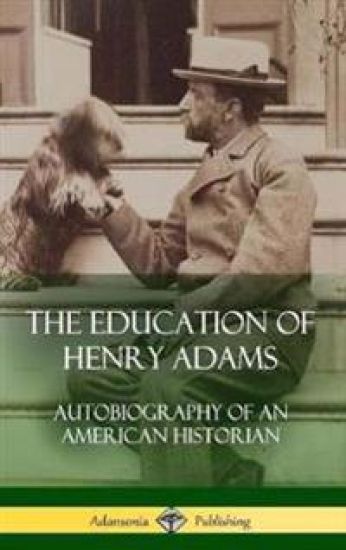
The autobiography of Henry Adams is comprised of two fundamental parts: an eye-opening history of the United States as it ascended to industrial and technological greatness, and a critique of education in the 19th century. Born into an influential family and directly descended from two Presidents of the United States, Adams lived in and chronicled events in the United States for most of his life. Cognitively buoyed by an excellent education at Harvard University, and given perspective on the wider world during a great tour of Europe he undertook shortly after graduating from college, Henry Adams became a distinguished and able chronicler of the past. However, Adams was taken aback at the sheer pace of change which characterized the development of the USA throughout his lifetime. Whereas the books he had studied indicated that nations steadily developed over centuries, the USA achieved such enormous progress in a matter of decades.
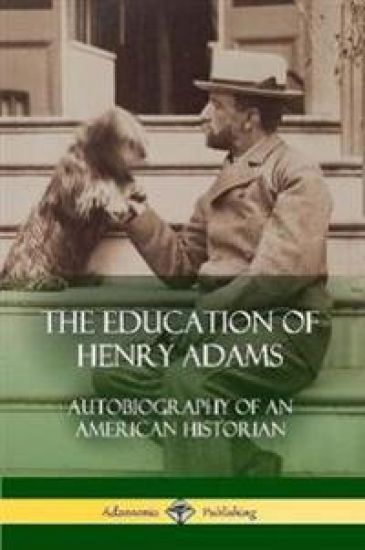
The autobiography of Henry Adams is comprised of two fundamental parts: an eye-opening history of the United States as it ascended to industrial and technological greatness, and a critique of education in the 19th century. Born into an influential family and directly descended from two Presidents of the United States, Adams lived in and chronicled events in the United States for most of his life. Cognitively buoyed by an excellent education at Harvard University, and given perspective on the wider world during a great tour of Europe he undertook shortly after graduating from college, Henry Adams became a distinguished and able chronicler of the past. However, Adams was taken aback at the sheer pace of change which characterized the development of the USA throughout his lifetime. Whereas the books he had studied indicated that nations steadily developed over centuries, the USA achieved such enormous progress in a matter of decades.



The Education is much more a record of Adams's introspection than of his deeds. It is an extended meditation on the social, technological, political, and intellectual changes that occurred over Adams's lifetime. Adams concluded that his traditional education failed to help him come to terms with these rapid changes, hence, his need for self-education. The organizing thread of the book is how the "proper" schooling and other aspects of his youth was time wasted, thus, his search for self-education through experiences, friendships, and reading.

FOR reasons which many persons thought ridiculous, Mrs. Lightfoot Lee decided to pass the winter in Washington. She was in excellent health, but she said that the climate would do her good. In New York she had troops of friends, but she suddenly became eager to see again the very small number of those who lived on the Potomac. It was only to her closest intimates that she honestly acknowledged herself to be tortured by ennui. Since her husband's death, five years before, she had lost her taste for New York society; she had felt no interest in the price of stocks, and very little in the men who dealt in them; she had become serious. What was it all worth, this wilderness of men and women as monotonous as the brown stone houses they lived in? In her despair she had resorted to desperate measures. She had read philosophy in the original German, and the more she read, the more she was disheartened that so much culture should lead to nothing-nothing.

EstherA NovelBy Henry AdamsEsther is a novel by Henry Adams first published in 1884 under the pen name "Frances Snow Compton." The comic story deals with a young, freethinking socialite who falls desperately in love with an Episcopal minister. The result is a clash of intellects, a confrontation between faith and reason and a battle of the sexes. In a remote pew, hidden under a gallery of the transept, two persons looked on with especial interest. The number of strangers who crowded in after them forced them to sit closely together, and their low whispers of comment were unheard by their neighbors. Before the service began they talked in a secular tone." Wharton's window is too high-toned," said the man." You all said it would be like Aladdin's," murmured the woman." Yes, but he throws away his jewels," rejoined the man. "See the big prophet over the arch; he looks as though he wanted to come down--and I think he ought.""Did Michael Angelo ever take lessons of Mr. Wharton?" asked the woman seriously, looking up at the figures high above the pulpit." He was only a prophet," answered her companion, and, looking in another direction, next asked: "Who is the angel of Paradise, in the dove-colored wings, sliding up the main aisle?"