Kirjojen hintavertailu – 12 859 819 kirjaa ja 27 kauppaa
Kirjailija
Herman Melville
Kirjat ja teokset yhdessä paikassa: 1 182 kirjaa, julkaisuja vuosilta 1851–2026, suosituimpiin kuuluu Pierre. Vertaile teosten hintoja ja tarkista saatavuus suomalaisista kirjakaupoista.
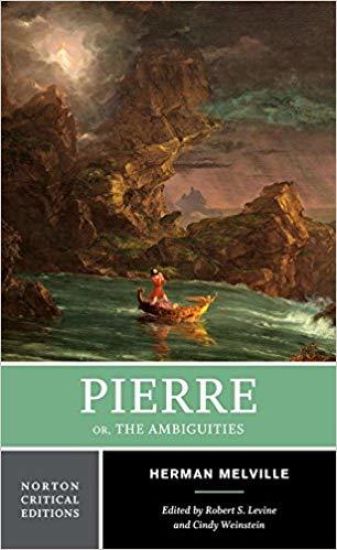
The Harper & Brothers 1852 first edition of Pierre is accompanied by Robert S. Levine and Cindy Weinstein’s introduction, note on the text and annotations. Contextual and source materials, including letters and responses, provide readers with a sense of Pierre’s time and place. Seven critical essays on Pierre’s major themes are also included.
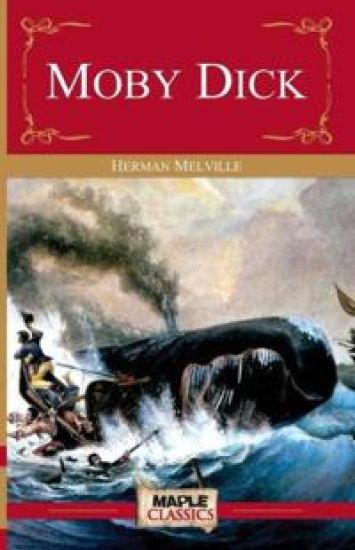
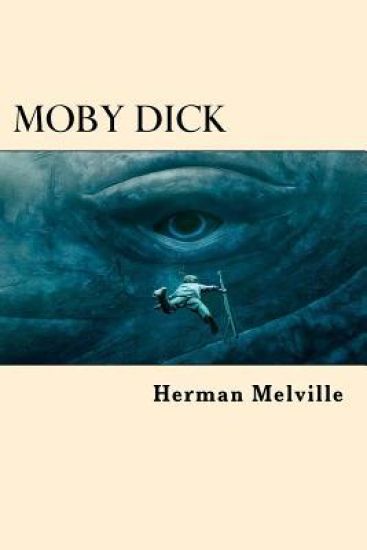
The FLAME TREE COLLECTABLE CLASSICS are chosen to create a delightful and timeless home library. Each stunning edition features deluxe cover treatments, ribbon markers, luxury endpapers and gilded edges. The unabridged text is accompanied by a Glossary of Victorian and Literary terms produced for the modern reader. American writer Herman Melville wrote Moby Dick in 1851 but it took decades before it was finally regarded as a great American novel, and worthy of its place among the greatest texts of humankind. A tale of imagination and adventure, it recounts the obsessive quest of Ahab, captain of a whaling ship seeking vengeance on Moby Dick, the white whale that had bitten off his leg on a previous voyage.
The Piazza Tales is a collection of six short stories by American writer Herman Melville, published by Dix & Edwards in the United States in May 1856 and in Britain in June. Except for the newly written title story, "The Piazza," all of the stories had appeared in Putnam's Monthly in 1853-1855. The collection includes what has long been regarded as the author's three most important achievements in the genre of short fiction, "Bartleby, the Scrivener", "Benito Cereno", and "The Encantadas", his sketches of the Gal pagos Islands. Melville had originally intended to entitle the volume Benito Cereno and Other Sketches, but settled on the definitive title after he had written the introductory story. The book received largely favorable reviews, with reviewers especially praising "The Encantadas". but did not sell well enough to get Melville out of his financial straits, probably because short fiction for magazines had little appeal to bookbuyers. After Melville was rediscovered until the end of the twentieth century, the short works attracting the most critical attention were "Bartleby," "Benito Cereno" and "The Encantadas," with "The Piazza" a little behind those.
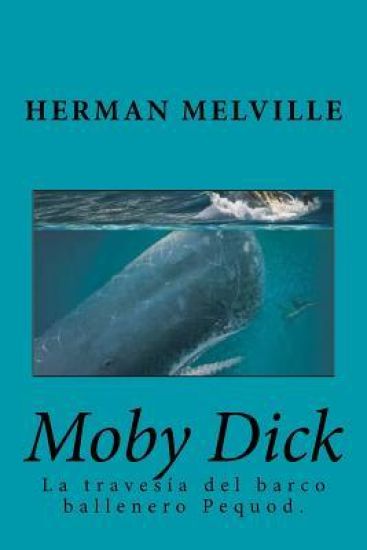
Moby Dick de Herman Melville es una historia pica de la traves a del barco ballenero Pequod y su capit n Ahab, quien persigue incansable al gran cachalote (el personaje principal) durante un viaje alrededor del mundo. El narrador de la novela es Ismael, un marinero en el Pequod que emprende el viaje de su afecto por el mar. Moby Dick comienza con la llegada de Ismael en New Bedford a medida que viaja hacia Nantucket. l se apoya en el Spouter Inn en New Bedford, donde conoce a Queequeg, un arponero de Nueva Zelanda que tambi n navegar en el Pequod. Aunque Queequeg parece peligroso, e Ismael debe compartir la cama junto, y el narrador crece r pidamente aficionado al arponero algo incivilizado. Queequeg es en realidad el hijo de un gran jefe que sali de Nueva Zelanda debido a su deseo de aprender entre los cristianos. Al d a siguiente, Ismael asiste a un servicio de la iglesia y escucha un serm n del padre Mapple, un predicador de renombre que pronuncia un serm n considerando Jon s y la ballena que se llega a la conclusi n de que la historia es una lecci n para predicador La verdad en la cara de la mentira. En una goleta de Nantucket, Ismael y Queequeg se encuentran con un cateto local que se burla de Queequeg. Sin embargo, cuando este cateto es barrido por la borda, Queequeg lo salva. En Nantucket, Queequeg e Ismael elegir entre tres barcos para un viaje de a o, y decidir sobre el Pequod. El capit n del Pequod, Peleg, ahora se retira, y se limita a propietaria de la embarcaci n con otra Quaker, Bildad. Peleg les dice del nuevo capit n, Acab, y le describe inmediatamente como un hombre grande y malos. Antes de salir para su viaje, Ismael y Queequeg se encuentran con un extra o llamado El as, que predice un desastre en su viaje. Antes de salir en el Pequod, El as predice de nuevo desastre.
Al margen de la persecuci n y evoluci n de sus personajes, el tema de la novela es eminentemente enciclop dico al incluir detalladas y extensas descripciones de la caza de las ballenas en el siglo XIX y multitud de otros detalles sobre la vida marinera de la poca.
Herman Melville, autor de la novela y gran conocedor del mar, detalla de forma magn fica la vida de los marinos y los pormenores de la caza de ballenas durante la traves a del Pequod en busca de Moby Dick. La persecuci n tuvo sus frutos y la tripulaci n avista al temido animal, cuyo lomo est cubierto de los arpones clavados y retorcidos, recuerdos de otras contiendas de las que sali victorioso. Sin embargo, en esta ocasi n Moby Dick se enfrenta a la peor de las batallas, la que est impulsada por el odio m s absoluto y el deseo ciego de venganza, y en el intento brutal de aplacar este rencor pierden la vida casi todos sus contrincantes. Todos excepto uno, que salv la vida para cont rnoslo; se trata del narrador que se presenta ante nosotros modestamente con un par de palabras: "Llamadme Ismael."
At sunrise on a first of April, there appeared, suddenly as Manco Capac at the lake Titicaca, a man in cream-colors, at the water-side in the city of St. Louis. His cheek was fair, his chin downy, his hair flaxen, his hat a white fur one, with a long fleecy nap. He had neither trunk, valise, carpet-bag, nor parcel. No porter followed him. He was unaccompanied by friends. From the shrugged shoulders, titters, whispers, wonderings of the crowd, it was plain that he was, in the extremest sense of the word, a stranger. In the same moment with his advent, he stepped aboard the favorite steamer Fid le, on the point of starting for New Orleans. Stared at, but unsaluted, with the air of one neither courting nor shunning regard, but evenly pursuing the path of duty, lead it through solitudes or cities, he held on his way along the lower deck until he chanced to come to a placard nigh the captain's office, offering a reward for the capture of a mysterious impostor, supposed to have recently arrived from the East; quite an original genius in his vocation, as would appear, though wherein his originality consisted was not clearly given; but what purported to be a careful description of his person followed.
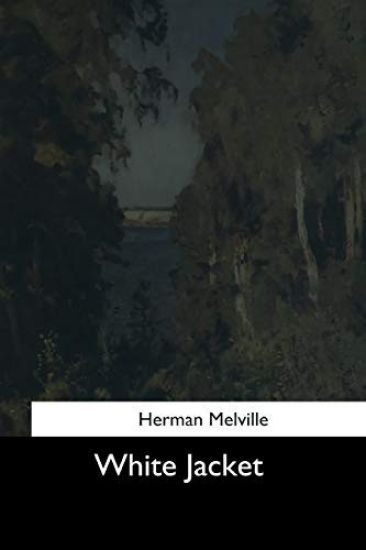
So, with many odds and ends of patches-old socks, old trowser-legs, and the like-I bedarned and bequilted the inside of my jacket, till it became, all over, stiff and padded, as King James's cotton-stuffed and dagger-proof doublet; and no buckram or steel hauberk stood up more stoutly. So far, very good; but pray, tell me, White-Jacket, how do you propose keeping out the rain and the wet in this quilted grego of yours? You don't call this wad of old patches a Mackintosh, do you?--you don't pretend to say that worsted is water-proof? No, my dear friend; and that was the deuce of it. Waterproof it was not, no more than a sponge. Indeed, with such recklessness had I bequilted my jacket, that in a rain-storm I became a universal absorber; swabbing bone-dry the very bulwarks I leaned against.
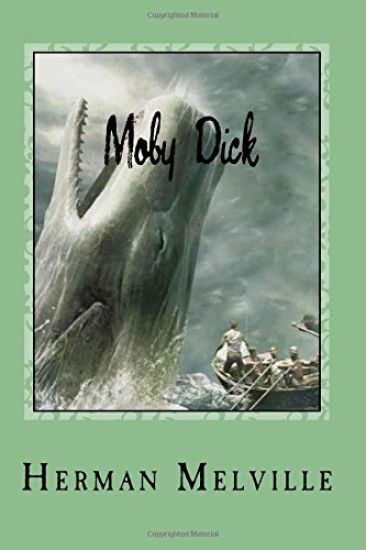
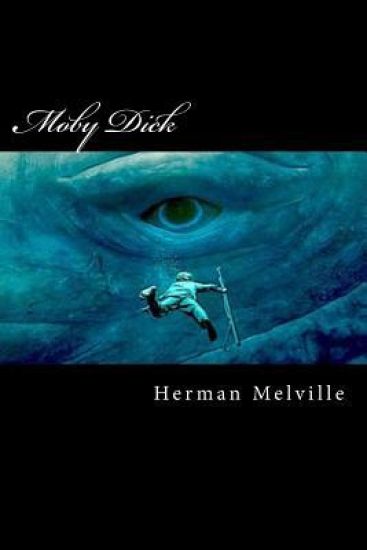
Moby-Dick; or, The Whale is a novel by American writer Herman Melville, published in 1851 during the period of the American Renaissance. Sailor Ishmael tells the story of the obsessive quest of Ahab, captain of the whaler the Pequod, for revenge on Moby Dick, the white whale that on the previous whaling voyage bit off Ahab's leg at the knee. The novel was a commercial failure and out of print at the time of the author's death in 1891, but during the 20th century, its reputation as a Great American Novel was established. William Faulkner confessed he wished he had written it himself, and D. H. Lawrence called it "one of the strangest and most wonderful books in the world", and "the greatest book of the sea ever written". "Call me Ishmael" is among world literature's most famous opening sentences. The novel has been adapted or represented in art, film, books, cartoons, television, and more than a dozen versions in comic-book format. The first adaptation was the 1926 silent movie The Sea Beast, starring John Barrymore, in which Ahab kills the whale and returns to marry his fianc e. The most famous adaptation was the John Huston 1956 film produced from a screenplay by author Ray Bradbury. This classic title has been published by RADLEY BOOKS. Each RADLEY CLASSIC is a meticulously restored, luxurious and faithful reproduction of a classic book; produced with elegant text layout, clarity of presentation, and stylistic features that make reading a true pleasure. Special attention is given to legible fonts and adequate letter sizing, correct line length for readability, generous margins and triple lead (lavish line separation); plus we do not allow any mistakes/changes/additions to creep into the author's words. Visit RADLEY BOOKS at www.radleybooks.com (or search RADLEY CLASSIC on Amazon) to see more classic book titles in this series.
The pale Usher-threadbare in coat, heart, body, and brain; I see him now. He was ever dusting his old lexicons and grammars, with a queer handkerchief, mockingly embellished with all the gay flags of all the known nations of the world. He loved to dust his old grammars; it somehow mildly reminded him of his mortality. "While you take in hand to school others, and to teach them by what name a whale-fish is to be called in our tongue leaving out, through ignorance, the letter H, which almost alone maketh the signification of the word, you deliver that which is not true." -HACKLUYT "WHALE... . Sw. and Dan. hval.
"Wellingborough, as you are going to sea, suppose you take this shooting-jacket of mine along; it's just the thing-take it, it will save the expense of another. You see, it's quite warm; fine long skirts, stout horn buttons, and plenty of pockets." Out of the goodness and simplicity of his heart, thus spoke my elder brother to me, upon the eve of my departure for the seaport.