

Kirjailija
Herman Melville
Kirjat ja teokset yhdessä paikassa: 1 182 kirjaa, julkaisuja vuosilta 1851–2026, suosituimpiin kuuluu Pierre. Vertaile teosten hintoja ja tarkista saatavuus suomalaisista kirjakaupoista.
1 182 kirjaa
Kirjojen julkaisuvuodet: 1851–2026.
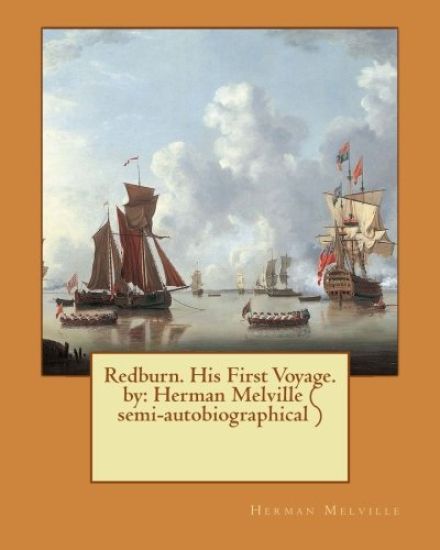
Redburn. His First Voyage. by: Herman Melville ( semi-autobiographical )
Herman Melville
Createspace Independent Publishing Platform
2017
nidottu
Redburn: His First Voyage is the fourth book by the American writer Herman Melville, first published in London in 1849. The book is semi-autobiographical and recounts the adventures of a refined youth among coarse and brutal sailors and the seedier areas of Liverpool. Melville wrote Redburn in less than ten weeks. While one scholar describes it as "arguably his funniest work," scholar F. O. Matthiessen calls it "the most moving of its author's books before Moby-Dick". Unable to find employment at home, young Wellingborough Redburn signs on the Highlander, a merchantman out of New York City bound for Liverpool, England. Representing himself as the "son of a gentleman" and expecting to be treated as such, he discovers that he is just a green hand, a "boy", the lowest rank on the ship, assigned all the duties no other sailor wants, like cleaning out the "pig-pen", a longboat that serves as a shipboard sty.
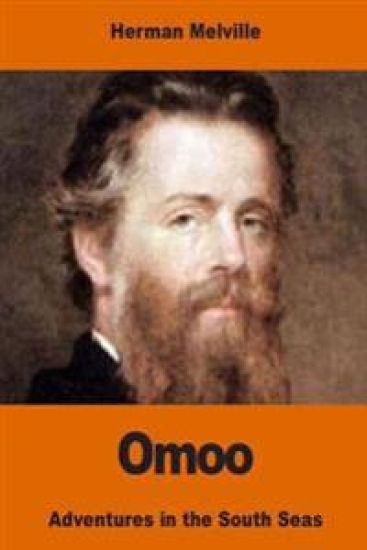
Omoo: Adventures in the South Seas
Herman Melville
Createspace Independent Publishing Platform
2017
nidottu
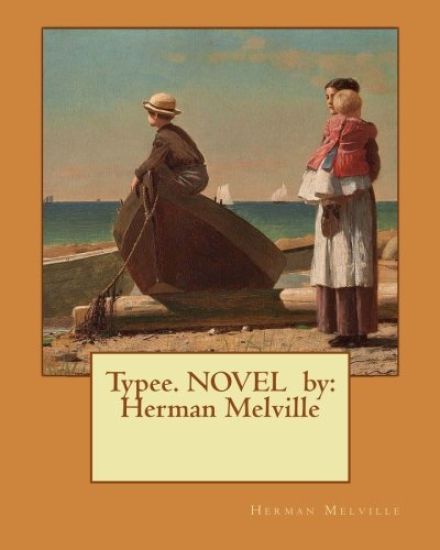
Typee. NOVEL by: Herman Melville
Herman Melville
Createspace Independent Publishing Platform
2017
nidottu
Typee: A Peep at Polynesian Life is the first book by American writer Herman Melville, published first in London, then New York, in 1846. Considered a classic in travel and adventure literature, the narrative is partly based on the author's actual experiences on the island Nuku Hiva in the South Pacific Marquesas Islands in 1842, liberally supplemented with imaginative reconstruction and adaptation of material from other books. The title is from the province Tai Pi Vai. Typee was Melville's most popular work during his lifetime; it made him notorious as the "man who lived among the cannibals Typee is "in fact, neither literal autobiography nor pure fiction". Melville "drew his material from his experiences, from his imagination, and from a variety of travel books when the memory of his experiences were inadequate." He departed from what actually happened in several ways, sometimes by extending factual incidents, sometimes by fabricating them, and sometimes by what one scholar calls "outright lies".
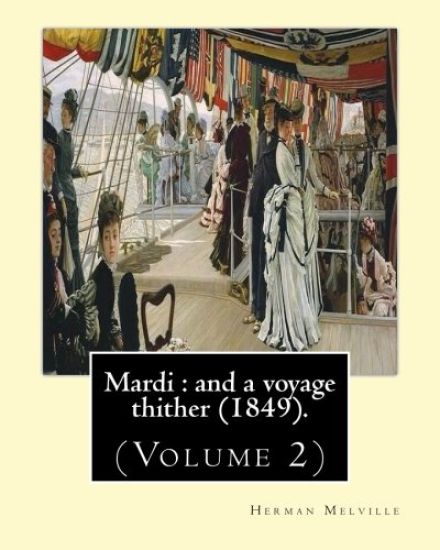
Mardi: and a voyage thither (1849). By: Herman Melville, dedicated By: Allan Melville (Volume 2): In two volumes (Volume 2).M
Allan Melville; Herman Melville
Createspace Independent Publishing Platform
2017
nidottu
Mardi, and a Voyage Thither is the third book by American writer Herman Melville, first published in London in 1849. Beginning as a travelogue in the vein of the author's two previous efforts, the adventure story gives way to a romance story, which in its turn gives way to a philosophical quest. Mardi is Melville's first pure fiction work (while featuring fictional narrators; his previous novels were heavily autobiographical). It details (much like Typee and Omoo) the travelings of an American sailor who abandons his whaling vessel to explore the South Pacific. Unlike the first two, however, Mardi is highly philosophical and said to be the first work to show Melville's true potential. The tale begins as a simple narrative, but quickly focuses upon discourse between the main characters and their interactions with the different symbolic countries they encounter. While not as cohesive or lengthy as Moby-Dick, it shares a similar writing style as well as many of the same themes. As a preface to Mardi, Melville wrote somewhat ironically that his first two books were nonfiction but disbelieved; by the same pattern he hoped the fiction book would be accepted as fact. The voyage from island to island echoes Rabelais's Gargantua and Pantagruel, especially the last two books. According to scholar Newton Arvin, "The praise of eating and drinking is highly Rabelaisian in intention, and so in general is all the satire on bigotry, dogmatism, and pedantry. Taji and his friends wandering about on the island of Maramma, which stands for ecclesiastical tyranny and dogmatism, are bound to recall Pantagruel and his companions wandering among the superstitious inhabitants of Papimany; and the pedantic, pseudo-philosophi of Melville's Doxodox is surely, for a reader of Rabelais, an echo of the style of Master Janotus de Bragmardo holding forth polysyllabically to Gargantua in Book I." 1] Arvin also recognizes the influence of Gulliver's Travels by Jonathan Swift, "there is something very Swiftian in Melville's Hooloomooloo, the Isle of Cripples, the inhabitants of which are all twisted and deformed, and whose shapeless king is horrified at the straight, strong figures of his visitors from over sea."... Herman Melville (August 1, 1819 - September 28, 1891) was an American novelist, short story writer, and poet of the American Renaissance period. His best known works include Typee (1846), a romantic account of his experiences in Polynesian life, and his whaling novel Moby-Dick (1851). His work was almost forgotten during his last thirty years. His writing draws on his experience at sea as a common sailor, exploration of literature and philosophy, and engagement in the contradictions of American society in a period of rapid change. He developed a complex, baroque style: the vocabulary is rich and original, a strong sense of rhythm infuses the elaborate sentences, the imagery is often mystical or ironic, and the abundance of allusion extends to Scripture, myth, philosophy, literature, and the visual arts. Born in New York City as the third child of a merchant in French dry goods, Melville's formal education ended abruptly after his father died in 1832, leaving the family in financial straits. Melville briefly became a schoolteacher before he took to sea in 1839 as a common sailor on a merchant ship. In 1840 he signed aboard the whaler Acushnet for his first whaling voyage, but jumped ship in the Marquesas Islands. After further adventures, he returned to Boston in 1844. His first book, Typee (1845), a highly romanticized account of his life among Polynesians, became such a best-seller that he worked up a sequel, Omoo (1847). These successes encouraged him to marry Elizabeth Shaw, of a prominent Boston family, but were hard to sustain. His first novel not based on his own experiences, Mardi (1849), is a sea narrative that develops into a philosophical allegory, but was not well received.
Typee: A Romance of the South Seas
Herman Melville
Createspace Independent Publishing Platform
2017
nidottu
Published first in London, then New York, in 1846, Typee is considered a classic in travel and adventure literature, the narrative is partly based on the author's actual experiences on the island Nuku Hiva in the South Pacific Marquesas Islands in 1842, liberally supplemented with imaginative reconstruction and adaptation of material from other books. The title is from the province Tai Pi Vai. Typee was Melville's most popular work during his lifetime; it made him notorious as the "man who lived among the cannibals".

El largo cuento Bartleby el escribiente es una narraci n singular y contrastante desde varios ngulos. Ofrece un cuento intimista sobre la inacci n, cuando el autor fue celebrado por relatos de acci n en Moby Dick y otros. Frente al realismo de su estilo, juega a una ret rica que bordea la psicolog a enfermiza y una trama incre ble. El texto es doblemente interesante por las interpretaciones y elogios prodigados por autores e intelectuales posteriores, en cambio sus contempor neos no descubrieron esa breve joya literaria. Ese efecto, saltando de la indiferencia al elogio, no resulta inusual en la historia de la literatura con su veleidoso tr nsito desde el cieno al cielo y viceversa, porque este cuento exige relecturas para apreciar sus cualidades. Esta extremada apariencia de anticipaci n contrasta con ingredientes de costumbrismo urbano en el relato: una profesi n de "escribiente" que est acotada a una situaci n definida, en un ambiente laboral y urbano bastante preciso.
Mardi: and a voyage thither (1849). By: Herman Melville, dedicated By: Allan Melville (Complete set volume 1, and 2): Mardi,
Allan Melville; Herman Melville
Createspace Independent Publishing Platform
2017
nidottu
Mardi, and a Voyage Thither is the third book by American writer Herman Melville, first published in London in 1849. Beginning as a travelogue in the vein of the author's two previous efforts, the adventure story gives way to a romance story, which in its turn gives way to a philosophical quest. Mardi is Melville's first pure fiction work (while featuring fictional narrators; his previous novels were heavily autobiographical). It details (much like Typee and Omoo) the travelings of an American sailor who abandons his whaling vessel to explore the South Pacific. Unlike the first two, however, Mardi is highly philosophical and said to be the first work to show Melville's true potential. The tale begins as a simple narrative, but quickly focuses upon discourse between the main characters and their interactions with the different symbolic countries they encounter. While not as cohesive or lengthy as Moby-Dick, it shares a similar writing style as well as many of the same themes. As a preface to Mardi, Melville wrote somewhat ironically that his first two books were nonfiction but disbelieved; by the same pattern he hoped the fiction book would be accepted as fact. The voyage from island to island echoes Rabelais's Gargantua and Pantagruel, especially the last two books. According to scholar Newton Arvin, "The praise of eating and drinking is highly Rabelaisian in intention, and so in general is all the satire on bigotry, dogmatism, and pedantry. Taji and his friends wandering about on the island of Maramma, which stands for ecclesiastical tyranny and dogmatism, are bound to recall Pantagruel and his companions wandering among the superstitious inhabitants of Papimany; and the pedantic, pseudo-philosophi of Melville's Doxodox is surely, for a reader of Rabelais, an echo of the style of Master Janotus de Bragmardo holding forth polysyllabically to Gargantua in Book I." 1] Arvin also recognizes the influence of Gulliver's Travels by Jonathan Swift, "there is something very Swiftian in Melville's Hooloomooloo, the Isle of Cripples, the inhabitants of which are all twisted and deformed, and whose shapeless king is horrified at the straight, strong figures of his visitors from over sea.".. Herman Melville (August 1, 1819 - September 28, 1891) was an American novelist, short story writer, and poet of the American Renaissance period. His best known works include Typee (1846), a romantic account of his experiences in Polynesian life, and his whaling novel Moby-Dick (1851). His work was almost forgotten during his last thirty years. His writing draws on his experience at sea as a common sailor, exploration of literature and philosophy, and engagement in the contradictions of American society in a period of rapid change. He developed a complex, baroque style: the vocabulary is rich and original, a strong sense of rhythm infuses the elaborate sentences, the imagery is often mystical or ironic, and the abundance of allusion extends to Scripture, myth, philosophy, literature, and the visual arts. Born in New York City as the third child of a merchant in French dry goods, Melville's formal education ended abruptly after his father died in 1832, leaving the family in financial straits. Melville briefly became a schoolteacher before he took to sea in 1839 as a common sailor on a merchant ship. In 1840 he signed aboard the whaler Acushnet for his first whaling voyage, but jumped ship in the Marquesas Islands. After further adventures, he returned to Boston in 1844. His first book, Typee (1845), a highly romanticized account of his life among Polynesians, became such a best-seller that he worked up a sequel, Omoo (1847). These successes encouraged him to marry Elizabeth Shaw, of a prominent Boston family, but were hard to sustain. His first novel not based on his own experiences, Mardi (1849), is a sea narrative that develops into a philosophical allegory, but was not well received....
White-Jacket (1850) NOVEL by: Herman Melville
Herman Melville
Createspace Independent Publishing Platform
2017
nidottu
Typee, or, A narrative of a four months' residence among the natives of a valley of the Marquesas Islands, or, a peep at Polynesian life. By: Herman M
Lemuel Shaw; Herman Melville
Createspace Independent Publishing Platform
2017
nidottu
White Jacket; or, The world in a man-of-war. By: Herman Melville: Adventure fiction
Herman Melville
Createspace Independent Publishing Platform
2017
nidottu
Typee, a romance of the South Seas. By: Herman Melville, introduction By: Sterling Andrus Leonard: Sterling Andrus Leonard, Born: 1888 Died: 1931
Sterling Andrus Leonard; Herman Melville
Createspace Independent Publishing Platform
2017
nidottu
Herman Melville (August 1, 1819 - September 28, 1891) was an American novelist, short story writer, and poet of the American Renaissance period. His best known works include Typee (1846), a romantic account of his experiences in Polynesian life, and his whaling novel Moby-Dick (1851). His work was almost forgotten during his last thirty years. His writing draws on his experience at sea as a common sailor, exploration of literature and philosophy, and engagement in the contradictions of American society in a period of rapid change. He developed a complex, baroque style: the vocabulary is rich and original, a strong sense of rhythm infuses the elaborate sentences, the imagery is often mystical or ironic, and the abundance of allusion extends to Scripture, myth, philosophy, literature, and the visual arts. Born in New York City as the third child of a merchant in French dry goods, Melville's formal education ended abruptly after his father died in 1832, leaving the family in financial straits. Melville briefly became a schoolteacher before he took to sea in 1839 as a common sailor on a merchant ship. In 1840 he signed aboard the whaler Acushnet for his first whaling voyage, but jumped ship in the Marquesas Islands. After further adventures, he returned to Boston in 1844. His first book, Typee (1845), a highly romanticized account of his life among Polynesians, became such a best-seller that he worked up a sequel, Omoo (1847). These successes encouraged him to marry Elizabeth Shaw, of a prominent Boston family, but were hard to sustain. His first novel not based on his own experiences, Mardi (1849), is a sea narrative that develops into a philosophical allegory, but was not well received. Redburn (1849), a story of life on a merchant ship, and his 1850 expose of harsh life aboard a Man-of-War, White-Jacket yielded warmer reviews but not financial security. In August 1850, Melville moved his growing family to Arrowhead, a farm near Pittsfield, Massachusetts, where he established a profound but short-lived friendship with Nathaniel Hawthorne, to whom he dedicated Moby-Dick. Moby-Dick was another commercial failure, published to mixed reviews. Melville's career as a popular author effectively ended with the cool reception of Pierre (1852), in part a satirical portrait of the literary scene. His Revolutionary War novel Israel Potter appeared in 1855. From 1853 to 1856, Melville published short fiction in magazines, most notably "Bartleby, the Scrivener" (1853), "The Encantadas" (1854), and "Benito Cereno" (1855). These and three other stories were collected in 1856 as The Piazza Tales. In 1857, he voyaged to England, where he reunited with Hawthorne for the first time since 1852, and then went on to tour the Near East. The Confidence-Man (1857), was the last prose work he published during his lifetime. He moved to New York to take a position as Customs Inspector and turned to poetry. Battle-Pieces and Aspects of the War (1866) was his poetic reflection on the moral questions of the Civil War. In 1867 his oldest child, Malcolm, died at home from a self-inflicted gunshot. Clarel: A Poem and Pilgrimage in the Holy Land, a metaphysical epic, appeared in 1876. In 1886, his second son, Stanwix, died and Melville retired. During his last years, he privately published two volumes of poetry, left one volume unpublished, and returned to prose of the sea: the novella Billy Budd, left unfinished at his death, was published in 1924. Melville's death from cardiovascular disease in 1891 subdued a reviving interest in his work. The 1919 centennial of his birth became the starting point of the "Melville Revival". Critics discovered his work, scholars explored his life, his major novels and stories have become world classics, and his poetry has gradually attracted respect.
Nominada por los estadounidenses como una de las 100 mejores novelas en la serie de PBS The Great American Read. A trav s de este cl sico, Melville logra convertir la historia de la caza de un cachalote en toda una met fora sobre la condici n humana y sus conflictos. Moby Dick, la novela que William Faulkner hubiera querido escribir, va siempre acompa ada del reconocimiento y el elogio que merece toda construcci n narrativa impecable. La lucha del capit n Ahab, su terrible obsesi n y la m tica persecuci n de la enorme ballena ha traspasado fronteras, consiguiendo as la indiscutible categor a de obra maestra de la literatura universal. Esta edici n cuenta con la introducci n del especialista y director del Departamento de Estudios Americanos, Andrew Delbanco, autor de Melville (2005), la biograf a de referencia del autor de Moby Dick. Asimismo, incorpora una serie de ilustraciones tales como el mapa de la traves a, un plano del ballenero Pequod y otras curiosidades que enriquecen la experiencia de la lectura y proyectan la imaginaci n del lector. «Pero t , oh ballena, nadas con esa calma hechicera ante quien te ve por primera vez, despu s de haber enga ado y destruido a tantos hombres... ENGLISH DESCRIPTION Moby-Dick is the story of Captain Ahab's quest to avenge the whale that 'reaped' his leg. The quest is an obsession and the novel is a diabolical study of how a man becomes a fanatic. But it is also a hymn to democracy. Bent as the crew is on Ahab s appalling crusade, it is equally the image of a co-operative community at work: all hands dependent on all hands, each individual responsible for the security of each. Among the crew is Ishmael, the novel's narrator, ordinary sailor, and extraordinary reader. Digressive, allusive, vulgar, transcendent, the story Ishmael tells is above all an education: in the practice of whaling, in the art of writing.
Bartleby, the Scrivener: A Story of Wall-Street
Herman Melville
Createspace Independent Publishing Platform
2017
nidottu
The narrator, an elderly, unnamed Manhattan lawyer with a comfortable business, already employs two scriveners to copy legal documents by hand, Nippers and Turkey. An increase in business leads him to advertise for a third, and he hires the forlorn-looking Bartleby in the hope that his calmness will soothe the irascible temperaments of the other two. At first, Bartleby produces a large volume of high-quality work. But one day, when asked to help proofread a document, Bartleby answers with what soon becomes his perpetual response to every request - "I would prefer not to." To the dismay of the lawyer and to the irritation of the other employees, Bartleby performs fewer and fewer tasks and eventually none, instead staring for long periods of time at a brick wall just outside one of the office's windows. The narrator makes several futile attempts to reason with him and to learn something about him; when he stops by the office one Sunday morning, he discovers that Bartleby has started living there. Tension builds as business associates wonder why Bartleby is always there. Sensing the threat to his reputation but emotionally unable to evict Bartleby, the narrator moves his business out. Soon the new tenants come to ask for help in removing Bartleby, who now sits on the stairs all day and sleeps in the building's doorway at night. The narrator visits him and attempts to reason with him, and surprises even himself by inviting Bartleby to come live with him, but Bartleby declines the offer. Later the narrator returns to find that Bartleby has been forcibly removed and imprisoned in the Tombs. Finding Bartleby glummer than usual during a visit, the narrator bribes a turnkey to make sure he gets enough food. When he returns a few days later Bartleby has died of starvation, having preferred not to eat. Some time afterwards, the narrator hears a rumor that Bartleby had worked in a dead letter office and reflects that dead letters would have made anyone of Bartleby's temperament sink into an even darker gloom. The story closes with the narrator's resigned and pained sigh, "Ah Bartleby Ah humanity ".

Israel Potter (1855) by: Herman Melville His Fifty Years of Exile
Herman Melville
Createspace Independent Publishing Platform
2017
nidottu
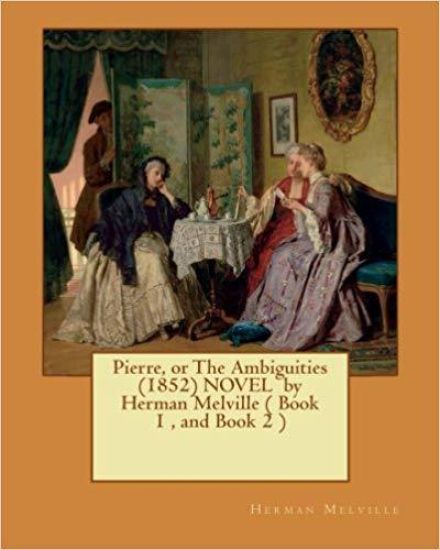
Pierre, or The Ambiguities (1852) NOVEL by Herman Melville ( Book 1, and Book 2 )
Herman Melville
Createspace Independent Publishing Platform
2017
nidottu
The Confidence-Man: His Masquerade
Herman Melville
Createspace Independent Publishing Platform
2017
nidottu
Moby-Dick; or, The whale.By: Herman Melville, this book is inscribed to Nathaniel Hathorne (complete aet volume 1, and 2).: Novel, adventure fictio
Nathaniel Hathorne; Herman Melville
Createspace Independent Publishing Platform
2017
nidottu
Moby-Dick; or, The Whale is a novel by American writer Herman Melville, published in 1851 during the period of the American Renaissance. Sailor Ishmael tells the story of the obsessive quest of Ahab, captain of the whaler the Pequod, for revenge on Moby Dick, the white whale that on the previous whaling voyage bit off Ahab's leg at the knee. The novel was a commercial failure and out of print at the time of the author's death in 1891, but during the 20th century, its reputation as a Great American Novel was established. William Faulkner confessed he wished he had written it himself, and D. H. Lawrence called it "one of the strangest and most wonderful books in the world", and "the greatest book of the sea ever written". "Call me Ishmael" is among world literature's most famous opening sentences. The product of a year and a half of writing, the book draws on Melville's experience at sea, on his reading in whaling literature, and on literary inspirations such as Shakespeare and the Bible. The white whale is modeled on the notoriously hard to catch actual albino whale Mocha Dick, and the ending is based on the sinking of the whaler Essex by a whale. The detailed and realistic descriptions of whale hunting and of extracting whale oil, as well as life aboard ship among a culturally diverse crew, are mixed with exploration of class and social status, good and evil, and the existence of God. In addition to narrative prose, Melville uses styles and literary devices ranging from songs, poetry, and catalogs to Shakespearean stage directions, soliloquies, and asides. Dedicated to Nathaniel Hawthorne, "in token of my admiration for his genius", the work was first published as The Whale in London in October 1851, and under its definitive title in New York in November. Hundreds of differences, mostly slight and some important, are seen between the two editions. The London publisher censored or changed sensitive passages and Melville made revisions, as well, including the last-minute change in the title for the New York edition. The whale, however, appears in both editions as "Moby Dick", with no hyphen. Because the British edition lacked the Epilogue, which accounts for Ishmael's survival, it seemed that the story was told by someone who was supposed to have perished. Many reviewers in British magazines recognized a violation of the rules of fiction and criticized the author for a serious flaw. Other reviewers, however, found the book too fascinating to dismiss it for these reasons. Some of the scornful British reviews were either reprinted or quoted in American periodicals, wrongfooting the American readers though the Epilogue was present in Moby-Dick. About 3,200 copies were sold during the author's life..... Nathaniel Hathorne; July 4, 1804 - May 19, 1864) was an American novelist, Dark Romantic, and short story writer. He was born in 1804 in Salem, Massachusetts, to Nathaniel Hathorne and the former Elizabeth Clarke Manning. His ancestors include John Hathorne, the only judge involved in the Salem witch trials who never repented of his actions. Nathaniel later added a "w" to make his name "Hawthorne" in order to hide this relation. ... Herman Melville (August 1, 1819 - September 28, 1891) was an American novelist, short story writer, and poet of the American Renaissance period. His best known works include Typee (1846), a romantic account of his experiences in Polynesian life, and his whaling novel Moby-Dick (1851). His work was almost forgotten during his last thirty years.....
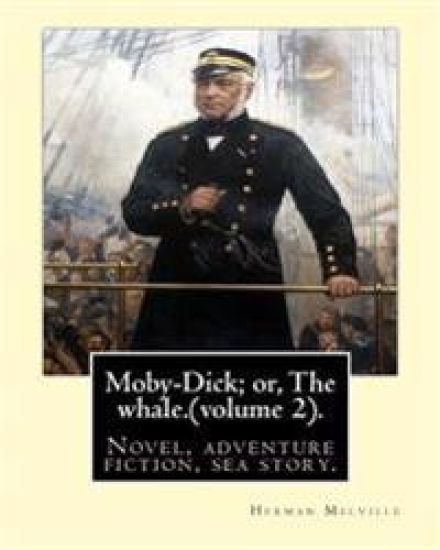
Moby-Dick; or, The whale.By: Herman Melville, this book is inscribed to Nathaniel Hathorne (volume 2).: Novel, adventure fiction, sea story.
Nathaniel Hathorne; Herman Melville
Createspace Independent Publishing Platform
2017
nidottu
Moby-Dick; or, The Whale is a novel by American writer Herman Melville, published in 1851 during the period of the American Renaissance. Sailor Ishmael tells the story of the obsessive quest of Ahab, captain of the whaler the Pequod, for revenge on Moby Dick, the white whale that on the previous whaling voyage bit off Ahab's leg at the knee. The novel was a commercial failure and out of print at the time of the author's death in 1891, but during the 20th century, its reputation as a Great American Novel was established. William Faulkner confessed he wished he had written it himself, and D. H. Lawrence called it "one of the strangest and most wonderful books in the world", and "the greatest book of the sea ever written". "Call me Ishmael" is among world literature's most famous opening sentences. The product of a year and a half of writing, the book draws on Melville's experience at sea, on his reading in whaling literature, and on literary inspirations such as Shakespeare and the Bible. The white whale is modeled on the notoriously hard to catch actual albino whale Mocha Dick, and the ending is based on the sinking of the whaler Essex by a whale. The detailed and realistic descriptions of whale hunting and of extracting whale oil, as well as life aboard ship among a culturally diverse crew, are mixed with exploration of class and social status, good and evil, and the existence of God. In addition to narrative prose, Melville uses styles and literary devices ranging from songs, poetry, and catalogs to Shakespearean stage directions, soliloquies, and asides. Dedicated to Nathaniel Hawthorne, "in token of my admiration for his genius", the work was first published as The Whale in London in October 1851, and under its definitive title in New York in November. Hundreds of differences, mostly slight and some important, are seen between the two editions. The London publisher censored or changed sensitive passages and Melville made revisions, as well, including the last-minute change in the title for the New York edition. The whale, however, appears in both editions as "Moby Dick", with no hyphen. Because the British edition lacked the Epilogue, which accounts for Ishmael's survival, it seemed that the story was told by someone who was supposed to have perished. Many reviewers in British magazines recognized a violation of the rules of fiction and criticized the author for a serious flaw. Other reviewers, however, found the book too fascinating to dismiss it for these reasons. Some of the scornful British reviews were either reprinted or quoted in American periodicals, wrongfooting the American readers though the Epilogue was present in Moby-Dick. About 3,200 copies were sold during the author's life..... Nathaniel Hathorne; July 4, 1804 - May 19, 1864) was an American novelist, Dark Romantic, and short story writer. He was born in 1804 in Salem, Massachusetts, to Nathaniel Hathorne and the former Elizabeth Clarke Manning. His ancestors include John Hathorne, the only judge involved in the Salem witch trials who never repented of his actions. Nathaniel later added a "w" to make his name "Hawthorne" in order to hide this relation. ... Herman Melville (August 1, 1819 - September 28, 1891) was an American novelist, short story writer, and poet of the American Renaissance period. His best known works include Typee (1846), a romantic account of his experiences in Polynesian life, and his whaling novel Moby-Dick (1851). His work was almost forgotten during his last thirty years.....