Kirjojen hintavertailu – 12 859 819 kirjaa ja 27 kauppaa
Kirjailija
Herman Melville
Kirjat ja teokset yhdessä paikassa: 1 182 kirjaa, julkaisuja vuosilta 1851–2026, suosituimpiin kuuluu Pierre. Vertaile teosten hintoja ja tarkista saatavuus suomalaisista kirjakaupoista.
The narrator, an elderly lawyer who has a very comfortable business helping wealthy men deal with mortgages, title deeds, and bonds, relates the story of the strangest man he has ever known. The narrator already employs two scriveners, Nippers and Turkey. Nippers suffers from chronic indigestion, and Turkey is a drunk, but the office survives because in the mornings Turkey is sober even though Nippers is irritable, and in the afternoon Nippers has calmed down even though Turkey is drunk.
Based on Melville's actual experiences after having jumped ship in the Marquesas Islands, this work was extremely popular, and provoked disbelief among its readers until the events it described were corroborated by Melville's fellow castaway, Richard Greene. While the book is based on fact, Typee is properly considered a work of fiction: the three week stay on which the author based his story is extended to four months, and Melville drew extensively on contemporary accounts by Pacific explorers to add cultural detail to what might otherwise have been a straightforward story of escape, capture and re-escape.
A masterful adaptation of the timeless literary classic, faithfully and beautifully rendered by an award-winning artist. In striking black-and-white illustrations, Chabout retells the story of the Great American Novel. Captain Ahab strikes out on a voyage, obsessively seeking revenge on the great white whale that took his leg. This hardcover edition collects both of the Vents d'Ouest volumes, printed in English for the first time.
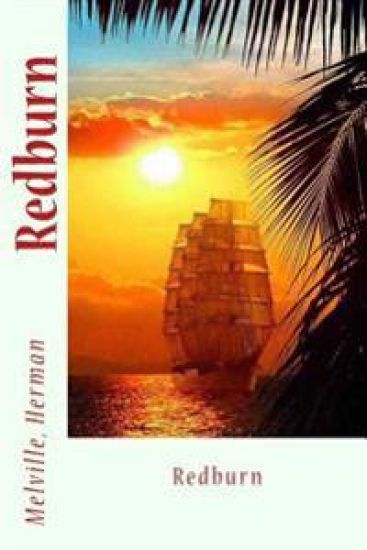
Wellington Redburn is a fifteen-year-old from the state of New York, with only one dream - to run away to sea. However, when he does fulfil this long-held fantasy, he quickly finds that reality as a cabin boy is far harsher than he ever imagined. Mocked by the crew on board the Highlander for his weakness and bullied by the vicious and merciless sailor Jackson, Wellington must struggle to endure the long journey from New York to Liverpool. But when he does reach England, he is equally horrified by what he finds there: poverty, desperation and moral corruption. Inspired by Melville's own youthful experiences on board a cargo boat, this is a compelling tale of innocence transformed, through bitter experience, into disillusionment. A fascinating sea journal and coming-of-age tale, Redburn provides a unique insight into the mind of one of America's greatest novelists.
The Piazza Tales is a collection of six short stories by American writer Herman Melville, published by Dix & Edwards in the United States in May 1856 and in Britain in June. Except for the newly written title story, "The Piazza," all of the stories had appeared in Putnam's Monthly in 1853-1855. The collection includes what has long been regarded as the author's three most important achievements in the genre of short fiction, "Bartleby, the Scrivener", "Benito Cereno", and "The Encantadas", his sketches of the Galapagos Islands. Melville had originally intended to entitle the volume Benito Cereno and Other Sketches, but settled on the definitive title after he had written the introductory story. The book received largely favorable reviews, with reviewers especially praising "The Encantadas".but did not sell well enough to get Melville out of his financial straits, probably because short fiction for magazines had little appeal to bookbuyers. After Melville was rediscovered until the end of the twentieth century, the short works attracting the most critical attention were "Bartleby," "Benito Cereno" and "The Encantadas," with "The Piazza" a little behind those. In addition to the five stories, Melville wrote an introductory story for which the volume was titled. Scholar Douglas Robillard believes that this served the purpose of making the stories to appear "more closely joined than they actually are." The contract for the book was signed on 17 March 1856, it was advertised on 5 April as "in press" and should have been available by 15 May--though a copy was deposited for copyright on May 20. The volume was printed by Miller & Holman, Printers and Stereotypers, of New York, as a duodecimo volume of 431 pages, excluding seven pages of advertisements for other product by the same publishers. Biographer Parker observes that to reach that number of pages the book was padded out by leaving excessive white space. The front and back covers were ornamented by a border of rules and rosettes. The spine displayed the title, names of author and publishers stamped in gold, and the volume was priced at $1.00. In June the book was advertised together with another as "TWO GOOD SUMMER BOOKS". In 1922, three years after the centennial of Melville's birth, the first reissue of the collection appeared as part of the Constable collected edition." The Lightning-Rod Man" was chosen for inclusion in William Evans Burton's of Wit and Humor of 1857, with an illustration by Henry Louis Stephens. No other original illustration for one of his works appeared during Melville's lifetime. "The Lightning-Rod Man" the one Melville tale to be available throughout his lifetime.... Herman Melville (August 1, 1819 - September 28, 1891) was an American novelist, short story writer, and poet of the American Renaissance period. His best known works include Typee (1846), a romantic account of his experiences in Polynesian life, and his whaling novel Moby-Dick (1851). His work was almost forgotten during his last thirty years. His writing draws on his experience at sea as a common sailor, exploration of literature and philosophy, and engagement in the contradictions of American society in a period of rapid change. He developed a complex, baroque style: the vocabulary is rich and original, a strong sense of rhythm infuses the elaborate sentences, the imagery is often mystical or ironic, and the abundance of allusion extends to Scripture, myth, philosophy, literature, and the visual arts. Born in New York City as the third child of a merchant in French dry goods, Melville's formal education ended abruptly after his father died in 1832, leaving the family in financial straits. Melville briefly became a schoolteacher before he took to sea in 1839 as a common sailor on a merchant ship. In 1840 he signed aboard the whaler Acushnet for his first whaling voyage, but jumped ship in the Marquesas Islands.
"Bartleby, the Scrivener: A Story of Wall Street" is a short story by the American writer Herman Melville, first serialized anonymously in two parts in the November and December 1853 issues of Putnam's Magazine, and reprinted with minor textual alterations in his The Piazza Tales in 1856. A Wall Street lawyer hires a new clerk who-after an initial bout of hard work-refuses to make copy and any other task required of him, with the words "I would prefer not to". The lawyer cannot bring himself to remove Bartleby from his premises, and decides instead to move his office, but the new proprietor removes Bartleby to prison, where he perishes. Numerous essays have been published on what, according to scholar Robert Milder, "is unquestionably the masterpiece of the short fiction" in the Melville canon.
Israel Potter: His Fifty Years of Exile is the eighth book by American writer Herman Melville, first published in serial form in Putnam's Monthly magazine between July 1854 and March 1855, and in book form by G. P. Putnam & Co. in March 1855. A pirated edition was also published in London by George Routledge in May 1855. The book is loosely based on a pamphlet (108-page) autobiography that Melville acquired in the 1840s, Life and Remarkable Adventures of Israel R. Potter (Providence, Rhode Island, 1824). Plot: When Israel Potter leaves his plow to fight in the American Revolution, he's immediately thrown into the Battle of Bunker Hill, where he receives multiple wounds. However, this does not deter him, and after hearing a rousing speech by General George Washington, he volunteers for further duty, this time at sea, where more ill fortune awaits him. Israel is captured by the British Navy and taken to England. Yet, he makes his escape, and this triggers a series of extraordinary events and meetings with remarkable people. Along the way, Israel encounters King George III, who takes a liking to the Yankee rebel and shelters him in Kew Gardens; Benjamin Franklin, who presses Israel into service as a spy; John Paul Jones, who invites Israel to join his crew aboard The Ranger; and Ethan Allen, whom Israel attempts to free from a British prison. Throughout these adventures, Israel Potter acquits himself bravely, but his patriotic valor does not bring him any closer to his dream of returning to America. After the war, Israel finds himself in London, where he descends into poverty. Finally, fifty years after he left his plough, he makes his way back to his beloved Berkshires. However, few things remain the same. Soon, Israel fades out of being, his name out of memory, and he dies on the same day the oldest oak on his native lands is blown down.... Herman Melville (August 1, 1819 - September 28, 1891) was an American novelist, short story writer, and poet of the American Renaissance period. His best known works include Typee (1846), a romantic account of his experiences in Polynesian life, and his whaling novel Moby-Dick (1851). His work was almost forgotten during his last thirty years. His writing draws on his experience at sea as a common sailor, exploration of literature and philosophy, and engagement in the contradictions of American society in a period of rapid change. He developed a complex, baroque style: the vocabulary is rich and original, a strong sense of rhythm infuses the elaborate sentences, the imagery is often mystical or ironic, and the abundance of allusion extends to Scripture, myth, philosophy, literature, and the visual arts. Born in New York City as the third child of a merchant in French dry goods, Melville's formal education ended abruptly after his father died in 1832, leaving the family in financial straits. Melville briefly became a schoolteacher before he took to sea in 1839 as a common sailor on a merchant ship. In 1840 he signed aboard the whaler Acushnet for his first whaling voyage, but jumped ship in the Marquesas Islands. After further adventures, he returned to Boston in 1844. His first book, Typee (1845), a highly romanticized account of his life among Polynesians, became such a best-seller that he worked up a sequel, Omoo (1847). These successes encouraged him to marry Elizabeth Shaw, of a prominent Boston family, but were hard to sustain. His first novel not based on his own experiences, Mardi (1849), is a sea narrative that develops into a philosophical allegory, but was not well received. Redburn (1849), a story of life on a merchant ship, and his 1850 expose of harsh life aboard a Man-of-War, White-Jacket yielded warmer reviews but not financial security..
Unable to find employment at home, young Wellingborough Redburn signs on the Highlander, a merchantman out of New York City bound for Liverpool, England. Representing himself as the "son of a gentleman" and expecting to be treated as such, he discovers that he is just a green hand, a "boy", the lowest rank on the ship, assigned all the duties no other sailor wants, like cleaning out the "pig-pen", a longboat that serves as a shipboard sty. The first mate promptly nicknames him "Buttons" for the shiny ones on his impractical jacket. Redburn quickly grasps the workings of social relations aboard ship.
Typee is "in fact, neither literal autobiography nor pure fiction". Melville "drew his material from his experiences, from his imagination, and from a variety of travel books when the memory of his experiences were inadequate." He departed from what actually happened in several ways, sometimes by extending factual incidents, sometimes by fabricating them, and sometimes by what one scholar calls "outright lies".
Narra la historia de Bartleby, el escribiente, contada a trav s de un abogado de nombre desconocido que tiene su oficina en Wall Street (Nueva York) y que, seg n sus propias palabras, en la tranquilidad de un c modo retiro, trabaja c modamente con los t tulos de propiedad de los hombres ricos, con hipotecas y obligaciones. Tiene tres empleados, apodados Turkey (Pavo), Nippers (Pinzas) y Ginger Nut (Bizcocho de jengibre). Turkey y Nippers son copistas, o escribientes; Ginger Nut, de apenas doce a os, es el chico de los recados.
Ein lterer Rechtsanwalt berichtet als Ich-Erz hler von einem seiner Schreiber namens Bartleby, den er eines Tages in sein von Hochh usern umstelltes lichtloses B ro in der Wall Street aufnimmt. Bartleby beginnt seine T tigkeit mit stillem Flei und einsiedlerischer Ausdauer. Er kopiert unerm dlich Vertr ge, lehnt aber zur berraschung seines Dienstherrn schon bald jede andere T tigkeit mit den Worten ab: "Ich m chte lieber nicht" ("I would prefer not to"). Bald weigert er sich sogar, Vertr ge zu kopieren, wohnt aber inzwischen in dem B ro - h flich, freudlos, ohne Freunde und fast ohne zu essen.
En 1799, en las costas del actual Chile, un ballenero estadounidense encuentra a un barco sudamericano en dificultades. El capit n norteamericno, Amasa Delano, aborda el barco "espa ol" para prestar ayuda y se le cuenta que enfermedades y tormentas han diezmado a la tripulaci n y a los esclavos transportados. Pero ciertos detalles inquietan a Delano, quien tardar en descubrir lo ocurrido: los esclavos han tomado el control del buque, matado a muchos marinos y obligado al capit n Benito Cereno y el resto de la tripulaci n a llevarlos a las costas de frica. Al aparecer Delano, los rebeldes fuerzan a los blancos a comportarse como si todav a estuvieran en control del buque.
En 1799, pour faire le plein d'eau, le navire du capitaine Amaso Delano, le D lices du c libataire, mouille dans une petite le au sud du Chili . Arrive sur le m me mouillage le San Dominick, un n grier espagnol en piteux tat, command par le jeune Benito Cereno, pas plus vaillant que son navire, toujours accompagn d'un serviteur noir, Babo. Le capitaine espagnol raconte son odyss e qui devait le mener de Buenos Aires Lima, avec temp te au cap Horn, scorbut pour les cinquante matelots et les trois cents esclaves noirs. Delano fait apporter de l'eau et des vivres fra ches mais se pose des questions.
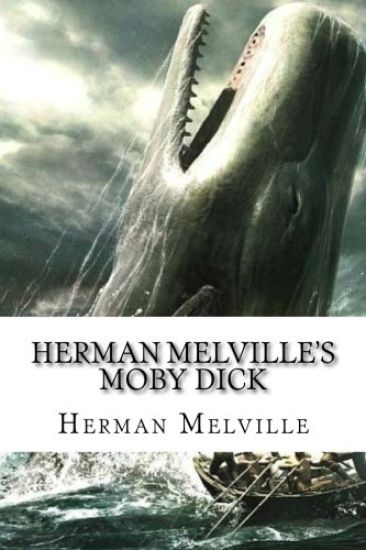
Moby-Dick; or, The Whale is a novel by American writer Herman Melville, published in 1851 during the period of the American Renaissance. Sailor Ishmael tells the story of the obsessive quest of Ahab, captain of the whaler the Pequod, for revenge on Moby Dick, the white whale that on the previous whaling voyage bit off Ahab's leg at the knee. The novel was a commercial failure and out of print at the time of the author's death in 1891, but during the 20th century, its reputation as a Great American Novel was established. William Faulkner confessed he wished he had written it himself, and D. H. Lawrence called it "one of the strangest and most wonderful books in the world", and "the greatest book of the sea ever written". "Call me Ishmael" is among world literature's most famous opening sentences. 3] The product of a year and a half of writing, the book draws on Melville's experience at sea, on his reading in whaling literature, and on literary inspirations such as Shakespeare and the Bible. The white whale is modeled on the notoriously hard to catch actual albino whale Mocha Dick, and the ending is based on the sinking of the whaler Essex by a whale. The detailed and realistic descriptions of whale hunting and of extracting whale oil, as well as life aboard ship among a culturally diverse crew, are mixed with exploration of class and social status, good and evil, and the existence of God. In addition to narrative prose, Melville uses styles and literary devices ranging from songs, poetry, and catalogs to Shakespearean stage directions, soliloquies, and asides.
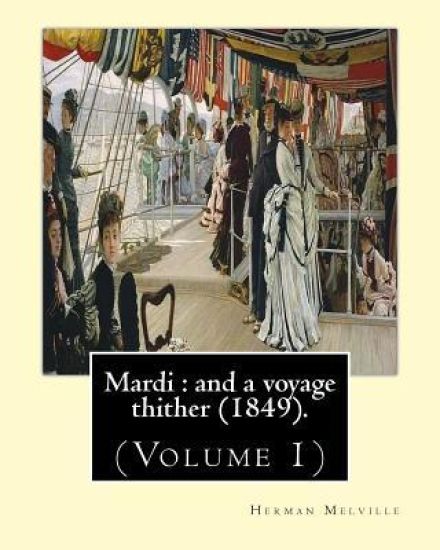
Mardi, and a Voyage Thither is the third book by American writer Herman Melville, first published in London in 1849. Beginning as a travelogue in the vein of the author's two previous efforts, the adventure story gives way to a romance story, which in its turn gives way to a philosophical quest. Mardi is Melville's first pure fiction work (while featuring fictional narrators; his previous novels were heavily autobiographical). It details (much like Typee and Omoo) the travelings of an American sailor who abandons his whaling vessel to explore the South Pacific. Unlike the first two, however, Mardi is highly philosophical and said to be the first work to show Melville's true potential. The tale begins as a simple narrative, but quickly focuses upon discourse between the main characters and their interactions with the different symbolic countries they encounter. While not as cohesive or lengthy as Moby-Dick, it shares a similar writing style as well as many of the same themes. As a preface to Mardi, Melville wrote somewhat ironically that his first two books were nonfiction but disbelieved; by the same pattern he hoped the fiction book would be accepted as fact. The voyage from island to island echoes Rabelais's Gargantua and Pantagruel, especially the last two books. According to scholar Newton Arvin, "The praise of eating and drinking is highly Rabelaisian in intention, and so in general is all the satire on bigotry, dogmatism, and pedantry. Taji and his friends wandering about on the island of Maramma, which stands for ecclesiastical tyranny and dogmatism, are bound to recall Pantagruel and his companions wandering among the superstitious inhabitants of Papimany; and the pedantic, pseudo-philosophi of Melville's Doxodox is surely, for a reader of Rabelais, an echo of the style of Master Janotus de Bragmardo holding forth polysyllabically to Gargantua in Book I." 1] Arvin also recognizes the influence of Gulliver's Travels by Jonathan Swift, "there is something very Swiftian in Melville's Hooloomooloo, the Isle of Cripples, the inhabitants of which are all twisted and deformed, and whose shapeless king is horrified at the straight, strong figures of his visitors from over sea.". Herman Melville (August 1, 1819 - September 28, 1891) was an American novelist, short story writer, and poet of the American Renaissance period. His best known works include Typee (1846), a romantic account of his experiences in Polynesian life, and his whaling novel Moby-Dick (1851). His work was almost forgotten during his last thirty years. His writing draws on his experience at sea as a common sailor, exploration of literature and philosophy, and engagement in the contradictions of American society in a period of rapid change. He developed a complex, baroque style: the vocabulary is rich and original, a strong sense of rhythm infuses the elaborate sentences, the imagery is often mystical or ironic, and the abundance of allusion extends to Scripture, myth, philosophy, literature, and the visual arts. Born in New York City as the third child of a merchant in French dry goods, Melville's formal education ended abruptly after his father died in 1832, leaving the family in financial straits. Melville briefly became a schoolteacher before he took to sea in 1839 as a common sailor on a merchant ship. In 1840 he signed aboard the whaler Acushnet for his first whaling voyage, but jumped ship in the Marquesas Islands. After further adventures, he returned to Boston in 1844. His first book, Typee (1845), a highly romanticized account of his life among Polynesians, became such a best-seller that he worked up a sequel, Omoo (1847). These successes encouraged him to marry Elizabeth Shaw, of a prominent Boston family, but were hard to sustain. His first novel not based on his own experiences, Mardi (1849), is a sea narrative that develops into a philosophical allegory, but was not well received.