Kirjailija
Herman Melville
Kirjat ja teokset yhdessä paikassa: 1 182 kirjaa, julkaisuja vuosilta 1851–2026, suosituimpiin kuuluu Pierre. Vertaile teosten hintoja ja tarkista saatavuus suomalaisista kirjakaupoista.
1 182 kirjaa
Kirjojen julkaisuvuodet: 1851–2026.


In those houses which are strictly double houses--that is, where the hall is in the middle--the fireplaces usually are on opposite sides; so that while one member of the household is warming himself at a fire built into a recess of the north wall, say another member, the former's own brother, perhaps, may be holding his feet to the blaze before a hearth in the south wall--the two thus fairly sitting back to back. Is this well? Be it put to any man who has a proper fraternal feeling. Has it not a sort of sulky appearance? But very probably this style of chimney building originated with some architect afflicted with a quarrelsome family.


Included in this Herman Melville collection are six tales that range considerably - from "The Encantadas" (an allegorical travelogue) to the haunting "Bartleby, the Scrivener". Opening the volume is "The Piazza," a pastoral sketch that frames the collection. "Benito Cereno" - a subversive satire - of grows out of a true story of mutiny among the enslaved.
Typee, or, A narrative of a four months' residence among the natives of: valley of the Marquesas Islands, or, a peep at Polynesian life, By Herman Mel
Herman Melville
Createspace Independent Publishing Platform
2016
nidottu
Typee is "in fact, neither literal autobiography nor pure fiction". Melville "drew his material from his experiences, from his imagination, and from a variety of travel books when the memory of his experiences were inadequate." He departed from what actually happened in several ways, sometimes by extending factual incidents, sometimes by fabricating them, and sometimes by what one scholar calls "outright lies". The actual one-month stay on which Typee is based is presented as four months in the narrative; there is no lake on the actual island on which Melville might have canoed with the lovely Fayaway, and the ridge which Melville describes climbing after escaping the ship he may actually have seen in an engraving. He drew extensively on contemporary accounts by Pacific explorers to add to what might otherwise have been a straightforward story of escape, capture, and re-escape. Most American reviewers accepted the story as authentic, though it provoked disbelief among some British readers. Two years after the novel's publication, many of the events described therein were corroborated by Melville's fellow castaway, Richard Tobias "Toby" Greene. Typee may have provided the writers Louis Becke, Jack London, and Robert Louis Stevenson with the themes and images of the Pacific experience: cannibalism, colonialism, cultural absorption, exoticism, natural plenty and beauty, and a perceived simplicity of native lifestyle, desires and motives. The inaugural book of the Library of America series, titled Typee, Omoo, Mardi (May 6, 1982), was a volume containing Typee: A Peep at Polynesian Life, its sequel Omoo: A Narrative of Adventures in the South Seas (1847), and Mardi, and a Voyage Thither (1849). Herman Melville (August 1, 1819 - September 28, 1891) was an American novelist, short story writer, and poet of the American Renaissance period best known for Typee (1846), a romantic account of his experiences in Polynesian life, and his whaling novel Moby-Dick (1851). His work was almost forgotten during his last thirty years. His writing draws on his experience at sea as a common sailor, exploration of literature and philosophy, and engagement in the contradictions of American society in a period of rapid change. He developed a complex, baroque style: the vocabulary is rich and original, a strong sense of rhythm infuses the elaborate sentences, the imagery is often mystical or ironic, and the abundance of allusion extends to Scripture, myth, philosophy, literature, and the visual arts. Born in New York City as the third child of a merchant in French dry goods, Melville's formal education ended abruptly after his father died in 1832, leaving the family in financial straits. Melville briefly became a schoolteacher before he took to sea in 1839 as a common sailor on a merchant ship. In 1840 he signed aboard the whaler Acushnet for his first whaling voyage, but jumped ship in the Marquesas Islands. After further adventures, he returned to Boston in 1844. His first book, Typee (1845), a highly romanticized account of his life among Polynesians, became such a best-seller that he worked up a sequel, Omoo (1847). These successes encouraged him to marry Elizabeth Shaw, of a prominent Boston family, but were hard to sustain. His first novel not based on his own experiences, Mardi (1849), is a sea narrative that develops into a philosophical allegory, but was not well received. Redburn (1849), a story of life on a merchant ship, and his 1850 expose of harsh life aboard a Man-of-War, White-Jacket yielded warmer reviews but not financial security........
Moby Dick oder Der weiße Wal
Herman Melville
Createspace Independent Publishing Platform
2016
nidottu
Die Fahrt beginnt am Weihnachtstag. Kapit n Ahab l sst sich anfangs nicht an Deck blicken. Erst auf offener See kommt er aus seiner Kabine und erkl rt der Mannschaft in pathetischen Worten das wahre Ziel der Fahrt: Er will Moby Dick, den wei en Wal, der ihm das Bein abgerissen hat, jagen und erlegen. Als Anreiz nagelt er eine Golddublone an den Hauptmast, die derjenige erhalten soll, der den Wal als erster sichtet. Die Mannschaft, die sich aus Vertretern vieler verschiedener Nationen zusammensetzt und so gleichsam die Welt als Mikrokosmos symbolisiert, l sst sich vom Charisma ihres Kapit ns mitrei en und schw rt sich auf dessen Ziel ein. Weitere Klassiker unter: www.buch-klassiker.de
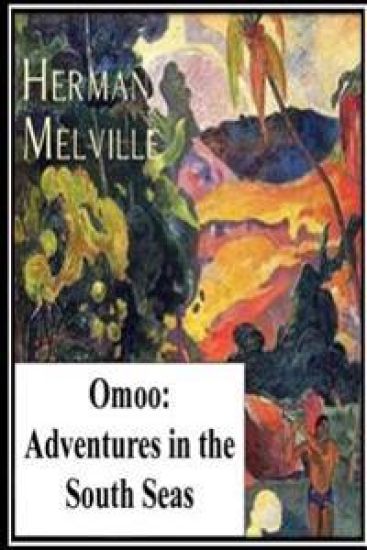
Omoo: Adventures in the South Seas
Herman Melville
Createspace Independent Publishing Platform
2016
nidottu
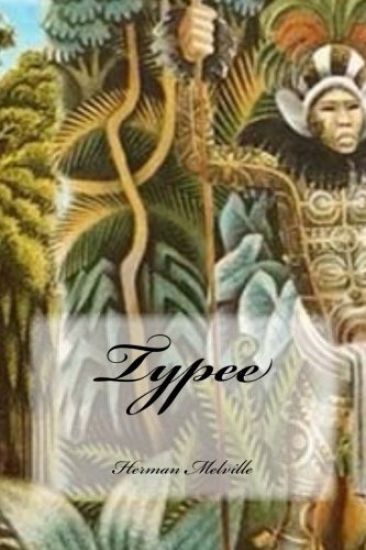
Typee is the first book by American writer Herman Melville, published first in London, then New York, in 1846. Considered a classic in travel and adventure literature, the narrative is based on the author's actual experiences as a captive on the island Nuku Hiva in the South Pacific Marquesas Islands in 1842, and is liberally supplemented with imaginative reconstruction and adaptation of material from other books. The title is from the name of a valley there called Tai Pi Vai. Typee was Melville's most popular work during his lifetime; it made him notorious as the "man who lived among the cannibals".

Ein lterer Rechtsanwalt berichtet als Icherz hler von einem seiner Schreiber namens Bartleby, den er eines Tages in sein von Hochh usern umstelltes lichtloses B ro in der Wall Street aufnimmt. Bartleby beginnt seine T tigkeit mit stillem Flei und einsiedlerischer Ausdauer. Er kopiert unerm dlich Vertr ge, lehnt aber zur berraschung seines Dienstherrn schon bald jede andere T tigkeit mit den Worten ab: "Ich m chte lieber nicht", "I would prefer not to". Bald weigert er sich sogar, Vertr ge zu kopieren, wohnt aber inzwischen in dem B ro - h flich, freudlos, ohne Freunde und fast ohne zu essen.

Narra la historia un abogado de nombre desconocido que tiene su oficina en Wall Street, Nueva York, quien, seg n sus propias palabras, "en la tranquilidad de un c modo retiro, trabaja c modamente con los t tulos de propiedad de los hombres ricos, con hipotecas y obligaciones". Tiene tres empleados, con los apodos de Turkey ("Pavo"), Nippers ("Tenazas") y Ginger Nut ("Nuez de jengibre"), a los cuales describe en la obra. Turkey y Nippers son copistas, o escribientes, en tanto que Ginger Nut, que tiene s lo doce a os, es el chico de los recados.

En 1799, au large des c tes du Chili, un bateau am ricain conduit par le capitaine Delano croise un bateau espagnol en piteux tat, le San Dominick. Delano embarque son bord pour proposer son aide. La plupart des officiers du bateau espagnol a disparu. Des esclaves noirs sont install s partout sur le bateau. Benito Cereno, le capitaine du navire n grier, raconte que le bateau a essuy une temp te, puis que le scorbut a frapp l' quipage. Mais de nombreux d tails interpellent Delano, il doute que ce soit la v ritable histoire du San Dominick et de son quipage.


En 1799, el capit n Amasa Delano ancl en la bah a de una isla desierta del litoral chileno. A la ma ana siguiente apareci en el lugar un misterioso nav o, el Santo Domingo. Las maniobras de ste hicieron sopechar que se trataba de un barco en apuros, con lo que orden que se preparara un bote y acudi a la misteriosa nave para prestar su ayuda. El espect culo que encontr fue sorprendente. Aqu l era un barco de esclavos al que la tempestad y una epidemia hab an diezmado. Ahora los marineros blancos conviv an entre los negros en una situaci n adversa por la falta de provisiones y de oficiales y el extra o comportamiento del capit n del barco Don Benito.