
Kirjailija
Herman Melville
Kirjat ja teokset yhdessä paikassa: 1 182 kirjaa, julkaisuja vuosilta 1851–2026, suosituimpiin kuuluu Pierre. Vertaile teosten hintoja ja tarkista saatavuus suomalaisista kirjakaupoista.
1 182 kirjaa
Kirjojen julkaisuvuodet: 1851–2026.

Pierre, or The Ambiguities. NOVEL (1852) by: Herman Melville (World's Classics)
Herman Melville
Createspace Independent Publishing Platform
2016
nidottu

White Jacket; or, the World in a man-of-war. By: Herman Melville: Adventure fiction. White-Jacket; or, The World in a Man-of-War is the fifth book by
Herman Melville
Createspace Independent Publishing Platform
2016
nidottu

"Bartleby, the Scrivener: A Story of Wall Street" is a short story by the American writer Herman Melville, first serialized anonymously in two parts in the November and December 1853 issues of Putnam's Magazine, and reprinted with minor textual alterations in his The Piazza Tales in 1856. A Wall Street lawyer hires a new clerk who-after an initial bout of hard work-refuses to make copy and any other task required of him, with the words "I would prefer not to". The lawyer cannot bring himself to remove Bartleby from his premises, and decides instead to move his office, but the new proprietor removes Bartleby to prison, where he perishes.

Mardi: and a voyage thither (1849). By: Herman Melville (volume 1): (Original Version) Mardi, and a Voyage Thither is the thi
Herman Melville
Createspace Independent Publishing Platform
2016
nidottu
Mardi: and a voyage thither (1849). By: Herman Melville (volume 2): (Original Version) Mardi, and a Voyage Thither is the thi
Herman Melville
Createspace Independent Publishing Platform
2016
nidottu
Redburn. His First Voyage. By: Herman Melville: is the fourth book by the American writer Herman Melville, The book is semi-autobiographical and reco
Herman Melville
Createspace Independent Publishing Platform
2016
nidottu
Redburn: His First Voyage, is the fourth book by the American writer Herman Melville, first published in London in 1849. The book is semi-autobiographical and recounts the adventures of a refined youth among coarse and brutal sailors and the seedier areas of Liverpool. Melville wrote Redburn in less than ten weeks. While one scholar describes it as "arguably his funniest work," Unable to find employment at home, young Wellingborough Redburn signs on the Highlander, a merchantman out of New York City bound for Liverpool, England. Representing himself as the "son of a gentleman" and expecting to be treated as such, he discovers that he is just a green hand, a "boy", the lowest rank on the ship, assigned all the duties no other sailor wants, like cleaning out the "pig-pen", a longboat that serves as a shipboard sty. The first mate promptly nicknames him "Buttons" for the shiny ones on his impractical jacket. Redburn quickly grasps the workings of social relations aboard ship. As a common seaman he can have no contact with those "behind the mast" where the officers command the ship. Before the mast, where the common seaman work and live, a bully named Jackson, the best seaman aboard, rules through fear with an iron fist. Uneducated yet cunning, with broken nose and squinting eye, he is described as "a Cain afloat, branded on his yellow brow with some inscrutable curse and going about corrupting and searing every heart that beat near him." Redburn soon experiences all the trials of a greenhorn: seasickness, scrubbing decks, climbing masts in the dead of night to unfurl sails, cramped quarters, and bad food. When the ship lands in Liverpool he is given liberty ashore. He rents a room and walks the city every day. One day in a street called Launcelott's Hey he hears "a feeble wail" from a cellar beneath an old warehouse and looking into it sees "the figure of what had been a woman. Her blue arms folded to her livid bosom two shrunken things like children, that leaned toward her, one on each side. At first I knew not whether they were alive or dead. They made no sign; they did not move or stir; but from the vault came that soul-sickening wail." He runs for help but is met with indifference by a ragpicker, a porter, his landlady, even by a policeman who tells him to mind his own business. He returns with some bread and cheese and drops them into the vault to the mother and children, but they are too weak to lift it to their mouths. The mother whispers "water" so he runs and fills his tarpaulin hat at an open hydrant. The girls drink and revive enough to nibble some cheese. He clasps the mother's arms and pulls them aside to see "a meager babe, the lower part of its body thrust into an old bonnet. Its face was dazzlingly white, even in its squalor; but the closed eyes looked like balls of indigo. It must have been dead for some hours." Judging them beyond the point at which medicine could help, he returns to his room. A few days later he revisits the street and finds the vault empty: "In place of the woman and children, a heap of quick-lime was glistening.".... Herman Melville(August 1, 1819 - September 28, 1891) was an American novelist, short story writer, and poet of the American Renaissance period. His best known works include Typee (1846), a romantic account of his experiences in Polynesian life, and his whaling novel Moby-Dick (1851). His work was almost forgotten during his last thirty years. His writing draws on his experience at sea as a common sailor, exploration of literature and philosophy, and engagement in the contradictions of American society in a period of rapid change. He developed a complex, baroque style: the vocabulary is rich and original, a strong sense of rhythm infuses the elaborate sentences, the imagery is often mystical or ironic, and the abundance of allusion extends to Scripture, myth, philosophy, literature, and the visual arts.

Redburn. His First Voyage. By: Herman Melville ( The book is semi-autobiographical )
Herman Melville
Createspace Independent Publishing Platform
2016
nidottu
Redburn: His First Voyage is the fourth book by the American writer Herman Melville, first published in London in 1849. The book is semi-autobiographical and recounts the adventures of a refined youth among coarse and brutal sailors and the seedier areas of Liverpool. Melville wrote Redburn in less than ten weeks. While one scholar describes it as "arguably his funniest work," scholar F. O. Matthiessen calls it "the most moving of its author's books before Moby-Dick". Unable to find employment at home, young Wellingborough Redburn signs on the Highlander, a merchantman out of New York City bound for Liverpool, England. Representing himself as the "son of a gentleman" and expecting to be treated as such, he discovers that he is just a green hand, a "boy", the lowest rank on the ship, assigned all the duties no other sailor wants, like cleaning out the "pig-pen", a longboat that serves as a shipboard sty. The first mate promptly nicknames him "Buttons" for the shiny ones on his impractical jacket. Redburn quickly grasps the workings of social relations aboard ship. As a common seaman he can have no contact with those "behind the mast" where the officers command the ship. Before the mast, where the common seaman work and live, a bully named Jackson, the best seaman aboard, rules through fear with an iron fist. Uneducated yet cunning, with broken nose and squinting eye, he is described as "a Cain afloat, branded on his yellow brow with some inscrutable curse and going about corrupting and searing every heart that beat near him." Redburn soon experiences all the trials of a greenhorn: seasickness, scrubbing decks, climbing masts in the dead of night to unfurl sails, cramped quarters, and bad food.

Battle-Pieces and Aspects of the War, (1866). By: Herman Melville: Poetry (Original Classics)
Herman Melville
Createspace Independent Publishing Platform
2016
nidottu
Battle-Pieces and Aspects of the War (1866) is the first book of poetry published by American author Herman Melville. The volume is dedicated "To the Memory of the Three Hundred Thousand Who in the War For the Maintenance of the Union Fell Devotedly Under the Flag of Their Country" and its 72 poems deal with the battles and personalities of the American Civil War and their aftermath. Also included are Notes and a Supplement in prose in which Melville sets forth his thoughts on how the Post-war Reconstruction should be carried out. Critics at the time were at best respectful and often sharply critical of Melville's unorthodox style. The book had sold only 486 copies by 1868 and recovered barely half of its publications costs. Not until the latter half of the twentieth century did Battle-Pieces become regarded as one of the most important group of poems on the Civil War. Battle-Pieces is made up of 72 short lyric and narrative poems grouped into two sections. The first and longer sequence is centered on battles, but the emphasis is on taking stock of the results and on the personalities of the officers who led them. The second, shorter series is made up of elegies, epitaphs, and requiems. 5] The opening poem is "The Portent," a meditation on the hanging of the abolitionist John Brown: Hanging from the beam, Slowly swaying (such the law), Gaunt the shadow on your green, Shenandoah The cut is on the crown (Lo, John Brown), And the stabs shall heal no more. Hidden in the cap Is the anguish none can draw; So your future veils its face, Shenandoah But the streaming beard is shown (Weird John Brown), The meteor of the war. Other poems include: "A Requiem For Soldiers Lost In Ocean Transports"; "The Martyr Indicative of the Passion of the People on the 15th of April 1865"; "The Frenzy In The Wake Sherman's Advance Through The Carolinas"; "The March To The Sea"; "Look-Out Mountain The Night Fight"; "Shiloh A Requiem"; "A Utilitarian View Of The Monitor's Fight"; "The Conflict Of Convictions"; "On the Slain at Chickamauga."......... Herman Melville (August 1, 1819 - September 28, 1891) was an American novelist, short story writer, and poet of the American Renaissance period. His best known works include Typee (1846), a romantic account of his experiences in Polynesian life, and his whaling novel Moby-Dick (1851). His work was almost forgotten during his last thirty years. His writing draws on his experience at sea as a common sailor, exploration of literature and philosophy, and engagement in the contradictions of American society in a period of rapid change. He developed a complex, baroque style: the vocabulary is rich and original, a strong sense of rhythm infuses the elaborate sentences, the imagery is often mystical or ironic, and the abundance of allusion extends to Scripture, myth, philosophy, literature, and the visual arts. Born in New York City as the third child of a merchant in French dry goods, Melville's formal education ended abruptly after his father died in 1832, leaving the family in financial straits. Melville briefly became a schoolteacher before he took to sea in 1839 as a common sailor on a merchant ship. In 1840 he signed aboard the whaler Acushnet for his first whaling voyage, but jumped ship in the Marquesas Islands. After further adventures, he returned to Boston in 1844. His first book, Typee (1845), a highly romanticized account of his life among Polynesians, became such a best-seller that he worked up a sequel, Omoo (1847). These successes encouraged him to marry Elizabeth Shaw, of a prominent Boston family, but were hard to sustain. His first novel not based on his own experiences, Mardi (1849), is a sea narrative that develops into a philosophical allegory, but was not well received. Redburn (1849), a story of life on a merchant ship, and his 1850 expose of harsh life aboard a Man-of-War, White-Jacket yielded warmer reviews but not financial security....
Bartleby, the Scrivener: A Story of Wall-Street
Herman Melville
Createspace Independent Publishing Platform
2016
nidottu
The narrator, an elderly, unnamed Manhattan lawyer with a comfortable business, already employs two scriveners to copy legal documents by hand, Nippers and Turkey. An increase in business leads him to advertise for a third, and he hires the forlorn-looking Bartleby in the hope that his calmness will soothe the irascible temperaments of the other two. At first, Bartleby produces a large volume of high-quality work. But one day, when asked to help proofread a document, Bartleby answers with what soon becomes his perpetual response to every request: "I would prefer not to." To the dismay of the lawyer and to the irritation of the other employees, Bartleby performs fewer and fewer tasks and eventually none, instead staring for long periods of time at a brick wall just outside one of the office's windows. The narrator makes several futile attempts to reason with him and to learn something about him; when he stops by the office one Sunday morning, he discovers that Bartleby has started living there. Tension builds as business associates wonder why Bartleby is always there. Sensing the threat to his reputation but emotionally unable to evict Bartleby, the narrator moves his business out. Soon the new tenants come to ask for help in removing Bartleby, who now sits on the stairs all day and sleeps in the building's doorway. The narrator visits him and attempts to reason with him, and surprises even himself by inviting Bartleby to come live with him, but Bartleby declines the offer. Later the narrator returns to find that Bartleby has been forcibly removed and imprisoned in the Tombs. Finding Bartleby glummer than usual during a visit, the narrator bribes a turnkey to make sure he gets enough food. When he returns a few days later Bartleby has died of starvation, having preferred not to eat. Some time afterwards, the narrator hears a rumor that Bartleby had worked in a dead letter office and reflects that dead letters would have made anyone of Bartleby's temperament sink into an even darker gloom. The story closes with the narrator's resigned and pained sigh, "Ah Bartleby Ah humanity ".

Complete and unabridged. Teeming with ideas and imagery, and with its extraordinary intensity sustained by mischievous irony and moments of exquisite beauty, Moby-Dick is both a great American epic and a profoundly imaginative literary creation. Part of the Macmillan Collector’s Library; a series of stunning, clothbound, pocket sized classics with gold foiled edges and ribbon markers. These beautiful books make perfect gifts or a treat for any book lover. This edition features an afterword by Nigel Cliff. On board the whaling ship Pequod a crew of wise men and fools, renegades and seeming phantoms is hurled through treacherous seas by crazed Captain Ahab, a man hell-bent on hunting down the mythic White Whale. Herman Melville transforms the little world of the whale ship into a crucible where mankind's fears, faith and frailties are pitted against a relentless fate.



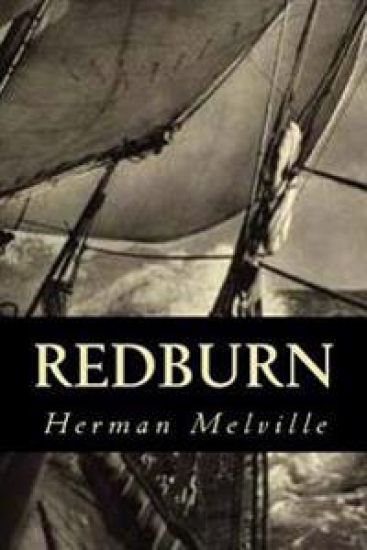
Redburn: His First Voyage, is the fourth book by the American writer Herman Melville, first published in London in 1849. The book is semi-autobiographical and recounts the adventures of a refined youth among coarse and brutal sailors and the seedier areas of Liverpool. Melville wrote Redburn in less than ten weeks. While one scholar describes it as "arguably his funniest work,"


Mardi, and A Voyage Thither
Herman Melville
Createspace Independent Publishing Platform
2016
nidottu

Bartleby the Scrivener: A Story of Wall Street es un cuento del escritor estadounidense Herman Melville. Ha sido considerado una de sus mejores obras. Narra la historia de Bartleby, el escribiente, contada a trav s de un abogado de nombre desconocido que tiene su oficina en Wall Street, Nueva York y que, seg n sus propias palabras, en la tranquilidad de un c modo retiro, trabaja c modamente con los t tulos de propiedad de los hombres ricos, con hipotecas y obligaciones. Tiene tres empleados, apodados Turkey, Nippers y Ginger Nut. Turkey y Nippers son copistas, o escribientes; Ginger Nut, de apenas doce a os, es el chico de los recados. Como los dos escribientes no son suficientes para hacer el trabajo de la oficina, el narrador pone un anuncio para contratar un nuevo empleado. Bartleby se presenta y es contratado de inmediato. Su figura es descrita como p lidamente pulcra, lamentablemente respetable, incurablemente solitaria.