Kirjojen hintavertailu – 12 859 819 kirjaa ja 27 kauppaa

Kirjailija

Horace

Kirjat ja teokset yhdessä paikassa: 276 kirjaa, julkaisuja vuosilta 1926–2026, suosituimpiin kuuluu Odi, Epodi e Sermoni di Orazio. Vertaile teosten hintoja ja tarkista saatavuus suomalaisista kirjakaupoista.

276 kirjaa

Kirjojen julkaisuvuodet: 1926–2026.

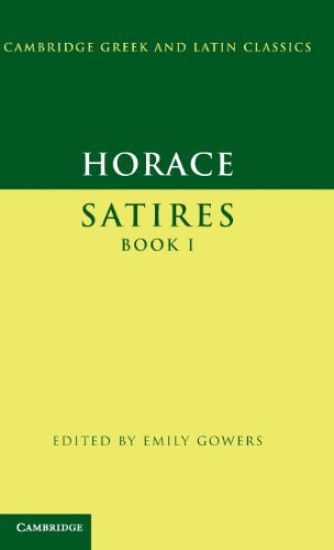
Horace: Satires Book I

Horace: Satires Book I

Horace

Cambridge University Press
2012
sidottu
Horace's first book of Satires is his debut work, a document of one man's self-fashioning on the cusp between republic and empire, and a pivotal text in the history of Roman satire. It wrestles with the problem of how to define and assimilate satire and justifies the poet's own position in a suspicious society. The commentary gives full weight to the dense texture of these poems while helping readers interpret their most cryptic aspects and appreciate their technical finesse. The introduction puts Horace in context as late-Republican newcomer and a vital figure in the development of satire, and discusses the structure and meaning of Satires I, literary and philosophical influences, style, metre, transmission and Horace's rich afterlife. Each poem is followed by an essay offering overall interpretation. This work is designed for upper-level students and scholars of classics but contains much of interest to specialists in later European literature.
Horace: Satires Book I

Horace: Satires Book I

Horace

Cambridge University Press
2012
pokkari
Horace's first book of Satires is his debut work, a document of one man's self-fashioning on the cusp between republic and empire, and a pivotal text in the history of Roman satire. It wrestles with the problem of how to define and assimilate satire and justifies the poet's own position in a suspicious society. The commentary gives full weight to the dense texture of these poems while helping readers interpret their most cryptic aspects and appreciate their technical finesse. The introduction puts Horace in context as late-Republican newcomer and a vital figure in the development of satire, and discusses the structure and meaning of Satires I, literary and philosophical influences, style, metre, transmission and Horace's rich afterlife. Each poem is followed by an essay offering overall interpretation. This work is designed for upper-level students and scholars of classics but contains much of interest to specialists in later European literature.
Horace: Odes IV and Carmen Saeculare

Horace: Odes IV and Carmen Saeculare

Horace

Cambridge University Press
2011
sidottu
The Carmen Saeculare was composed and published in 17 BCE as Horace was returning to the genre of lyric which he had abandoned six years earlier; the fourth book of Odes is in part a response to this poem, the only commissioned poem we know from the period. The hardening of the political situation, with the Republic a thing of the past and the Augustan succession in the air, threw the problematic issue of praise into fresh relief, and at the same time provided an impulse towards the nostalgia represented by the poet's private world. Professor Thomas provides an introduction and commentary (the first full commentary in English since the nineteenth century) to each of the poems, exploring their status as separate lyric artefacts and their place in the larger web of the book. The edition is intended primarily for upper-level undergraduates and graduate students, but is also important for scholars.
Horace: Odes IV and Carmen Saeculare

Horace: Odes IV and Carmen Saeculare

Horace

Cambridge University Press
2011
pokkari

Halvin toimitettuna 41,90 €

The Carmen Saeculare was composed and published in 17 BCE as Horace was returning to the genre of lyric which he had abandoned six years earlier; the fourth book of Odes is in part a response to this poem, the only commissioned poem we know from the period. The hardening of the political situation, with the Republic a thing of the past and the Augustan succession in the air, threw the problematic issue of praise into fresh relief, and at the same time provided an impulse towards the nostalgia represented by the poet's private world. Professor Thomas provides an introduction and commentary (the first full commentary in English since the nineteenth century) to each of the poems, exploring their status as separate lyric artefacts and their place in the larger web of the book. The edition is intended primarily for upper-level undergraduates and graduate students, but is also important for scholars.
Satires and Epistles

Satires and Epistles

Horace

Oxford University Press
2011
nidottu

Halvin toimitettuna 18,90 €

'What's the harm in using humour to put across what is true?' Gluttony, lust, and hypocrisy are just a few of the targets of Horace's Satires. Writing in the 30s BC, Horace exposes the vices and follies of his Roman contemporaries, while still finding time to reflect on how to write good satire and along the way revealing his own persona to be as flawed and bigoted as the people he attacks. Alongside famous episodes such as the fable of the town mouse and the country mouse, the explosive fart of Priapus, and the grotesque dinner party given by the nouveau-riche Nasidienus, these poems are stuffed full of comic vignettes, moral insights, and Horace's pervasive humanity. They influenced not only Persius and Juvenal but the long tradition of English satire, from Ben Jonson to W. H. Auden. These new prose translations by John Davie perfectly capture the ribald style of the original. In the Epistles, Horace uses the form of letters to his friends, acquaintances, foremen, and even the emperor to explore questions of philosophy and how to live a good life; and in 'The Art of Poetry' (the Ars poetica), he gives advice on poetic style that informed the work of writers and dramatists for centuries. ABOUT THE SERIES: For over 100 years Oxford World's Classics has made available the widest range of literature from around the globe. Each affordable volume reflects Oxford's commitment to scholarship, providing the most accurate text plus a wealth of other valuable features, including expert introductions by leading authorities, helpful notes to clarify the text, up-to-date bibliographies for further study, and much more.
The Odes of Horace in Latin and English; With a Translation of Dr. Bentley's Notes. to Which Are Added, Notes Upon Notes; ... Part III. to Be Continued.
The 18th century was a wealth of knowledge, exploration and rapidly growing technology and expanding record-keeping made possible by advances in the printing press. In its determination to preserve the century of revolution, Gale initiated a revolution of its own: digitization of epic proportions to preserve these invaluable works in the largest archive of its kind. Now for the first time these high-quality digital copies of original 18th century manuscripts are available in print, making them highly accessible to libraries, undergraduate students, and independent scholars. Western literary study flows out of eighteenth-century works by Alexander Pope, Daniel Defoe, Henry Fielding, Frances Burney, Denis Diderot, Johann Gottfried Herder, Johann Wolfgang von Goethe, and others. Experience the birth of the modern novel, or compare the development of language using dictionaries and grammar discourses. ++++The below data was compiled from various identification fields in the bibliographic record of this title. This data is provided as an additional tool in helping to insure edition identification: ++++British LibraryT042046Parallel Latin and English texts. Contains odes 8-12 of Book 1. Part of a 24-part work consisting of the odes, epodes and carmen saeculare. P.36 misnumbered 30. London: printed for Bernard Lintot, 1725. 30 i.e.36]p.; 12
The Odes of Horace in Latin and English; With a Translation of Dr. Bentley's Notes. to Which Are Added, Notes Upon Notes; ... Part II. to Be Continued.
The 18th century was a wealth of knowledge, exploration and rapidly growing technology and expanding record-keeping made possible by advances in the printing press. In its determination to preserve the century of revolution, Gale initiated a revolution of its own: digitization of epic proportions to preserve these invaluable works in the largest archive of its kind. Now for the first time these high-quality digital copies of original 18th century manuscripts are available in print, making them highly accessible to libraries, undergraduate students, and independent scholars. Western literary study flows out of eighteenth-century works by Alexander Pope, Daniel Defoe, Henry Fielding, Frances Burney, Denis Diderot, Johann Gottfried Herder, Johann Wolfgang von Goethe, and others. Experience the birth of the modern novel, or compare the development of language using dictionaries and grammar discourses. ++++The below data was compiled from various identification fields in the bibliographic record of this title. This data is provided as an additional tool in helping to insure edition identification: ++++British LibraryT042042Parallel Latin and English texts. Contains odes 4-7 of Book 1. Part of a 24-part work consisting of the odes, epodes and carmen saeculare. Also issued as part of: 'The odes, epodes, and carmen seculare of Horace, in Latin and English', 1713. London: printed for Bernard Lintott, 1712. 35, 1]p.; 12
The Odes of Horace in Latin and English; With a Translation of Dr. Bentley's Notes. to Which Are Added, Notes Upon Notes; ... Part IV. to Be Continued.
The 18th century was a wealth of knowledge, exploration and rapidly growing technology and expanding record-keeping made possible by advances in the printing press. In its determination to preserve the century of revolution, Gale initiated a revolution of its own: digitization of epic proportions to preserve these invaluable works in the largest archive of its kind. Now for the first time these high-quality digital copies of original 18th century manuscripts are available in print, making them highly accessible to libraries, undergraduate students, and independent scholars. Western literary study flows out of eighteenth-century works by Alexander Pope, Daniel Defoe, Henry Fielding, Frances Burney, Denis Diderot, Johann Gottfried Herder, Johann Wolfgang von Goethe, and others. Experience the birth of the modern novel, or compare the development of language using dictionaries and grammar discourses. ++++The below data was compiled from various identification fields in the bibliographic record of this title. This data is provided as an additional tool in helping to insure edition identification: ++++British LibraryT042047Parallel Latin and English texts. Contains odes 13-19 of Book 1. Part of a 24-part work consisting of the odes, epodes and carmen saeculare. Also issued as part of: 'The odes, epodes, and carmen seculare of Horace, in Latin and English', 1713. London: printed for Bernard Lintott, 1712. 34p.; 12
The odes of Horace in Latin and English; with a translation of Dr. Bentley's notes. To which are added, notes upon notes; ... Part XIV. To be continued.
The 18th century was a wealth of knowledge, exploration and rapidly growing technology and expanding record-keeping made possible by advances in the printing press. In its determination to preserve the century of revolution, Gale initiated a revolution of its own: digitization of epic proportions to preserve these invaluable works in the largest archive of its kind. Now for the first time these high-quality digital copies of original 18th century manuscripts are available in print, making them highly accessible to libraries, undergraduate students, and independent scholars. Western literary study flows out of eighteenth-century works by Alexander Pope, Daniel Defoe, Henry Fielding, Frances Burney, Denis Diderot, Johann Gottfried Herder, Johann Wolfgang von Goethe, and others. Experience the birth of the modern novel, or compare the development of language using dictionaries and grammar discourses. ++++The below data was compiled from various identification fields in the bibliographic record of this title. This data is provided as an additional tool in helping to insure edition identification: ++++British LibraryT042059Parallel Latin and English texts. Contains odes 12-15 of Book 3. With two final advertisement leaves. Part of a 24-part work consisting of the odes, epodes and carmen saeculare. Also issued as part of: 'The odes, epodes, and carmen seculare of Horace, London: printed for Bernard Lintott, 1712. 31, 5]p.; 12