
Kirjailija
Ivan Turgenev
Kirjat ja teokset yhdessä paikassa: 396 kirjaa, julkaisuja vuosilta 1862–2026, suosituimpiin kuuluu Vernyj drug. Rasskazy o sobakakh. Vertaile teosten hintoja ja tarkista saatavuus suomalaisista kirjakaupoista.
396 kirjaa
Kirjojen julkaisuvuodet: 1862–2026.
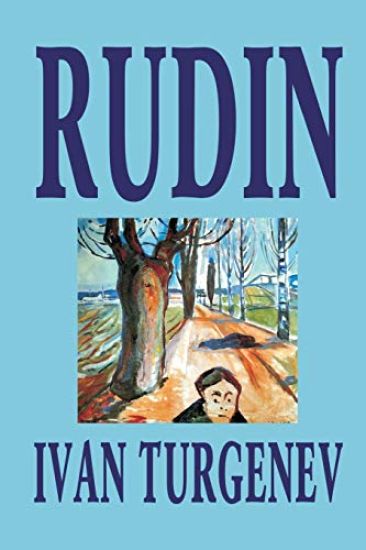
RUDIN (1856) by Ivan Sergeevich Turgenev (1818-1883) tells the story of a character typical to Turgenev -- a "superfluous" man, weak of will, brimming with indecisive frustration -- and yet tormented by ideals. Rudin is made impotent by the dissonance of honoring the older generations while at the same time embracing the new bold epoch of pre-revolutionary Russia. The theme of melancholic powerless men coupled with vital idealistic women is prevalent in Turgenev's work, and it would be hard to find a clearer study of the type than RUDIN.
A Hunter's Sketches by Ivan Turgenev, Fiction, Classics, Literary, Short Stories
Ivan Turgenev
Wildside Press
2003
pokkari
Great Russian author Ivan Sergeevich Turgenev (1818-1883) was an avid hunter and nature lover and used his own experiences in the woods of his native Russia to pen A HUNTER'S SKETCHES (written in the period of 1852-1874). This work established his reputation as a foremost writer of his time. "Do you know, for instance, the delight of setting off before daybreak in spring? You come out on to the steps. . . . In the dark-grey sky stars are twinkling here and there; a damp breeze in faint gusts flies to meet you now and then; there is heard the secret, vague whispering of the night; the trees faintly rustle, wrapt in darkness. And now they put a rug in the cart, and lay a box with the samovar at your feet." -- from "The Forest And The Steppe"
Fathers and Sons by Ivan Turgenev, Fiction, Classics, Literary
Ivan Turgenev
Wildside Press
2003
pokkari
Fathers and Sons by Ivan Turgenev, Fiction, Classics, Literary
Ivan Turgenev
Wildside Press
2003
sidottu
A Hunter's Sketches by Ivan Turgenev, Fiction, Classics, Literary, Short Stories
Ivan Turgenev
Wildside Press
2003
sidottu
Considered one of Ivan Turgenev's finest works, Fathers and Sons was the first of the great nineteenth-century Russian novels to achieve international renown. A stirring tale of generational conflict during a period of social revolution, it vividly depicts the friction between liberal and conservative thought and the rise of the radical new philosophy of nihilism. Set in Russia during the 1860s against the backdrop of the liberation of the serfs, the story concerns the clash of older aristocrats with the new democratic intelligentsia. The impressionable young student Arkady Kirsanoff arrives home in the company of his friend Bazarov, a cynical biologist. Arkady's father and uncle, already distressed by the upheaval of the peasants, grow increasingly irritated at Bazarov's outspoken nihilism and his ridicule of the conventions of state, church, and home. The young friends, bored by the rustic life of the Kirsanoff estate, venture off to the provincial capital in search of amusement. There they encounter both romance and alienation. This inexpensive edition of a literary landmark affords students and general readers the opportunity to savor a timeless masterpiece of world literature.
The Torrents of Spring by Ivan Turgenev, Fiction, Literary, Poetry
Ivan Turgenev
Wildside Press
2003
sidottu
" 'I've come across some stories in my time. The things people tell you when they think they're on the brink...' A country doctor recounts a story to an aspiring Russian novelist. The tale is unexpected, short and bittersweet, rather like its subject: a love affair between the doctor and his dying patient, the beautiful and cultured Alexandra Andreyevna. Thrown together by her condition, they find a love imbued with an honesty and an urgency that most would find unbearable. But this young woman's life is particularly fragile and in his desperate bid to cure her the doctor unwittingly prescribes the most dangerous drug of all. The Country Doctor was first published in the Russian literary magazine The Contemporary in the late 1840s. It was one of many tales which would later comprise The Sportsman's Notebook. Simon Day dramatises this enchanting story of frustrated love, bringing the elegance of Turgenev's prose to life in a new way."
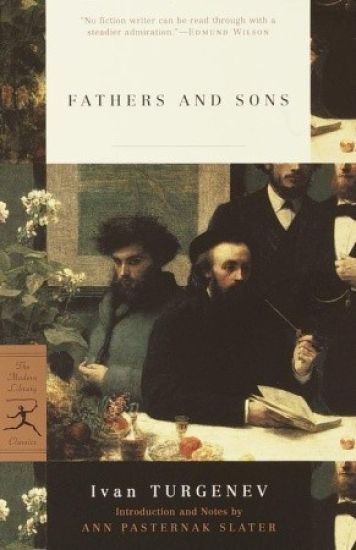
This new translation by Richard Freeborn makes Turgenev's masterpiece about the conflict between generations seem as fresh, outspoken, and exciting as it was to those readers who first encountered its famous hero. The controversial portrayal of Bazarov, the 'nihilist' or 'new man', shocked Russian society when the novel was published in 1862. The image of humanity liberated by science from age-old conformities and prejudices is one that can threaten establishments of any political or religious persuasion, and is especially potent at the present time. Richard Freeborn is the first translator to have had access to Turgenev's working manuscript. An appendix contains the first English translation of some of Turgenev's preparatory sketches for the novel.
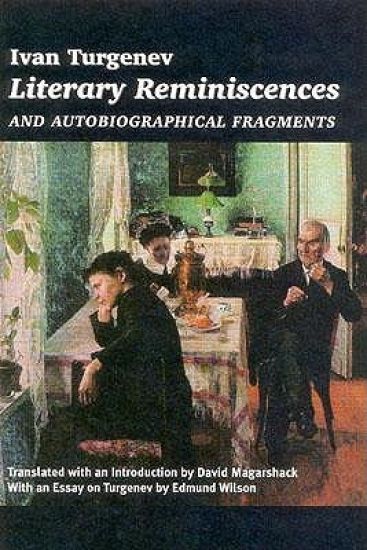
Toward the end of his career as a brilliant novelist, Turgenev turned his pen to the essays that comprise these Literary Reminiscences. Here he discusses the character of creative writing, the attitude of the artist to his environment, and the transmutation of the artist's experience into a work of art. He offers, as well, brilliant studies of Pushkin, Gogol, Belinsky, Lermontov, and Krylov, and a penetrating account of his own difficulties in writing Fathers and Sons. There are also descriptions of travels through Italy, simply and beautifully written pieces on country life, and eyewitness accounts of the 1848 political riots in Paris. David Magarshack has provided a first-class translation and has written an introduction which explains and sets the scene for each of the essays. "The best possible introduction to the author a reader could ask for.... Turgenev is an uninsistent, lyric meditator, who sees with a precise eye wherever he looks, and whether he is drawing a bead on a quail or escaping from a burning ship, always asks the uncomfortable questions of himself."—New York Herald-Tribune.
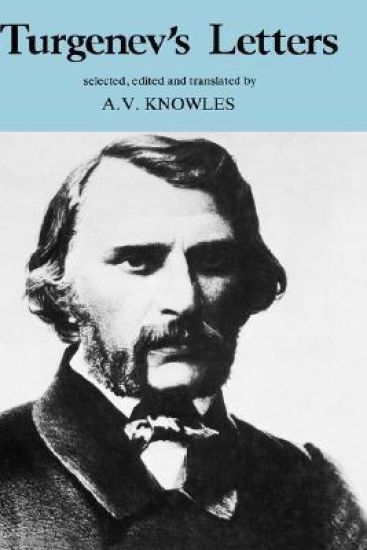
Ivan Turgenev, one of the greatest Russian writers, was the first to achieve real fame outside of his own country. He spent most of his adult life in Western Europe and started to write letters, not just to keep his friends informed of his progress, but 'in order to receive replies'. An entertaining and accomplished correspondent, he rarely objected to publication of his letters, which were written with that possibility in mind. This selection of full letters spans more than fifty years, from 1831 until just before Turgenev's death in September 1883. Turgenev enjoyed conversations by post, debating social and political questions, and issues in literature, art and music. Among his correspondents were major writers of the day (including Flaubert, Zola, Maupassant, Henry James, Tolstoy and Dostoyevsky) as well as friends and relations. Many of the letters reveal his views on contemporary literary and social events in Russia and Europe; others, to his publishers, translators and to aspiring authors, give some of his criteria for a writer. These letters will not provide an answer to the Turgenev enigma, but they do show many sides of this fascinating and mercurial man. The letters are in chronological sections. A biographical framework is provided both by the introductions to these sections and to individual letters, and by the inclusion of letters covering the main events of his life. This selection is an important contribution both to our knowledge and understanding of nineteenth-century Russian and European history and literature. A. V. Knowles is Senior Lecturer in Russian at the University of Liverpool and is the editor of the Tolstoy volume in The Critical Heritage series.
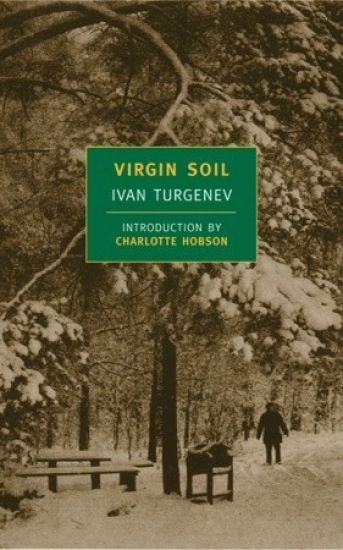
Turgenev was the most liberal-spirited and unqualifiedly humane of all the great nineteenth-century Russian novelists, and in Virgin Soil, his biggest and most ambitious work, he sought to balance his deep affection for his country and his people with his growing apprehensions about what their future held in store. At the heart of the book is the story of a young man and a young woman, torn between love and politics, who struggle to make headway against the complacency of the powerful, the inarticulate misery of the powerless, and the stifling conventions of provincial life. This rich and complex book, at once a love story, a devastating, and bitterly funny social satire, and, perhaps most movingly of all, a heartfelt celebration of the immense beauty of the Russian countryside, is a tragic masterpiece in which one of the world's finest novelists confronts the enduring question of the place of happiness in a political world.
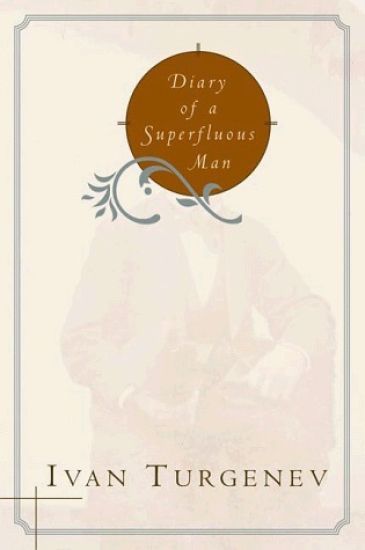
When Turgenev published Diary of a Superfluous Man in 1850, he created one of the first literary portraits of the alienated man. Turgenev once said that there was a great deal of himself in the unsuccessful lovers who appear in his fiction. This failure, along with painful self-consciousness, is a central fact for the ailing Chulkaturin in this melancholy tale. As he reflects on his life, he tells the story of Liza, whom he loved, and a prince, whom she loved instead, and the curious turns all their lives took.
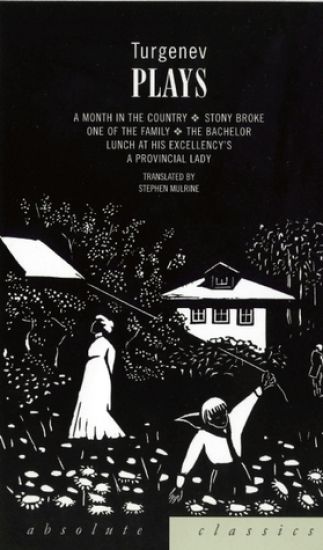
Includes the plays; A Month in the Country, Stony Broke, One of the Family, The Bachelor, Lunch at His Excellency's and A Provincial Lady. A Month in the Country is Turgenev's acknowledged masterpiece and clearly influenced the plays of Chekhov, written almost half a century later. His shorter plays are highly performable comedies at one, two and three-act length, and all the features of his major contribution to the world repertoire are to be found there in some measure. This collection of six plays, written between 1843 and 1852, samples of the best of Turgenev's drama.
Turgenev's povest' (or novella) Asya, of 1858, has a Rhineland setting. Asya, the illegitimate daughter of a Russian landowner, is travelling abroad with her half-brother. The narrator falls in love with her, but cannot bring himself to propose marriage until it is too late. Asya has gone. The narrative stance here struck by Turgenev - one of remorseful recollection - renders Asya one of his most poignant tales. It immediately occasioned a lively debate among contemporary Russian critics: over 'weak' as against 'positive' heroes, and the position of the intellectual vis a vis the people. At a more submerged level of the tale, the heroine's 'narrative' has until recently tended to be overlooked.
Turgenev is an author who no longer belongs to Russia only. During the last fifteen years of his life he won for himself the reading public. As regards his method of dealing with his material and shaping it he surpasses all the prose writers of his country, and has but few equals among the great novelists of other lands. To one familiar with all Turgenev's works it is evident that he possessed the keys of all human emotions, all human feelings, the highest and the lowest, the novel as well as the base. He make himself almost exclusively the poet of the gentler side of human nature. We may say that the description of love is Turgenev's specialty. Rudin is the first of Turgenev's social novels, and is a sort of artistic introduction to those that follow, because it refers to the epoch anterior to that when the present social and political movements began. This epoch is being fast forgotten, and without his novel it would be difficult for us to fully realise it, but it is well worth studying, because we find in it the germ of future growths. Introduced in English, the text is in Russian and the notes are in English