Kirjojen hintavertailu – 12 859 818 kirjaa ja 27 kauppaa

Kirjailija

Ivan Turgenev

Kirjat ja teokset yhdessä paikassa: 396 kirjaa, julkaisuja vuosilta 1862–2026, suosituimpiin kuuluu Vernyj drug. Rasskazy o sobakakh. Vertaile teosten hintoja ja tarkista saatavuus suomalaisista kirjakaupoista.

396 kirjaa

Kirjojen julkaisuvuodet: 1862–2026.

Two Friends and Other Stories

Two Friends and Other Stories

Ivan Turgenev

Faber Faber
2008
pokkari
Considered to be among the world's greatest masters of fiction Turgenev's works explored the social issues that affected Russians during the nineteenth century, most notably the peasantry and the intelligentsia. Part of the charm of his novels and stories is his sense of place and his sympathy with the rural landscapes. The works of Ivan Turgenev that are now available on the Faber Finds list are as much a celebration of a classic Russian novelist and short-story writer as they are of the translator Constance Garnett. During her lifetime Garnett translated around 70 volumes of Russian literature that included works by Dostoevsky, Tolstoy and Chekhov as well as Turgenev.
The Torrents of Spring and Other Stories
The Torrents of Spring and Other Stories was written when Turgenev was in his fifties and is considered to be partly autobiographical. Also known as Spring Torrents, The Torrents of Spring focuses on the main protagonist Dimitry Sanin, a young Russian landowner who on his travels to Germany meets and falls in love with Gemma, an Italian living in Frankfurt. After winning her heart Sanin decides to sell off his estate in Russia and move to Frankfurt to be close to her. However, once back in Russia and away from his fiancée he succumbs to the charms of a sophisticated older woman, Maria Nikolaevna. He breaks off his engagement with Gemma and embarks on an affair with Maria Nikolaevna, knowing that he doesn't truly love her. Years later a successful but lonely man Sanin can't forget Gemma, the love of his life, and is tortured by the thought of what might have been had he not abandoned her. Returning to Frankfurt he searches for Gemma in the hope that she will forgive him. An exploration of the joy and disappointment of first love, of betrayal, redemption and forgiveness The Torrents of Spring is classic Turgenev.
The Jew and Other Stories

The Jew and Other Stories

Ivan Turgenev

Faber Faber
2008
pokkari
A difficult and uncompromising short tale by the Russian master Turgenev, and four additional tales. Includes The Duellist, an early (1846) study of contrasting characters which clearly demonstrates his movement away from the romantic and melodramatic tradition in Russian literature, and towards his unerringly realistic portraiture of individual lives, a skill that is perhaps most perfectly expressed in his short works. Five short tales by Turgenev: The Jew, An Unhappy Girl, The Duellist, Three Portraits and Enough, in Constance Garnett's classic 1900 translation.
A Lear of the Steppes and Other Stories
Martin Petrovitch, believing he has dreamed of his own impending death, transfers ownership of his estate to his two daughters. Turgenev's short story version of Shakespeare's King Lear, follows his protagonist from that fatalistic submission to the cataclysm of cruelty, betrayal and violence that follows. Three tales written by Turgenev in Constance Garnett's classic 1898 translation: A Lear of the Steppes, Faust and Acia. With an introduction by Edward Garnett.
A Desperate Character and Other Stories
Misha Poltyev, a 'desperate character,' squanders his inheritance, senselessly turns to drink, and lives among the beggars of the highway. Eventually, he returns to his family estate and the graveyard where his parents lie:'I want to dig myself a grave ... and to lie here for time everlasting. There's only this spot left for me in the world. Get a spade! Oh God! Everywhere nothing but injustice, and oppression, and evil-doing ... Everything must go to ruin then, and me too!' These stories demonstrate Turgenev's matchless skill for portraying elemental aspects of Russian life: the melancholic, the nostalgic, and the darkly comic. Six tales written by Turgenev between 1847 and 1881, in Constance Garnett's classic 1899 translation: A Desperate Character, A Strange Story, Punin and Baburin, Old Portraits, The Brigadier and Pyetushkov. With an introduction by Edward Garnett.
A Sportsman's Sketches: Volume 2

A Sportsman's Sketches: Volume 2

Ivan Turgenev

Faber Faber
2008
pokkari
A Sportsman's Sketches was a collection of short stories written by Ivan Turgenev in 1852. As Turgenev's first major piece of writing they brought him instant recognition. Based on his own observations riding around his family's estate the stories explore the difficult lives of the peasants and the Russian system of serfdom. This system came into effect during the 11th century and required the dependency of the peasants on the state. Peasants' mobility was severely restricted and it was made illegal for them to run away from the estates where they worked - they belonged, in essence, to the landowners who could move them to another estate under another landowner while retaining the serf's personal property and family. While there were many rebellions against serfdom it was only in 1861 that it was finally abolished and all serfs were freed by the Tsar, Alexander II. Turgenev's A Sportsman's Sketches influenced the Tsar's decision to abolish the system of serfdom in Russia. Volume Two includes: Tatyana Borisovna and her Nephew DeathThe SingersPyotr Petrovich KarataevThe TrystThe Hamlet of the Shchigrovsky DistrictChertopkhanov and NedopyuskinThe End of ChertopkhanovLiving RelicThe Rattling of WheelsThe Forest and the Steppe
The Diary of a Superfluous Man and Other Stories
'That night I went home to my lodgings in a state of perfect ecstasy ... I felt supremely happy, and was already making all sorts of plans in my head. If someone had whispered in my ear then: "You're raving, my dear chap! That's not a bit what's in store for you. What's in store for you is to die all alone, in a wretched little cottage, amid the insufferable grumbling of an old hag who will await your death with impatience to sell your boots for a few coppers ... !"' Turgenev's hopeless protagonist, at the end of his life, can only truthfully define himself as 'superfluous,' and relates the tale of the failed romance that confirmed him in that unfortunate opinion. Turgenev's virtuosic account of a man thoroughly undermined by himself, tormented by jealousy and love, but who is, ultimately, nothing more than superfluous. This volume of five tales also includes A Tour in the Forest, Yakov Pasinkov, Andrei Kolosov and A Correspondence, in Constance Garnett's classic 1899 translation.
Virgin Soil: Volume 1

Virgin Soil: Volume 1

Ivan Turgenev

Faber Faber
2008
pokkari
Virgin Soil, written in 1877 and translated into English in 1896, was Ivan Turgenev's last novel and an appropriate end to his career as a novelist. Its analysis of the future of Russia was prescient as it sketches out the historical justification of the Nihilist movement - why it was necessary - and then prophesises its failure. The book caused Turgenev's final disgrace with the Government and, like many other Russian writers before and after him, he was exiled, although this took place after his death rather than during his lifetime. Denied a public funeral and honours the Government suppressed any public comments on his works and his influence on Russian literature. As Edward Garnett writes in his introduction to Virgin Soil in 1896 'to examine the characters of the novel is to see how perfectly representative they are of Russian political life'. Turgenev's genius was the ability to take a simple story line and create an intricate and in-depth look at life in Russia as seen through the eyes of ordinary Russians.
Fathers and Children

Fathers and Children

Ivan Turgenev

Faber Faber
2008
pokkari
First translated by Constance Garnett in 1895 Fathers and Children was published in 1862 in The Russian Messenger and provoked immediate controversy for its portrayal of the rise of the nihilist movement. With its themes of love and redemption Fathers and Children (or Fathers and Sons as it was also known) was written as a response to the liberal movement that arose in Russia during the 1860s. The novel explores the growing disharmony between the younger generation and the older generation in Russia and the 'children's' rejection of the existing values and authority of their 'father's'. The main protagonist Yevgeny Bazarov is training to be a doctor and is mentor to Arkady Kirsanov. Arkady's brother Pavel and his father Nikolai represent the past while Arkady, as the sentimentalist, represents the present. Bazarov, on the other hand, represents the changing society as he rejects the old system entirely. However, Bazarov finds it hard to reconcile his views when he falls in love with Anna Sergeyvna Odintsov, a wealthy widow. Widely regarded as Turgenev's most powerful work and the first modern novel in Russian Literature, Fathers and Children helped to establish Turgenev's name in the West.
A House of Gentlefolk

A House of Gentlefolk

Ivan Turgenev

Faber Faber
2008
pokkari
A sequel to Rudin, A House of Gentlefolk was originally published in 1858 and was translated from the Russian by Constance Garnett in 1894. A quintessential Turgenev novel about Russian society, idealism, innocence and disillusionment it is set amidst the green fields owned by bourgeois Russians. The novel pivots around the character of Lisa, a smart and accomplished young woman who represents the traditional, dutiful, innocent and modest Russian girlhood from that era. Lavretsky, the hero, is a man of action and a man of culture. He, like Lisa, is a democratic Russian and so it is almost inevitable that he and Lisa fall in love. Their contentment is short-lived, however, as a woman from Lavretsky's past enters their lives and threatens to ruin their happiness forever. Although a melancholy story the novel's overall tone remains one of hope and it is easy to see how A House of Gentlefolk became the favourite Turgenev novel for English-speaking readers.
On the Eve

On the Eve

Ivan Turgenev

Faber Faber
2008
pokkari
On the Eve is set at the beginning of the Crimean War and probes the friendships and loves of Elena, a young Russian woman, and the men in her life. First published in 1859 and translated into English in 1895 On the Eve is an exquisite novel that delves into the life of a young woman as well as being a penetrating diagnosis of Russia in the 1850s. Vying for Elena's affections are Shubin, an artist, and Bersenyev, a student, but into their midst comes Insarov, a friend of Bersenyev's from Bulgaria, who is passionate about the freedom of his country. It is the strong and committed Insarov that Elena falls in love with but Elena's parents are unimpressed with the Bulgarian and want her to marry a more suitable Russian man that they have chosen for her. Elena and Insarov secretly marry but with a dawning consciousness and sense of foreboding the reader remembers that this is on the eve of the Crimean War - what future will the lovers have once war breaks out?
Virgin Soil: Volume 2

Virgin Soil: Volume 2

Ivan Turgenev

Faber Faber
2008
pokkari
Virgin Soil, written in 1877 and translated into English in 1896, was Ivan Turgenev's last novel and an appropriate end to his career as a novelist. Its analysis of the future of Russia was prescient as it sketches out the historical justification of the Nihilist movement - why it was necessary - and then prophesises its failure. The book caused Turgenev's final disgrace with the Government and, like many other Russian writers before and after him, he was exiled, although this took place after his death rather than during his lifetime. Denied a public funeral and honours the Government suppressed any public comments on his works and his influence on Russian literature. As Edward Garnett writes in his introduction to Virgin Soil in 1896 'to examine the characters of the novel is to see how perfectly representative they are of Russian political life'. Turgenev's genius was the ability to take a simple story line and create an intricate and in-depth look at life in Russia as seen through the eyes of ordinary Russians.
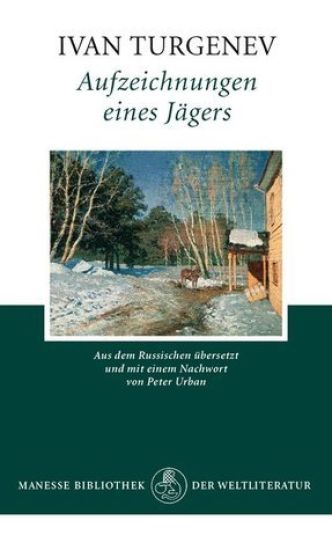
Aufzeichnungen eines Jägers

Aufzeichnungen eines Jägers

Ivan Turgenev

Manesse Verlag
2008
sidottu
Peter Urban, maßgeblicher Kenner und Vermittler russischer Weltliteratur, erschließt in seiner Neuübersetzung den Bedeutungs- und Nuancenreichtum von Turgenevs literarischem Glanzstück mit der ihm eigenen Meisterschaft. Für diese Ausgabe hat er zudem drei "Jäger-Skizzen" aus dem Umfeld der "Aufzeichnungen" erstmals ins Deutsche übertragen. Alles andere als eine beschauliche Idylle ist das Landleben, wie es sich den Augen und Ohren des umherstreifenden Jäger-Chronisten darbietet. Es wird regiert von Verbohrtheit, Unmenschlichkeit und roher Gewalt. Turgenevs grandiose Komposition von zweiundzwanzig Novellen rundet sich zu einem eindringlichen Epochenbild Rußlands zur Mitte des 19. Jahrhunderts. Der Titel vermittelt in einer Art verharmlosender Camouflage, es würde in diesem Buch um landläufiges Jägerlatein gehen. Doch die zaristische Zensurbehörde ließ sich durch diese Finte nicht lange hinters Licht führen und verbot die "Aufzeichnungen eines Jägers" noch im Erscheinungsjahr. Die Schilderung menschenunwürdiger Zustände, die aufklärerisch-realistische Figurenzeichnung, vom Leibeigenen bis zum Gutsbesitzer, vom Handwerker bis zum kleinen Beamten, wirkte trotz Verbots als Sprengstoff in der Diskussion um die Aufhebung der Leibeigenschaft in Rußland. Mit der Novellensammlung von 1852 trat Turgenev die Erbschaft der Puschkinschen Erzählkunst an. Die "Aufzeichnungen" begründeten im Nu seinen Ruf als Erzähler von europäischem Format. Die sanfte Ironie, die die Erzählhaltung wie in einem scheinbar absichtslosen Erlebnisbericht prägt, erhöht die Drastik des Geschilderten ungemein wirkungsvoll. "Ein Meisterwerk der kleinen Form: Großartige kleine Geschichten, die man wunderbar im Strandkorb lesen kann." Götz Alsmann in der Sendung "Lesen!" "Peter Urban hat das Buch wieder zum Leben erweckt. Das ist plötzlich ganz klar und schön zu lesen." Elke Heidenreich in der Sendung "Lesen!" "Das ist eins dieser ewigen Bücher. Das man immer und immer wieder lesen kann und muß, und wo man sich verliert im Lesen in der Welt, die es beschreibt. Das Buch muß man einfach lieben." Volker Weidermann, Frankfurter Allgemeine Sonntagszeitung

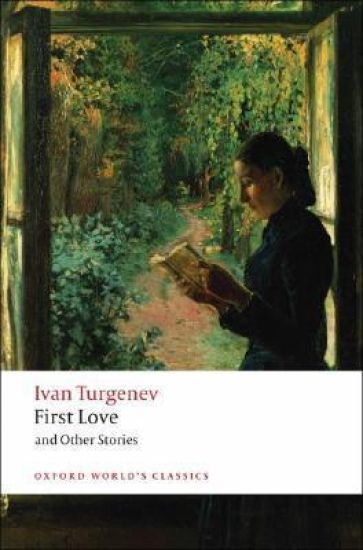
First Love and Other Stories

First Love and Other Stories

Ivan Turgenev

Oxford University Press
2008
nidottu

Halvin toimitettuna 15,60 €

This collection brings together six of Turgenev's best-known `long' short stories, in which he turns his skills of psychological observation and black comedy to subjects as diverse as the tyranny of serfdom, love, and revenge on the Russian steppes. These stories all display the elegance and clarity of Turgenev's finest writing. Richard Freeborn was until recently Professor of Russian at the School of Slavonic and East European Studies, London. ABOUT THE SERIES: For over 100 years Oxford World's Classics has made available the widest range of literature from around the globe. Each affordable volume reflects Oxford's commitment to scholarship, providing the most accurate text plus a wealth of other valuable features, including expert introductions by leading authorities, helpful notes to clarify the text, up-to-date bibliographies for further study, and much more.
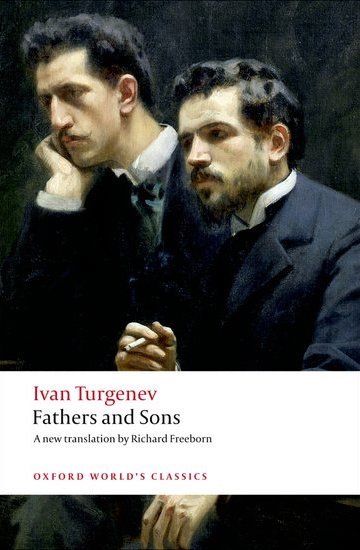
Fathers and Sons

Fathers and Sons

Ivan Turgenev

Oxford University Press
2008
nidottu

Halvin toimitettuna 17,90 €

Turgenev's masterpiece about the conflict between generations is as fresh, outspoken, and exciting today as it was in when it was first published in 1862. The controversial portrait of Bazarov, the energetic, cynical, and self-assured `nihilist' who repudiates the romanticism of his elders, shook Russian society. Indeed the image of humanity liberated by science from age-old conformities and prejudices is one that can threaten establishments of any political or religious persuasion, and is especially potent in the modern era. This new translation, specially commissioned for the World's Classics, is the first to draw on Turgenev's working manuscript, which only came to light in 1988. ABOUT THE SERIES: For over 100 years Oxford World's Classics has made available the widest range of literature from around the globe. Each affordable volume reflects Oxford's commitment to scholarship, providing the most accurate text plus a wealth of other valuable features, including expert introductions by leading authorities, helpful notes to clarify the text, up-to-date bibliographies for further study, and much more.
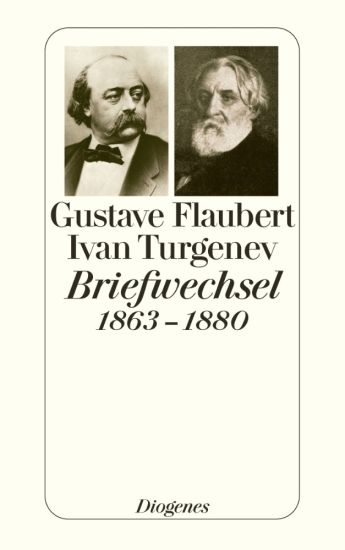
Flaubert-Turgenev Briefwechsel 1863-1880

Flaubert-Turgenev Briefwechsel 1863-1880

Gustave Flaubert; Ivan Turgenev

DIOGENES VERLAG AG
2008
pokkari
17 Jahre lang, bis zum Tode Flauberts, dauert diese Freundschaft, 235 Briefe wandern in dieser Zeit zwischen den beiden Schriftstellern hin und her. Sie handeln von den Büchern und der Gicht, dem Altern und der Dummheit - und immer wieder von der gegenseitigen Zuneigung: "Ein seltener Beleg dafür, dass zwei große Schriftsteller einander von Herzen zugeneigt sind." (Julian Barnes)
Fathers and Children

Fathers and Children

Ivan Turgenev

WW Norton Co
2008
nidottu
The English rendition of the title of this novel has been problematic since the book’s publication in 1862. In his prefatory note to the Second Edition, Katz explains his decision to return to the original title, the one preferred by the author himself: Ottsy i deti, literally “Fathers and Children.” The novel is accompanied by a rich selection of Turgenev’s letters that illustrate his involvement in the critical controversy that surrounded the publication of Fathers and Children. Four of the most significant critiques of the day—by Dmitry Pisarev, Nikolai Strakhov, Apollon Grigorev, and Alexander Herzen—further enhance the reader’s understanding of this critical firestorm. Twenty-three critical essays—seven of which are new to the Second Edition—are organized around several themes: the issue of translation; politics, including Turgenev’s liberalism, his view of revolution, and his attitude toward nihilism; and various literary aspects, including Turgenev’s use of imagery, generational conflict, the role of women, and the growing impact of science on society. A Chronology of Turgenev's life and work and an updated Selected Bibliography are also included.
Aufzeichnungen eines Jägers

Aufzeichnungen eines Jägers

Ivan Turgenev

DIOGENES VERLAG AG
2007
pokkari
Turgenevs Aufzeichnungen eines Jägers, ein Sammelband mit 25 Erzählungen, die ab 1947 in der Zeitschrift Sovremennik ('Der Zeitgenosse') erschienen waren, verhalfen ihrem Autor 1852 zum literarischen Durchbruch, sorgten jedoch auch für politischen Sprengstoff.