Kirjojen hintavertailu – 12 859 819 kirjaa ja 27 kauppaa

Kirjailija

Jacob Neusner

Kirjat ja teokset yhdessä paikassa: 291 kirjaa, julkaisuja vuosilta 1970–2023, suosituimpiin kuuluu The Mishnah. Vertaile teosten hintoja ja tarkista saatavuus suomalaisista kirjakaupoista.

291 kirjaa

Kirjojen julkaisuvuodet: 1970–2023.

Talmudic Anthology in Three Volumes

Talmudic Anthology in Three Volumes

Jacob Neusner

Peter Lang GmbH
1995
sidottu
This anthology sets forth, in three volumes, a selection of Talmudic discussions of problems of enduring social importance. Utilizing the categories that uniformly serve in the description, analysis, and interpretation of a religion that sets forth a theory of the social order, in this case, a Judaism, we ask about how the Talmud of Babylonia discusses topics concerning Torah, God, and Israel. Those categories in their native and classical setting speak of o1! God's o2! revealing the Torah o3! to Israel the holy people. These categories may be represented by the secular words o1! ethos, o2! ethics, and o3! ethnos. They correspond, in a religious system, to the world view, way of life, and social entity. In each case, there is an introduction to a discussion, which specifies how the ancient sages address an issue of acute contemporary consequence. The way in which the Talmud presents its authors' ideas on issues that concern humanity in the twenty-first century is laid out in the Talmud's own language and idiom.
Talmudic Anthology in Three Volumes

Talmudic Anthology in Three Volumes

Jacob Neusner

Peter Lang GmbH
1995
sidottu
This anthology sets forth, in three volumes, a selection of Talmudic discussions of problems of enduring social importance. Utilizing the categories that uniformly serve in the description, analysis, and interpretation of a religion that sets forth a theory of the social order, in this case, a Judaism, we ask about how the Talmud of Babylonia discusses topics concerning Torah, God, and Israel. Those categories in their native and classical setting speak of o1! God's o2! revealing the Torah o3! to Israel the holy people. These categories may be represented by the secular words o1! ethos, o2! ethics, and o3! ethnos. They correspond, in a religious system, to the world view, way of life, and social entity. In each case, there is an introduction to a discussion, which specifies how the ancient sages address an issue of acute contemporary consequence. The way in which the Talmud presents its authors' ideas on issues that concern humanity in the twenty-first century is laid out in the Talmud's own language and idiom.
Judaism in Modern Times

Judaism in Modern Times

Jacob Neusner

Blackwell Publishers
1995
nidottu
This book provides an introduction to Judaism in the nineteenth and twentieth centuries for all students of Judaism and world religions, and covers major movements that have been developed. Written by a leading teacher and researcher, each chapter features a clear and authoritative introduction to its subject, accompanied by a reading by a specialist in the particlular field.
Judaism's Theological Voice

Judaism's Theological Voice

Jacob Neusner

University of Chicago Press
1995
sidottu
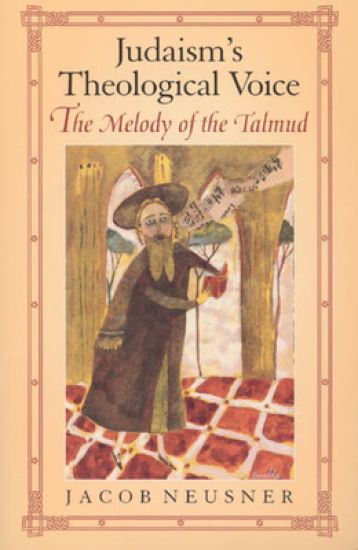
Taking the everyday life of contemporary Judaism as his beginning in this text, Neusner asks when in the life of the living faith of the Torah does Israel, the holy community, meet God? Where does the meeting take place? What is the medium of the encounter? Neusner sets forth the character and the form of the Torah as sung theology. Israel, the holy community, meets God in the synagogue, while at prayer, and in the yeshiva, when studying the Torah - at the moment in each setting when the Torah is received. In both circumstances people do not read but sing out its words. With the written part of the Torah sung in the synagogue, and the oral part declaimed in centres of sacred learning, music provides the medium for Judaism's theological voice. Neusner identifies a reciprocal exchange between the holy community Israel and God: Israel sings to God when the Torah is studied, and God sings to Israel when the Torah is declaimed. Through the metaphor of music, Neusner offers an account of how he believes those faithful to the Torah meet God in the Torah, and how they should listen to the melody of God's self-revelation.
Judaism's Theological Voice

Judaism's Theological Voice

Jacob Neusner

University of Chicago Press
1995
nidottu
Taking the everyday life of contemporary Judaism as his beginning in this text, Neusner asks when in the life of the living faith of the Torah does Israel, the holy community, meet God? Where does the meeting take place? What is the medium of the encounter? Neusner sets forth the character and the form of the Torah as sung theology. Israel, the holy community, meets God in the synagogue, while at prayer, and in the yeshiva, when studying the Torah - at the moment in each setting when the Torah is received. In both circumstances people do not read but sing out its words. With the written part of the Torah sung in the synagogue, and the oral part declaimed in centres of sacred learning, music provides the medium for Judaism's theological voice. Neusner identifies a reciprocal exchange between the holy community Israel and God: Israel sings to God when the Torah is studied, and God sings to Israel when the Torah is declaimed. Through the metaphor of music, Neusner offers an account of how he believes those faithful to the Torah meet God in the Torah, and how they should listen to the melody of God's self-revelation.
The Classics of Judaism

The Classics of Judaism

Jacob Neusner

Westminster/John Knox Press,U.S.
1995
nidottu
In order to understand the faith of Judaism, according to Jacob Neusner, one must look at the very foundation of that faith: the Torah. To believers, this act of studying the Torah provides a direct and immediate link to the living God and forms the very basis of a faithful Jewish life. In this book, Jacob Neusner introduces the reader to selections from all the documents of the Torah, in addition to Scripture, that define the canon of Judaism in its formative age. The Classics of Judaism is, however, more than a collection of writings. It is also a primer for learning how to approach and read any book of Judaism.
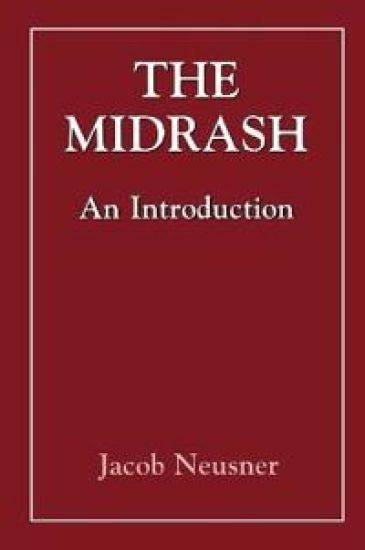
The Midrash

The Midrash

Jacob Neusner

Jason Aronson Inc. Publishers
1994
nidottu

Halvin toimitettuna 62,40 €

The Midrash: An Introduction sets forth the way in which Judaism reads the Hebrew Bible. In this masterful presentation, the reader is introduced to the classics of Jewish Bible interpretation, with special attention to the way in which the ribbis of Talmudic times read the Pentateuch, the Book of Ruth, and Song of Songs. The seven Midrash compilations are introduced with a lucid account of their main points, accompanied by selections that give the reader a direct encounter, in English, with the Bible as Judaism understands it. The word midrash, based on the Hebrew root DaRaSH (“search”), means “interpretation” or “exegesis.” Midrash also more formally refers to the compilations of such interpretations of Scripture. As Dr. Jacob Neusner explains, these compilations “reached closure and conclusion in the formative stage of Judaism, that is, the first seven centuries of the Common Era, the time in which the Mishnah (ca. 200), Talmud of the Land of Israel (ca. 400), and Talmud of Babylonia (ca. 600) were written.” Midrash is not so much about Scripture as it is a subordinate part of Scripture: “They did not write about Scripture,” Dr. Neusner says. “They wrote with Scripture … much as painters paint with a palette of colors.” The Midrash: An Introduction is the second volume in Dr. Jacob Neusner’s series of introductory volumes on classical rabbinic literature. As with the first volume – The Mishnah: An Introduction – this book offers the layperson a concise description of the religious literature and, drawing on Dr. Neusner’s own translations of the texts, walks readers through the selections, providing them with firsthand experience with the document itself. As Dr. Neusner says in his preface to The Midrash: An Introduction, “In these pages I mean to make it possible for readers to know one such compilation from the other and so to begin studying their own.”