Kirjojen hintavertailu – 12 859 819 kirjaa ja 27 kauppaa

Kirjailija

Jacob Neusner

Kirjat ja teokset yhdessä paikassa: 291 kirjaa, julkaisuja vuosilta 1970–2023, suosituimpiin kuuluu The Mishnah. Vertaile teosten hintoja ja tarkista saatavuus suomalaisista kirjakaupoista.

291 kirjaa

Kirjojen julkaisuvuodet: 1970–2023.

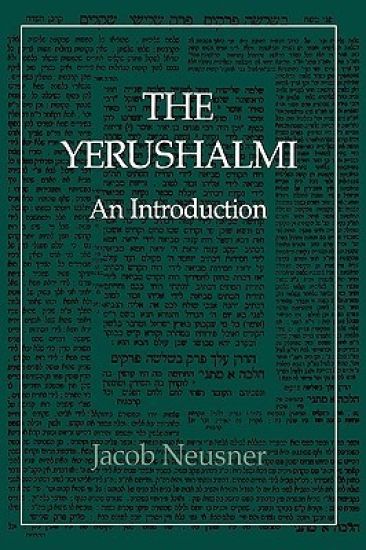
The Yerushalmi--The Talmud of the Land of Israel

The Yerushalmi--The Talmud of the Land of Israel

Jacob Neusner

Jason Aronson Inc. Publishers
1994
sidottu
The Yerushalmi, also known as the Jerusalem Talmud or the Talmud of the Land of Israel, is the lesser known and leser studied of the two Talmuds of Jewish tradition. The "talmud" that is generally studied, the one that has had the most profound influence on Jewish life and culture, is actually the Bavli, or Babylonian Talmud. These two Talmuds, developed in different parts of the Jewish world nearly two millennia ago, differ in many ways, despite the fact that they are both structured as Jewish oral law as set forth by Rabbi Judah the Prince. The Yerushalmi, famous for its incomprehensibility, consists of hundreds of pages of what Dr. Jacob Neusner calls "barely intelligible writing." In The Yerushalmi--The Talmud of the Land of Israel: An Introduction, Dr. Neusner, regarded by some as one of the foremost Jewish scholars today, offers the first clear and careful book-length study of this important document, and he provides the modern reader with a rich understanding of its history, its content, and its significance. As Dr. Neusner explains, "The Yerushalmi has suffered an odious but deserved reputation for the difficulty in making sense of its discourse. That reputation is only partly true; there are many passages that are scarcely intelligible. But there are a great many more that are entirely or mainly accessible." In this groundbreaking introduction to the Yerushalmi, Dr. Neusner looks at the Talmud of the Land of Israel as literature and then deals with its three most important topics: the sages, Torah, and history. In his engaging preface, Dr. Neusner invites his readers to think about the excitement generated by the discovery of the Dead Sea Scrolls in 1947. He then compares that significant discovery to the kind of reaction that would be inspired if a document like the Yerushalmi were found in the same kind of hillside cave: Consider in your mind's eye the sensation such a discovery--the sudden, unanticipated discovery of the Yerushalmi--would cause, the scholarly lives and energies that would flow to the find and its explication... To call the contents of that hillside cave a revolution, to compare them to the finds at Qumran, at the Dead Sea, or at Nag Hammadi, or to any of the other great contemporary discoveries from ancient times, would hardly be deemed an exaggeration. The Yerushalmi is just such a library. The Yerushalmi--The Talmud of the Land of Israel: An Introduction is the third in Dr. Neusner's series of introductory volumes on classical rabbinic literature.

Classical Judaism

Classical Judaism

Jacob Neusner

Peter Lang GmbH
1993
sidottu
This three-part anthology presents Classical Judaism in accord with its native categories, Torah, learning, and virtue. These correspond to the categories that a religious system will define for itself: world view, way of life, and theory of the social order that maintains the view and realizes it in its shared existence. By presenting substantial samples of the writings of that Judaism, the three volumes afford direct access to the way in which, in its own words, that Judaism makes its statement. Readers are introduced through extensive selections to the character of Judaism through the kinds of writing that serve as its medium - Midrash, Mishnah, Talmud, stories about sages. The first part of the anthology speaks of the Torah, meaning, the written Torah and how it is read in Scripture. The second addresses the Mishnah, that is, the first document of the oral Torah, and further introduces the Talmuds and explains how these are to be read. Both of these volumes begin with essays on hermeneutics. The third volume sets forth the way in which the sage is represented as a medium through which the Torah of Sinai is set forth.
Classical Judaism

Classical Judaism

Jacob Neusner

Peter Lang GmbH
1993
sidottu
This three-part anthology presents Classical Judaism in accord with its native categories, Torah, learning, and virtue. These correspond to the categories that a religious system will define for itself: world view, way of life, and theory of the social order that maintains the view and realizes it in its shared existence. By presenting substantial samples of the writings of that Judaism, the three volumes afford direct access to the way in which, in its own words, that Judaism makes its statement. Readers are introduced through extensive selections to the character of Judaism through the kinds of writing that serve as its medium - Midrash, Mishnah, Talmud, stories about sages. The first part of the anthology speaks of the Torah, meaning, the written Torah and how it is read in Scripture. The second addresses the Mishnah, that is, the first document of the oral Torah, and further introduces the Talmuds and explains how these are to be read. Both of these volumes begin with essays on hermeneutics. The third volume sets forth the way in which the sage is represented as a medium through which the Torah of Sinai is set forth.
Judaism and Story

Judaism and Story

Jacob Neusner

University of Chicago Press
1992
sidottu
In this close analysis of The Fathers According to Rabbi Nathan, a sixth-century commentary on the Mishnah-tractate The Fathers (Avot), Jacob Neusner considers the way in which the story, as a distinctive type of narrative, entered the canonical writings of Judaism. The final installment in Neusner's cycle of analyses of the major texts of the Judaic canon, Judaism and Story shows that stories about sages exist in far greater proportion in The Fathers According to Rabbi Nathan than in any of the other principal writings in the canon of Judaism of late antiquity. Neusner's detailed comparison of The Fathers and The Fathers According to Rabbi Nathan demonstrates the transmission and elaboration of these stories and shows how these processes incorporated the newer view of the sage as a supernatural figure and of the eschatological character of Judaic teleology. These distinctions, as Neusner describes them, mark a shift in Jewish orientation to world history. Judaism and Story documents a chapter of rabbinic tradition that explored the possibility of historical orientation by means of stories. As Neusner demonstrates, this experiment with narrative went beyond the borders of rabbinic preoccupation with rhetorical argumentation focused on the explication of the Torah. The sage story moved in the direction of biography, but without allowing biography to emerge. This development, in Neusner's account, parallels the movement from epistle to Gospel in early Christianity and thus has broad implications for the history of religions.
A Short History of Judaism

A Short History of Judaism

Jacob Neusner

Augsburg Fortress
1992
pokkari
One of the world's experts on classical Jewish history and literature offers an authoritative interpretation of the three major periods of Jewish history from the time of the Bible up to the present. What emerges is a captivating account of the life-forming nature of a dynamic religion in vastly differing historical contexts. Glossary, maps, illustrations, photographs.
An Introduction to Judaism

An Introduction to Judaism

Jacob Neusner

Westminster/John Knox Press,U.S.
1992
nidottu
Judaism is an ancient religion, practiced through most of recorded history and having profound influence on both Christianity and Islam. It is a modern religion, too, still transforming the lives of many people. In this book, Jacob Neusner brings together these two aspects of the study of Judaism. He describes how Judaism is practiced in a particular time and place--America today--and surveys how Judaism took shape as people responded to political and religious crises. Neusner provides a wealth of primary texts in addition to his own analysis.
Rabbinic Political Theory

Rabbinic Political Theory

Jacob Neusner

University of Chicago Press
1991
nidottu
In The Economics of the Mishnah Jacob Neusner showed how economics functioned as an active and generative ingredient in the system of the Mishnah. With this new study, Rabbinic Political Theory, he moves from the economics to the politics of the Mishnah, placing that politics in the broader context of ancient political theory. Neusner begins his study with a modification of Weber's categories for a theory of politics: myth, institutions, administration, passion, responsibility, and proportion. Detailing the Mishnah's conception of politics, Neusner considers what he calls the stable and static structure and system through comparison with Aristotle. Although Aristotle's Politics and the Mishnah share a common economic theory based on the fundamental unit of the householder, they diverge in their conceptions of political structure and order. Aristotle embeds economics within political economy, while, Neusner argues, the Mishnah presents the anomaly of an economics separated from politics. Using modern political terms, this study explicates the complicated politics developed by the philosopher-theologians of the Mishnah. It is a first-rate contribution to our understanding of the intersection of politics, political philosophy, and the Mishnaic system.
The Literature of Formative Judaism

The Literature of Formative Judaism

Jacob Neusner

Garland Publishing Inc
1991
sidottu
First published in 1991. This is Volume XI, Part II of a set of twenty volumes of essays and articles on the religion, history and literature on the origins of Judaism. This text looks at to the canon, or holy literature, of Judaism. That literature covers what is called “the Oral Torah.” To understand the concept of the Oral Torah, we have to return to the generative myth of the Judaism that has predominated. For that Judaism appeals to a theory of revelation in two media of formulation and transmission, written and oral, in books and in memory. The written Torah is the Pentateuch and encompasses the whole of the Hebrew Scriptures of ancient Israel (the “Old Testament”). The Oral Torah is ultimately contained in and written down as the Mishnah, expanded and amplified by Tosefta, and the two Talmuds, on the one side, and the Midrash-compilations that serve to explain the written Torah, on the other.
Studying Classical Judaism

Studying Classical Judaism

Jacob Neusner

Westminster/John Knox Press,U.S.
1991
nidottu
What do we know about the history, literature, and religion of Judaism in its formative age? How do we know it, and why does it matter? In Studying Classical Judaism, renowned scholar and author Jacob Neusner addresses these and other important questions. Applying many of the same methods Christian scholars use to study Christianity, Neusner outlines what we now know about ancient Judaism. He points out the core-belief of normative Judaism and reveals the methodological underpinnings of the most cogent and up-to-date interpretations of the texts that determined classical Judaism.
The Mishnah

The Mishnah

Jacob Neusner

Yale University Press
1991
pokkari

Halvin toimitettuna 94,30 €

The eminent Judaica scholar Jacob Neusner provides here the first form-analytical translation of the Mishnah. This path-breaking edition provides as close to a literal translation as possible, following the syntax of Mishnaic Hebrew in its highly formalized and syntactically patterned language. Demonstrating that the Mishnah is a work of careful and formal poetry and prose, Neusner not only analyzes the repeated construction but also divides the thoughts on the printed page so that the patterned language and the poetry comprised in those patterns emerge visually.“With meticulous methodology and with rare stylistic beauty of expression, Neusner. . . has produced an incomparable translation of the Mishnah, both new and innovative, which reflects the genius of the original Hebrew idiom. Neusner penetrates the Tannaitic mind, capturing its spirit, its subtle nuances, and its poetic cadences. . . A most impressive volume which transcends all previous versions of the Mishnah.”—Choice“The overall effect is a linguistic purity and simplicity which strives to capture not only the substance, but the spirit and style of the Mishnah’s universe. . . . An artful and impressive addition. . . . It deserves not only admiration but serious attention as well.”—Charles Raffel, Judaica Book News“The work is significant because for the first time it makes available to student and scholar alike a rendition of the Mishnah which attempts to convey not only the substance of that document, but the highly patterned and formalized language which Neusner believes is the key to comprehending its contents.”—Daniel H. Gordis, Hebrew Studies
Uniting the Dual Torah

Uniting the Dual Torah

Jacob Neusner

Cambridge University Press
1990
sidottu
In this book Jacob Neusner analyzes the text of Sifra, a commentary on the book of Leviticus, arguing that Sifra should be understood as successfully relating the Mishnah, the authoritative writing down of the Oral Torah, to Jewish Scripture, or the written Torah. Neusner shows how Sifra's authors adopted a mediating position between the written Torah and the Mishnah, reconstructing large tracts of the Mishnah according to the logic and program of the written Torah of Leviticus.
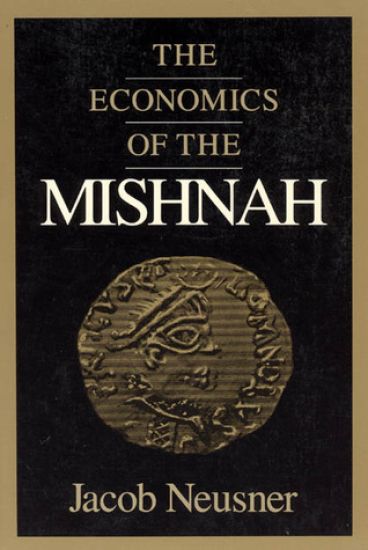
The Economics of the Mishnah

The Economics of the Mishnah

Jacob Neusner

University of Chicago Press
1990
sidottu
In this compelling study, Jacob Neusner argues that economics is an active and generative ingredient of the system of the Mishnah. The Mishnah directly addresses such economic concerns as the value of work, agronomics, currency, commerce and the marketplace, and correct management of labor and of the household. In all its breadth, the Mishnah poses the question of the critical place occupied by the economy in society under God's rule. The Economics of the Mishnah is the first book to examine the place of economic theory generally in the Judaic system of the Mishnah. Jacob Neusner begins by surveying previous work on economics and Judaism, the best known being Werner Sombart's The Jews and Modern Capitalism. The mistaken notion that Jews have had a common economic history has outlived the demise of Sombart's argument, and it is a notion that Neusner overturns before discussing the Mishnaic economics. Only in Aristotle, Neusner argues, do we find an equal to the Mishnah's accomplishment in engaging economics in the service of a larger systemic statement. Neusner shows that the framers of the Mishnah imagined a distributive economy functioning through the Temple and priesthood, while also legislating for the action of markets. The economics of the Mishnah, then, is to some extent a mixed economy. The dominant, distributive element in this mixed economy, Neusner contends, derives from the belief that the Temple and its designated castes on earth exercise God's claim to the ownership of the holy land. He concludes by considering the implications of the derivation of the Mishnah's economics from the interests of the undercapitalized and overextended farmer.
The Economics of the Mishnah

The Economics of the Mishnah

Jacob Neusner

University of Chicago Press
1990
nidottu
In this compelling study, Jacob Neusner argues that economics is an active and generative ingredient of the system of the Mishnah. The Mishnah directly addresses such economic concerns as the value of work, agronomics, currency, commerce and the marketplace, and correct management of labor and of the household. In all its breadth, the Mishnah poses the question of the critical place occupied by the economy in society under God's rule. The Economics of the Mishnah is the first book to examine the place of economic theory generally in the Judaic system of the Mishnah. Jacob Neusner begins by surveying previous work on economics and Judaism, the best known being Werner Sombart's The Jews and Modern Capitalism. The mistaken notion that Jews have had a common economic history has outlived the demise of Sombart's argument, and it is a notion that Neusner overturns before discussing the Mishnaic economics. Only in Aristotle, Neusner argues, do we find an equal to the Mishnah's accomplishment in engaging economics in the service of a larger systemic statement. Neusner shows that the framers of the Mishnah imagined a distributive economy functioning through the Temple and priesthood, while also legislating for the action of markets. The economics of the Mishnah, then, is to some extent a mixed economy. The dominant, distributive element in this mixed economy, Neusner contends, derives from the belief that the Temple and its designated castes on earth exercise God's claim to the ownership of the holy land. He concludes by considering the implications of the derivation of the Mishnah's economics from the interests of the undercapitalized and overextended farmer.