Kirjojen hintavertailu – 12 859 819 kirjaa ja 27 kauppaa

Kirjailija

Jacob Neusner

Kirjat ja teokset yhdessä paikassa: 291 kirjaa, julkaisuja vuosilta 1970–2023, suosituimpiin kuuluu The Mishnah. Vertaile teosten hintoja ja tarkista saatavuus suomalaisista kirjakaupoista.

291 kirjaa

Kirjojen julkaisuvuodet: 1970–2023.

Judaism and its Social Metaphors

Judaism and its Social Metaphors

Jacob Neusner

Cambridge University Press
1989
sidottu
The crisis in Palestine is a manifestation of Israel's historical significance to the Jewish people. Jacob Neusner examines the crucial role of the definition of Israel in the history of Judaic thought. He argues that Judaic sages have constructed various metaphoric images of Israel - as family, as chosen people, as a nation - in order to express changing theological concerns as the religion evolved. The history of the definition of Israel is revealed as the reflection of the history of Judaism itself. This is a bold and original interpretation of the way in which Jews, as well as other peoples, define themselves.
The Religious Study of Judaism

The Religious Study of Judaism

Jacob Neusner

University Press of America
1988
sidottu
In this volume, Dr. Neusner explores the history of religious ideas and writings, focusing first on the idea of history, and second, on the conception of a foundation document comprising the Pentateuch and the Mishnah. He then moves on to an interpretation of the implications, for the history of Judaism, of the distinctive and particular character of an important document, Sifra, a sustained address to the book of Leviticus by sages of the fourth or fifth century. ^BContents:: Part I: The Idea of History in Formative Judaism; Part II: "The Constitution" of the Judaism of the Dual Torah; Part III: Ethics or Ontology in Formative Judaism; Part IV: From Text to Matrix in the Case of Sifra; Part V: The University as Locus for Studying the Formative Age of Judaism.
The Mishnah

The Mishnah

Jacob Neusner

Jason Aronson Inc. Publishers
1988
sidottu
In his brilliant introduction on the Mishnah, Jacob Neusner asks: How do you read a book that does not identify its author, tell you where it comes from, or explain why it was written – a book without a preface? And how do you identify a book with neither a beginning nor end, lacking table of contents and title? The answer is you just begin and let the author of the book lead you by paying attention to the information that the author does give, to the signals that the writer sets out. As Neusner goes on to explain, the Mishnah portrays the world in a special way, in a kind of code that makes it a difficult work for the modern reader to understand. Without knowing how to decode the Mishnah, we may read its works without receiving its message. Neusner, one of the world’s foremost Mishnaic scholars, demonstrated that the Mishnah’s own internal logic and structure form a solid foundation on which to build an understanding of this vitally important Jewish work. Using examples of how the Mishnah’s language, logic, and discourse associate and categorize behaviors, events, and objects, Neusner opens the Mishnah to readers who would not otherwise be able to grasp its most fundamental concepts. Since the Mishnah forms the basis of both the Babylonian and the Palestinian Talmuds (which are, in Neusner’s elegant terms, “the core curriculum of Judaism as a living religion”), study of the Mishnah is essential to an understanding of Judaism. Drawing on his own new translation of the Mishnah and displaying the enthusiastic dedication that has sparked a whole new body of Mishnaic research, Neusner allows readers with no previous background to join Jews who have studied, analyzed, and delighted in the wisdom of Mishnah for centuries. In addition to giving us a thorough exploration of the Mishnah’s language, contents, organization, and inner logic, Neusner also provides us with a broad understanding of how it communicated its own world view – its vision of both the concrete an spiritual worlds. The Mishnah: An Introduction gives us a tour of this sacred Jewish text, shedding light on its many facets – from its view of life to its conception of God and His relation to our world.

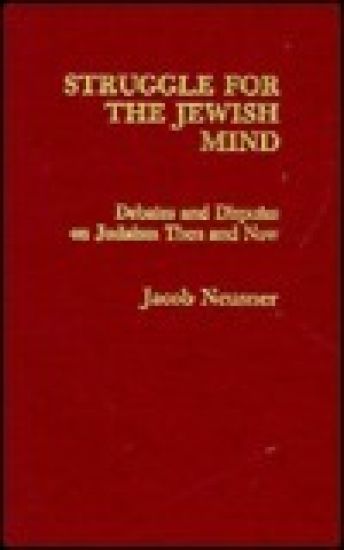
Struggle for the Jewish Mind

Struggle for the Jewish Mind

Jacob Neusner

University Press of America
1988
sidottu
Noted scholar Jacob Neusner records skirmishes in an ongoing battle within the field of Judaic Studies between ethnic and academic scholars. On the one side, Neusner argues, ethnic scholars assume the interest in and importance of the Jewish and Judaic data and regard incremental erudition, whether or not formed for a purpose, as self-evidently interesting. On the other side, academic scholars address issues of humanistic learning and treat the Jewish or Judaic data as exemplary of broader issues in the humanities and social sciences. Taken together, the skirmishes constitute a widening gap between these two academies on the essential question of how to conduct scholarship about the Jews and Judaism. By bringing together book reviews and essays of debate, Professor Neusner addresses the works of colleagues and critics and presents as a whole a corpus of criticism. Co-published with Studies in Judaism.
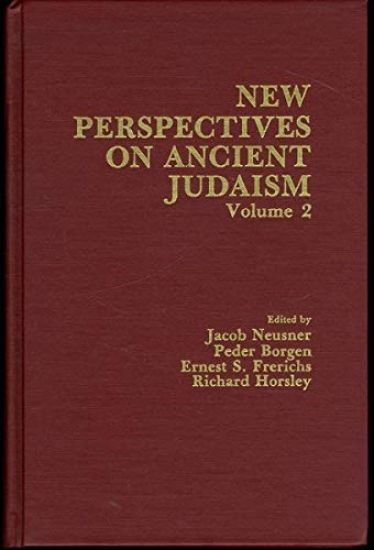
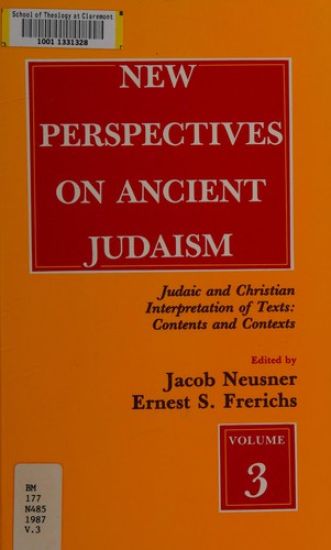
New Perspectives on Ancient Judaism

New Perspectives on Ancient Judaism

Jacob Neusner; Ernest S. Frerichs

University Press of America
1987
sidottu
This collection continues the study of ancient Judaism. Contents: Text as Interpretation: Paul and Ancient Readings of Paul; Translation and Exegetical Augmentation in the Targums to the Pentateuch; Topic, Rhetoric, Logic: Analysis of a Syllogistic Passage in the Yerushalmi; System or Tradition? The Bavli and Its Sources; and Literary Studies of Aggadic Narrative: A Bibliography. Co-published with Studies in Judaism.
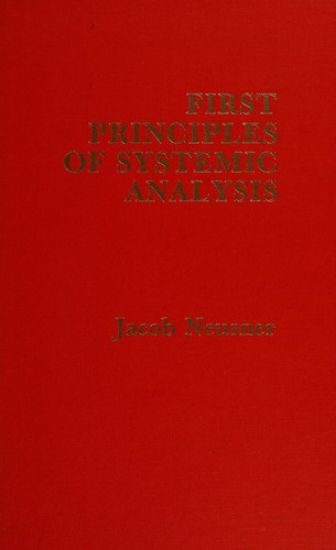
First Principles of Systemic Analysis:

First Principles of Systemic Analysis:

Jacob Neusner

University Press of America
1987
sidottu
Jacob Neusner, a leading scholar of Judaism, offers a provocative statement on methodology in this history of religion. Neusner offers initial generalizations, or 'first principles,' seen as the histories of four periods of Judaism. Co-published with Studies in Judaism. Co-published with Studies in Judaism.
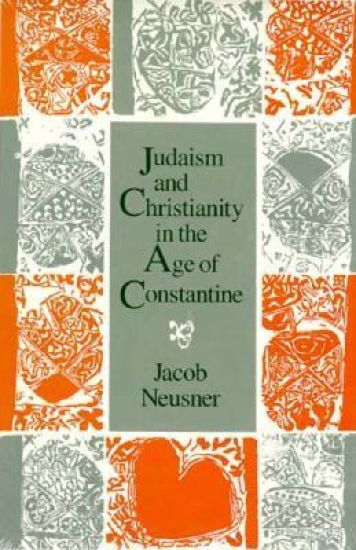
Judaism and Christianity in the Age of Constantine

Judaism and Christianity in the Age of Constantine

Jacob Neusner

University of Chicago Press
1987
sidottu
With the conversion of Constantine in 312, Christianity began a period of political and cultural dominance that it would enjoy until the twentieth century. Jacob Neusner contradicts the prevailing view that following Christianity's ascendancy, Judaism continued to evolve in isolation. He argues that because of the political need to defend its claims to religious authenticity, Judaism was forced to review itself in the context of a triumphant Christianity. The definition of issues long discussed in Judaism—the meaning of history, the coming of the Messiah, and the political identity of Israel—became of immediate and urgent concern to both parties. What emerged was a polemical dialogue between Christian and Jewish teachers that was unprecedented. In a close analysis of texts by the Christian theologians Eusebius, Aphrahat, and Chrysostom on one hand, and of the central Jewish works the Talmud of the Land of Israel, the Genesis Rabbah, and the Leviticus Rabbah on the other, Neusner finds that both religious groups turned to the same corpus of Hebrew scripture to examine the same fundamental issues. Eusebius and Genesis Rabbah both address the issue of history, Chrysostom and the Talmud the issue of the Messiah, and Aphrahat and Leviticus Rabbah the issue of Israel. As Neusner demonstrates, the conclusions drawn shaped the dialogue between the two religions for the rest of their shared history in the West.
New Perspectives on Ancient Judaism

New Perspectives on Ancient Judaism

Jacob Neusner; Ernest S. Frerichs

University Press of America
1987
nidottu
Continues the study of ancient Judaism by academic methods. This volume includes, by chapter descriptions: Galatians (1:1-5): Paul and Greco-Roman Rhetoric; Text as Interpretation: Paul and Ancient Readings of Paul; Translation and Exegetical Argumentation in the Targums to the Pentateuch; Topic, Rhetoric, Logic: Analysis of a Syllogistic Passage in the Yershalmi; System or Tradition? The Bavli and its Sources; and Literary Studies of Aggadic Narrative: A Bibliography. Co-published with Studies in Judaism.
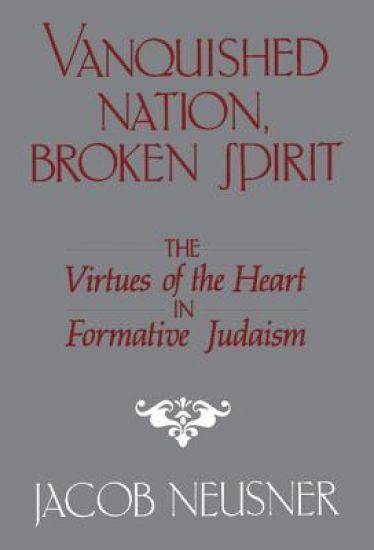
Vanquished Nation, Broken Spirit

Vanquished Nation, Broken Spirit

Jacob Neusner

Cambridge University Press
1987
sidottu
From the destruction of the Second Temple in 70 A. D. to the creation of the State of Israel in 1948, the Jews were a conquered nation. Yet Jewish sages and holy works preached a doctrine of both interior and exterior virtue that allowed the Jewish people to feel and believe in the dignity and nobility of their earthly condition. Neusner’s book explores the attitudes in Jewish canonical writings and asks how these virtues relate to the politics of the Jews as a vanquished people. Jacob Neusner, the author of over 166 books on Judaism and Jewish history, is a frequent lecturer both in America and throughout the world. He has been a Fulbright Fellow at the Hebrew University, and twice has been a Guggenheim Fellow.