Kirjojen hintavertailu – 12 859 818 kirjaa ja 27 kauppaa

Kirjailija

Jacques Derrida

Kirjat ja teokset yhdessä paikassa: 172 kirjaa, julkaisuja vuosilta 1982–2027, suosituimpiin kuuluu Given Time II. Vertaile teosten hintoja ja tarkista saatavuus suomalaisista kirjakaupoista.

172 kirjaa

Kirjojen julkaisuvuodet: 1982–2027.

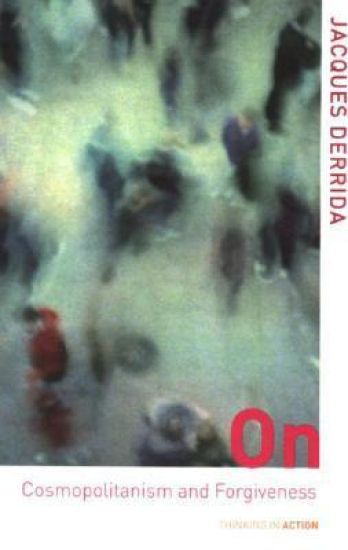
On Cosmopolitanism and Forgiveness

On Cosmopolitanism and Forgiveness

Jacques Derrida

Routledge
2001
sidottu
One of the world's most famous philosophers, Jacques Derrida, explores difficult questions in this important and engaging book. Is it still possible to uphold international hospitality and justice in the face of increasing nationalism and civil strife in so many countries? Drawing on examples of treatment of minority groups in Europe, he skilfully and accessibly probes the thinking that underlies much of the practice, and rhetoric, that informs cosmopolitanism. What have duties and rights to do with hospitality? Should hospitality be grounded on a private or public ethic, or even a religious one? This fascinating book will be illuminating reading for all.
Writing and Difference

Writing and Difference

Jacques Derrida

Routledge
2001
nidottu

Halvin toimitettuna 29,70 €

In the 1960s a radical concept emerged from the great French thinker Jacques Derrida. Read the book that changed the way we think; read Writing and Difference, the classic introduction.
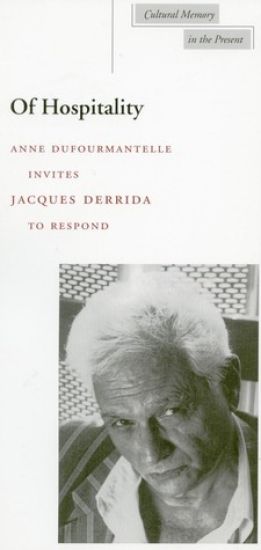
Of Hospitality

Of Hospitality

Jacques Derrida; Anne Dufourmantelle

Stanford University Press
2000
sidottu
These two lectures by Jacques Derrida, "Foreigner Question" and "Step of Hospitality/No Hospitality," derive from a series of seminars on "hospitality" conducted by Derrida in Paris, January 1996. His seminars, in France and in America, have become something of an institution over the years, the place where he presents the ongoing evolution of his thought in a remarkable combination of thoroughly mapped-out positions, sketches of new material, and exchanges with students and interlocutors. As has become a pattern in Derrida's recent work, the form of this presentation is a self-conscious enactment of its content. The book consists of two texts on facing pages. "Invitation" by Anne Dufourmantelle appears on the left (an invitation that of course originates in a response), clarifying and inflecting Derrida's "response" on the right. The interaction between them not only enacts the "hospitality" under discussion, but preserves something of the rhythms of teaching. The volume also characteristically combines careful readings of canonical texts and philosophical topics with attention to the most salient events in the contemporary world, using "hospitality" as a means of rethinking a range of political and ethical situations. "Hospitality" is viewed as a question of what arrives at the borders, in the initial surprise of contact with an other, a stranger, a foreigner. For example, Antigone is revisited in light of the question of impossible mourning; Oedipus at Colonus is read via concerns that also apply to teletechnology; the trial of Socrates is brought into conjunction with the televised funeral of François Mitterrand.
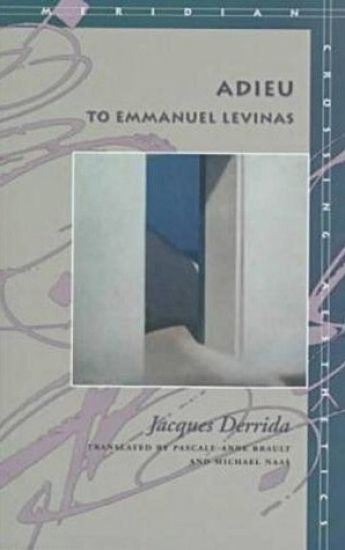
Adieu to Emmanuel Levinas

Adieu to Emmanuel Levinas

Jacques Derrida

Stanford University Press
1999
sidottu
This volume contains the speech given by Derrida at Emmanuel Levinas's funeral on December 27, 1995, and his contribution to a colloquium organized to mark the first anniversary of Levinas's death. For both thinkers, the word adieu names a fundamental characteristic of human being: the salutation or benediction prior to all constative language (in certain circumstances, one can say adieu at the moment of meeting) and that given at the moment of separation, sometimes forever, as at the moment of death, it is also the a-dieu, for God or to God before and in any relation to the other. In this book, Derrida extends his work on Levinas in previously unexplored directions via a radical rereading of Totality and Infinity and other texts, including the lesser-known talmudic readings. He argues that Levinas, especially in Totality and Infinity, bequeaths to us an "immense treatise of hospitality," a meditation on the welcome offered to the other. The conjunction of an ethics of pure prescription with the idea of an infinite and absolute hospitality confronts us with the most pressing political, juridical, and institutional concerns of our time. What, then, is an ethics and what is a politics of hospitality? And what, if it ever is, would be a hospitality surpassing any ethics and any politics we know? As always, Derrida raises these questions in the most explicit of terms, moving back and forth between philosophical argument and the political discussion of immigration laws, peace, the state of Israel, xenophobia—reminding us with every move that thinking is not a matter of neutralizing abstraction, but a gesture of hospitality for what happens and still may happen.
Den andres enspråkighet eller Den ursprungliga protesen
Det är utifrån det dubbla, till synes antinomiska påståendet man talar ju bara ett enda språk och man talar aldrig ett enda språk som Jacques Derrida i Den andres enspråkighet tar med oss på en resa till det fransk-maghrebinsk-judiska Algeriet och därifrån angriper frågor som fått förnyad aktualitet: myten, ja, fantasmen om modersmålet, språkpolitiken, skol- och kulturkolonialismen, översättningspoetiken, gästens och gästgivarens språk m.m. Den andres enspråkighet hör till de mest politiska böcker som Derrida hittills skrivit.
Religion

Religion

Jacques Derrida

Stanford University Press
1998
nidottu
What should we make of the return to the sacred evidenced by the new vitality of churches, sects, and religious beliefs in many parts of the world today? What are the boundaries between the essential traits of religion and those of ethics and justice? Is there a "truth" to religion? This remarkable volume includes reflections on such questions by three of the most important philosophers of our time-Jacques Derrida, Gianni Vattimo, and Hans-Georg Gadamer. Together with other distinguished thinkers, they address a wide range of questions about the meaning, status, and future prospects of religion. In his meditation on the "return of religion," entitled "Faith and Knowledge: The Two Sources of 'Religion' at the Limits of Mere Reason," Derrida addresses the ways in which this return is intrinsically linked to transformations of which the new media are both the carriers and the symptom. Derrida coins this process one of globalatinization. This neologism signals, among other things, the process of a certain universalization of the Roman word or concept of religion, which tends to become hegemonic, as well as a certain performativity discernible in the new media and in contemporary structures of testimony and confession. Examples of this include, Derrida reminds us, not only the phenomenon of televangelism and televisual stagings of the pope's journeys, and not only the portrayal and self-presentation of Islam, but also the fetishization and becoming virtually absolute of the televisual and the multimedial as such. Using Being and Time as a point of reference, Vattimo suggests that religious experience is both an individual experience and a manifestation of a historical rhythm within which religion regularly appears and disappears. A commentary by Gadamer summarizes and enriches the contributions by Derrida and Vattimo. Four essays by Maurizio Ferraris, Eugenio Trias, Vincenzo Vitiello, and Aldo Giorgio Gargani complete the volume by examining other facets of the "religious."
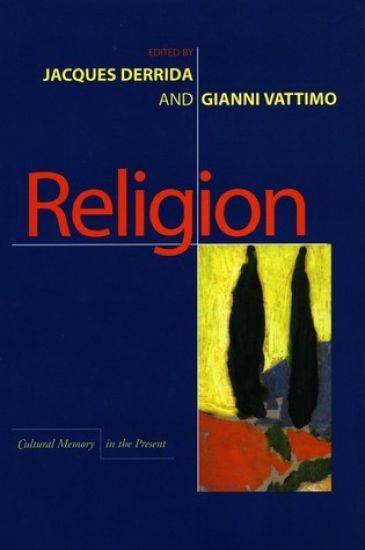
Religion

Religion

Jacques Derrida; Gianni Vattimo

Stanford University Press
1998
sidottu
What should we make of the return to the sacred evidenced by the new vitality of churches, sects, and religious beliefs in many parts of the world today? What are the boundaries between the essential traits of religion and those of ethics and justice? Is there a "truth" to religion? This remarkable volume includes reflections on such questions by three of the most important philosophers of our time—Jacques Derrida, Gianni Vattimo, and Hans-Georg Gadamer. Together with other distinguished thinkers, they address a wide range of questions about the meaning, status, and future prospects of religion. In his meditation on the "return of religion," entitled "Faith and Knowledge: The Two Sources of 'Religion' at the Limits of Mere Reason," Derrida addresses the ways in which this return is intrinsically linked to transformations of which the new media are both the carriers and the symptom. Derrida coins this process one of globalatinization. This neologism signals, among other things, the process of a certain universalization of the Roman word or concept of religion, which tends to become hegemonic, as well as a certain performativity discernible in the new media and in contemporary structures of testimony and confession. Examples of this include, Derrida reminds us, not only the phenomenon of televangelism and televisual stagings of the pope's journeys, and not only the portrayal and self-presentation of Islam, but also the fetishization and becoming virtually absolute of the televisual and the multimedial as such. Using Being and Time as a point of reference, Vattimo suggests that religious experience is both an individual experience and a manifestation of a historical rhythm within which religion regularly appears and disappears. A commentary by Gadamer summarizes and enriches the contributions by Derrida and Vattimo. Four essays by Maurizio Ferraris, Eugenio Trias, Vincenzo Vitiello, and Aldo Giorgio Gargani complete the volume by examining other facets of the "religious."
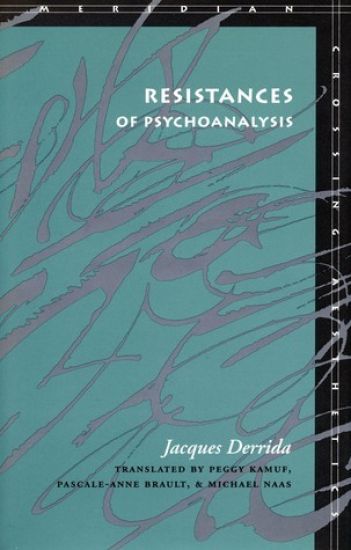
Resistances of Psychoanalysis

Resistances of Psychoanalysis

Jacques Derrida

Stanford University Press
1998
sidottu
In the three essays that make up this stimulating and often startling book, Jacques Derrida argues against the notion that the basic ideas of psychoanalysis have been thoroughly worked through, argued, and assimilated. The continuing interest in psychoanalysis is here examined in the various "resistances" to analysis—conceived not only as a phenomenon theorized at the heart of psychoanalysis, but as psychoanalysis's resistance to itself, an insusceptibility to analysis that has to do with the structure of analysis itself. Derrida not only shows how the interest of psychoanalysis and psychoanalytic writing can be renewed today, but these essays afford him the opportunity to revisit and reassess a subject he first confronted (in an essay on Freud) in 1966. They also serve to clarify Derrida's thinking about the subjects of the essays—Freud, Lacan, and Foucault—a thinking that, especially with regard to the last two, has been greatly distorted and misunderstood. The first essay, on Freud, is a tour de force of close reading of Freud's texts as philosophical reflection. By means of the fine distinctions Derrida makes in this analytical reading, particularly of The Interpretation of Dreams, he opens up the realm of analysis into new and unpredictable forms—such as meeting with an interdiction (when taking an analysis further is "forbidden" by a structural limit). Following the essay that might be dubbed Derrida's "return to Freud," the next is devoted to Lacan, the figure for whom that phrase was something of a slogan. In this essay and the next, on Foucault, Derrida reencounters two thinkers to whom he had earlier devoted important essays, which precipitated stormy discussions and numerous divisions within the intellectual milieus influenced by their writings. In this essay, which skillfully integrates the concept of resistance into larger questions, Derrida asks in effect: What is the origin and nature of the text that constitutes Lacanian psychoanalysis, considering its existence as an archive, as teachings, as seminars, transcripts, quotations, etc.? Derrida's third essay may be called not simply a criticism but an appreciation of Foucault's work: an appreciation not only in the psychological and rhetorical sense, but also in the sense that it elevates Foucault's thought by giving back to it ranges and nuances lost through its reduction by his readers, his own texts, and its formulaic packaging.

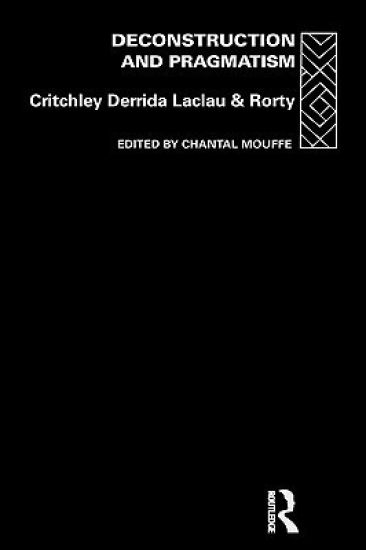
Deconstruction and Pragmatism

Deconstruction and Pragmatism

Simon Critchley; Jacques Derrida; Ernesto Laclau; Richard Rorty

Routledge
1996
sidottu
Deconstruction and pragmatism constitute two of the major intellectual influences on the contemporary theoretical scene; influences personified in the work of Jacques Derrida and Richard Rorty. Both Rortian pragmatism, which draws the consequences of post-war developments in Anglo-American philosophy, and Derridian deconstruction, which extends and troubles the phonomenological and Heideggerian influence on the Continental tradition, have hitherto generally been viewed as mutually exclusive philosophical language games. The purpose of this volume is to bring deconstruction and pragmatism into critical confrontation with one another through staging a debate between Derrida and Rorty, itself based on discussions that took place at the College International de Philosophie in Paris in 1993. The ground for this debate is layed out in introductory papers by Simon Critchley and Ernesto Laclau, and the remainder of the volume records Derrida's and Rorty's responses to each other's work. Chantal Mouffe gives an overview of the stakes of this debate in a helpful preface.
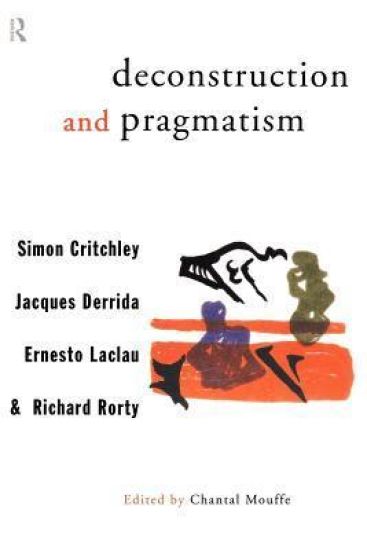
Deconstruction and Pragmatism

Deconstruction and Pragmatism

Simon Critchley; Jacques Derrida; Ernesto Laclau; Richard Rorty

Routledge
1996
nidottu
Deconstruction and pragmatism constitute two of the major intellectual influences on the contemporary theoretical scene; influences personified in the work of Jacques Derrida and Richard Rorty. Both Rortian pragmatism, which draws the consequences of post-war developments in Anglo-American philosophy, and Derridian deconstruction, which extends and troubles the phonomenological and Heideggerian influence on the Continental tradition, have hitherto generally been viewed as mutually exclusive philosophical language games. The purpose of this volume is to bring deconstruction and pragmatism into critical confrontation with one another through staging a debate between Derrida and Rorty, itself based on discussions that took place at the College International de Philosophie in Paris in 1993. The ground for this debate is layed out in introductory papers by Simon Critchley and Ernesto Laclau, and the remainder of the volume records Derrida's and Rorty's responses to each other's work. Chantal Mouffe gives an overview of the stakes of this debate in a helpful preface.
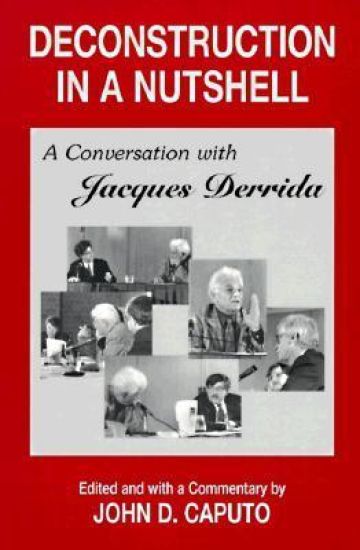
Deconstruction in a Nutshell

Deconstruction in a Nutshell

Jacques Derrida

Fordham University Press
1996
pokkari
Responding to questions put to him at a Roundtable held at Villanova University in 1994, Jacques Derrida leads the reader through an illuminating discussion of the central themes of deconstruction. Speaking in English and extemporaneously, Derrida takes up with unusual clarity and great eloquence such topics as the task of philosophy, the Greeks, justice, responsibility, the gift, the community, the distinction between the messianic and the concrete messianisms, and his interpretation of James Joyce. Derrida convincingly refutes the charges of relativism and nihilism that are often leveled at deconstruction by its critics and sets forth the profoundly affirmative and ethico-political thrust of his work. The "Roundtable" is marked by the unusual clarity of Derrida's presentation and by the deep respect for the great works of the philosophical and literary tradition with which he characterizes his philosophical work. The Roundtable is annotated by John D. Caputo, the David R. Cook Professor of Philosophy at Villanova University, who has supplied cross references to Derrida's writings where the reader may find further discussion on these topics. Professor Caputo has also supplied a commentary which elaborates the principal issues raised in the Roundtable. In all, this volume represents one of the most lucid, compact and reliable introductions to Derrida and deconstruction available in any language. An ideal volume for students approaching Derrida for the first time, Deconstruction in a Nutshell will prove instructive and illuminating as well for those already familiar with Derrida's work.
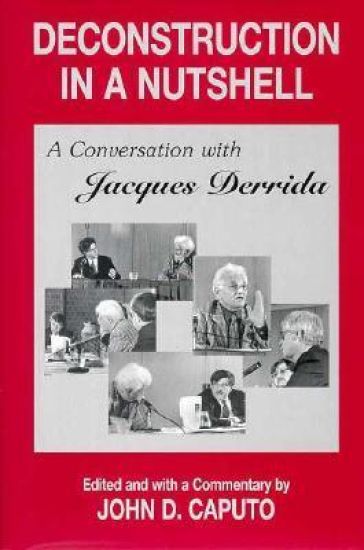
Deconstruction in a Nutshell

Deconstruction in a Nutshell

Jacques Derrida

Fordham University Press
1996
sidottu
Responding to questions put to him at a Roundtable held at Villanova University in 1994, Jacques Derrida leads the reader through an illuminating discussion of the central themes of deconstruction. Speaking in English and extemporaneously, Derrida takes up with unusual clarity and great eloquence such topics as the task of philosophy, the Greeks, justice, responsibility, the gift, the community, the distinction between the messianic and the concrete messianisms, and his interpretation of James Joyce. Derrida convincingly refutes the charges of relativism and nihilism that are often leveled at deconstruction by its critics and sets forth the profoundly affirmative and ethico-political thrust of his work. The "Roundtable" is marked by the unusual clarity of Derrida's presentation and by the deep respect for the great works of the philosophical and literary tradition with which he characterizes his philosophical work. The Roundtable is annotated by John D. Caputo, the David R. Cook Professor of Philosophy at Villanova University, who has supplied cross references to Derrida's writings where the reader may find further discussion on these topics. Professor Caputo has also supplied a commentary which elaborates the principal issues raised in the Roundtable. In all, this volume represents one of the most lucid, compact and reliable introductions to Derrida and deconstruction available in any language. An ideal volume for students approaching Derrida for the first time, Deconstruction in a Nutshell will prove instructive and illuminating as well for those already familiar with Derrida's work.
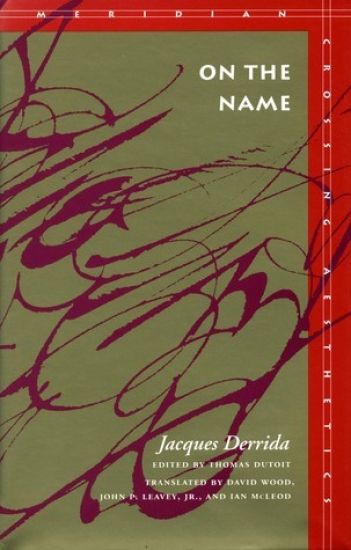
On the Name

On the Name

Jacques Derrida

Stanford University Press
1995
sidottu
"The name: What does one call thus? What does one understand under the name of name? And what occurs when one gies a name? What does one give then? One does not offer a thing, one delivers nothing, and still something comes to be, which comes down to giving that which one does not have, as Plotinus said of the Good. What happens, above all, when it is necessary to sur-name, renaming there where, precisely, the name comes to be found lacking? What makes the proper name into a sort of sur-name, pseudonym, or cryptonym at once singular and singularly untranslatable?" Jacques Derrida thus poses a central problem in contemporary language, ethics, and politics, which he addresses in a liked series of the three essays. Passions: "An Oblique Offering" is a reflection on the question of the response, on the duty and obligation to respond, and on the possibility of not responding—which is to say, on the ethics and politics of responsibility. Sauf le nom (Post Scriptum) considers the problematics of naming and alterity, or transcendence, raised inevitably by a rigorous negative theology. Much of the text is organized around close readings of the poetry of Angelus Silesius. The final essay, Khora, explores the problem of space or spacing, of the word khora in Plato's Tmaeus. Even as it places and makes possible nothing less than the whole world, khora opens and dislocates, displaces, all the categories that govern the production of that world, from naming to gender. In addition to readers in philosophy and literature, Khora will be of special interest to those in the burgeoning field of "space studies"(architecture, urbanism, design).
Points...

Points...

Jacques Derrida

Stanford University Press
1995
sidottu
This volume collects twenty-three interviews given over the course of the last two decades by Jacques Derrida. It illustrates the extraordinary breadth of his concerns, touching upon such subjects as the teaching of philosophy, sexual difference and feminine identity, the media, AIDS, language and translation, nationalism, politics, and Derrida's early life and the history of his writings. Often, as in the interview on Heidegger, or that on drugs, or on the nature of poetry, these interviews offer not only an introduction to other discussions, but something available nowhere else in his work. When did feminist discourse become an indispensable consideration for deconstruction? What was the impact on Derrida's work of his being an Algerian Jew growing up during World War II? Is there an ineradicable gap between language-based attitude such as those found in a deconstruction and subjectivity-oriented critical models such as those developed by Foucault and Lacan? Such questions as these are answered with great thoughtfulness and intensity. Derrida's oral style is patient, generous, and helpful. His tone varies with the questioners and the subject matter—militant, playful, strategic, impassioned, analytic: difference in modulation can sometimes be heard within the same dialogue. The informality of the interview process frequently leads to the most succinct and lucid explications to be found of many of the most important and influential aspects of Derrida's thought. Sixteen of the interviews appear here for the first time in English, including an interview, conducted especially for this volume, concerning the recent exchange of letters in the New York Review of Books.