
Kirjailija
James Hogg
Kirjat ja teokset yhdessä paikassa: 268 kirjaa, julkaisuja vuosilta 1807–2026, suosituimpiin kuuluu The Private Memoirs and Confessions of a Justified Sinner. Vertaile teosten hintoja ja tarkista saatavuus suomalaisista kirjakaupoista.
268 kirjaa
Kirjojen julkaisuvuodet: 1807–2026.

Tales And Sketches, Including Winter Evening Tales; The Bridal Of Polmood, Etc.
James Hogg
Kessinger Pub
2007
pokkari
Familiar Anecdotes Of Sir Walter Scott, With A Sketch Of The Life Of The Shepherd
James Hogg; S. Dewitt Bloodgood
Kessinger Pub
2007
pokkari

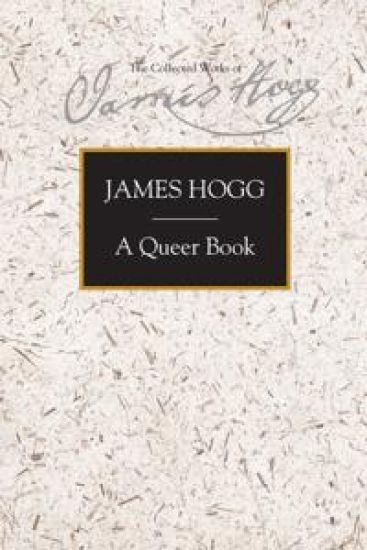
'It will be a grand book for thae Englishers for they winna understand a word of it' Hogg's boast to William Blackwood Witty, humorous and comical as the title implies, the eccentric nature of many of the poems collected here nevertheless belies the often serious and moral issues contained within. Newly available in paperback, and including many of Hogg's better known longer pieces, the present volume is based on the first edition of A Queer Book to be published since 1832 - though the similarity between the two editions ends with the running order. While the text for the original edition was substantially reworked by the publisher to smooth out Hogg's use of Scots, this volume brings together manuscripts from all over the world to provide material as near to his final copy as possible. The result is a vibrant collection including many poems which have never been studied critically before. A thorough introduction to the best of Hogg's poetry.
The Domestic Manners And Private Life Of Sir Walter Scott
James Hogg
KESSINGER PUBLISHING, LLC
2007
sidottu
Originally published in 1810, The Forest Minstrel represents the first full collection of songs by Hogg. The items contained include some of his first compositions as a shepherd in Ettrick, while others originate from early contact with the literary culture of Edinburgh. This edition for the first time supplies musical settings for the majority of items, whereas in 1810 Hogg only nominated tunes by title. These settings are based on extensive research in relevant pre-1810 Scottish music books. As a result, the modern reader is given access to the tunes which originally formed an integral part of the songs. An Introduction describes Hogg's development as a song-writer and the musical context in 1810; while full annotation is provided on both the texts of the songs and the related tunes. Includes a CD The volume also includes a CD containing audio recordings of the seventy-two tunes which are provided by means of the notations.
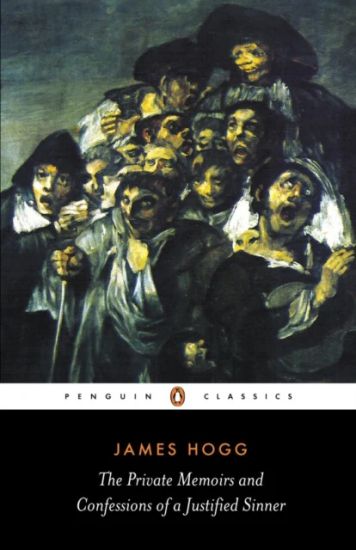
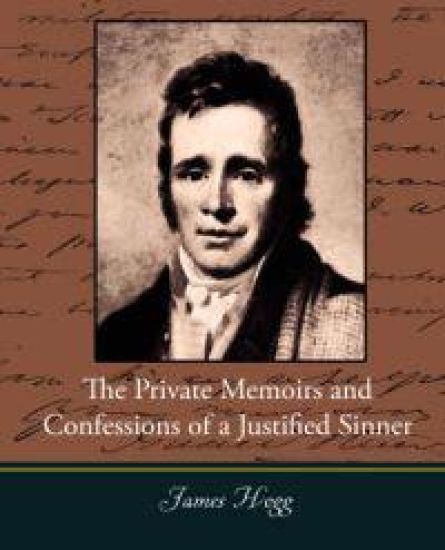
The Private Memoirs and Confessions of a Justified Sinner
James Hogg
Penguin Classics
2006
isokokoinen pokkari
Halvin toimitettuna 16,20 €
James Hogg's The Private Memoirs and Confessions of a Justified Sinner is a Scottish classic, a quintessentially Gothic tale of psychological horror, and a relentless attack on Calvinist dogma. The Penguin Classics edition is edited with an introduction and notes by Karl Miller. Robert Wringham's family is composed of a dissolute father and brother, a pious mother, and a rival father in the person of a fanatical Calvinist minister. He comes to believe that he is one of the elect, predestined to be saved, while others are damned. Sure of his freedom from the dictates of morality, he embarks on a series of crimes in the company of a new friend Gil-Martin, a man of many likenesses who can be mistaken for Robert, and who explains that they are as one in the holy work of purifying the world. But who is Gil-Martin? And what does he truly desire? The Gothic double or doppelganger is nowhere more powerfully imagined than in Confessions of a Justified Sinner, once called 'the greatest novel of Scotland'. This new edition has an introduction by Karl Miller, which discusses the presence of the novel in the life and times of James Hogg. It also contains two of Hogg's most interesting stories, 'Marion's Jock' and 'John Gray o' Middleholm'. James Hogg (1770-1835) born in Ettrick, in the Scottish Borders. A shepherd for many years, Hogg was writing poems by the 1790s, aiding Walter Scott with material for his collection of ballads, The Minstrelsy of the Scottish Border. In 1810 he moved to Edinburgh, where he published several volumes of verse, and worked on the Spy and Blackwood's Edinburgh Magazine. Confessions of a Justified Sinner was published anonymously in 1824, and is now generally seen as his masterpiece. If you enjoyed Confessions of a Justified Sinner, you might like Matthew Lewis's The Monk, also available in Penguin Classics.'A Scottish classic, a world classic'Ian Rankin'A sinister, funny, moving tale of demonic possession, murder and religious fanaticism'Sunday Telegraph
The Collected Letters of James Hogg, Volume 2, 1820-1831
James Hogg
Edinburgh University Press
2006
sidottu
The letters in the second volume of Gillian Hughes's pioneering edition vividly reflect Hogg's varied social experience and shed new light on his own writings and those of his contemporaries. His correspondents included major writers such as Scott and Byron, politicians such as Sir Robert Peel, and publishers such as John Murray and William Blackwood. But there are also letters to shepherds, farmers, aristocrats, musicians, young ladies, and bluestockings. In this meticulous and thoroughly researched edition, Hogg's entertaining and informative letters are illuminatingly placed in context by an editorial apparatus that includes full annotation and biographical notes on Hogg's chief correspondents.
In 1822 Rudolph Ackermann's Forget Me Not [...] for 1823 established a fashion for handsomely produced and copiously illustrated annual anthologies of short literary works. Books of this kind were designed as Christmas and New Year's presents, and in the 1820s and 1830s they became a significant publishing phenomenon. Like other well-known writers of the time (including Wordsworth, Scott, and Letitia Elizabeth Landon), Hogg was a contributor to the annuals, and Contributions to Annuals and Gift-Books brings together all the Hogg texts that were either written for, or first published in, annuals and gift-books. 'Invocation to the Queen of the Fairies' in the Literary Souvenir for 1825 was Hogg's first known contribution to an annual, and thereafter writing for the annuals became 'a kind of business' for him during the economic slump of the late 1820s. Contributions to Annuals and Gift-Books contains some of Hogg's finest short stories (for example 'The Cameronian Preacher's Tale' and 'Scottish Haymakers'), as well as some of his best-known poems (for example 'A Boy's Song' and 'The Sky Lark'). This volume highlights a coherent part of Hogg's total literary output, and in doing so provides new insights into an area of nineteenth-century publishing history that is attracting increasing interest and attention. Hogg was a professional writer with an acute awareness of the shifting trends of the literary marketplace during the 1820s and 1830s, when annuals were at their peak of popularity. However, his literary objectives did not always match the needs of the annuals, and as a result some of his contributions were returned as unsuitable for a family-oriented audience. Hogg's sometimes complex negotiations with the editors and publishers of the annuals are meticulously documented in Contributions to Annuals and Gift-Books. In this context, the volume (for example) reprints both Hogg's manuscript version of 'What is Sin?', and the version actually published in Ackermann's Juvenile Forget Me Not. The engravings for which Hogg wrote are included in the present volume.
With an Essay on Hogg's Literary Friendships by Janette Currie and an Appendix on the Popular Context by Suzanne Gilbert Scottish popular tradition includes a group of stories about a King who has adventures - amorous and otherwise - as he wanders in disguise among his people. Many of these stories focus on James V and in Walter Scott's long narrative poem The Lady of the Lake (1810) the King encounters a mysterious lady while he is wandering alone and unrecognised in the Highlands. At first sight Scott's heroine seems to be a simple country girl, but she turns out to be a daughter of the great aristocratic house of Douglas, living for the time being in a rural exile. Scott's romantic and aristocratic version of the old 'wandering King' stories was hugely popular in its day, but Hogg subverts and questions this tale in Mador of the Moor (1816). The name 'Mador' suggests 'made o'er', 'made over', and Mador of the Moor is in effect a makeover of The Lady of the Lake. Hogg's poem, like Scott's, tells how a deer-hunt in the Highlands leads a disguised King of Scots into a love-adventure with a young woman. However Hogg's heroine, Ila Moore, is not a chaste aristocrat but a girl of low social standing who is made pregnant by the wandering King. Ila's inherent resourcefulness and strength of character suggest that a peasant girl pregnant out of wedlock can be a heroine fully worthy of respect, and Mador (rejected as shocking and ridiculous by its original readership), now re-emerges as a flowing and immensely readable narrative that eloquently challenges the deeply-ingrained class and gender prejudices of Hogg's society.
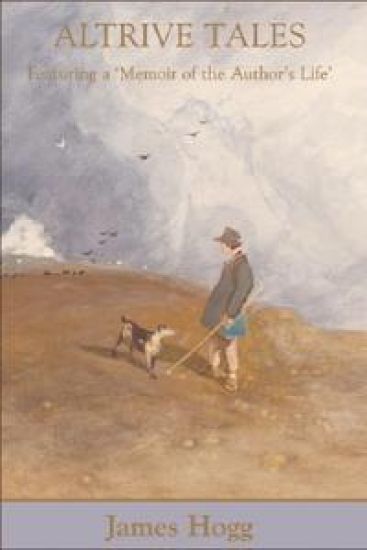
'I like to write about myself: in fact, there are few things I like better!' So confesses Hogg with pawky self-mocking humour in Altrive Tales. The collection opens with Hogg's own story of how a ragged servant-lad remade himself as a respected professional writer, the associate of Byron, Scott, Southey, Wordsworth and Galt. Hogg's frank and humorous 'Memoir of the Author's Life' is widely recognised as a classic of Romantic autobiography and an important record of early nineteenth-century Scottish culture. The themes of the 'Memoir' continue in the tales that follow. 'The Adventures of Captain John Lochy' is a fast-paced historical fiction, the autobiography of a social outcast adrift in Scotland, Russia, the Netherlands, and Sweden. 'The Pongos' (an early version of the Tarzan story) takes a look at Scottish involvement in the British empire in a comic parody of Enlightenment notions about the nature of man and of society. 'Marion's Jock' is a virtuoso exercise in Scots and in Hogg's ability to communicate the peasant lifestyle of his native Scottish Borders. This new edition, thoughtfully introduced, extensively annotated and featuring a reading list and Hogg chronology, presents Altrive Tales as a major achievement by one of Scotland's finest storytellers.
The Queen's Wake is one of the landmarks of British Romantic poetry. It focuses on the return of Mary, Queen of Scots to Scotland in 1561 to take personal rule of her kingdom after her years in France. In the poem poets and bards hold a poetic competition (a 'wake') in Holyrood Palace to welcome the Queen home. When The Queen's Wake was published in 1813 it proved an unexpected popular success, placing Hogg for a while alongside Byron and Scott as one of the most admired British poets of that time. Over the next six years Hogg made substantial revisions, making the poem even more attractive and saleable. The fifth edition (1819) is an enhanced and carefully polished version from a now established and respected poet. It is markedly different from the edgy, powerful and unsettling first version, which was the work of an impecunious and marginalised outsider. This book presents both the first and fifth edition of the poem.