Kirjojen hintavertailu – 12 859 819 kirjaa ja 27 kauppaa

Kirjailija

James Hogg

Kirjat ja teokset yhdessä paikassa: 268 kirjaa, julkaisuja vuosilta 1807–2026, suosituimpiin kuuluu The Private Memoirs and Confessions of a Justified Sinner. Vertaile teosten hintoja ja tarkista saatavuus suomalaisista kirjakaupoista.

268 kirjaa

Kirjojen julkaisuvuodet: 1807–2026.

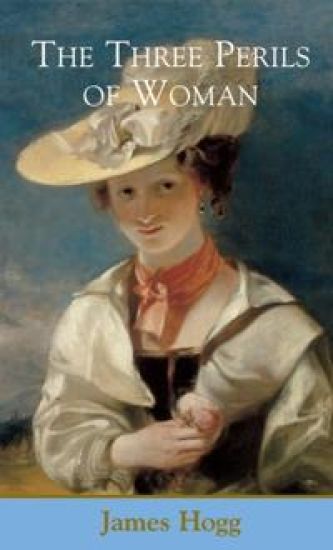
The Three Perils of Woman

The Three Perils of Woman

James Hogg

Edinburgh University Press
1995
sidottu
Both comical and horrific, The Three Perils of Woman is essentially a combination of two stories on similar themes. One is set in the Highlands following the Battle of Culloden and the other in Hogg's Edinburgh. Daring in its subject matter, the novel touches on such delicate topics as prostitution and venereal disease.
A Queer Book

A Queer Book

James Hogg

Edinburgh University Press
1995
sidottu
'It will be a grand book for thae Englishers for they winna understand a word of it' Hogg's boast to William Blackwood Witty, humorous and comical as the title implies, the eccentric nature of many of the poems collected here nevertheless belies the often serious and moral issues contained within. Newly available in paperback, and including many of Hogg's better known longer pieces, the present volume is based on the first edition of A Queer Book to be published since 1832 - though the similarity between the two editions ends with the running order. While the text for the original edition was substantially reworked by the publisher to smooth out Hogg's use of Scots, this volume brings together manuscripts from all over the world to provide material as near to his final copy as possible. The result is a vibrant collection including many poems which have never been studied critically before. A thorough introduction to the best of Hogg's poetry.
Making Leisure Provision for People with Profound Learning and Multiple Disabilities
This book is intended for individuals or organizations (teachers, social workers, psychologists, community nurses, parents and carers) who wish to create leisure opportunities for people with profound and multiple impairments. The text reflects a number of leisure activities based on the authors' experience, from gardening to aromatherapy, drama to microtechnology. It also offers guidance for running and developing workshops for parents, carers and professionals. Useful addresses, contacts and resources are included.
Confessions of a Justified Sinner

Confessions of a Justified Sinner

James Hogg

Everyman's Library USA
1992
sidottu
Robert is a difficult and disturbed young man. He turns to his Calvinist faith for solace but finds it hard to get along with other people. After he falls in with the mysterious and charming Gil-Martin, his actions become more and more extreme. He convinces himself that he is one of the chosen few and that, therefore, all his actions are right and good . . . even murder. James Hogg ('the Ettrick Shepherd') was a poet, novelist, and farmer whose work was discovered by Sir Walter Scott and admired by writers as different as Wordsworth and Byron. His most famous book, The Confessions of a Justified Sinner (1824), is striking in its use of Calvinist doctrine, demonology, and a highly modern psychological perception to tell the story of the criminal Colwan, deluded by occult forces into thinking he represents an instrument of divine justice and vengeance. Introduction by Roger Lewis (Book Jacket Status: Not Jacketed)
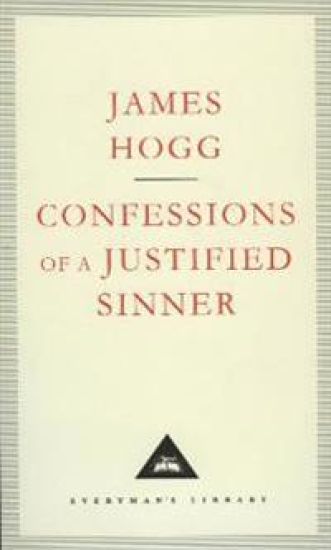
Confessions Of A Justified Sinner

Confessions Of A Justified Sinner

James Hogg

Everyman's Library
1992
sidottu
What connects Frankenstein and Dr Jekyll and Mr Hyde? James Hogg. What connects gothic romance with Freud? James Hogg. What connects theology with psychopathology? James Hogg. A gothic tale of good verses evil, about a pact with Satan and the horrific consequences. It's a chilling tale and cleverly written as the novel deals intelligently with the idea of pre-destination and in parts it treads the same path as the classic tale of Faust selling his soul to the Devil, in other places it shines a light on schizophrenia, a century before it was medically identified. Prompted by his charismatic companion - who lacks only cloven hooves to give his identity away - our 'hero' is easily tempted into the belief that he can be God's champion by killing the already damned. Conveniently, as one of the elect, his lies, cruelty and murders cannot be held against him, since his salvation is already secured
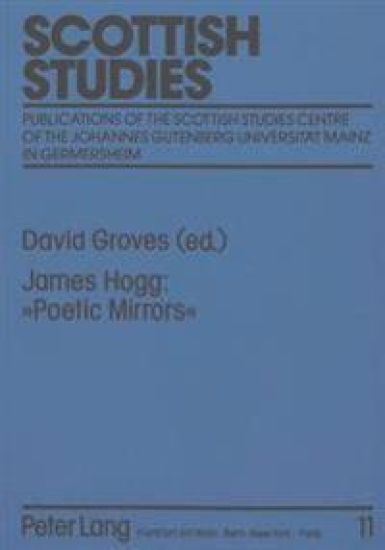
Poetic Mirrors

Poetic Mirrors

James Hogg

Peter Lang GmbH
1990
nidottu
The Poetic Mirror (1816) has long been recognised as containing some of the best and funniest literary parodies of the Romantic period. Its author, James Hogg (1770-1835), the Ettrick Shepherd, was almost entirely self-educated, and worked as a common shepherd until his midthirties; his Scottish working-class origins equipped him well for the task of satirising some of the excesses of the Romantic poets. Hogg's Poetic Mirror has been out of print since 1929. His little-known New Poetic Mirror (1829-1831) has never been published in full, until now. The present edition, which includes both Mirrors, contains six parodies of Wordsworth, two each of Coleridge, Southey, and Leigh Hunt, and others of Byron, Scott, Thomas Moore, George Crabbe, James Montgomery, and other contemporary writers. The Introduction and Notes by David Groves contain much new information about James Hogg and his relations with the poets and critics of the day.

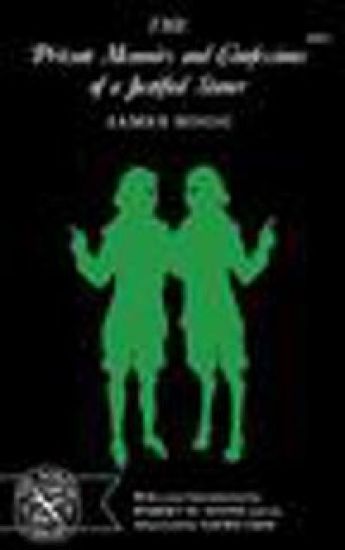
The Private Memoirs and Confessions of a Justified Sinner
The Private Memoirs, first published in 1824, is an early psychological novel, in which the phenomena of the split personality and the obsessed character are described with extraordinary insight. Set in the gloomy world of 18th-century Scottish Calvinism, the novel is a story of moral fanaticism, of a mind darkened by and overpowering conviction of its own righteousness. The story concerns two brothers: one murders the other and is in turn destroyed – or destroys himself. It is a book, Andre Gide wrote, “fitted to arouse passionate interest both in those who are attracted by religious and moral questions, and for quite other reasons, in psychologists and artists, and above all in surrealists who are so particularly drawn by the demoniac in every shape.” The book contains vivid pictures of the manners and morals of a chiaroscuro society remarkably similar in some ways to Dostoevsky’s, but seen from the outside by a man whose rebellious, independent disposition enabled him to survive in defiance of his own Establishment. It draws on some of the traditions and techniques of the “Gothic” school, but more importantly, it is an early exercise in narrative technique – in its deliberate manipulation of point-of-view – and in psychological realism. The text of this edition has been carefully collated with the first edition. It contains an introduction by Robert M. Adams, an afterword by Gide, and a glossary of Scottish words and phrases prepared by Mr. Adams.