Kirjojen hintavertailu – 12 859 819 kirjaa ja 27 kauppaa

Kirjailija

James Hogg

Kirjat ja teokset yhdessä paikassa: 268 kirjaa, julkaisuja vuosilta 1807–2026, suosituimpiin kuuluu The Private Memoirs and Confessions of a Justified Sinner. Vertaile teosten hintoja ja tarkista saatavuus suomalaisista kirjakaupoista.

268 kirjaa

Kirjojen julkaisuvuodet: 1807–2026.

The Collected Letters of James Hogg, Volume 1, 1800-1819
Hogg was a superb letter-writer, and this is the initial volume of the first collected edition of his letters (to be completed in three volumes). Many of the letters have never been published before, or published only in part. They vividly reflect Hogg's varied social experience and shed new light on his own writings and those of his contemporaries. Among his famous correspondents were writers such as Scott, Byron, and Southey, antiquarians such as Robert Surtees, politicians such as Sir Robert Peel, and editors and publishers such as John Murray, William Blackwood, and Robert Chambers. But there are also letters to shepherds, farmers, aristocrats, musicians, young ladies, and bluestockings. Hogg first appears in this volume in 1800 as a young shepherd with literary ambitions, and becomes the famous author of The Queen's Wake (1813) and a key supporter of the early Blackwood's Edinburgh Magazine (1817). Among the final letters it contains are some tender if idiosyncratic love-letters to the Dumfriesshire girl he married in 1820 at the mature age of forty-nine. Hogg's entertaining and informative letters are supplemented by detailed annotation and a full editorial apparatus, including biographical notes on his chief correspondents and a concise overview of this phase of his life. This edition of Hogg's Letters has its roots in the late 1970s and 1980s, when the four founder members of the James Hogg Society (Gillian Hughes, Douglas Mack, Robin MacLachlan, and Elaine Petrie) began work on tracing and transcribing Hogg's surviving letters. The major tasks of completing this work and preparing a full-scale edition of Hogg's Letters were subsequently passed to Gillian Hughes, who is now bringing this important research project to fruition. Key Features: * The first ever edition of Hogg's letters to be published * Includes many letters never previously published * Features Hogg's correspondence with figures such as Sir Walter Scott, Lord Byron and Sir Robert Peel
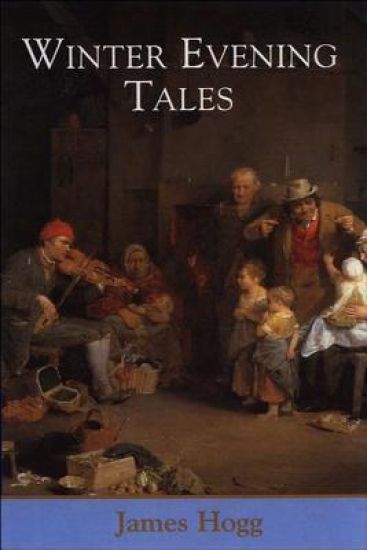
Winter Evening Tales

Winter Evening Tales

James Hogg

Edinburgh University Press
2004
nidottu
Winter Evening Tales (1820; second edition 1821) was James Hogg's most successful work of prose fiction in his lifetime. Its experimental medley of novellas, tales, poems and sketches posed a lively alternative to the dominant form of the historical novel established by Walter Scott. The collection includes terse masterpieces of mystery and the uncanny, virtuoso improvisations on folktale themes, and two brilliant autobiographical novellas, The Renowned Adventures of Basil Lee and Love Adventures of Mr George Cochrane. This paperback edition takes account of newly-discovered information about An Old Soldier's Tale and The Long Pack. A critical introduction, explanatory notes, reading list and Hogg chronology are provided to assist the reader in appreciating Hogg's entertaining and challenging tale collection to the full.
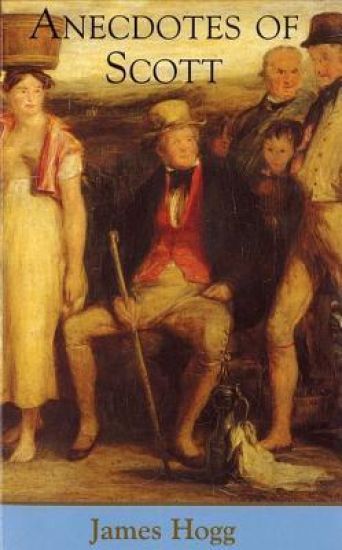
Anecdotes of Scott

Anecdotes of Scott

James Hogg

Edinburgh University Press
2004
nidottu
After Scott's death in 1832 James Hogg wrote an affectionate but frank account of their long friendship. Scott's son-in-law and official biographer, John Gibson Lockhart, declared himself to be filled with 'utter disgust and loathing' at the 'beastly and abominable things' he found it to contain. This edition includes both the original version, written as a contribution to a Scott biography planned by a young London friend of Hogg's, and a revised version created subsequently for an American market. Those with an interest in Romantic biography and autobiography will be particularly fascinated by these lively, readable, idiosyncratic and disconcerting texts. A wealth of information is provided in the paperback edition of this volume, which also includes a useful Hogg chronology and reading list.
The Queen's Wake

The Queen's Wake

James Hogg

Edinburgh University Press
2004
sidottu
The Queen's Wake is one of the landmarks of British Romantic poetry. It focuses on the return of Mary, Queen of Scots to Scotland in 1561 to take personal rule of her kingdom after her years in France. In the poem poets and bards hold a poetic competition (a 'wake') in Holyrood Palace to welcome the Queen home. In the descriptions of the songs and the people who sing them various Scottish poets of Hogg's own period can be recognised, giving the reader a sense of the condition of poetry in Hogg's Scotland. Another key concern of the poem is the state of Scotland in 1561 - a crucial period in Scottish history, coming a year after the legislation was passed that brought in the Scottish Reformation. The Queen's Wake looks back to the pre-1560 world of Catholic Scotland and explores the tensions between that old world and an emerging modernity. When The Queen's Wake was published in 1813 it proved an unexpected popular success, placing Hogg for a while alongside Byron and Scott as one of the most admired British poets of that time. Over the next six years Hogg was encouraged by major players in the Edinburgh book trade to make substantial revisions, to make the poem even more attractive and saleable. The fifth edition (1819) is an enhanced and carefully polished version from the now established and respected poet. It is markedly different from the edgy, powerful and unsettling first version of The Queen's Wake, which was the work of an impecunious and marginalised outsider. Thus the poem exists in significantly different authorial versions, each reflecting Hogg's circumstances at the time. In recent years a consensus has emerged that in cases of this kind the modern reader is best served by having access to editions of both versions. The Stirling/South Carolina Research Edition of The Queen's Wake therefore presents both the first and fifth edition of the poem. Key Features: * The publication of one of the landmarks of British Romantic poetry * At time of publication the poem's success placed Hogg alongside Burns and Scott as one of the leading writers of the period * Presents both the first and fifth editions of the poem to allow the reader to compare the two * A careful editorial introduction places the poem in its historical context
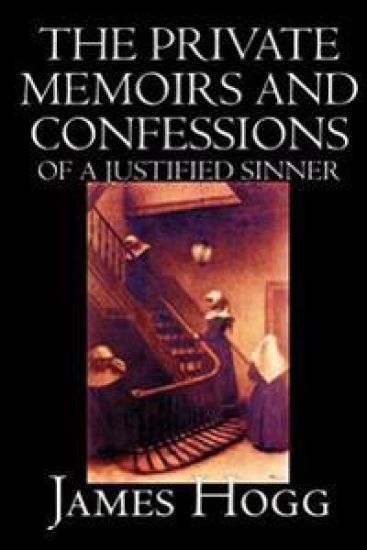
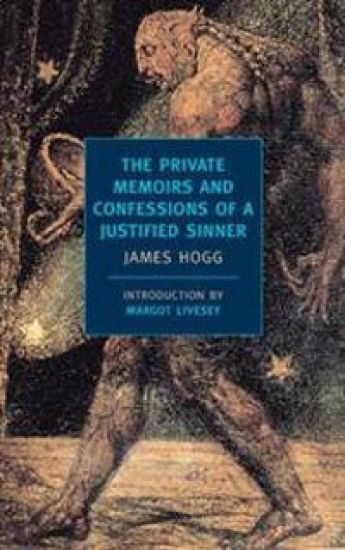
The Private Memoirs and Confessions of A Justified Sinner by James Hogg, Fiction, Literary
"I was born an outcast in the world, in which I was destined to act so conspicuous a part. My mother was a burning and a shining light. But she was married to a man all over spotted with the leprosy of sin. She fled from his embraces the first night after their marriage. . . ." James Hogg wrote about the supernatural powerfully and convincingly, especially in his best-known novel, The Private Memoirs and Confessions of a Justified Sinner, published in 1824; it has been called "the greatest of all Scottish novels."
Altrive Tales

Altrive Tales

James Hogg

Edinburgh University Press
2003
sidottu
Altrive Tales was carefully prepared by Hogg in 1832 as the opening volume in a planned twelve-volume collected prose fiction series, intended as the culmination of his career as a storyteller. It opens with his own story of how a ragged servant-lad remade himself as a respected professional writer, the associate of Byron, Scott, Southey, Wordsworth and Galt. Hogg's frank and humorous 'Memoir of the Author's Life' is widely recognised as a classic of Romantic autobiography and an important record of early nineteenth-century Scottish culture. Hogg's sharp eye for the latest publishing phenomena and pawky self-mocking humour is evident in his awareness of Altrive Tales as a contribution to the monthly-volume classic fiction series of the early 1830s following Sir Walter Scott's magnum opus edition of the Waverley Novels. Frankly pleading guilty to the egotism of presenting his own output to the world as a literary classic Hogg engagingly confesses, 'I like to write about myself: in fact, there are few things which I like better [...]'. The themes of the 'Memoir' continue in the tales that follow.' The Adventures of Captain John Lochy' is a fast-paced historical fiction, the autobiography of a social outcast adrift in Scotland, Russia, the Netherlands, and Sweden. 'The Pongos' (an early version of the Tarzan story) takes a look at Scottish involvement in the British empire in a comic parody of Enlightenment notions about the nature of man and of society. 'Marion's Jock' is a virtuoso exercise in Scots and in Hogg's ability to communicate the peasant lifestyle of his native Scottish Borders. This new edition, thoughtfully introduced and extensively annotated, presents Altrive Tales as a major achievement by one of Scotland's finest storytellers.
The Jacobite Relics of Scotland

The Jacobite Relics of Scotland

James Hogg

Edinburgh University Press
2003
sidottu
James Hogg's Jacobite Relics - originally commissioned by the Highland Society of London in 1817 - is an important addition to The Collected Works of James Hogg. It created a canon for the Jacobite song which had an enormous influence on subsequent collections, and was of great importance in defining the relationship between the Scottish song tradition and its Romantic editors and collectors. From the first publication of the Relics in 1819, there has been speculation about how many of them were authored or at least substantially altered by Hogg. Professor Murray Pittock has conducted extensive research in this area since 1987, and has identified several previously unknown sources from which Hogg would have worked as he developed his collection. The introduction to volume two deals with the genesis of the text and Hogg's relationship with the Highland Society and there is also considerable annotation to accurately communicate the context of the songs and Hogg's relationship to the textuality of Jacobite culture.
Winter Evening Tales

Winter Evening Tales

James Hogg

Edinburgh University Press
2002
sidottu
Winter Evening Tales (1820; second edition 1821) was James Hogg's most successful work of prose fiction in his lifetime. Exhibiting the most complex genesis of any of Hogg's works, it is the outstanding example of a 'national' genre pioneered by him -- the miscellaneous collection of popular and traditional narratives. Hogg's experimental medley of novellas, tales, poems and sketches posed a lively alternative to the dominant form of the historical novel established by Walter Scott. The collection includes terse masterpieces of mystery and the uncanny, virtuoso improvisations on folktale themes, and -- the highlights of the edition -- two brilliant autobiographical novellas, The Renowned Adventures of Basil Lee and Love Adventures of Mr George Cochrane. Reprinted in incomplete and unreliable texts in Victorian editions of Hogg's works, Winter Evening Tales fell into almost total obscurity after the author's death. The Stirling/ South Carolina Edition of the Collected Works of James Hogg is delighted to republish this key work in Hogg's career in its entirety for the first time since the early nineteenth century.
The Jacobite Relics of Scotland

The Jacobite Relics of Scotland

James Hogg

Edinburgh University Press
2002
sidottu
James Hogg's Jacobite Relics - originally commissioned by the Highland Society of London in 1817 - is an important addition to The Collected Works of James Hogg. It created a canon for the Jacobite song which had an enormous influence on subsequent collections, and was of great importance in defining the relationship between the Scottish song tradition and its Romantic editors and collectors. From the first publication of the Relics in 1819 the majority of scholars have argued about how many of them were authored or at least substantially altered by Hogg. Professor Murray Pittock has conducted extensive research in this area since 1987, and has identified many previously neglected or unknown sources from which Hogg would have worked as he developed his collection. He has identified contemporary 17th- and 18th-century sources for the majority of the songs in the edition. This has implications not only for Hogg's integrity as a writer, but for our understanding of the history of the Scottish song as a whole. The introduction to volume one includes the crucial issue of Hogg's relationship to the Jacobite song tradition, and the place of the Relics within Hogg's career and personal context, facilitating further interpretations of Hogg's range of creative strategies. Considerable annotation accurately communicates the context of the songs and Hogg's relationship to the textuality of Jacobite culture. The introduction to volume two deals with the genesis of the text and Hogg's relationship with the Highland Society. This volume will be available from November 2002.
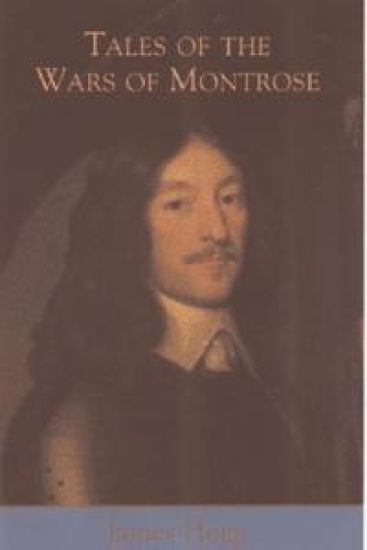
Tales of the Wars of Montrose

Tales of the Wars of Montrose

James Hogg

Edinburgh University Press
2002
nidottu
In this collection of short stories Hogg focuses on the Scottish civil war of 1644-45, in which the Marquis of Montrose led his royalist forces in a series of stunning victories against the odds before his final defeat at Philiphaugh. Each of Hogg's five tales centres on one of the five major battles of Montrose's brilliant but ultimately futile campaign. Each tale is utterly different from the others in genre and tone, but taken together they build up a composite picture of what it was like to experience the 'anarchy and confusion' of the time at first hand. The importance of Tales of the Wars of Montrose was long obscured by the fact that the publisher of the first edition seriously mangled Hogg's text, not least by including an unrelated sixth tale in order to bulk out the collection to the commercially-expected norm of three volumes. Gillian Hughes has restored Hogg's coherent five-tale collection, and by returning to Hogg's manuscripts in preparing her edition she has made possible the first appearance in print of an uncensored text of this lively and innovative collection.
Private Memoirs and Confessions of a Justified Sinner

Private Memoirs and Confessions of a Justified Sinner

James Hogg; Ian Campbell

Edinburgh University Press
2002
nidottu
A TLS International Book of the Year (TLS, Dec 7, 2001) This now-famous book was given a hostile reception when it first appeared in 1824. It was not reprinted until the late 1830s, when a heavily bowdlerised version was included in a posthumous edition of Hogg's collected Tales and Sketches published by Blackie & Son of Glasgow. Thereafter Confessions of a Justified Sinner attracted little interest until the 1890s, when the unbowdlerised text was printed for the first time since the 1820s. However, the current high reputation of Hogg's novel did not fully begin to establish itself until 1947, when a warmly enthusiastic Introduction by Andre Gide appeared in a new edition of the unbowdlerised text. He went on to record how he had read 'this astounding book [!] with a stupefaction and admiration that increased at every page'. Many readers have subsequently shared Gide's enthusiasm, and Confessions of a Justified Sinner is now widely recognised as one of the outstanding British novels of the Romantic era. It has also been acclaimed as one of the defining texts of Scotland, with Iain Crichton Smith recently applauding 'a towering Scottish novel, one of the very greatest of all Scottish books'. Peter Garside's eagerly-awaited new Stirling / South Carolina edition (available in both hardback and paperback) excitingly opens out our understanding of Hogg's masterpiece. Its annotation adds very substantially to the contributions of previous editors, for example by showing various layers of hitherto undetected references. Through an impressive piece of scholarly detective-work, Garside has also uncovered the remarkable story of the first printing of the Justified Sinner and Hogg's battle with his London publishers, Longman, for his subversive and challenging novel to make its first appearance in a form he found satisfactory. This edition provides an illuminating and compelling new account of the genesis of Hogg's masterpiece, and of the cultural, theological, geographical, and historical contexts of this remarkable novel.
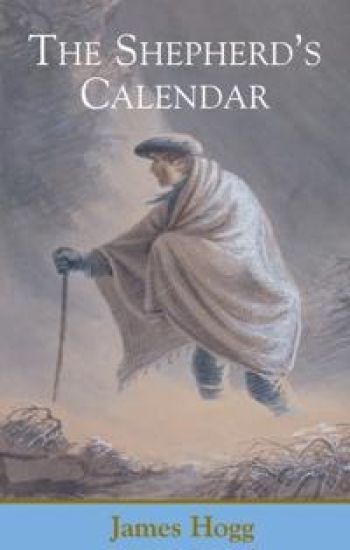
The Shepherd's Calendar

The Shepherd's Calendar

James Hogg

Edinburgh University Press
2002
nidottu
James Hogg is one of the acknowledged masters of the short story. Some of his best stories appeared in The Shepherd's Calendar, a work of the 1820s in which he sets out to re-create on paper the manner and the content of the traditional oral storytelling of Ettrick Forest, the remote and mountainous sheep-farming district in which he grew up. Like Hogg's masterpiece The Private Memoirs and Confessions of a Justified Sinner, several of the stories from The Shepherd's Calendar deal disturbingly and hauntingly with the supernatural, and explore psychological depths with a remarkable insight and intensity. The Shepherd's Calendar also draws on Hogg's experiences as a young shepherd in the 1790s as it produces a convincing and very human picture of the dangers, the pleasures, and the tensions of the lives of the rural poor in Scotland in the years that followed the French Revolution. This paperback is based on the acclaimed hardback edition of The Shepherd's Calendar for the Stirling / South Carolina Collected Works of James Hogg (Edinburgh University Press, 1995).
The Spy

The Spy

James Hogg

Edinburgh University Press
2000
sidottu
Hogg's extremely rare periodical of 1810-11 shows him reacting to the writers, personalities, and locales of Scotland's capital city after his move to Edinburgh from Ettrick and his career-change from shepherd and farmer to professional author. His characteristically astute and idiosyncratic vision reveals a rather different city from that of Walter Scott and Francis Jeffrey, and his band of contributors form another audience for his work than the middle-class Tories associated with the later Blackwood's Edinburgh Magazine. The Spy includes early versions of some of Hogg's best-known poetry and prose besides a wealth of fascinating lesser-known material. This is the first edition of The Spy since the original edition of 1810-11 was published, and offers a carefully corrected text, full annotation, notes on Hogg's contributors to his paper, and a history of its making. It represents an advance in our knowledge both of Hogg's early writing career and of the city he encountered early in the nineteenth century.
Anecdotes of Scott

Anecdotes of Scott

James Hogg

Edinburgh University Press
1999
sidottu
James Hogg knew Sir Walter Scott well, and after Scott's death in 1832 he wrote an affectionate but frank account of their long friendship. Hogg arranged for his manuscript to be sent to John Gibson Lockhart, Scott's son-in-law and official biographer; but when Lockhart read the manuscript he declared himself to be filled with 'utter disgust and loathing' at the 'beastly and abominable things' he found it to contain. As a result, Hogg withdrew the manuscript from publication, but later arranged for the US publication of an extensively revised version, Familiar Anecdotes of Sir Walter Scott. Professor Rubenstein has produced a meticulous new edition which includes both the first version, Anecdotes of Sir W. Scott and the later version. She provides a wealth of new information about these lively, readable, idiosyncratic, and disconcerting texts.
Queen Hynde

Queen Hynde

James Hogg

Edinburgh University Press
1998
sidottu
Heroic, radical and at times hilarious, Queen Hynde is Ossian with jokes; but Hogg's epic has serious purposes in mind. Its picture of the ancient Scottish past has much in common with stories of King Arthur and Camelot; and Queen Hynde aspires to emulate Paradise Lost as a Christian epic.
Lay Sermons

Lay Sermons

James Hogg

Edinburgh University Press
1997
sidottu
Lay Sermons offers, playfully, a series of lay sermons on good principles and good breeding - the last thing that one would expect from the pen of Blackwood's Ettrick Shepherd. But a significant part of the joke is that the Shepherd provides lay sermons that combine into a series of wise meditations on life and on literature.
Tales of the Wars of Montrose

Tales of the Wars of Montrose

James Hogg

Edinburgh University Press
1996
sidottu
In Tales of the Wars of Montrose Hogg continues his examination of Scotland's past. Using different narrators and different moods in each of the five tales that comprise the work, Hogg leads the reader into (and eventually out of) a state of anarchy and confusion in his native country.