Kirjojen hintavertailu – 12 859 828 kirjaa ja 27 kauppaa

Kirjailija

James Lee

Kirjat ja teokset yhdessä paikassa: 461 kirjaa, julkaisuja vuosilta 2004–2026, suosituimpiin kuuluu Silesian Folk Tales. Vertaile teosten hintoja ja tarkista saatavuus suomalaisista kirjakaupoista.

461 kirjaa

Kirjojen julkaisuvuodet: 2004–2026.

Master of Puzzles - Kuromasu 200 Hard Puzzles 10x10 Vol. 7
Kuromasu (from Japanese "kuromasu wa doko da", literally "Where is Black Cells?"; also known as "Kurodoko") is played on a rectangular grid. Some of these cells have numbers in them. Each cell may be either black or white. The object is to determine what type each cell is. The following rules determine which cells are which: Each number on the board represents the number of white cells that can be seen from that cell, including itself. A cell can be seen from another cell if they are in the same row or column, and there are no black cells between them in that row or column. Numbered cells may not be black. No two black cells may be horizontally or vertically adjacent. All the white cells must be connected horizontally or vertically.
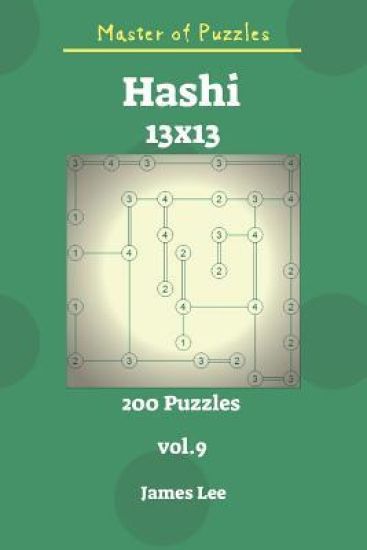
Master of Puzzles - Hashi 200 Puzzles 13x13 Vol. 9
Each puzzle is based on a rectangular arrangement of islands where the number in each island tells how many bridges are connected to it. The object is to connect all islands according to the number of bridges so: There are no more than two bridges in the same direction. Bridges can only be vertical or horizontal and are not allowed to cross islands or other bridges. When completed, all bridges are interconnected enabling passage from any island to another.
Master of Puzzles Binary - 200 Hard to Master Puzzles 12x12 Vol.18
Binary (also known as "Binairo Puzzle," "Takuzu," "Tohu wa Vohu") is played on a rectangular or square grid. The goal is to fill in the grid with digits "0" and "1" according to the following rules: Each box should contain a zero or a one. No more than two similar numbers next to or below each other are allowed. Each row and each column should contain an equal number of zeros and ones (or one more for odd sized grids). Each row is unique, and each column is unique.
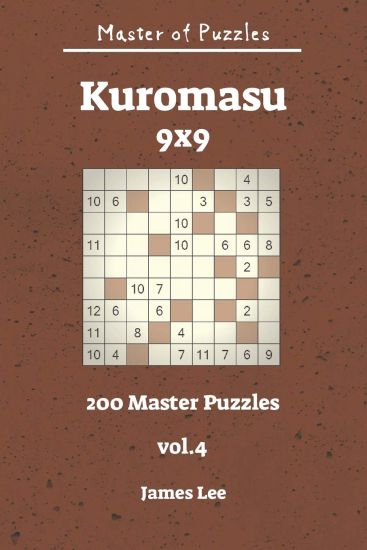
Master of Puzzles - Kuromasu 200 Master Puzzles 9x9 Vol. 4
Kuromasu (from Japanese "kuromasu wa doko da," literally "Where is Black Cells?"; also known as "Kurodoko") is played on a rectangular grid. Some of these cells have numbers in them. Each cell may be either black or white. The object is to determine what type each cell is. The following rules determine which cells are which: Each number on the board represents the number of white cells that can be seen from that cell, including itself. A cell can be seen from another cell if they are in the same row or column, and there are no black cells between them in that row or column. Numbered cells may not be black. No two black cells may be horizontally or vertically adjacent. All the white cells must be connected horizontally or vertically.
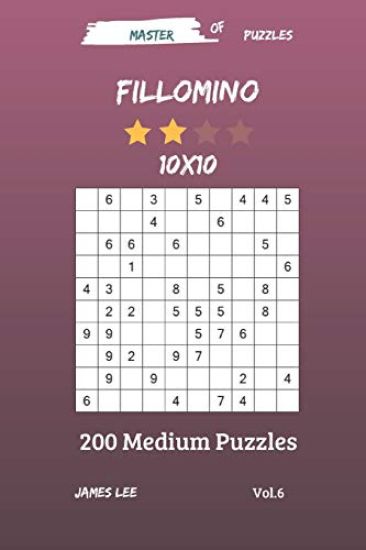
Master of Puzzles - Fillomino 200 Medium Puzzles 10x10 Vol. 6
Fillomino (also known as "Polyominous") is a type of logic puzzle. Fillomino is played on a rectangular grid with no standard size. Some cells of the grid start containing numbers, referred to as "givens." The goal is to divide the grid into blocks. The block must contain the number of cells indicated by the number in the cells of the block. The block cannot touch a similarly sized block, horizontally or vertically. Cells without numbers may form blocks necessary to complete the puzzle.
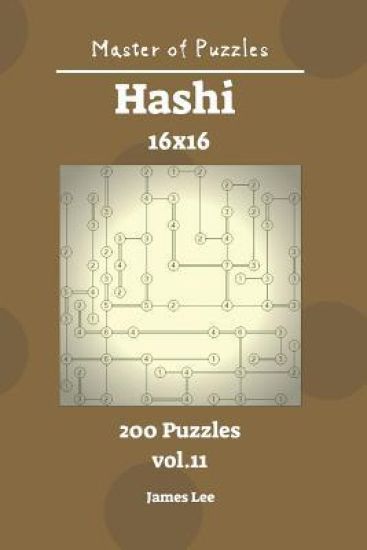
Master of Puzzles - Hashi 200 Puzzles 16x16 Vol. 11
Each puzzle is based on a rectangular arrangement of islands where the number in each island tells how many bridges are connected to it. The object is to connect all islands according to the number of bridges so: There are no more than two bridges in the same direction. Bridges can only be vertical or horizontal and are not allowed to cross islands or other bridges. When completed, all bridges are interconnected enabling passage from any island to another.
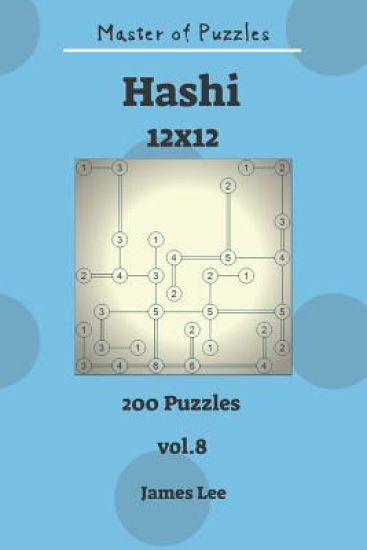
Master of Puzzles - Hashi 200 Puzzles 12x12 Vol. 8
Each puzzle is based on a rectangular arrangement of islands where the number in each island tells how many bridges are connected to it. The object is to connect all islands according to the number of bridges so: There are no more than two bridges in the same direction. Bridges can only be vertical or horizontal and are not allowed to cross islands or other bridges. When completed, all bridges are interconnected enabling passage from any island to another.
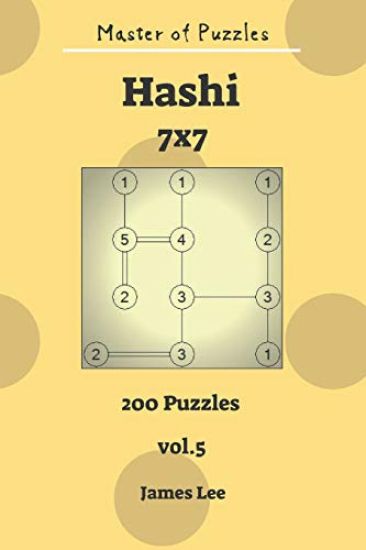
Master of Puzzles - Hashi 200 Puzzles 7x7 Vol. 5

Master of Puzzles - Hashi 200 Puzzles 7x7 Vol. 5

James Lee

Independently Published
2018
nidottu
Each puzzle is based on a rectangular arrangement of islands where the number in each island tells how many bridges are connected to it. The object is to connect all islands according to the number of bridges so: There are no more than two bridges in the same direction. Bridges can only be vertical or horizontal and are not allowed to cross islands or other bridges. When completed, all bridges are interconnected enabling passage from any island to another.
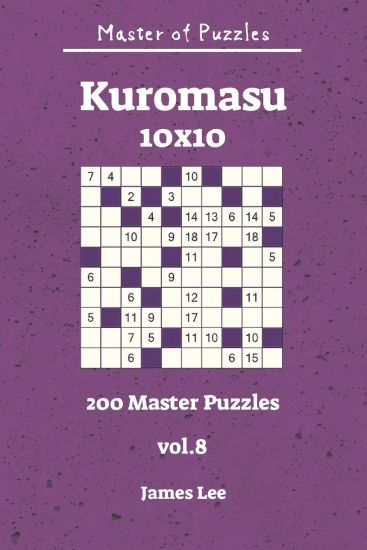
Master of Puzzles - Kuromasu 200 Master Puzzles 10x10 Vol. 8
Kuromasu (from Japanese "kuromasu wa doko da," literally "Where is Black Cells?"; also known as "Kurodoko") is played on a rectangular grid. Some of these cells have numbers in them. Each cell may be either black or white. The object is to determine what type each cell is. The following rules determine which cells are which: Each number on the board represents the number of white cells that can be seen from that cell, including itself. A cell can be seen from another cell if they are in the same row or column, and there are no black cells between them in that row or column. Numbered cells may not be black. No two black cells may be horizontally or vertically adjacent. All the white cells must be connected horizontally or vertically.
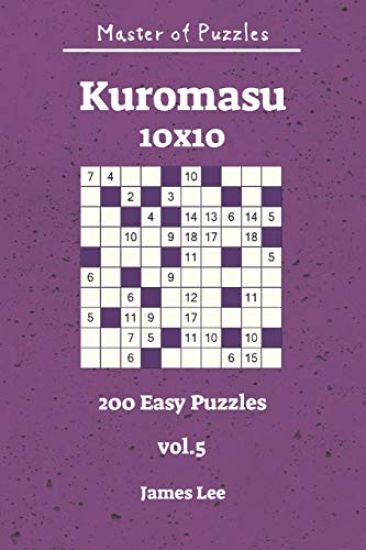
Master of Puzzles - Kuromasu 200 Easy Puzzles 10x10 Vol. 5
Kuromasu (from Japanese "kuromasu wa doko da," literally "Where is Black Cells?"; also known as "Kurodoko") is played on a rectangular grid. Some of these cells have numbers in them. Each cell may be either black or white. The object is to determine what type each cell is. The following rules determine which cells are which: Each number on the board represents the number of white cells that can be seen from that cell, including itself. A cell can be seen from another cell if they are in the same row or column, and there are no black cells between them in that row or column. Numbered cells may not be black. No two black cells may be horizontally or vertically adjacent. All the white cells must be connected horizontally or vertically.
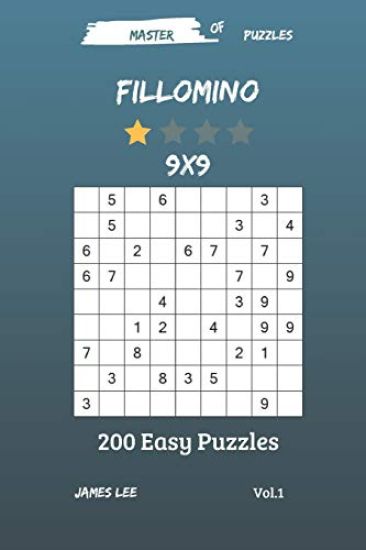
Master of Puzzles - Fillomino 200 Easy Puzzles 9x9 Vol. 1
Fillomino (also known as "Polyominous") is a type of logic puzzle. Fillomino is played on a rectangular grid with no standard size. Some cells of the grid start containing numbers, referred to as "givens." The goal is to divide the grid into blocks. The block must contain the number of cells indicated by the number in the cells of the block. The block cannot touch a similarly sized block, horizontally or vertically. Cells without numbers may form blocks necessary to complete the puzzle.
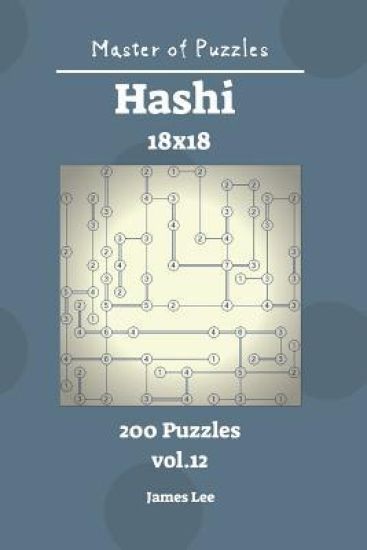
Master of Puzzles - Hashi 200 Puzzles 18x18 Vol. 12
Each puzzle is based on a rectangular arrangement of islands where the number in each island tells how many bridges are connected to it. The object is to connect all islands according to the number of bridges so: There are no more than two bridges in the same direction. Bridges can only be vertical or horizontal and are not allowed to cross islands or other bridges. When completed, all bridges are interconnected enabling passage from any island to another.
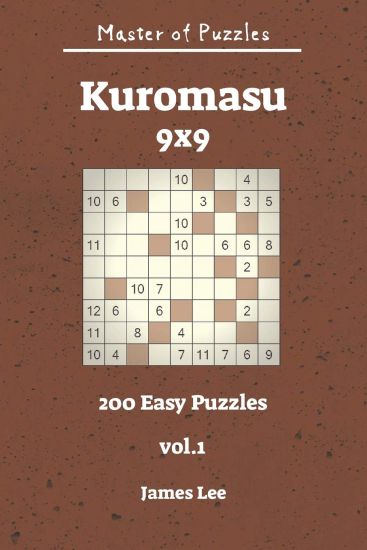
Master of Puzzles - Kuromasu 200 Easy Puzzles 9x9 Vol. 1
Kuromasu (from Japanese "kuromasu wa doko da," literally "Where is Black Cells?"; also known as "Kurodoko") is played on a rectangular grid. Some of these cells have numbers in them. Each cell may be either black or white. The object is to determine what type each cell is. The following rules determine which cells are which: Each number on the board represents the number of white cells that can be seen from that cell, including itself. A cell can be seen from another cell if they are in the same row or column, and there are no black cells between them in that row or column. Numbered cells may not be black. No two black cells may be horizontally or vertically adjacent. All the white cells must be connected horizontally or vertically.
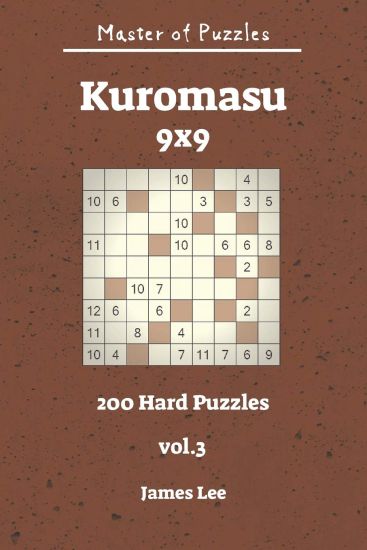
Master of Puzzles - Kuromasu 200 Hard Puzzles 9x9 Vol. 3
Kuromasu (from Japanese "kuromasu wa doko da," literally "Where is Black Cells?"; also known as "Kurodoko") is played on a rectangular grid. Some of these cells have numbers in them. Each cell may be either black or white. The object is to determine what type each cell is. The following rules determine which cells are which: Each number on the board represents the number of white cells that can be seen from that cell, including itself. A cell can be seen from another cell if they are in the same row or column, and there are no black cells between them in that row or column. Numbered cells may not be black. No two black cells may be horizontally or vertically adjacent. All the white cells must be connected horizontally or vertically.
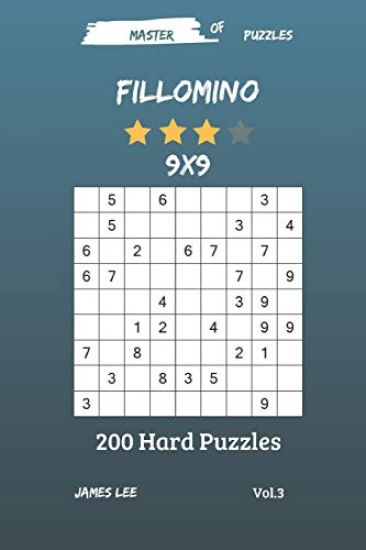
Master of Puzzles - Fillomino 200 Hard Puzzles 9x9 Vol. 3
Fillomino (also known as "Polyominous") is a type of logic puzzle. Fillomino is played on a rectangular grid with no standard size. Some cells of the grid start containing numbers, referred to as "givens." The goal is to divide the grid into blocks. The block must contain the number of cells indicated by the number in the cells of the block. The block cannot touch a similarly sized block, horizontally or vertically. Cells without numbers may form blocks necessary to complete the puzzle.
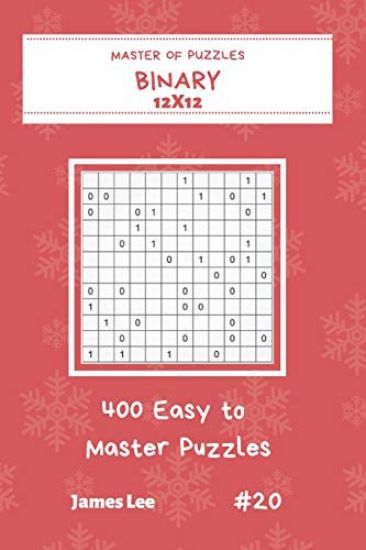
Master of Puzzles Binary - 400 Easy to Master Puzzles 12x12 Vol.20
Binary (also known as "Binairo Puzzle," "Takuzu," "Tohu wa Vohu") is played on a rectangular or square grid. The goal is to fill in the grid with digits "0" and "1" according to the following rules: Each box should contain a zero or a one. No more than two similar numbers next to or below each other are allowed. Each row and each column should contain an equal number of zeros and ones (or one more for odd sized grids). Each row is unique, and each column is unique.
Master of Puzzles - Kuromasu 200 Medium Puzzles 10x10 Vol. 6
Kuromasu (from Japanese "kuromasu wa doko da," literally "Where is Black Cells?"; also known as "Kurodoko") is played on a rectangular grid. Some of these cells have numbers in them. Each cell may be either black or white. The object is to determine what type each cell is. The following rules determine which cells are which: Each number on the board represents the number of white cells that can be seen from that cell, including itself. A cell can be seen from another cell if they are in the same row or column, and there are no black cells between them in that row or column. Numbered cells may not be black. No two black cells may be horizontally or vertically adjacent. All the white cells must be connected horizontally or vertically.
Master of Puzzles - Fillomino 200 Easy Puzzles 10x10 Vol. 5
Fillomino (also known as "Polyominous") is a type of logic puzzle. Fillomino is played on a rectangular grid with no standard size. Some cells of the grid start containing numbers, referred to as "givens." The goal is to divide the grid into blocks. The block must contain the number of cells indicated by the number in the cells of the block. The block cannot touch a similarly sized block, horizontally or vertically. Cells without numbers may form blocks necessary to complete the puzzle.
Master of Puzzles - Fillomino 200 Master Puzzles 9x9 Vol. 4
Fillomino (also known as "Polyominous") is a type of logic puzzle. Fillomino is played on a rectangular grid with no standard size. Some cells of the grid start containing numbers, referred to as "givens." The goal is to divide the grid into blocks. The block must contain the number of cells indicated by the number in the cells of the block. The block cannot touch a similarly sized block, horizontally or vertically. Cells without numbers may form blocks necessary to complete the puzzle.