Kirjojen hintavertailu – 12 859 818 kirjaa ja 27 kauppaa
Kirjailija
Jane Austen
Kirjat ja teokset yhdessä paikassa: 3 212 kirjaa, julkaisuja vuosilta 1791–2027, suosituimpiin kuuluu Ylpeys ja ennakkoluulo. Vertaile teosten hintoja ja tarkista saatavuus suomalaisista kirjakaupoista.
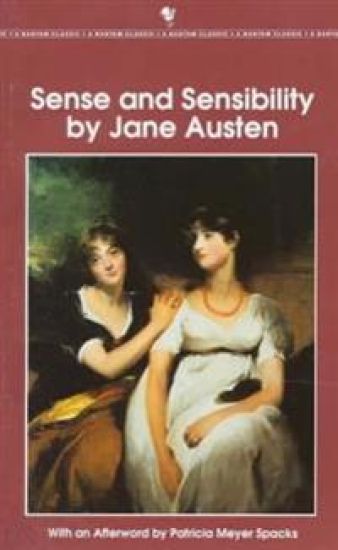
Jane Austen seems to have been born with the comic precision and other-worldly insight she everywhere displays in Sense and Sensibility, her first published novel (1811), which, though revised later, was completed in 1797 at the age of twenty-two. This meticulously constructed story of two sisters with opposing temperaments and romantic inclinations exemplifies the distilled spirit of classicism in English literature.
In its marvelously perceptive portrayal of two young women in love, Sense and Sensibility is the answer to those who believe that Jane Austen's novels, despite their perfection of form and tone, lack strong feeling. Its two heroines, Marianne and Elinor--so utterly unlike each other-both undergo the most violent passions when they are separated from the men they love. What differentiates them, and gives this extraordinary book its complexity and brilliance, is the way each expresses her suffering: Marianne-young, impetuous, ardent-falls into paroxysms of grief when she is rejected by the dashing John Willoughby; while her sister, Elinor--wiser, more sensible, more self-controlled--masks her despair when it appears that Edward Ferrars is to marry the mean-spirited and cunning Lucy Steele. All, of course, ends happily--but not until Elinor's "sense" and Marianne's "sensibility" have equally worked to reveal the profound emotional life that runs beneath the surface of Austen's immaculate and irresistible art.
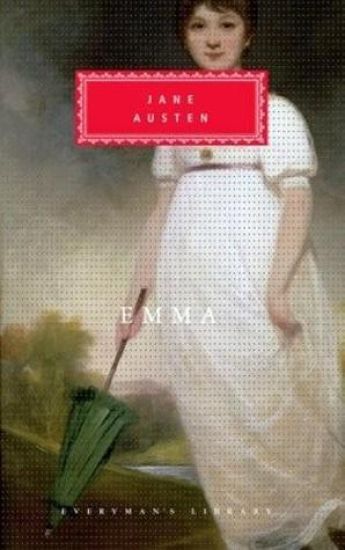
An Everyman's Library edition of Jane Austen's revolutionary and inspiring novel, which is once again a major motion picture. Twenty-one-year-old Emma Woodhouse is comfortably dominating the social order in the village of Highbury, convinced that she has both the understanding and the right to manage other people's lives--for their own good, of course. Her well-meant interfering centers on the aloof Jane Fairfax, the dangerously attractive Frank Churchill, the foolish if appealing Harriet Smith, and the ambitious young vicar Mr. Elton--and ends with her complacency shattered, her mind awakened to some of life's more intractable dilemmas, and her happiness assured. Austen's comic imagination was so deft and beautifully fluent that she could use it to probe the deepest human ironies while setting before us a dazzling gallery of characters--some pretentious or ridiculous, some admirable and moving, all utterly true.
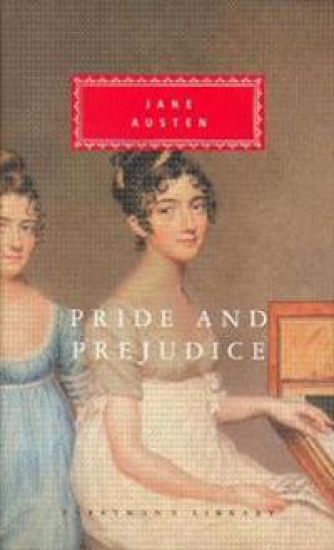
Probably the popular favourite among Jane Austen's novels, Pride and Prejudice was the first to be written (1796-7), when the author was just twenty-one. Revised for publication thirteen years later, it combines the freshness of youth with the skill of maturity, not least in the brilliance of the characterization and the attractiveness of the heroine, Elizabeth Bennet.
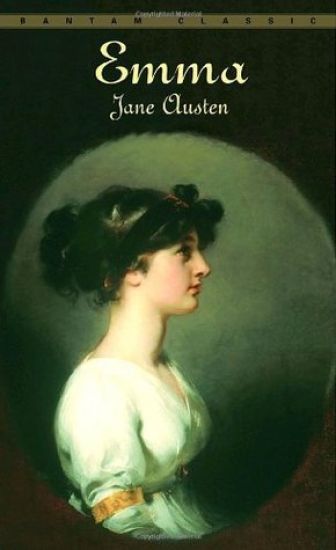
Although described by Jane Austen as a character 'whom no one but myself will much like', the irrepressible Emma Woodhouse is one of her most beloved heroines. Clever, rich and beautiful, she sees no need for marriage, but loves interfering in the romantic lives of others, until her matchmaking plans unravel, with consequences that she never expected. Jane Austen's novel of youthful exuberance and gradual self-knowledge is a brilliant, sparkling comic masterpiece.
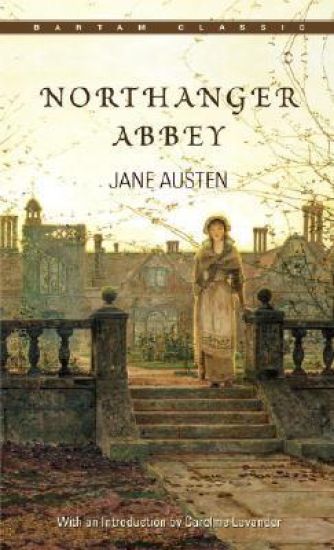
Northanger Abbey is the earliest of Jane Austen's great comedies of female enlightenment and combines literary burlesque - making fun of the excesses of the Gothic novel - with larger moral, philosophical, and social issues: the folly of letting literature get in the way of life, the inexcusability of not thinking for oneself, and the painful difficulties (especially for women) involved in growing up. Lady Susan and The Watsons are early compositions that reflect many of the qualities of Northanger Abbey. The first is an epistolary novel centring on the intrigues of the villainous Lady Susan; the second is an unfinished example of Jane Austen's most characteristic form - a story where the heroine is outstanding for her sense and goodness, virtues notably lacking in the other characters, who are here part of an altogether bleaker vision. Sanditon, too, is tragically incomplete, and it signals the achievement of a new depth and breadth of comic insight on the part of its author.
Jane Austen's last completed novel, a brilliantly insightful story of regret, second chances, and the courage to follow our hearts Anne Elliot is twenty-seven and unmarried--by all accounts a spinster in her time--seemingly doomed to spend the rest of her life waiting on her image-obsessed father and extravagant older sister; attempting to maintain their once lavish, now dwindling family estate; and occasionally babysitting the children of her married younger sister. It wasn't always this way, though. When Anne was nineteen, she was in love with and engaged to Frederick Wentworth, a man with no money and few prospects. Anne's well-meaning family and friends convinced her that a young heiress like herself could do better, so she broke off the engagement. But when chance brings Wentworth and Anne together again eight years later, he is now an accomplished naval captain with an impressive fortune, and Anne must face her feelings for him that remain and consider how different her life could have been if only she hadn't been so easily persuaded by others.
Emma, when first published in 1816, was written when Jane Austen was at the height of her powers. In it, we have her two greatest comic creations -- the eccentric Mr. Woodhouse and that quintissential bore, Miss Bates. In it, too, we have her most profound characterization: the witty, imaginative, self-deluded Emma, a heroine the author declared "no one but myself will much like," but who has been much loved by generations of readers. Delightfull funny, full of rich irony, Emma is regarded as one of Jane Austen's finest achievements.
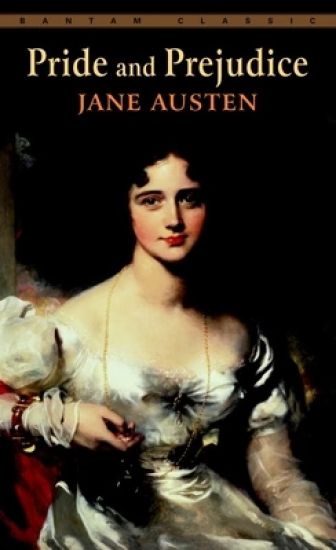
Nominated as one of America's best-loved novels by PBS's The Great American Read "It is a truth universally acknowledged, that a single man in possession of a good fortune must be in want of a wife." So begins Pride and Prejudice, Jane Austen's witty comedy of manners--one of the most popular novels of all time--that features splendidly civilized sparring between the proud Mr. Darcy and the prejudiced Elizabeth Bennet as they play out their spirited courtship in a series of eighteenth-century drawing-room intrigues. Renowned literary critic and historian George Saintsbury in 1894 declared it the "most perfect, the most characteristic, the most eminently quintessential of its author's works," and Eudora Welty in the twentieth century described it as "irresistible and as nearly flawless as any fiction could be."
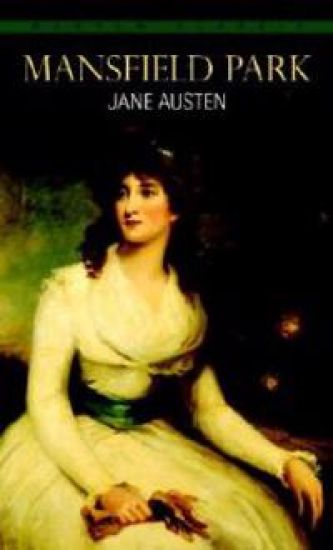
One of the gifts from the 19th century to ours is the writing of Jane Austen. Her graceful and delicate perceptions are far different from those offered us today. In Mansfield Park she creates a household of young people, among them Fanny Price. During an era when upbringing was nearly everything, Fanny has the bad luck to be the poor relation in a wealthy family. Against a lovely and witty rival, she brings only natural goodness as a weapon in her battle for the man she loves.
In 1811, Jane Austen's first published work, Sense and Sensibility, marked the debut of England's premier novelist of manners. Believing that "3 or 4 families in a country village is the very thing to work on," she created a brilliant tragicomedy of flirtation and folly. Romantic walks through lush Devonshire and genteel dinner parties at a stately manor draw two pretty sisters into the schemes and manipulations of landed gentry determined to marry wisely and well. Neither sense nor sensibility can guarantee happiness for either--as romantic Marianne falls prey to a dangerous rascal, and reasonable Elinor loses her heart to a gentleman already engaged. Wonderfully entertaining yet subtle and probing in its characterizations, Sense and Sensibility richly displays the supreme artistry of a great English novelist.
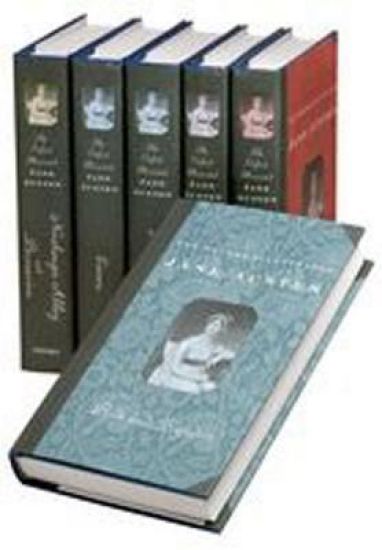
This complete set of the novels of Jane Austen is now reissued as a shrink-wrapped set with handsome new jackets. Using the definitive text established by R. W. Chapman, with later revisions by distinguished scholars, the set presents the most authoritative and comprehensive edition available - invaluable for students and enthusiasts of Jane Austen's work. Each volume contains notes and appendices, and indexes of characters, and the set is illustrated with a charming selection of early nineteenth-century plates.
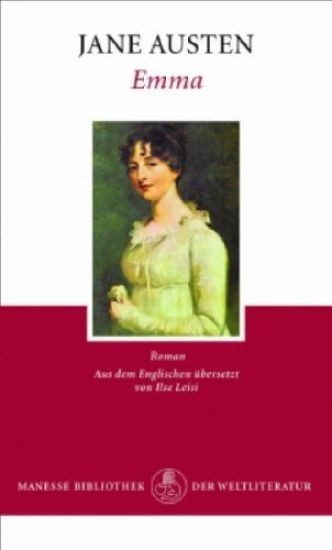
Emma ist eine kluge und selbstbewusste junge Frau, aber sie ist auch ein wenig verwöhnt. Nachdem ihre frühere Gouvernante und Gefährtin Anne sie verlassen hat, versucht sie in Highbury Schicksal zu spielen und ihre männlichen und weiblichen Bekannten miteinander zu verheiraten, wie es ihr die Phantasie gerade eingibt. Das muss natürlich schiefgehen. Als sie entdeckt, dass Harriet, die sie zuerst für den jungen Pfarrer und später für den attraktiven Frank Churchill vorgesehen hatte, eigentlich ein Auge auf den von ihr selbst heimlich verehrten Mr. Knightley geworfen hat, wird es Zeit, dass sie endlich zur Vernunft kommt.
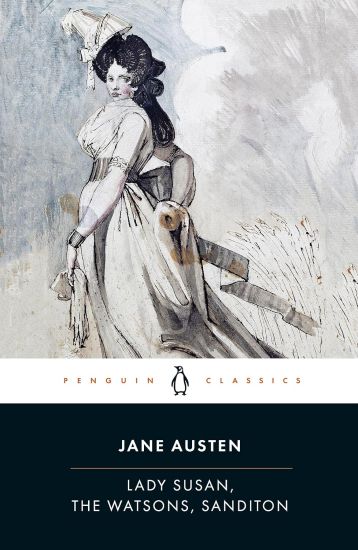
Collecting three lesser-known works by one of the nineteenth century's greatest authors, Jane Austen's Lady Susan, The Watsons and Sanditon is edited with an introduction by Margaret Drabble in Penguin Classics. These three short works show Austen experimenting with a variety of different literary styles, from melodrama to satire, and exploring a range of social classes and settings. The early epistolary novel Lady Susan depicts an unscrupulous coquette, toying with the affections of several men. In contrast, The Watsons is a delightful fragment, whose spirited heroine Emma Watson finds her marriage opportunities limited by poverty and pride. Written in the last months of Austen's life, the uncompleted novel Sanditon, set in a newly established seaside resort, offers a glorious cast of hypochondriacs and speculators, and shows an author contemplating a the great social upheavals of the Industrial Revolution with a mixture of scepticism and amusement. Margaret Drabble's introduction examines these three works in the context of Jane Austen's major novels and her life, and discusses the social background of her fiction. This edition features a new chronology. Jane Austen (1775-1817) was extremely modest about her own genius but has become one of English literature's most famous women writers. Austen began writing at a young age, embarking on what is possibly her best-known work, Pride and Prejudice, at the age of 22. She was also the author of Sense and Sensibility, Persuasion, Northanger Abbey and Mansfield Park. If you enjoyed Lady Susan, The Watsons and Sanditon, you may like Charlotte Brontë's Tales of Angria, also available in Penguin Classics.'In [Sanditon] she exploits her greatest gifts, her management of dialogue and her skill with monologue. The book feels open and modern ... as vigorous and inventive as her earlier work'Carol Shields
Der Herrensitz 'Mansfield Park' ist der Hauptschauplatz dieses berühmten Familienromans, in dem mit viel Ironie und Witz das Schicksal der armen Fanny im Kreise der reichen Verwandtschaft erzählt wird. Mehrere Heiratsanträge, einen Ehebruch und natürlich Liebe gibt es zuhauf in diesem buntesten Meisterwerk der großen Dame der englischen Literatur.
This collection of all Jane Austen's minor works printed from her manuscripts, includes three volumes of high-spirited early efforts (written at about fifteen); "Lady Susan" / the fragments "The Watsons" (thought to have been a sketch for "Emma" ) and "Sanditon," written in the last year of her life; and a number of impromptu comic verses, and three prayers.
This is part of a complete set of Jane Austen's novels collating the editions published during the author's lifetime and previously unpublished manuscripts. The books are illustrated with 19th century plates and incorporate revisions by experts in the light of subsequent research. The set consists of "Pride and Prejudice", "Sense and Sensibility", "Mansfield Park", "Northanger Abbey" and "Persuasion", "Emma" and "Minor Works".