Kirjojen hintavertailu – 12 859 819 kirjaa ja 27 kauppaa

Kirjailija

Jean-Jacques Rousseau

Kirjat ja teokset yhdessä paikassa: 1 116 kirjaa, julkaisuja vuosilta 1755–2026, suosituimpiin kuuluu Emile. Vertaile teosten hintoja ja tarkista saatavuus suomalaisista kirjakaupoista.

Nimi esiintyy myös muodoissa: JEAN JACQUES ROUSSEAU, Jean -Jacques Rousseau

1 116 kirjaa

Kirjojen julkaisuvuodet: 1755–2026.

Emile

Emile

Jean-Jacques Rousseau

Prometheus Books
2003
pokkari
In his pioneering treatise on education the great French philosopher presented concepts that had a significant influence on the development of pedagogy, and yet many of his ideas still sound radical today. Written in reaction to the stultifying system of rote learning and memorization prevalent throughout Europe in Rousseau's time, Emile is a utopian vision of child-centered education, full of the sentiments of Romanticism, which Rousseau himself inspired. Imagining a typical boy named Emile, Rousseau creates an ideal model of one-on-one tutelage from infancy to manhood with himself as the child's mentor. "Everything is good as it comes from the hands of the Author of Nature; but everything degenerates in the hands of man." This is the first of many provocative statements that characterize this work and are a hallmark of Rousseau's arresting rhetoric. As in so many of his other famous works, here too Rousseau asserts his main thesis that human beings by nature are good; it is only the distorting influences of civilization that have corrupted them. If this is true, then in educating children one must do nothing to interfere with human nature in its natural course. Far from being the chief means by which society inculcates its rules and principles, education should be the method of helping youths discover the inherent truths of their own human nature. From infancy to young adulthood learning should come purely from personal experience. Rather than imparting facts, teachers should foster self-discovery, so that knowledge is acquired through following innate curiosity, not vicariously through the statements of others. Educators as well as students of philosophy will find much to admire in Rousseau's original and still radical ideas.
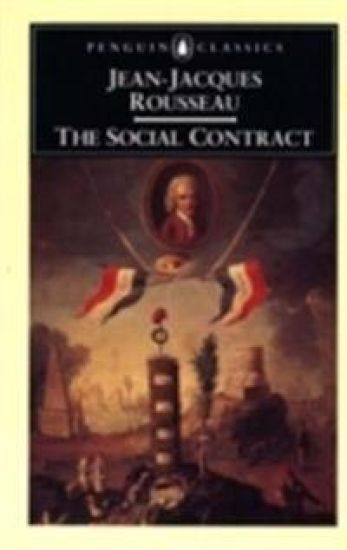
The Social Contract

The Social Contract

Jean-Jacques Rousseau

Penguin Classics
2003
isokokoinen pokkari

Halvin toimitettuna 16,30 €

'Man was born free, and he is everywhere in chains'These are the famous opening words of a treatise that has not ceased to stir debate since its publication in 1762. Rejecting the view that anyone has a natural right to wield authority over others, Rousseau argues instead for a pact, or 'social contract', that should exist between all the citizens of a state and that should be the source of sovereign power. From this fundamental premise, he goes on to consider issues of liberty and law, freedom and justice, arriving at a view of society that has seemed to some a blueprint for totalitarianism, to others a declaration of democratic principles. Translated and Introduced by Maurice Cranston
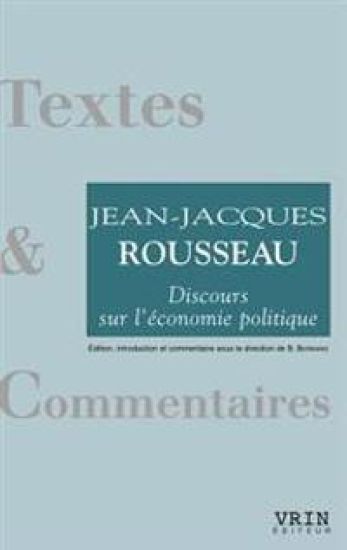
Discours Sur l'Economie Politique

Discours Sur l'Economie Politique

Jean-Jacques Rousseau

Librarie Philosophique J. Vrin
2002
nidottu
Dans le Discours sur l'economie politique, Rousseau forme deux elements essentiels de sa pensee politique: la notion de la volonte generale et la distinction entre souverainete et gouvernement. Pourtant, la place centrale qui revient a cette oeuvre ne lui a pas ete reconnue. D'abord publiee (en 1755) comme article de l'Encyclopedie, elle a longtemps ete consideree comme marquee par l'influence de Diderot. Son objet, l'economie, semblait etranger aux preoccupations essentielles de Rousseau. Cette nouvelle edition, appuyee sur le brouillon manuscrit, eclaire la genese du texte. Le commentaire propose cherche a degager l'unite et la specificite de l'oeuvre: il analyse le processus d'invention de la volonte generale et l'emergence des problemes decisifs lies a cette notion; il restitue son sens a l'economie politique dans la pensee de Rousseau; il situe son intervention, centrale parce que singuliere, dans les debats de son temps. C'est sans doute ce qui fait aussi son interet present: parce que l'administration des choses, a ses yeux, doit dependre de celle des hommes, Rousseau lie les questions du patriotisme, de l'education publique a celles de la propriete et de l'impot. Il affirme clairement que l'economie doit etre pensee sous la politique parce que l'egalite est la condition de la liberte.
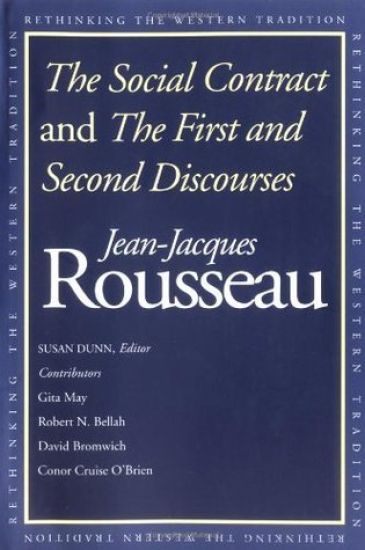
The Social Contract and The First and Second Discourses

The Social Contract and The First and Second Discourses

Jean-Jacques Rousseau

Yale University Press
2002
pokkari
Jean-Jacques Rousseau’s ideas about society, culture, and government are pivotal in the history of political thought. His works are as controversial as they are relevant today. This volume brings together three of Rousseau’s most important political writings—The Social Contract and The First Discourse (Discourse on the Sciences and Arts) and The Second Discourse (Discourse on the Origin and Foundations of Inequality)—and presents essays by major scholars that shed light on the dimensions and implications of these texts. Susan Dunn’s introductory essay underlines the unity of Rousseau’s political thought and explains why his ideas influenced Jacobin revolutionaries in France but repelled American revolutionaries across the ocean. Gita May’s essay discusses Rousseau as cultural critic. Robert N. Bellah explores Rousseau’s attempt to resolve the tension between the individual’s desire for freedom and the obligations that society imposes. David Bromwich analyzes Rousseau as a psychologist of the human self. And Conor Cruise O’Brien takes on the “noxious,” “deranged” Rousseau, excoriated by Edmund Burke but admired by Robespierre and Thomas Jefferson. Written from different, even opposing perspectives, these lucid essays convey a sense of the vital and contentious debate surrounding Rousseau and his legacy. For this edition Susan Dunn has provided a new translation of the Discourse on the Sciences and Arts and has revised a previously published translation of The Social Contract.
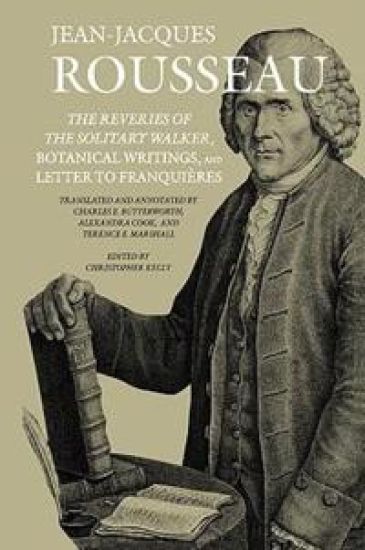
The Reveries of the Solitary Walker, Botanical Writings, and Letter to Franquières
"I am now alone on earth, no longer having any brother, neighbor, friend, or society other than myself" proclaimed Rousseau in Reveries of the Solitary Walker. Reveries, along with Botanical Writings and Letter to Franquières, were all written at the end of his life, a period when Rousseau renounced his occupation as author and ceased publishing his works. Presenting himself as an unwilling societal outcast, he nonetheless crafted each with a sharp eye on his readership. Whether addressing himself, a mother hoping to interest her child in botany, or a confused young nobleman, his dialogue reflects the needs of his interlocutor and of future readers. Although very different in style, these three works concern overlapping subjects. Their unity comes from the relation of the other writings to the Reveries, which consists of ten meditative"walks" during which Rousseau considers his life and thought. The third and fourth walks discuss truth, morality, and religious belief, which are the themes of the Letter to Franquières; while the seventh is a lengthy discussion of botany as a model for contemplative activity. The overarching themes of the volume-the relations among philosophic or scientific contemplation, religion, and morality-provide Rousseau's most intimate and final reflections on the difficulties involved in understanding nature.

Vom Gesellschaftsvertrag oder Grundlagen des politischen Rechts
In dieser Abhandlung entwirft Roussau die Fiktion eines in vorgesellschaftlicher Zeit abgeschlossenen Gesellschaftsvertrages zwischen den Menschen, der ihre Unterwerfung unter einen allgemeinen Willen, die 'volont? g?n?rale', und den Verzicht auf ihre Individualrechte vorsieht. Die beste Regierungsform, die das Volk, der Souverän dieses allgemeinen willen, delegieren kann, so der Denkimpuls des Verfassers, ist die Demokratie, ein Gedanke, mit dem Rousseau bis an die Schwelle unserer Zeit ein Gegenstand lebendiger Auseinandersetzung geblieben ist. Obwohl der 'contrat social' kaum eine historische Wirklichkeit beschreibt, stellt seine Theorie eine bedeutende Etappe in der Geschichte des demokratischen Gedanken dar. Die ist allerdings nur richtig zu verstehen, wenn sie als Denkgebäude und nicht als Staatenmodell gelesen wird. Die neue Übersetzung hat sie in diesem Sinne für unsere Zeit übertragen.